Why Cultural Alignment Improves Event Staff Retention
May 12, 2026


High turnover in the event industry is a costly problem, with over 70% of staff leaving annually. The real issue? It’s often not about pay but how employees feel at work. When staff connect with a team’s values and standards, they’re more likely to stay. Research shows companies with engaged workers see 59% less turnover.
Here’s how aligning team values can reduce staff turnover:

Cultural Alignment & Event Staff Retention: Key Statistics
Cultural alignment refers to the harmony between an individual's beliefs and the values and behaviors of an organization. In essence, it’s about bringing on team members who truly resonate with the way your team operates and communicates.
This connection shows in the little things - like how staff greet guests or handle unexpected challenges. These shared norms create a natural flow in team performance, something that can't be easily replicated or replaced once lost.
However, there’s a potential pitfall here: focusing too much on "fit" can unintentionally exclude diverse perspectives. The aim should be to align around values and standards, not to create a team of identical personalities. The strongest teams find a way to blend different viewpoints while staying grounded in shared principles.
This kind of alignment becomes especially important in the fast-paced world of event management.
Now, let’s look at why cultural alignment matters so much in event staffing. Event work is inherently high-pressure: tight deadlines, demanding guests, and no room for do-overs. In such environments, how staff feel about their team has a direct impact on their performance.
If workers feel like they’re just filling a spot, they’ll likely look elsewhere. But when they sense they’re part of something meaningful - where standards are clear and their contributions are valued - it changes everything.
"Building a retention-focused culture transforms occasional hired workers into loyal team members who understand your standards, deliver better service, and reduce the constant burden of recruiting." This is often achieved by implementing a scalable event scheduling system that supports these cultural standards. - Megan Hayward, Founder & CEO, TempGuru
Cultural alignment also strengthens what’s known as the "5 C's" of staff commitment: Commitment, Compensation, Career Growth, Culture, and Communication. When these elements are present - even for part-time or seasonal workers - staff stop seeing themselves as temporary hires and start seeing themselves as part of the team. This shift can make all the difference in delivering exceptional event experiences.
When there’s a disconnect in cultural alignment, it doesn’t just cause retention problems - it magnifies them. Misaligned values, poor communication, and a lack of belonging all contribute to driving staff away, creating a cycle of high turnover that’s hard to break.
One of the first signs of cultural misalignment is confusion about roles and responsibilities. When employees aren’t in sync with an organization’s communication style or expectations, they’re left guessing - and that creates problems.
In diverse teams - where 60% of corporate events cater to multicultural audiences - even small misunderstandings can snowball. For example, a simple “yes” from a staff member might mean acknowledgment rather than agreement, leading to missed tasks or overlooked details. This kind of miscommunication leaves expectations murky and tasks incomplete.
"Cultural precision isn't a soft skill; it's an operational discipline. When your teams understand nuance, they don't just represent your brand; they safeguard it in every market." – Daniel Muersing, CEO, Event Staff
Without tools like standardized checklists for things like dress codes, safety protocols, and catering staff scheduling tools, employees are left to interpret expectations on their own. That guesswork creates frustration, and frustrated staff are far less likely to return for future work.
On top of that, when employees feel disconnected from the organization, their sense of value diminishes, making retention even harder.
Temporary workers often find themselves isolated and overlooked, which directly impacts whether they’ll return. Data shows that employees who feel recognized are 3.7 times more likely to accept future shifts. But when staff don’t understand the mission of an event or feel no connection to the team’s values, their motivation plummets.
"Temporary staff may not be as invested in the event's success as permanent staff, which can impact their performance and the overall event experience for attendees." – Laurie Wherley, Jobble
Recognition matters. Whether it’s a quick shout-out or acknowledgment of effort, these small gestures go a long way. Without them, employees disengage, and disengaged workers can cost organizations between 18% and 33% of their annual salary in lost productivity and rehiring expenses. This highlights just how critical cultural alignment is for keeping employees engaged and motivated.
Even the most skilled and reliable staff won’t stick around if they don’t see a reason to stay. Cultural misalignment often means there’s no structured path for repeat bookings, tiered pay, or professional growth. That sends a clear signal to employees: they’re just filling a temporary need.
"Professional development shows you're investing in their growth, not just renting their time." – Megan Hayward, Founder & CEO, TempGuru
When experienced workers are treated the same as first-timers, loyalty takes a hit. The relationship starts to feel purely transactional, which is a major factor behind the industry’s staggering 70%+ annual staff turnover rate. Without growth opportunities or incentives to return, employees are left looking for better options elsewhere.
Retention issues don’t have to be a constant struggle when cultural alignment takes center stage. By addressing miscommunication, disengagement, and lack of growth, organizations can tackle these challenges head-on with practical solutions that are easier to implement than many managers realize.
When employees clearly understand why they’re there and what’s expected of them, confusion gives way to clarity. A standardized onboarding process - covering essentials like dress code, safety protocols, and role responsibilities - removes the uncertainty that often leads to early turnover. And it’s not just theory: a strong onboarding process can improve employee retention by 82%.
But onboarding is just the start. Regular feedback and open communication channels are equally crucial. When managers encourage questions and address concerns early, they can prevent small issues from snowballing into resignations. By 2025, around 75% of employee departures were deemed preventable with better leadership and feedback systems. Tools like Quickstaff make this even easier by centralizing event details, communication, and scheduling - ensuring everyone is informed and aligned with the event’s objectives. Beyond logistics, fostering a workplace where employees feel heard and appreciated is key to building loyalty.
A sense of belonging doesn’t happen by accident - it’s built through consistent actions that make staff feel valued.
"When team members feel their voices are heard, they're more likely to stay engaged and committed. This transparency helps build trust and strengthens the sense of belonging within our company." – Isabella Galeazzi, COO, Eleven8 Staffing
Transparency works best when paired with structured support. Pairing first-time workers with seasoned staff creates a built-in resource for questions, eases first-day nerves, and naturally passes along institutional knowledge. Public recognition - whether it’s a shout-out during an event debrief or a feature on social media - also goes a long way in showing that hard work is noticed. Companies with strong recognition programs see a 31% lower voluntary turnover rate, which is especially impactful in an industry where annual turnover often exceeds 70%.
However, belonging isn’t just about feeling appreciated - it’s also about seeing opportunities for growth.
Employees who see a future with your organization are far more likely to stick around. That future doesn’t have to mean a full-time role - it can be as simple as offering tiered pay that rewards experience. For instance, paying higher hourly rates to staff who’ve worked 10+ events signals that loyalty and commitment are valued.
"Building a retention-focused culture transforms occasional hired workers into loyal team members who understand your standards, deliver better service, and reduce the constant burden of recruiting." – Megan Hayward, Founder & CEO, TempGuru
Shadowing programs and paid onsite training sessions are also effective ways to demonstrate investment in your team. These initiatives show that the company cares about skill development, not just filling shifts. The numbers back this up: 94% of employees say they would stay longer at a company that invests in their professional growth. When development opportunities are woven into the company culture, employees are less likely to look elsewhere. This approach not only stabilizes the workforce but also enhances event outcomes in the long run.
When hiring, it's crucial to focus on cultural fit alongside experience and availability. Why? Studies show that 89% of employee turnover stems from poor cultural fit, and replacing a bad hire can cost up to 200% of their annual salary. That’s a hefty price tag, especially in industries where turnover already exceeds 70% annually.
You don’t need to completely overhaul your hiring process to address this. Start by revising job descriptions to reflect your team’s values and work environment honestly. This matters because 84% of candidates expect transparency about company culture before accepting an offer. During interviews, use STAR-based behavioral questions to evaluate past teamwork experiences. This approach provides tangible evidence of how candidates operate in real-world scenarios, avoiding decisions based solely on instinct.
"You can teach talent and share skills, but you can't force fit." – The Profit Recipe
On the scheduling front, develop a system where staff can share their preferences for event types, days, and time slots. Aligning assignments with these preferences shows employees they’re valued as individuals, not just as interchangeable workers. Additionally, ensure your scheduling and communication tools support this alignment to build trust and efficiency.
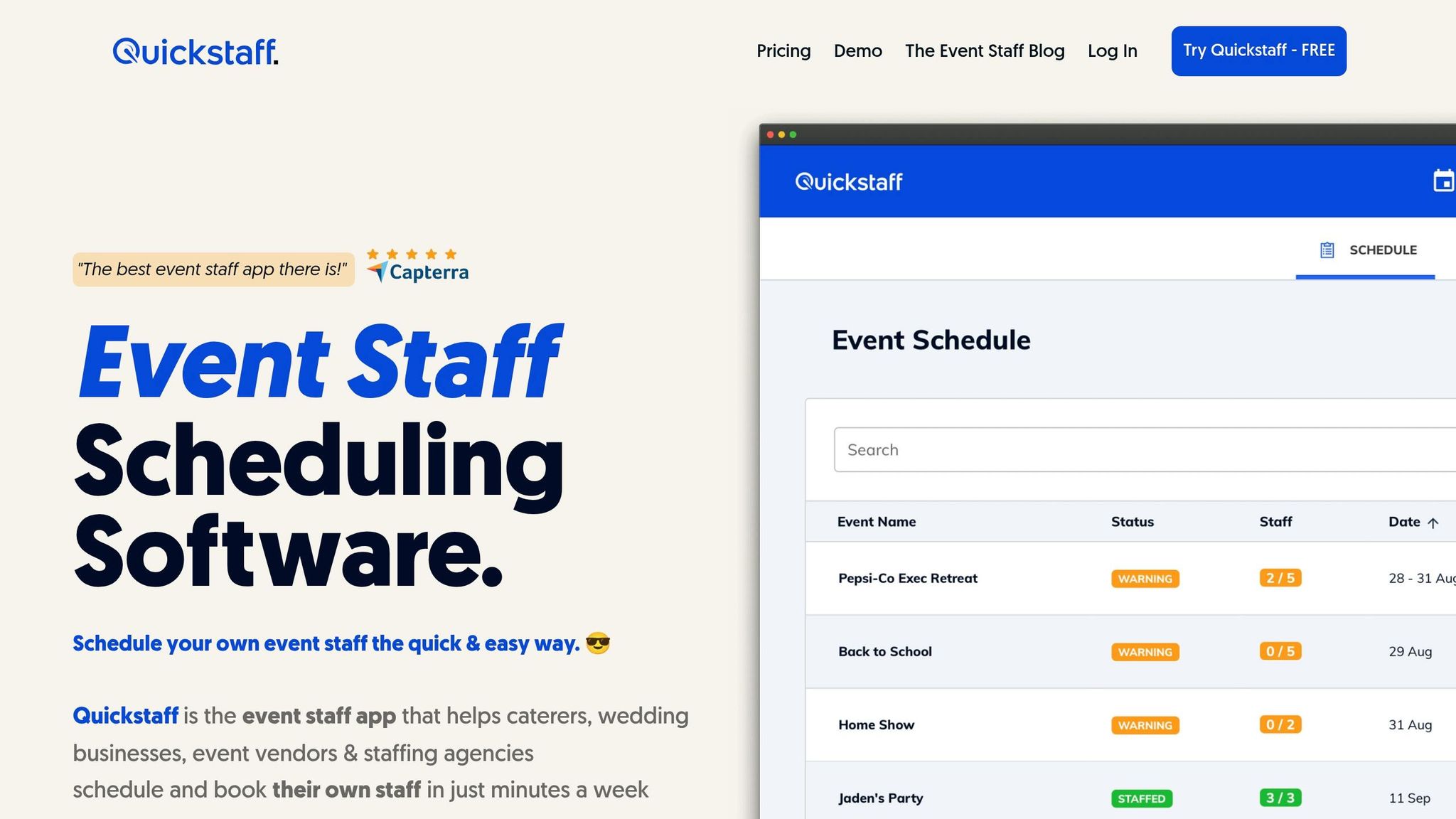
Once you’ve hired for cultural fit, the next step is maintaining alignment through seamless coordination. Without clear communication, even the best-fit teams can falter. Ambiguity about event details - like location, dress code, or key contacts - can quickly erode trust. Tools like Quickstaff help solve this problem by centralizing scheduling, communication, and event details in one mobile-friendly platform.
Quickstaff offers features like unlimited messaging and automated reminders to keep staff informed before and during events, minimizing last-minute confusion. Its availability tracking and waitlist apps make it easier to schedule employees who’ve already proven they work well with the team. Over time, consistent and preference-aware scheduling helps transform temporary workers into a dependable, aligned group - a cornerstone for improving retention and performance.
Cultural alignment doesn’t stop once the event wraps up. After each event, take 10–15 minutes to gather structured feedback from your staff. Focus on areas like communication clarity, team dynamics, and whether they felt supported in their roles. These conversations can reveal friction points that managers might otherwise overlook.
Use this feedback to refine your internal processes before the next event. For instance, if employees highlight unclear role boundaries or inconsistent communication, address those issues immediately. Closing these feedback loops not only resolves immediate concerns but also strengthens long-term team cohesion. Companies that act on feedback see up to 30% higher client satisfaction rates, a direct reflection of teams that feel heard, valued, and prepared.
Cultural misalignment can cost far more than just high turnover rates. In the event staffing industry, where annual turnover exceeds 70%, replacing employees can cost anywhere from 50% to 400% of their annual salary. These numbers alone make a strong case for prioritizing cultural alignment. But the benefits don’t stop there. Teams with engaged employees are 21% more productive than disengaged ones, and workers who feel valued are 3.7x more likely to accept future shifts. This kind of dependability can mean the difference between a seamless event and one riddled with chaos. The productivity and reliability that come with cultural alignment highlight its long-term value.
The strategies outlined in this article - hiring staff who align with your culture, using tools like Quickstaff to streamline coordination, and consistently gathering feedback after events - are straightforward. Yet, when applied consistently, they create a foundation of institutional knowledge that ensures events run efficiently.
Cultural alignment isn’t something you achieve once and forget about. A sustained effort to nurture alignment builds a team that’s not only stable and loyal but also grows alongside your business.
Understanding how well your event team aligns with your organization’s values and culture requires a mix of thoughtful strategies. Start with employee surveys to gauge team members' perceptions of your company’s culture. These surveys can reveal how your team feels about the values you promote and whether they see them reflected in day-to-day work.
You can also dive deeper with focus groups and exit interviews, which allow for more open, detailed discussions. These methods often uncover insights that might not surface in a standard survey. Additionally, tracking key performance indicators (KPIs) tied to cultural goals can provide measurable data on alignment.
For a more data-driven approach, explore HR analytics. This can include analyzing behavioral patterns and engagement levels to identify trends and areas needing attention. By combining these tools - surveys, interviews, KPIs, and analytics - you’ll gain a comprehensive understanding of how well your team embodies your desired culture.
To ensure you're hiring for values while embracing diversity, start by emphasizing candidates’ qualifications, actions, and how well they align with your organization’s core principles, such as teamwork and integrity. Implement fair hiring methods like structured interviews, standardized evaluation criteria, and diverse hiring panels to minimize bias. Be open about your values and your dedication to inclusion - this transparency helps attract a broad pool of talented candidates. By doing so, you can strike the right balance between fostering diversity and maintaining alignment with your organizational culture.
The quickest way to cut down turnover among temporary event staff is by providing competitive pay and being upfront about pay rates and any performance bonuses. When you clearly communicate compensation details, it fosters trust and makes staff feel appreciated - both of which go a long way in boosting retention.