7 Tips for Retaining Temporary Event Staff
February 19, 2026

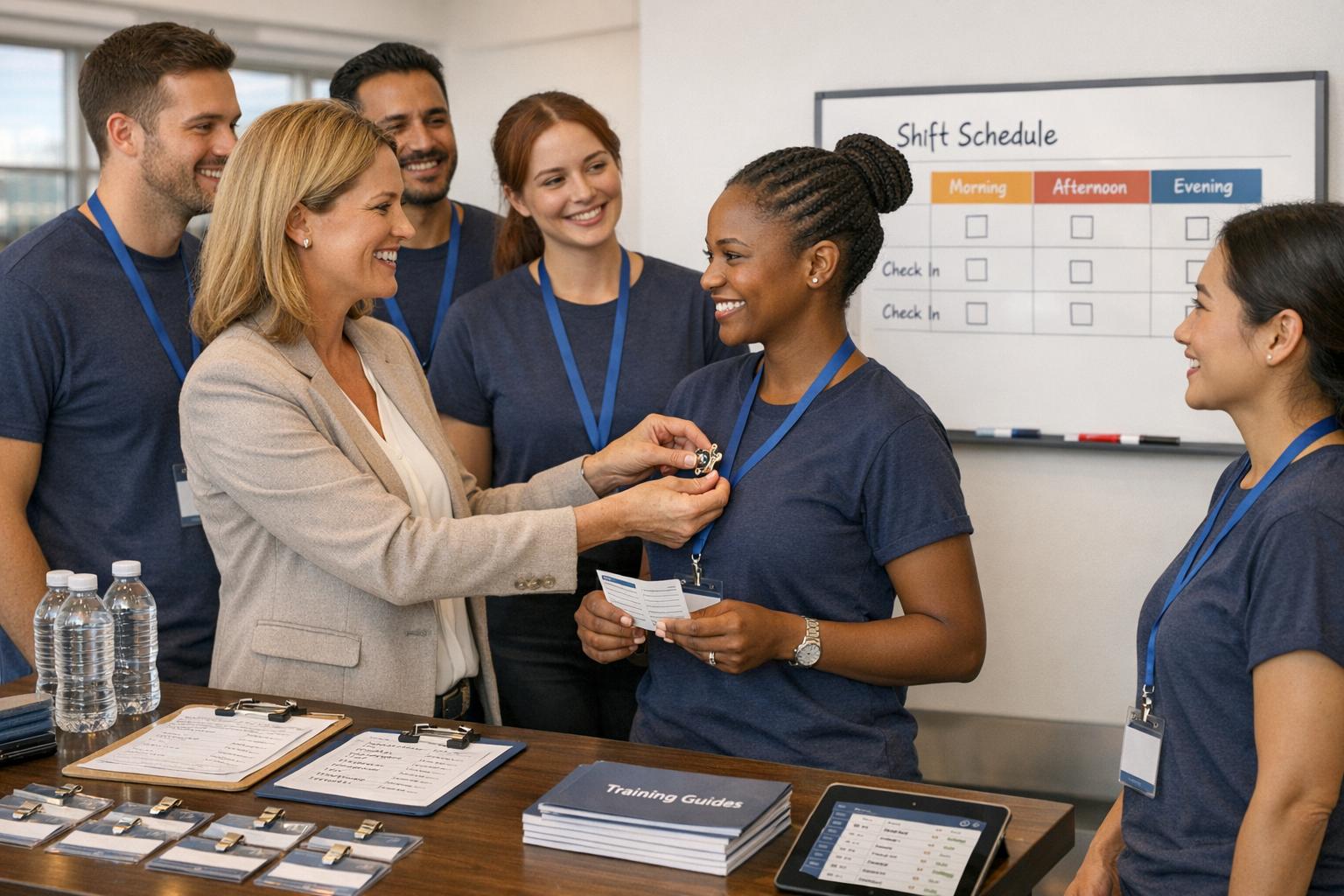
Temporary event staff turnover is costly and disruptive, but it’s preventable. High turnover rates, like the 419% seen in 2022, impact budgets, morale, and operations. Retaining staff ensures smoother events, fewer errors, and lower costs. Here’s how you can keep your temporary team engaged and motivated:
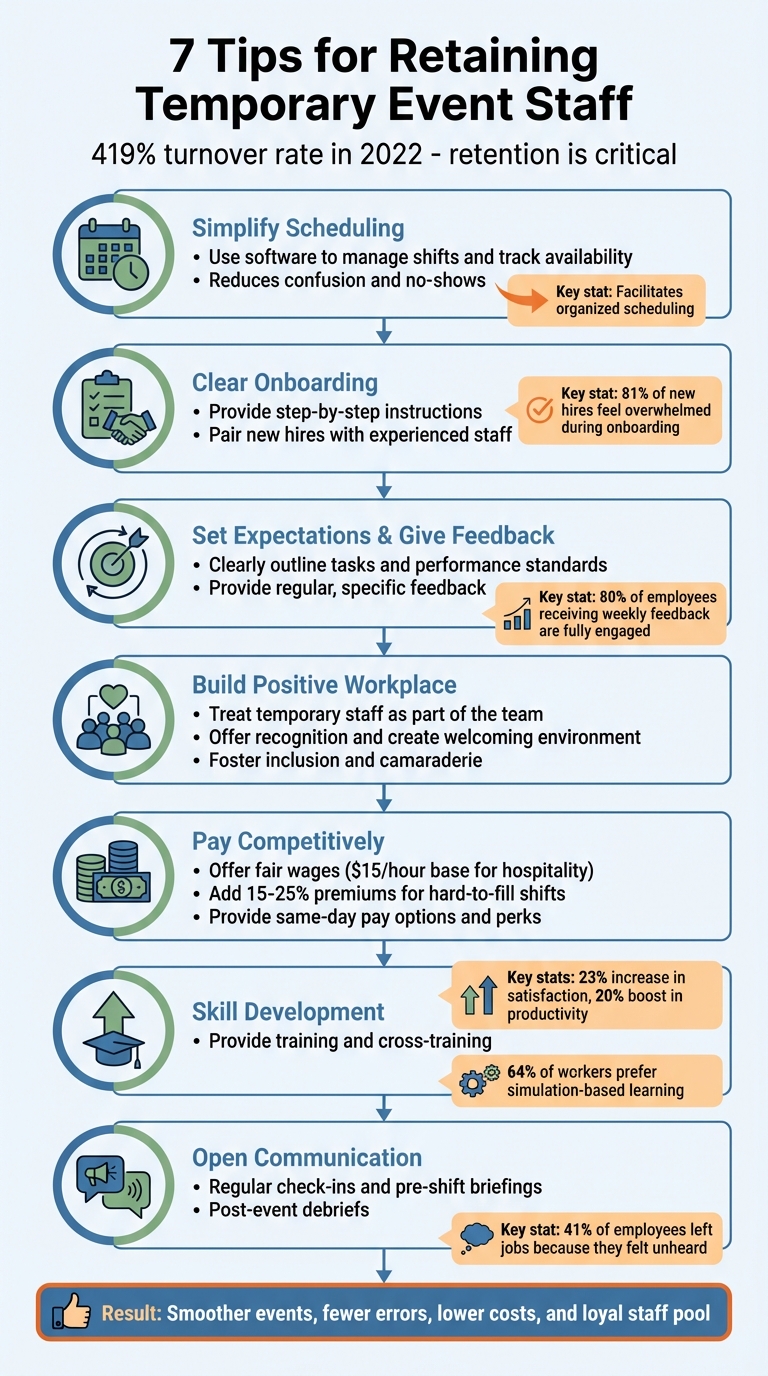
7 Essential Strategies for Retaining Temporary Event Staff
Relying on spreadsheets, texts, and calls for scheduling often leads to confusion and frustration. Miscommunication and conflicting details can damage staff trust. Scheduling software solves these issues by centralizing all critical information - like locations, call times, specific roles, and special instructions - into one easily accessible platform. This streamlined approach fosters trust among staff and helps improve retention.
One of the standout features is availability tracking. Staff can block off dates when they’re unavailable, ensuring managers only invite workers who are free. This eliminates the back-and-forth of inviting unavailable employees and scrambling to fill shifts last minute. Plus, calendar integrations (Google, iCal, Outlook, Yahoo) help avoid double-bookings and overcommitments.
"Software systems that organize and automate your staff scheduling are hard to beat." - Quickstaff Pro
Automated reminders and one-click email responses also play a key role in reducing no-shows and minimizing follow-up tasks. When employees can manage their schedules with ease, they’re more likely to stay engaged and return for future events. Giving staff control over their schedules enhances job satisfaction.
Beyond simplifying operations, organized scheduling encourages long-term loyalty. Quickstaff, for example, offers a mobile-friendly interface that has facilitated scheduling for over 20,000 events since 2013. They even provide a free 14-day trial. Real-time attendance data further empowers managers to make on-the-spot staffing adjustments. When workers experience this level of organization and professionalism, they feel appreciated - a key factor in whether they’ll want to work with you again.
First impressions matter, especially for temporary staff. A well-structured onboarding process ensures they understand their roles, responsibilities, and expectations before stepping in. Without it, confusion and mistakes can easily disrupt your event.
Start with a onboarding checklist of event day essentials. This should cover essentials like paperwork, payroll, safety protocols, and an FAQ to address common questions upfront. Keep in mind that 81% of new hires report feeling overwhelmed during onboarding. Breaking down the information into smaller, digestible steps can help ease this burden.
Using a buddy system can make a big difference. Pair new staff with seasoned team members during their first shift. This approach not only gives them someone to turn to for questions but also helps build their confidence as they learn on the job. It’s a straightforward way to provide support while reinforcing their understanding of the role.
"When onboarding focuses on real-world preparedness, staff arrive more confident, perform better, and are more likely to return for future events. That kind of readiness turns short-term roles into long-term talent relationships." - HireQuest
Equip your team with concise, role-specific materials like brand guidelines, setup protocols, and safety reminders. Short pre-shift meetings (5-10 minutes) are also invaluable for reviewing responsibilities and sharing critical instructions. When temporary staff know exactly what’s expected of them, they’re more likely to excel and even return for future opportunities. These straightforward practices not only improve performance but also build loyalty over time.
Clear targets are essential for guiding temporary staff effectively. By defining what success looks like for each role, you provide workers with a clear path forward and eliminate confusion that can lead to frustration. Be specific about tasks, performance standards, and milestones. For instance, instead of saying, "manage the registration desk", clarify with, "greet guests within 30 seconds of arrival, verify names against the guest list, and direct them to the correct ballroom entrance." This level of detail ensures everyone knows exactly what's expected of them and sets the stage for meaningful feedback.
Here’s why this matters: 80% of employees who receive weekly feedback are fully engaged at work. Yet, 34% of U.S. workers report not being recognized for their efforts, which can influence whether they choose to work with you again. This gap highlights a missed opportunity for many event managers.
Feedback should be a regular part of the event process. For multi-day events, hold daily debriefs to address challenges as they arise. For single-day events, quick check-ins can keep everyone aligned. When providing feedback, aim for specificity. Saying "great job" is nice, but something like, "Your quick thinking when the catering delivery was late kept us on schedule - thank you for coordinating with the kitchen staff", is far more impactful.
"Effective feedback must go beyond a mere checkbox mentality. When feedback is merely transactional, we risk delivering input that is imprecise, lacks meaningful direction, and fails to provide actionable insights." - Jim Link, CHRO, SHRM
Another key element is fostering two-way conversations. Encourage staff to share their thoughts and clarify how their tasks fit into the bigger picture of the event. When workers understand the purpose behind their responsibilities, they feel valued rather than disposable. This dialogue builds trust, improves delegation and highlights the benefits of event staff scheduling software, and helps them develop skills they can bring to future events. Regular, detailed feedback doesn’t just reinforce expectations - it strengthens their commitment to working with you again.
Creating an inclusive and welcoming environment is key to strengthening staff loyalty. Temporary workers, in particular, often feel undervalued or easily replaceable if they aren’t properly integrated into the team or made to feel their work matters. When people feel like they don’t belong, their behavior can reflect that perception.
Bringing permanent and temporary staff together as one cohesive team is essential. Excluding temporary workers from meetings or shared spaces like break rooms can lead to resentment, as they miss out on the recognition and camaraderie permanent staff enjoy. Instead, focus on fostering unity. For instance, implementing a buddy system where permanent employees mentor temporary staff can go a long way in building connections and maintaining engagement over time.
"A content employee who feels as though they belong naturally in the team is far more likely to be committed and efficient." - Mohau Vuma, Author, Encore Nationwide
Encouraging teamwork and camaraderie through shared spaces and activities can also make a big difference. Providing crew lounges with thoughtful amenities gives staff a chance to unwind. Fun, inclusive activities like "Hospitality Olympics", where both permanent and temporary workers collaborate on event-themed challenges, help reduce stress and build trust.
Public recognition is another powerful tool. Daily briefings can be an opportunity to highlight the exceptional work of temporary staff, boosting their morale and inspiring the whole team. Additionally, tools like anonymous suggestion boxes or digital surveys not only show that staff contributions are valued but also offer fresh ideas for improving event logistics and guest experiences.
Fair compensation plays a huge role in keeping temporary staff onboard. In fact, it’s often the number one factor workers consider when choosing assignments. If your pay rates fall short compared to other local venues, you risk losing your best team members to better-paying opportunities.
High turnover isn’t just inconvenient - it’s expensive. Offering competitive wages can help reduce these costs while building a dependable workforce.
"If you want your staff to stay, you'll need to pay them at least as well – if not better – than other events venues in your area." - Xclusive Staffing
Once you’ve established solid operational practices, fair pay and attractive incentives can further secure long-term commitment. Start with a competitive base rate, such as $15/hour for hospitality and event roles. For shifts that are harder to fill - like last-minute scheduling tools or holiday events - consider adding a 15–25% premium. You can also implement options like "Same Day Pay", which allows workers to access their earnings immediately after finishing a shift. This approach can go a long way in building trust and loyalty.
Loyalty bonuses are another great motivator. For example, offer rewards for completing 10 or 20 shifts to encourage repeat bookings. Covering practical expenses like parking or transportation, providing quality meals, and offering tangible perks such as gift cards, event merchandise, or performance bonuses can also demonstrate that you value your team. These efforts don’t just boost morale - they help create a dependable and enthusiastic pool of staff who are eager to work your events again.
Competitive wages are important, but showing an interest in your staff's professional growth can build even stronger loyalty. Temporary staff are more likely to return if they see opportunities to learn and grow. Training isn’t just about getting tasks done - it’s about showing that you care about their future. When employees feel they’re gaining skills that matter, they tend to stay more engaged and loyal. Here are some practical ways to weave skill development into your event operations.
Start with microlearning modules - bite-sized lessons covering topics like venue layouts, safety protocols, or customer service. These short, focused sessions can be delivered via QR codes or shared drives that staff can access on their phones. Companies using this method have reported a 23% jump in employee satisfaction and a 20% increase in productivity. To make it even more impactful, pair these lessons with scenario-based simulations. For example, train staff on how to handle situations like long check-in lines or assisting lost guests. Interestingly, 64% of workers prefer simulations as their top learning method.
Another effective strategy is cross-training, where team members are taught multiple roles, such as registration, logistics, or catering. This not only makes them more versatile but also opens up pathways for growth. Recognize top performers by promoting them to leadership roles. For example, Bar Crawl USA retained event leads for as long as nine years by giving them more responsibilities and profit-sharing opportunities. This approach even allowed some staff to earn $50–$100 per hour during large events.
"Offering training, mentorship, or leadership opportunities shows you're invested in their future. This can transform freelancers into long-term assets for your agency." - Mark Walls, Liveforce
Consider adding a shadowing program, where new hires work closely with seasoned managers to learn how to anticipate needs and solve problems effectively. Additionally, simple gestures like writing recommendation letters or endorsing them on LinkedIn can add professional value without costing you extra. These efforts can turn short-term gigs into meaningful career opportunities, making it more likely that your best staff will return for future events.
Temporary staff often find themselves feeling disconnected - unsure of who to approach with questions or whether their efforts are acknowledged. In fact, a staggering 41% of employees have left jobs because they felt unheard. Establishing clear communication channels and regularly checking in can make all the difference in showing your team that they are valued.
Building on the structured processes mentioned earlier, open communication strengthens team reliability. Start each shift with a quick huddle - just five to ten minutes - to assign tasks, highlight special client requests, and clarify expectations. This small investment of time helps eliminate confusion and avoid small mistakes that could lead to dissatisfaction or turnover. During the event, designate a team lead or buddy to act as the go-to person for questions, real-time coaching, and quick problem-solving. An open-door policy can also prevent minor misunderstandings from snowballing into bigger challenges.
"This [briefing] will include practical and logistical information such as what to wear, directions and public transport information, who to ring in case of problems, which entrance to use and who to report to."
– Becki Cross, Managing Director, Events Northern Ltd
After the event, hold a debrief while the experience is still fresh. Ask targeted questions like, "What could we do to make your job easier?" This kind of feedback loop shows you value their input and helps address potential issues early. Tools like Quickstaff can streamline communication, offering centralized updates on schedule changes or key announcements - cutting through the noise of scattered group messages.
When staff feel heard and supported, they’re more likely to be punctual, take ownership of their roles, and return for future events. Regular check-ins create a team that’s not only dependable but also engaged.
Retaining temporary event staff isn't just about filling shifts; it's about creating an environment where workers feel appreciated, supported, and motivated to come back. Strategies like using budget-friendly scheduling tools to lighten administrative tasks, setting up clear onboarding processes, and fostering open communication all contribute to a more positive experience for your team.
With record-high turnover rates and the steep costs of replacing staff, focusing on retention is more important than ever. When temporary workers feel like just another number, they might view the job as nothing more than a paycheck. But when you prioritize their experience - offering competitive wages, opportunities to grow their skills, recognition, and a sense of belonging - they become loyal advocates for your brand.
"In live event staffing, temporary workers are the backbone of successful activations... keeping this pool of talented contingent workers engaged and loyal to your event staffing company and the brands they represent is, therefore, essential."
– Mohau Vuma, Encore Nationwide
Many successful event companies rely on a "core bench" of dependable workers who understand the expectations, meet high standards, and deliver consistent results. Building this reliable pool takes effort at every step, from the first shift to the post-event follow-up. Tools like Quickstaff can simplify processes, but technology alone can't replace the personal touch. True retention comes from treating temporary staff as integral members of the team.
When bringing temporary staff on board, having a structured checklist can make all the difference. Start by breaking the training into smaller, easy-to-follow steps to avoid overwhelming new hires. Clearly outline their roles and responsibilities so they know exactly what's expected from day one. For better preparation, include job-specific training tailored to their tasks.
Make sure you set up clear communication channels - this helps new team members stay connected and ask questions when needed. Regular feedback is also crucial. It keeps temporary staff motivated and aligned with your goals. By streamlining processes, simplifying the training experience, and creating a supportive environment, you can give your team the tools they need to hit the ground running.
To cut down on no-shows, stay connected with your team leading up to the event. Regular check-ins help keep everyone engaged and committed. Be clear about schedules, expectations, and any updates to avoid confusion. Offering flexibility, like shift swaps, can also make a big difference. Additionally, having backup staff or cross-trained team members on standby ensures you're covered if someone can't make it. Scheduling tools can simplify all of this, making it easier to manage your team and keep things running smoothly.
Effective ways to keep temporary event staff coming back include referral bonuses, competitive pay, and recognizing their hard work. On top of that, creating a welcoming and engaging work atmosphere can make a big difference in keeping them motivated and loyal. These approaches not only make the job more rewarding but also increase the chances of staff returning for future events.