Scaling Event Services with Flexible Staffing
January 12, 2026

Event businesses often face unpredictable demand, making staffing a challenge. A fixed staffing model relies on permanent employees but struggles with high costs, limited flexibility, and burnout risks during peak times. On the other hand, flexible staffing models, like Quickstaff, use on-demand workers, offering scalability, lower costs, and better alignment with today’s workforce preferences.
Key Takeaways:
Quick Comparison:
| Criteria | Fixed Staffing | Flexible Staffing (Quickstaff) |
|---|---|---|
| Scalability | Limited, slow adjustments | High, instant adjustments possible |
| Cost Efficiency | High fixed costs | Pay only for hours worked |
| Flexibility | Struggles with demand shifts | Handles last-minute changes easily |
| Retention | High turnover risk | Meets worker preferences for flexibility |
Flexible staffing solutions are reshaping how event businesses operate, offering a modern approach to meet fluctuating demands while reducing costs and improving workforce satisfaction.
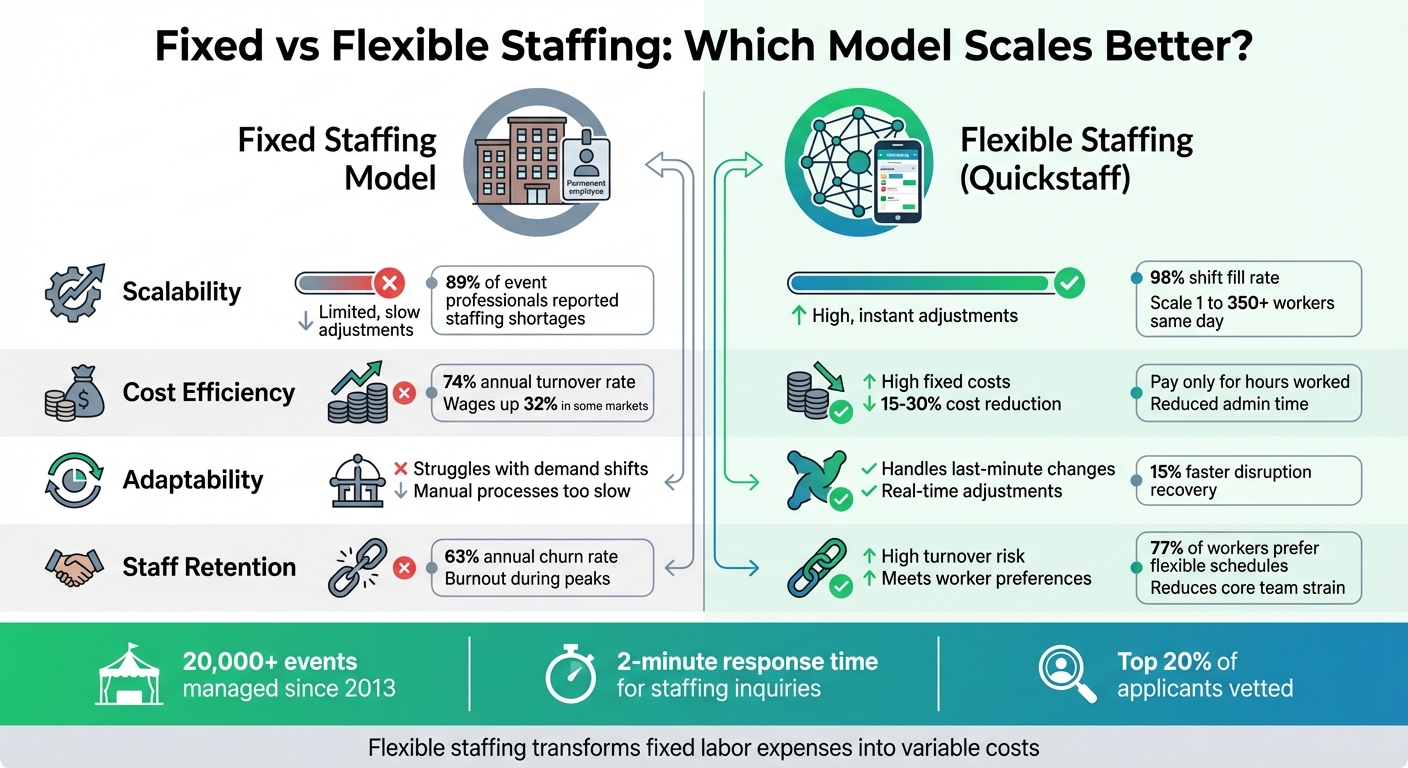
Fixed vs Flexible Staffing Models Comparison for Event Businesses
Fixed staffing models rely on employing permanent team members to manage events. These employees handle everything from setup to breakdown, ensuring a consistent approach across events. However, this model demands a significant investment in HR resources, training programs, and employee benefits to maintain operations effectively.
One of the most pressing issues with fixed staffing is its limited ability to scale on short notice. Eva Wei from WorkWhile highlights this challenge:
"Traditional in-house hiring is too slow, too rigid, and often too expensive for the high-speed world of live events".
When demand spikes, manual hiring processes often fall short. In fact, 89% of event professionals reported that staffing shortages negatively impacted their ability to deliver events in 2025. During busy periods, fixed teams face the risk of burnout, while slower times lead to unnecessary overhead costs.
Fixed staffing comes with ongoing expenses, including full salaries, benefits, and compliance costs, regardless of how many events are scheduled. With the event industry's annual turnover rate at 74%, businesses are frequently caught in costly cycles of recruiting and training. For instance, in markets like Las Vegas, wages for hospitality workers have surged by up to 32%, further driving up the cost of maintaining a fixed workforce. On top of that, federal regulations mandate compliance with the Fair Labor Standards Act, which includes a $7.25 minimum wage, overtime pay at 1.5x the regular rate, and up to 12 weeks of leave under the FMLA.
The unpredictable nature of event demand makes fixed staffing less practical. Since events are often sporadic - either one-time or recurring - employing a permanent team can lead to inefficiencies during downtime. Fixed teams also lack the flexibility to adjust quickly to sudden changes in demand or event layouts, which can disrupt operations and strain resources.
While permanent employees bring consistency to the table, the model faces retention challenges. The annual churn rate for event staff is 63%, and high-demand periods can exacerbate burnout. Additionally, with 77% of workers now seeking flexible schedules, rigid full-time structures can make it harder to attract and retain talent who prioritize work-life balance. This mismatch between workforce preferences and fixed staffing models further complicates retention efforts.

Traditional staffing models often falter when faced with unpredictable event demands. That’s where flexible staffing steps in, offering a smarter, more dynamic solution. Instead of assuming workers are always available, Quickstaff takes a different approach - it asks staff upfront about their availability and matches them to shifts that fit their schedules. This aligns perfectly with the growing trend, as 77% of workers now prefer flexible schedules, bridging the gap between business needs and workforce expectations.
Quickstaff’s centralized availability management system makes scaling a breeze. Managers can instantly check who’s available, avoid scheduling conflicts, and assemble teams for specific events with ease. Take its "Check Availability" feature, for example. This tool allows managers to respond to client inquiries about staffing capacity - even for events happening three months down the line - in just two minutes. The platform automates the entire booking process, from contacting workers to confirming their shifts. Since its launch in 2013, Quickstaff has facilitated staffing for over 20,000 events, proving how automation can help businesses handle more events without piling on administrative tasks.
And while scaling up, businesses also save time and money by cutting down on repetitive scheduling chores.
Flexible staffing is a game-changer for cost management. With Quickstaff, you only pay for the labor you need, eliminating unnecessary administrative hours. Gone are the days of juggling Excel spreadsheets, sticky notes, or endless group texts. Instead, everything is managed through a user-friendly dashboard. Jennifer Manley, a Staffing Coordinator, sums it up well:
"My time spent scheduling has shrunk majorly, leaving me more time to focus on recruiting, on-boarding and training."
The platform also minimizes inefficiencies by giving managers real-time visibility into staff availability and block-out dates. Automated reminders, directions, and event notes help reduce no-shows, saving both revenue and your reputation. Plus, its intuitive design means no formal training is needed, cutting onboarding costs even further.
Event management often involves last-minute changes, and Quickstaff is built to handle them. Its mobile-friendly, fully online system lets managers and staff adjust schedules from anywhere, anytime. If a client suddenly needs more servers, for instance, managers can quickly contact only the qualified staff for that role. Workers can also block out dates when they’re unavailable, and calendar syncing with Gmail or Outlook helps prevent double bookings and cancellations. Kelly from The Abbot KC shares:
"The time that we have been able to save by using this staff scheduling software has allowed us to tackle the other issues that we face thereby improving our overall events!"
Flexible scheduling isn’t just about convenience - it’s about meeting the expectations of today’s workforce. Quickstaff allows workers to manage their own schedules, making it an attractive option for those seeking flexibility. The platform’s mobile-friendly design provides easy access to event details, directions, and reminders, creating a better experience for staff. Its automated confirmation system simplifies the process, letting workers accept or decline shifts with a single click via email. This seamless approach helps workers juggle multiple commitments without stress. In an industry with a staggering 74% annual turnover rate, offering flexibility and autonomy can make a real difference in retaining staff.
Deciding between fixed and flexible staffing models isn't just a matter of preference - it’s about aligning your approach with your business's ability to grow and adapt. Here’s a side-by-side look at how these two models stack up across key metrics:
| Criteria | Fixed Staffing Model | Flexible Staffing Model (with Quickstaff) |
|---|---|---|
| Scalability | Limited; slow hiring processes hinder quick growth. Downsizing comes with expensive layoffs and severance costs. | High; scale from 1 to 350+ workers on the same day with a 98% fill rate. |
| Cost Efficiency | Low; fixed expenses like salaries, benefits, and insurance persist regardless of workload. 33% of businesses turn to contingent labor to reduce full-time costs. | High; cut labor costs by 15% to 30% by avoiding overstaffing. Pay only for hours worked. |
| Adaptability | Inflexible; struggles to handle seasonal peaks or last-minute changes. | High; allows real-time adjustments for fluctuating demands and sudden client needs. Companies recovered 15% faster from disruptions. |
| Staff Retention | High turnover risk during busy seasons; 74% annual turnover rate as core teams face unsustainable workloads. | Relieves strain on core staff by managing overflow. Offers the flexibility that 77% of workers prefer. |
This comparison highlights the flexibility and responsiveness of the Quickstaff model, which has become a game-changer for many businesses.
While fixed staffing provides stability, it lacks the agility that modern event-driven businesses demand. Flexible staffing through Quickstaff transforms fixed labor expenses into variable costs while ensuring access to top-tier talent - only the top 20% of applicants pass the platform's rigorous vetting process. George, Director of F&B at Memoir Agency, sums it up best:
"Quickstaff has been instrumental in providing our company with top-notch staff for our events. Their ability to source quality personnel efficiently has significantly contributed to the success of our projects".
Today, organizations are increasingly blending core teams with on-demand flexible staffing to achieve greater efficiency, cost savings, and adaptability.
For event businesses aiming to grow, flexible staffing proves to be a game-changer. It outshines fixed staffing models in key areas like scalability, cost control, and the ability to adapt. Whether it’s dealing with unexpected attendance changes, last-minute client requests, or seasonal demand surges, flexible staffing provides the agility that fixed teams simply can’t deliver.
With the ability to scale from 1 to over 350 workers while maintaining a 98% fill rate, flexible staffing effectively addresses the challenges faced by 89% of event professionals who reported staffing shortages in 2025.
Growth in this industry requires a forward-thinking approach. By automating routine tasks like scheduling, managers can focus on broader strategic goals. Quickstaff, for example, has been instrumental in organizing over 20,000 events since 2013. Its tools help businesses centralize staff availability, automate confirmations, and manage waitlists, creating a more efficient and streamlined process.
This kind of flexibility not only meets the evolving preferences of today’s workforce but also offers advanced scheduling solutions that remain accessible for businesses of all sizes.
Flexible staffing offers event businesses a smart way to align labor costs with actual event requirements, helping them save money. Instead of committing to full-time employees with fixed salaries, benefits, and potential overtime expenses, businesses can bring in temporary staff as needed. This "pay-as-you-go" system avoids the costs of overstaffing and ensures companies only pay for the team they truly need for each event.
It also helps reduce financial risks tied to no-shows or last-minute cancellations. With real-time availability tracking, managers can quickly reassign or replace staff to keep things running smoothly. On top of that, automation tools simplify scheduling, send reminders, and improve communication, cutting down on administrative tasks and saving valuable time. This streamlined approach allows event businesses to scale their operations up or down as needed, all while keeping costs in check.
Managing event staff becomes a breeze with Quickstaff. This platform brings everything together on a single, user-friendly dashboard, making scheduling straightforward and stress-free. Key features like real-time availability tracking, automated reminders, and safeguards against double-bookings or no-shows ensure your operations run smoothly and without hiccups.
Quickstaff is designed to save you time and enhance communication. Accessible from any device and so simple to use that no training is needed, it’s the perfect tool for event professionals. Its intuitive setup keeps everything clear and efficient, allowing you to focus on creating outstanding events.
Flexible staffing plays a key role in boosting employee satisfaction by giving workers more control over their schedules. This approach allows employees to better manage personal responsibilities like childcare, education, or health-related needs. The result? Less stress, a healthier work-life balance, and a reduced risk of burnout - one of the main reasons employees leave their jobs.
For event-based businesses, tools like Quickstaff make adopting flexible staffing a breeze. Managers can easily create events, check staff availability in real time, and assign shifts efficiently. This system lets employees pick assignments that align with their schedules, cutting down on confusion and increasing job satisfaction. The added benefit? Happier, more loyal staff who are likely to stick around for the long haul.


