Retention Strategies for Seasonal Catering Staff
May 6, 2026


Seasonal catering staff turnover can disrupt operations during peak times like weddings or corporate events. To reduce turnover and build a dependable team, focus on these key strategies:
Tracking metrics like retention rate, intent to return, and turnover costs helps measure success. Engaging seasonal staff as valued team members leads to smoother operations and higher loyalty.
Seasonal Catering Staff Retention Strategies and Key Metrics
Onboarding seasonal staff reflects your commitment to their role in your business. A well-structured process helps reduce turnover and encourages loyalty during those hectic seasons. It's essential to make seasonal workers feel just as important as your permanent team. To achieve this, focus on the key areas: event protocols, safety measures, and customer service.
"Treat seasonal workers with the same intention that you do your permanent employees." - circuitree
Start by covering the basics. Equip your seasonal team with the knowledge they need to hit the ground running - event procedures, safety requirements, and customer interaction guidelines. The quicker they feel confident, the smoother your operations will run. Digital training modules can be a great way to provide consistent, self-paced learning. There are many benefits of using event staff scheduling software to manage these digital workflows. Pair this with hands-on shadowing opportunities, allowing new hires to see how things work in real-time.
Once the basics are in place, the next step is creating a training plan that builds practical, impactful skills.
A targeted training plan is key to preparing seasonal staff for success. Start by setting clear expectations - cover details like dress codes, shift schedules, and workplace conditions to avoid confusion. Offering cross-training opportunities can also be a game-changer. By teaching staff multiple roles, you create a more adaptable team that can handle unexpected challenges during busy periods.
Automation can simplify the onboarding process by taking care of paperwork and compliance tasks, freeing up time to focus on building skills. To ensure your team is ready, start the hiring and training process 2–3 months before your peak season begins.
With the training foundation laid, the next step is fostering a sense of belonging from day one.
Company culture isn't just for full-time staff - it matters for everyone. Helping seasonal workers connect with your organization’s larger goals gives their work meaning beyond the daily grind. When they see how their efforts contribute to successful events and happy clients, they’ll feel more engaged and motivated.
Break down barriers between seasonal and permanent staff by including everyone in team lunches, meetings, and recognition programs. Assign mentors to new hires to provide both technical guidance and social support. This approach not only builds camaraderie but also boosts the likelihood of seasonal employees returning year after year.
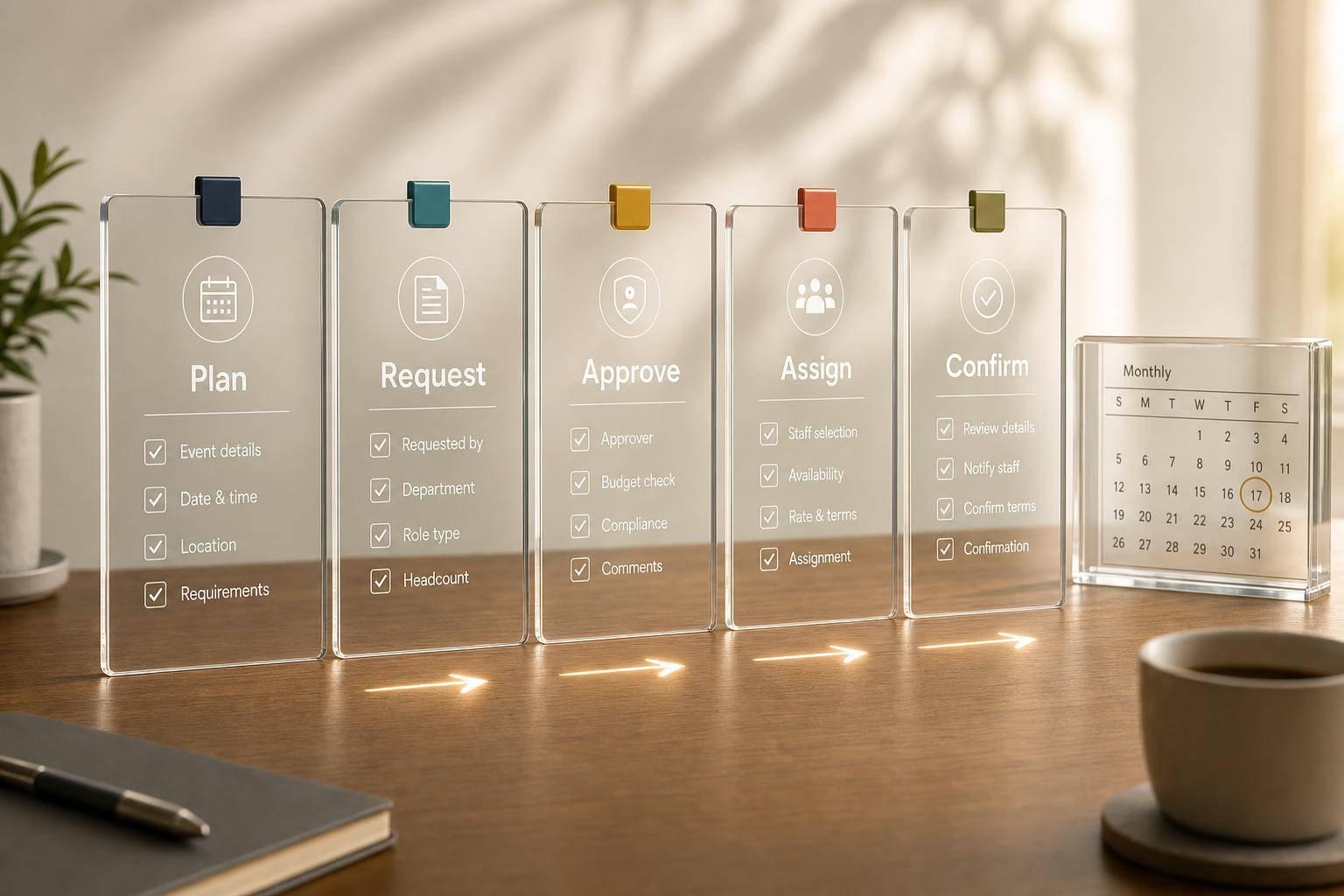
Scheduling plays a crucial role in retaining seasonal staff. When employees face unpredictable hours or struggle to confirm shifts, they often look for more stable work. The key to addressing this issue lies in moving from a reactive approach to a proactive scheduling system.
Rather than scrambling to find out "Who is free?" each time an event arises, ask your team to submit their availability in advance. For example, staff can indicate they’re available on Saturday from 8 a.m. to 6 p.m. before schedules are created. This approach ensures you're working with accurate data instead of relying on guesswork, paving the way for fair shift assignments.
"Staff who know about a gig 3 weeks out can plan around it. Staff who learn about it 3 days out have already made other plans." - Turnozo
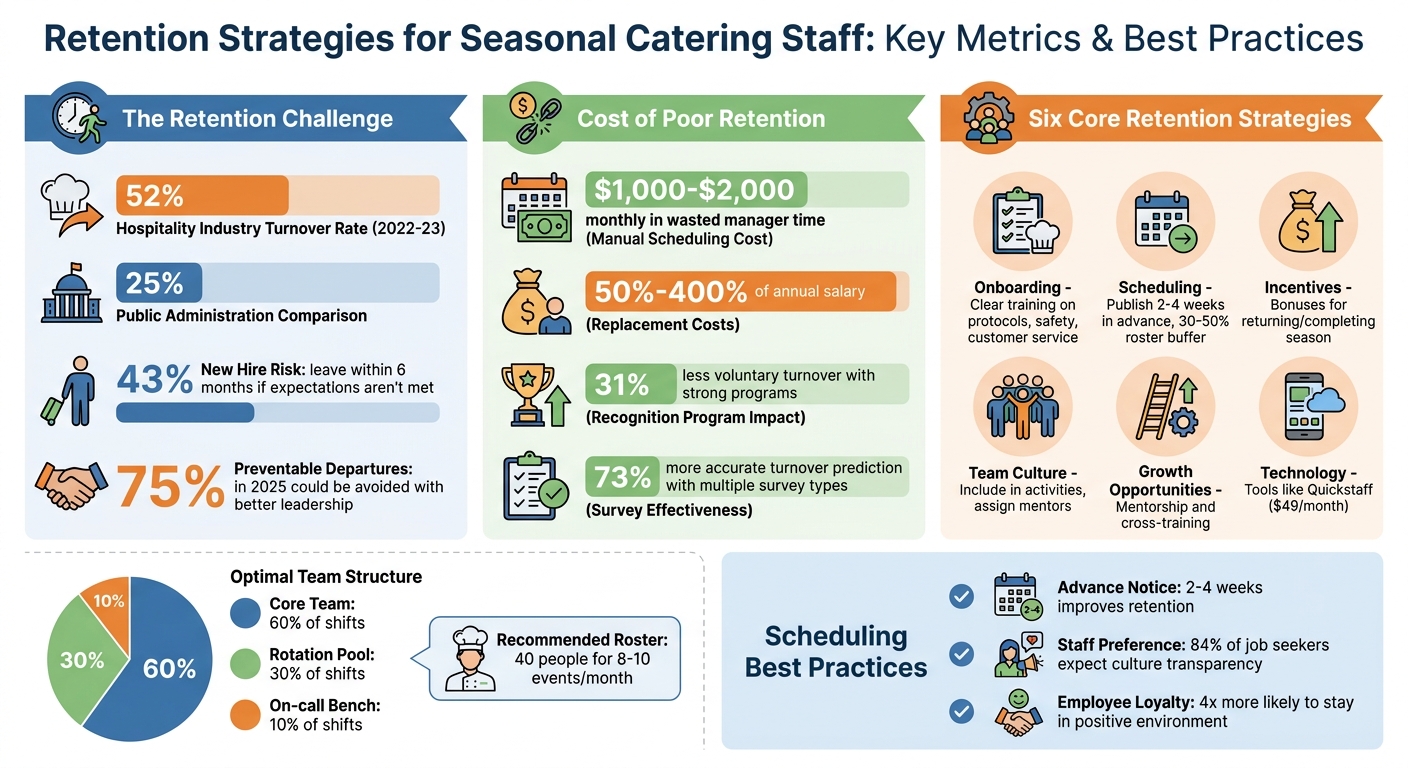
Publishing schedules 2–4 weeks in advance can significantly boost retention. When employees know their shifts early, they can better integrate work into their personal lives, reducing last-minute cancellations. Additionally, manual vs digital staff scheduling often costs mid-sized catering companies $1,000–$2,000 monthly in wasted manager time and turnover - resources that could be better spent on team development.
Fair scheduling isn’t just about posting shifts early; it’s about creating a structure that supports your team. Build your roster to be 30–50% larger than your maximum staffing needs. This buffer helps prevent burnout and ensures everyone gets adequate downtime. A balanced team might include:
For a company managing 8–10 events per month, a 40-person roster is ideal. In contrast, a 20-person roster often leads to unnecessary stress and overwork. This structure ensures equitable workloads, reducing burnout and improving long-term retention.
Skill-based tagging can further refine your scheduling. By categorizing staff based on specific skills - like fine dining service, high-volume bartending, or lead server experience - you can assign the right people to the right events. This approach promotes fairness and ensures no one feels overlooked or overburdened.
Another essential practice is setting clear deadlines for availability submissions. For example, require all staff to submit their weekly availability by Sunday evening for the following week. This consistency makes planning smoother and eliminates confusion about when preferences need to be communicated.
Relying on manual scheduling methods often creates unnecessary challenges. Important messages can get lost in group chats, "maybe" responses require endless follow-ups, and there’s no central place to track confirmed shifts. Technology can eliminate these headaches.
Quickstaff offers a mobile-friendly platform that centralizes scheduling. Staff can view event details, submit availability, and confirm shifts directly from their phones - perfect for workers who aren’t tied to a desk. Features like availability tracking and automated reminders (48 and 24 hours before events) reduce no-shows and cut down on back-and-forth communication.
One standout feature is Quickstaff's waitlist system. If someone cancels, you can instantly see which qualified team members are available to step in, turning potential disruptions into quick solutions. For high-stakes events with budgets exceeding $5,000, you can even add extra staff as a precaution. The cost of an additional server is minimal compared to the potential damage of being understaffed.
Quickstaff also includes an event calendar, offering a clear overview of all events, venues, and crew statuses. This prevents double-booking and helps you address any gaps before they become issues. At $49/month for teams of up to 35 staff, it’s a cost-effective way to save manager time and improve scheduling efficiency, all while enhancing communication and professionalism across your team.
Incentives and recognition programs can play a big role in keeping seasonal staff engaged and motivated. Seasonal employees often juggle multiple responsibilities during peak times, which means your catering business is constantly vying for their commitment. When workers feel appreciated and fairly rewarded, they're more likely to stick around for the entire season and even return the following year.
Re-sign bonuses are a great way to encourage proven seasonal workers to come back. Offering a one-time bonus for committing to the next busy season is usually much cheaper than the cost of recruiting and training new hires. As Mira McKee from Talroo explains, "Investing in and growing existing talent is far more economical compared to the time and cost it takes to recruit, hire, and bring newbies up to speed".
Completion bonuses can also help reduce mid-season turnover. By offering end-of-season bonuses, you can encourage employees to stay until the season wraps up. On top of that, giving returning staff a small raise shows you value their dependability.
To boost morale without breaking the bank, combine bonuses with perks like branded merchandise, meal vouchers, or commuter reimbursements.
But it’s not just about the money - recognizing daily efforts can go a long way in building loyalty.
Recognition programs are a perfect complement to financial rewards, emphasizing how much you value each team member's contributions. Public shout-outs during team meetings or on internal platforms can make employees feel noticed and appreciated. Acknowledging standout efforts - like pulling off a major event or stepping up during a busy weekend - can improve morale and set a positive example for the team.
Another effective strategy is offering priority scheduling for top performers. Giving them first pick of shifts for the next busy season not only rewards their hard work but also encourages them to stay loyal. Keeping a record of your best seasonal workers and reaching out to them during planning can be an easy, cost-free way to retain talent.
Creating a positive work culture can make a big difference in keeping seasonal staff around. For catering teams, in particular, a supportive environment often determines whether staff members return year after year.
Think of it this way: seasonal workers are an essential part of your team. Circuitree emphasizes this by saying, "Instead of regarding your seasonal workforce as temporary and transient, recognize them as a vital part of your ecosystem". To make this mindset a reality, include seasonal staff in team activities like lunches, meetings, and recognition programs right from the start. This helps break down any sense of hierarchy and makes everyone feel like they belong.
Good communication is key to building trust and catching potential issues early. Whether it’s through surveys, one-on-one conversations, or team meetings, regular check-ins give seasonal staff a chance to share their thoughts and concerns. For teams spread out across locations, tools like Slack can help everyone stay connected.
Exit interviews at the end of the season can also provide valuable feedback on what worked and what could be better. Letting seasonal staff know they’re welcome back next year can make a big impression, too. By staying clear and honest in your communication throughout their time with you, you’re not just setting the stage for rehires - you’re also showing your commitment to their growth and career development.
Speaking of growth, it’s important to show seasonal workers that their roles can lead to more. Just because the work is temporary doesn’t mean it has to feel like a dead end. Providing opportunities for development - like mentorship or shadowing - can help build stronger connections and give staff clear paths to improve their skills.
Spot high performers early on and take the time to discuss their career goals. Some might be interested in taking on more responsibility or even moving into permanent positions. Cross-training staff to handle different roles not only makes your team more flexible but also shows you’re invested in their success. Staying in touch during the off-season through newsletters or invites to company events can keep the relationship alive and make it easier to rehire skilled workers when the next busy season rolls around.
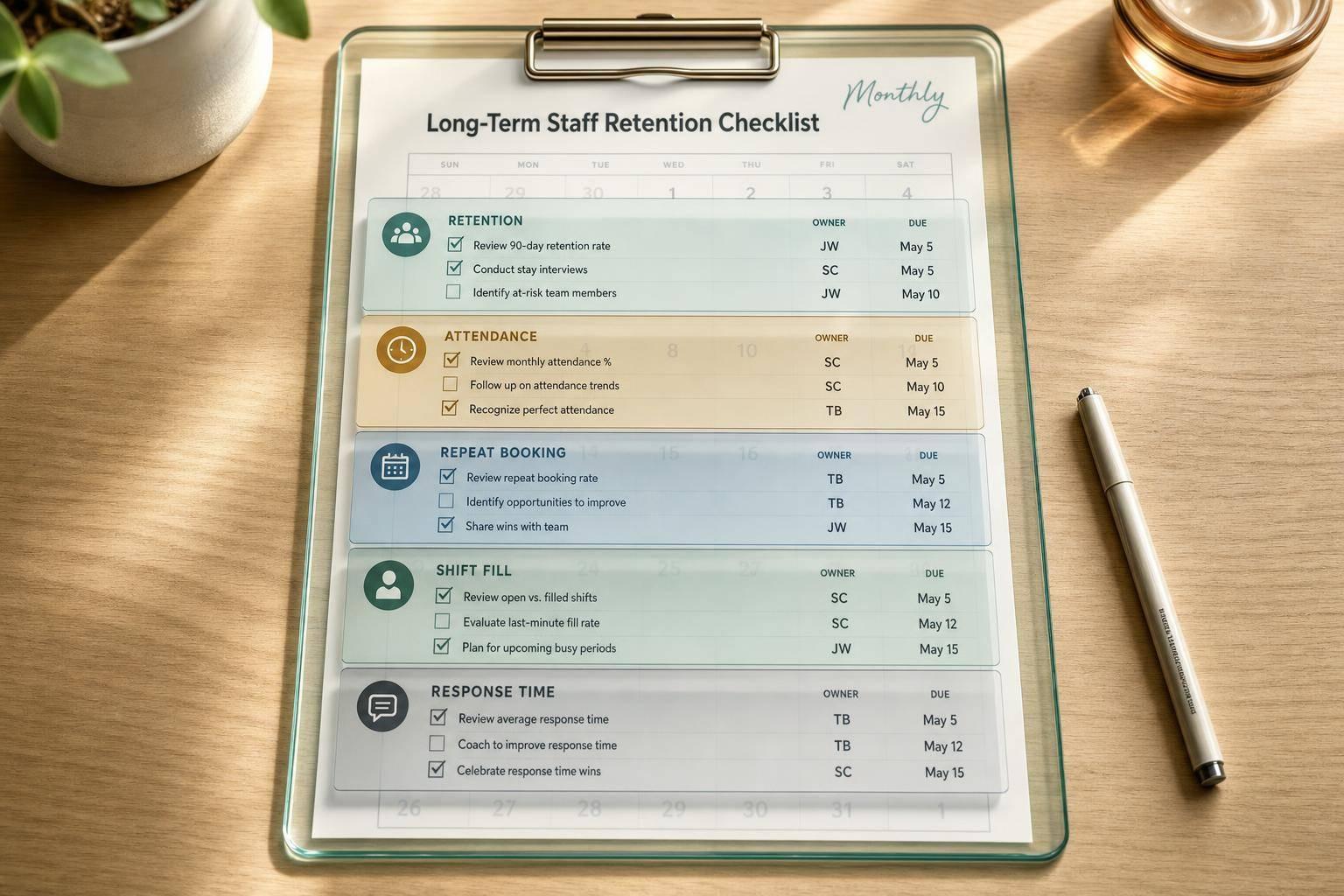
Understanding how well your retention strategies are working starts with tracking the right numbers. By focusing on measurable outcomes, you can fine-tune everything from onboarding processes to employee incentives, ensuring your team management efforts are effective.
Key metrics to keep an eye on include employee retention rate, staff turnover rate, intent to return, time to fill roles, and replacement costs. Here's how some of these metrics break down:
((Total employees at start - Number who left) ÷ Total employees at start) x 100.(Number of employees who left ÷ Average number of employees) x 100.For perspective, the hospitality industry had a 52% turnover rate in 2022-23, more than double the rate in public administration, which was 25%. Knowing your own numbers helps you set realistic goals for improvement.
For seasonal teams, intent to return is another critical metric. You can gauge this through end-of-season surveys that ask employees if they plan to come back for the next busy period. Additionally, tracking time to fill roles will reveal whether your hiring process is efficient or if you're scrambling to fill gaps at the last minute.
Don't overlook the financial side. Recruitment and replacement costs can range from 50% to 400% of an employee's annual salary. However, companies with strong recognition programs experience 31% less voluntary turnover, showing that investing in retention strategies can save money in the long run. These metrics not only highlight your staffing stability but also open the door to deeper insights through employee feedback.
Numbers tell part of the story, but employee feedback fills in the gaps. Start with new hire feedback surveys early in the season to catch potential problems before they grow. This is especially crucial in fast-paced industries like catering, where 43% of new hires leave within six months if the job doesn’t meet their expectations. Ask about onboarding, team dynamics, and whether they see themselves returning.
At the end of the season, exit interviews provide a chance to learn what worked - and what didn’t. Patterns in this feedback can highlight areas for improvement. For example, research suggests that 75% of employee departures in 2025 could have been avoided with better leadership and feedback systems.
"Compensation complaints often mask deeper issues: heavy workload, burnout, poor leadership, and limited career paths".
To stay ahead of potential issues, consider using pulse surveys during the season. These are quick, regular check-ins that can reveal early signs of frustration or burnout. Acting on this feedback in real time can help you retain staff before they decide to leave. In fact, organizations that use multiple survey types can predict turnover 73% more accurately, giving you the tools to address problems proactively rather than reactively.
Keeping seasonal catering staff engaged and motivated starts with treating them as integral members of your team, not just temporary help. By focusing on retention strategies and creating a genuinely supportive work environment, you can build a dependable group of employees who are eager to return year after year.
Workplace culture plays a huge role here. Employees in a positive work environment are almost four times more likely to stay, and 84% of job seekers now expect transparency about company culture from the very beginning. This means your retention efforts should start as soon as someone reads your job posting and continue long after their last shift ends.
Having a core group of returning staff reduces the time and stress of seasonal hiring. These team members already know your systems and expectations, so they can jump right in when things get busy again.
Staying connected during the off-season is another way to boost loyalty. Consider pairing new hires with experienced mentors, inviting seasonal staff to team events, or offering opportunities for growth and development. These efforts show that you value their contributions, creating a workplace where people not only want to return but also encourage others to join your team.
When time is tight, the key to training seasonal catering staff is to keep it straightforward and focused on specific tasks. Use tools like checklists and quick-reference guides to break down responsibilities into manageable steps. Pair these with hands-on demonstrations so team members can learn by doing, which speeds up the process and boosts confidence.
Additionally, scheduling and communication platforms can make a big difference. These tools help by delivering timely instructions and reminders, ensuring everyone stays on track and learns what they need to know without unnecessary delays. This approach ensures your team is ready to perform efficiently in no time.
To cut down on last-minute call-outs during peak times, consider offering incentives that keep your team motivated and engaged. Clear communication is crucial - make sure everyone understands their schedules and responsibilities. Scheduling software can be a game-changer here, helping you track staff availability, send timely reminders, and simplify communication. These steps can reduce no-shows and boost reliability when it matters most.
Key metrics to keep an eye on throughout the year include employee turnover rate, engagement levels, and no-show or last-minute cancellation rates. These figures give you a snapshot of how stable and satisfied your team is, making it easier to pinpoint problem areas and ensure your workforce stays dependable.