Top Perks To Retain Wedding Event Staff
April 22, 2026

Keeping your wedding event staff loyal and engaged isn't just about filling shifts - it’s about creating a team that stays. High turnover rates in the wedding industry (over 70% annually) make it costly and time-consuming to constantly recruit and train new workers. But with the right perks, you can reduce turnover, save money, and build a reliable team.
Here’s what works:
Start small: Ask your team what perks matter most, recognize their efforts, and ensure pay is competitive. These steps can turn part-time workers into a dependable, experienced team.

7 Proven Perks to Retain Wedding Event Staff with Key Statistics
Flexible scheduling plays a key role in keeping multi-gig workers engaged in the wedding industry. The stats tell the story: 89% of HR professionals have seen improved employee retention after adopting flexible work policies. This isn’t just a coincidence - it’s clear evidence that flexibility helps ensure your top talent stays on board. It’s about more than just convenience; it builds loyalty.
One way to make this happen is by introducing a preference system where team members can share their availability and preferred assignments. For instance, a server might prefer working Friday night receptions but wants Saturday mornings free. Another team member may enjoy handling ceremonies but can’t commit to late-night events. Aligning assignments with these preferences shows you value their time and commitments outside of work.
"Rigid schedules are driving talented hospitality workers out of the industry, but flexible scheduling offers a solution." - Tom Amos, CEO and Co-Founder, Sidekicker
Another approach is implementing a bid system through an app, allowing staff to claim shifts that fit their schedules. Some businesses even go a step further by offering four-day work weeks - 40 hours spread across four 10-hour days. This gives workers three consecutive days to rest and recharge, helping them maintain energy and enthusiasm.
Consistency in scheduling builds trust and reduces burnout. It also transforms occasional gig workers into dependable team members who know your standards and deliver consistently high-quality service. Tools like Quickstaff (https://quickstaffpro.com) simplify this process by managing availability, streamlining scheduling, and enabling real-time shift updates without endless back-and-forth communication.
Linking financial rewards to performance is a proven way to motivate wedding staff to deliver their best. Research shows that companies with strong recognition programs experience 31% lower voluntary turnover. When team members know their hard work can lead to tangible rewards, they’re more likely to go above and beyond at every event. These incentives not only acknowledge great performance but also help keep talented staff around for the long haul.
In addition to flexible schedules, performance-based bonuses are a key driver of engagement. The most effective bonuses are specific and straightforward. Here are some examples:
"A $25-50 bonus per staff member for strong performance on a major event costs $250-500 for 10 staff - modest relative to total event budgets but highly meaningful to recipients." – Megan Hayward, Founder & CEO, TempGuru
Another way to reward commitment is through tiered compensation. Staff who’ve worked 10 or more events with you bring valuable experience and a deeper understanding of your standards and client expectations. Offering higher base pay to these seasoned team members not only acknowledges their expertise but also gives them a compelling reason to stay.
The secret to making these bonus programs successful is transparency. Be clear about the criteria for earning rewards before every event. Whether it’s based on guest feedback or error-free service, clear expectations ensure staff know exactly how to achieve their goals. This level of openness makes bonuses a seamless part of your overall retention strategy.
Career development isn’t just a perk - it’s a game changer for building long-term commitment. When wedding event staff see opportunities to grow, they’re more likely to stay. In fact, 94% of employees say they’d stick around longer at a company that invests in their learning. This isn’t just about keeping people on board; it’s about creating a team that’s confident, skilled, and ready to deliver top-tier service at every event. Industry leaders who focus on staff development have seen this approach pay off with noticeable retention improvements.
Take Chowgirls Catering, for example. In 2025, they revamped their training program to tackle the event industry’s notorious turnover rates. They introduced online training modules for new hires, hands-on practice for essential tasks like loading equipment and setting up stations, and monthly team huddles to reinforce expectations. With these changes, paired with clear growth pathways and competency tracking, Chowgirls achieved a retention rate of 66% - a massive leap compared to the hospitality industry’s average of 20–25%.
"Staff know what they need to learn, where they stand, and how to advance–creating a motivating, supportive environment." – Meaghan Sabyan and Caitlyn English, Chowgirls Catering
So, where should you start? Standardized onboarding is key. Cover the basics like dress codes, safety protocols, communication tools, and specific job duties. Using checklists during onboarding can boost retention by 82%. Follow this up with short, focused sessions on customer service and equipment handling. Pairing new hires with seasoned mentors also helps them navigate the unpredictable challenges of live events.
Beyond onboarding, tiered advancement opportunities make a big difference. Recognize staff who’ve worked 10 or more events with higher pay and titles that reflect their experience. This kind of visible career progression not only rewards dedication but also gives employees clear goals to work toward.
Working in the wedding industry is no walk in the park. The long hours, unpredictable changes, and high-pressure environments can take a toll on your team, both physically and mentally. That’s why wellness programs are a must if you want to hold onto your best people. Businesses that prioritize wellness programs have seen a 425% return on investment when it comes to employee retention. When your staff feels cared for - both physically and mentally - they’re far more likely to stay engaged, even during the most hectic wedding seasons. These programs don’t just boost health; they also deepen your team’s dedication to your events.
To further protect your team, offering W-2 employment is a smart move. This ensures workers' compensation and liability coverage, which can be a lifesaver during on-site incidents. Of course, professional staffing with these protections comes at a cost - typically $25–$45 per hour for general roles and $35–$65 per hour for specialized positions. While this may seem steep, it’s an investment in trust and financial security that helps retain your talent.
"Compliance is boring. So is a lawsuit. Work with a staffing partner that handles the boring stuff so your event isn't." – TempGuru
Mental health support is just as critical as physical safety. Employee Assistance Programs (EAPs) can provide your team with access to professional counseling, whether they’re dealing with personal struggles or burnout. Offering extra paid time off for mental health or family emergencies sends a clear message: you see your employees as individuals, not just workers. Even small gestures, like a thoughtful card or a note of support, can go a long way in building loyalty. In fact, research suggests that 75% of employee departures in 2025 could have been prevented with better leadership and support systems.
Physical safety is another cornerstone of wellness. Make safety a priority from the start by standardizing protocols during onboarding. Use checklists to cover equipment handling, emergency procedures, and injury prevention, ensuring everyone knows the basics to stay safe on the job. This foundation of safety is easier to maintain when using a scalable event scheduling system that tracks compliance and certifications automatically.
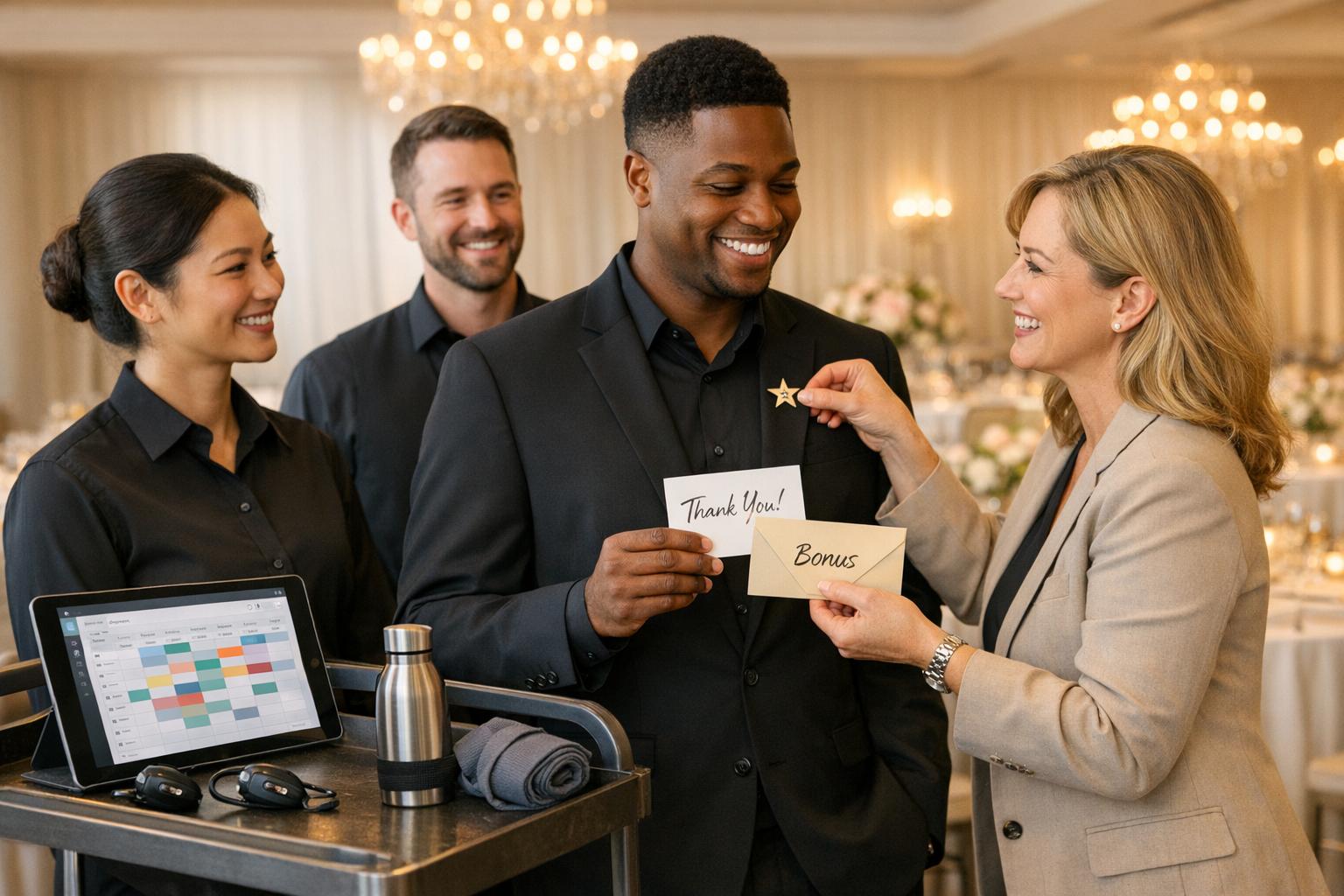
Flexible schedules and performance incentives are great, but recognition programs are a game-changer when it comes to keeping your wedding staff engaged. Too often, these workers feel like just another cog in the machine. But when you take the time to call them out by name and highlight their specific contributions, you send a clear message: they’re valued, and they matter. This shift in perception can turn temporary workers into loyal team members who align with your brand and deliver exceptional service.
The impact of recognition goes beyond just making people feel good - it directly influences their willingness to accept future shifts. Studies show that workers who feel recognized are 3.7 times more likely to take on additional shifts with the same employer. And in an industry where annual turnover rates soar above 70%, this kind of loyalty can save businesses significant time and money. Companies with strong recognition programs report 31% lower voluntary turnover, which means fewer headaches from constant hiring and training.
So, how can you put this into practice? Start with small, meaningful gestures. During your end-of-day recap, thank your team members by name and highlight specific actions. For example, instead of a generic “great job, everyone,” say something like, “Thanks, Marcus, for fixing the registration system issue this morning”. A handwritten note within 48 hours can also go a long way. If you work with a staffing agency, consider sending formal praise about specific workers to the agency manager. Not only does this help those individuals secure better opportunities, but it also builds strong loyalty to your business.
"Staff who feel valued perform better, are more likely to return for future events, and create positive word-of-mouth in the event staffing community." – Megan Hayward, Founder & CEO, TempGuru
For added impact, you can create simple awards like "Event Staff Member of the Quarter." These public acknowledgments foster a sense of community and pride within your team. When paired with other retention strategies, such as performance incentives, these recognition efforts help build a well-rounded approach to keeping your top talent engaged and committed.
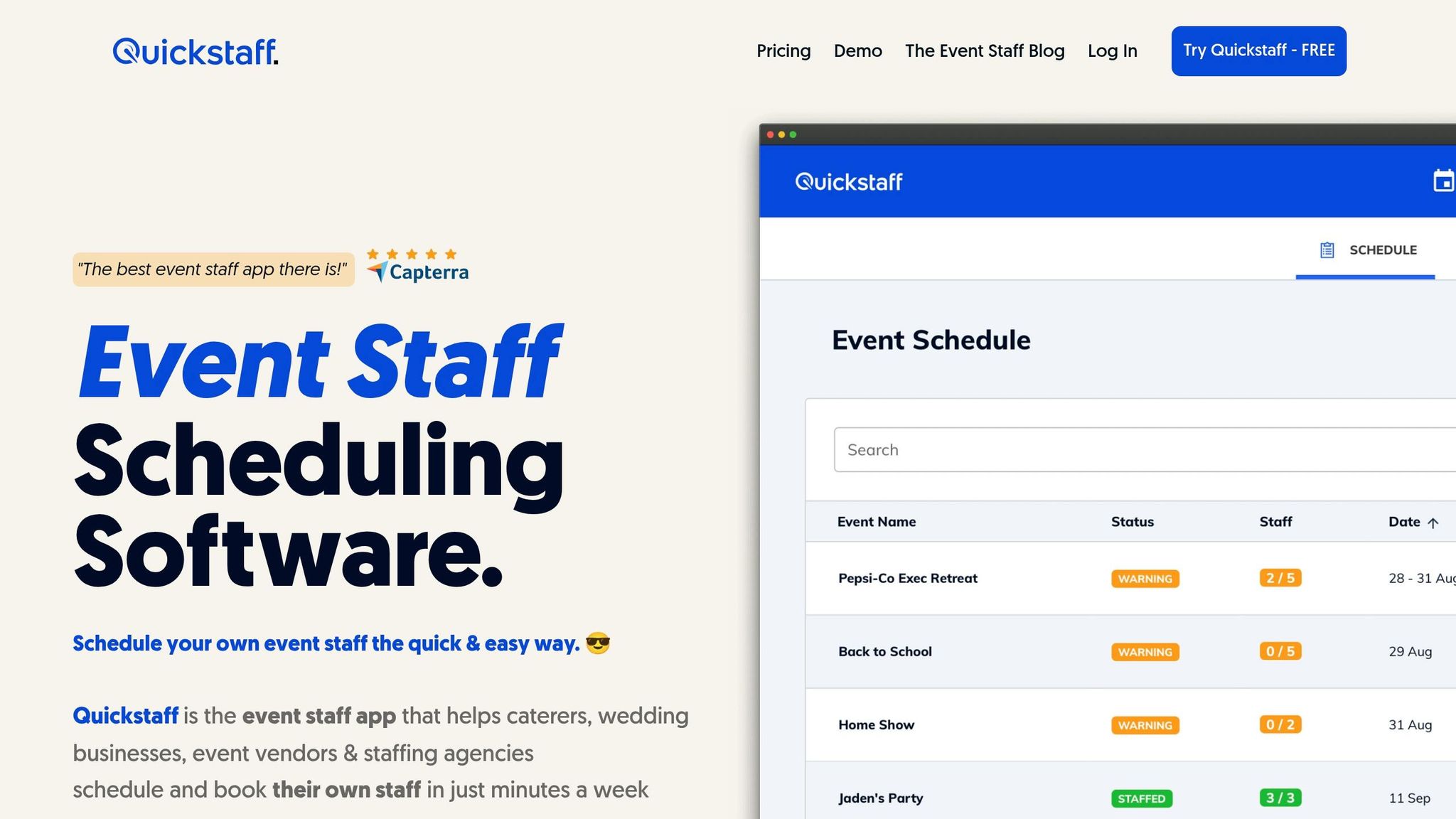
Scheduling chaos can quickly drain staff morale, leading to confusion and disengagement. In fact, poor scheduling is linked to 40% of hospitality staff turnover - a challenge wedding businesses simply can't afford to overlook.
Enter scheduling software. Tools like Quickstaff streamline the entire process by consolidating all scheduling information into one centralized system. Forget the endless back-and-forth of phone calls or juggling spreadsheets. With platforms like this, staff can manage their own schedules, update availability, and even receive automated reminders - all in one place. This self-service model empowers employees, giving them more control over their time, which directly supports retention. In fact, businesses using these tools have reported a 35% reduction in absenteeism.
The benefits go even further. Digital scheduling tools have been shown to improve retention rates by 25%. Event staffing agencies that minimize scheduling errors and no-shows through these platforms report retention improvements ranging from 30% to 50%. For wedding businesses, this means fewer last-minute crises and a more reliable team that knows your expectations.
"Prior to Quickstaff, I was using Excel spreadsheets to track my employees and their shift availability. My life changed the day I started using Quickstaff!" – Jaime S, VP, Lisa's Catering
These tools also enhance communication by enabling targeted messaging. For example, you can send updates specifically to servers or bartenders, ensuring that staff only receive information relevant to their roles. Features like automated waitlists and real-time visibility into commitments add another layer of efficiency. When combined with strategies like flexible scheduling and recognition programs, these tools create a well-rounded system that keeps your team engaged and coming back.
Fair and transparent pay isn't just about meeting industry standards - it’s a key factor in keeping staff happy and loyal. Megan Hayward, Founder & CEO of TempGuru, emphasizes this perfectly: "The foundation of retention is fair pay". In the wedding industry, where turnover can be high, offering competitive wages ensures experienced staff are more likely to return for future events.
In 2026, general event roles typically pay between $25 and $45 per hour, while specialized positions command $35 to $65 per hour. This highlights the importance of tiered pay structures that reward expertise and loyalty. Many wedding businesses are adopting this approach, offering higher compensation to repeat team members who bring valuable institutional knowledge to the table.
Transparency is just as important as the pay itself. Clearly laying out hourly rates, performance bonuses, and overtime calculations upfront helps avoid misunderstandings and fosters a professional, trust-based relationship between employers and staff.
Using a W-2 employment model can further strengthen this relationship. This setup not only handles payroll taxes but also provides benefits like workers' compensation and disability insurance. It’s a clear sign of commitment to staff well-being and can significantly lower onboarding costs. Considering that onboarding a new employee costs an average of $4,100, investing in competitive pay and proper overtime compensation ultimately saves money in the long run.
Keeping skilled wedding event staff isn't just about filling shifts - it’s about creating a team that sticks around. When you offer perks like flexible schedules, competitive pay, and genuine recognition, you build an environment where people want to stay. This approach doesn’t just save time on recruiting; it also helps maintain institutional knowledge and ensures events run smoothly.
As Megan Hayward, Founder & CEO of TempGuru, explains: "Building a retention-focused culture transforms occasional hired workers into loyal team members who understand your standards, deliver better service, and reduce the constant burden of recruiting."
So, what can you do now? Start by reviewing your pay rates to make sure they’re competitive in your area. Consider offering tiered pay for staff who’ve worked 10 or more events, and implement systems that respect scheduling preferences with enough notice. This helps avoid common scheduling problems that lead to burnout. These changes don’t have to break the bank - recognition alone can make a huge difference. In fact, workers who feel appreciated are 3.7 times more likely to accept future shifts.
Take action today. Ask your team which benefits matter most to them, streamline your onboarding process with clear guidelines, and make it a habit to publicly acknowledge top performers during events. Each step builds trust and reliability, giving your staff more reasons to return season after season.
Flexible scheduling is an excellent perk to consider if you're managing costs carefully. It not only keeps your wedding event staff happier but also helps you retain talented team members - all without requiring a large financial outlay.
To establish fair bonus guidelines, start by clearly communicating pay rates right from the beginning. Be upfront about how performance bonuses are calculated and earned. Offering tiered compensation can also be a smart move - this could be based on factors like experience or performance levels. Transparency is crucial here. Make sure expectations are clearly outlined, and consider rewarding long-term employees with periodic raises. This not only builds loyalty but also fosters trust within your team.
Quickstaff simplifies event staffing by tackling common challenges like no-shows and scheduling headaches. With features such as availability tracking, centralized management, and automated reminders, it ensures your team stays on the same page. Staff can confirm their schedules ahead of time and receive timely notifications to stay updated.
If a cancellation occurs, Quickstaff's waitlist and booking tools make replacing staff fast and hassle-free. This keeps your events running smoothly with minimal disruptions.