How to Retain Top Talent in Event Staffing
March 14, 2026


Retaining skilled event staff is critical for reducing turnover costs, maintaining client trust, and ensuring smooth operations. High turnover - like the 419% rate among temporary staff in 2022 - creates stress, disrupts teams, and impacts service quality. To keep top talent, focus on these strategies:
Investing in these areas builds a reliable, motivated team, saving money and enhancing your event business's reputation.

Event Staffing Retention Statistics and Key Strategies
Fair pay keeps your best employees around. Offering wages below the local market average can push top talent to look elsewhere. And replacing them isn’t cheap - the average cost to hire a new employee is about $4,700. Stay competitive by offering pay that’s ahead of the local market.
"If you want your staff to stay, you'll need to pay them at least as well – if not better – than other events venues in your area." - Xclusive Staffing
A smart approach is to set wages at the local average and add a premium. Don’t rely on national averages - they won’t reflect your market. For example, the average hourly wage for plumbers in Boston-Cambridge-Nashua is $41.03, compared to the national average of $30.46. Use tools like the U.S. Bureau of Labor Statistics to find accurate wage data for your region, and monitor local job boards to see what competitors are offering. When you’re clear about pay and stay competitive, you build trust and reduce turnover.
Transparency goes a long way. When employees understand how their pay is calculated - including base wages, overtime, bonuses, and reimbursements - they’re less likely to feel undervalued. Posting wage ranges in job ads can increase applicant engagement by up to 35%, and employees who believe their pay is fair are 43% less likely to leave their jobs.
Include specific hourly pay ranges (e.g., "$16–$20/hour"), explain overtime rates under the Fair Labor Standards Act (FLSA), and clarify any bonus or tip-sharing policies. Avoid vague terms like "competitive pay" - they don’t inspire confidence. Accuracy is key, too. Payroll mistakes happen to 33% of employers annually, and 77% of workers say a delayed paycheck would make it hard to cover their bills. Even small errors can damage trust and drive talented employees away.
Pay alone isn’t everything. While 74% of employees say wages aren’t keeping up with inflation, 59% would choose workplace flexibility over a higher salary. Transparent compensation is essential, but perks can make your workplace even more appealing.
Consider offering extras like meal allowances, transportation stipends, or branded gear. Invest in professional development through online courses, guest speakers, or clear paths to promotions like team lead or manager roles. Recognition also matters - a lot. Whether it’s a public shoutout, peer nominations, or a handwritten thank-you note, 78% of employees say recognition motivates them to work harder. On the flip side, workers who feel unappreciated are twice as likely to plan their exit within a year. Small perks like wellness stipends, priority shift picks, or post-event celebrations can create a sense of belonging that encourages your best people to stick around.
Rigid schedules can push talented staff away. Event workers often juggle multiple jobs, family responsibilities, and unpredictable hours. When you respect their availability, your events can become their priority over others. Relying on outdated methods like spreadsheets or text chains can lead to missed shifts, wasted time, and unnecessary stress. In contrast, digital tools provide better shift visibility, helping to reduce burnout.
For instance, at major events like the Glastonbury festival, implementing an organized scheduling system has been proven to reduce staff turnover. Giving returning team members priority access to preferred shifts creates a sense of loyalty and satisfaction.
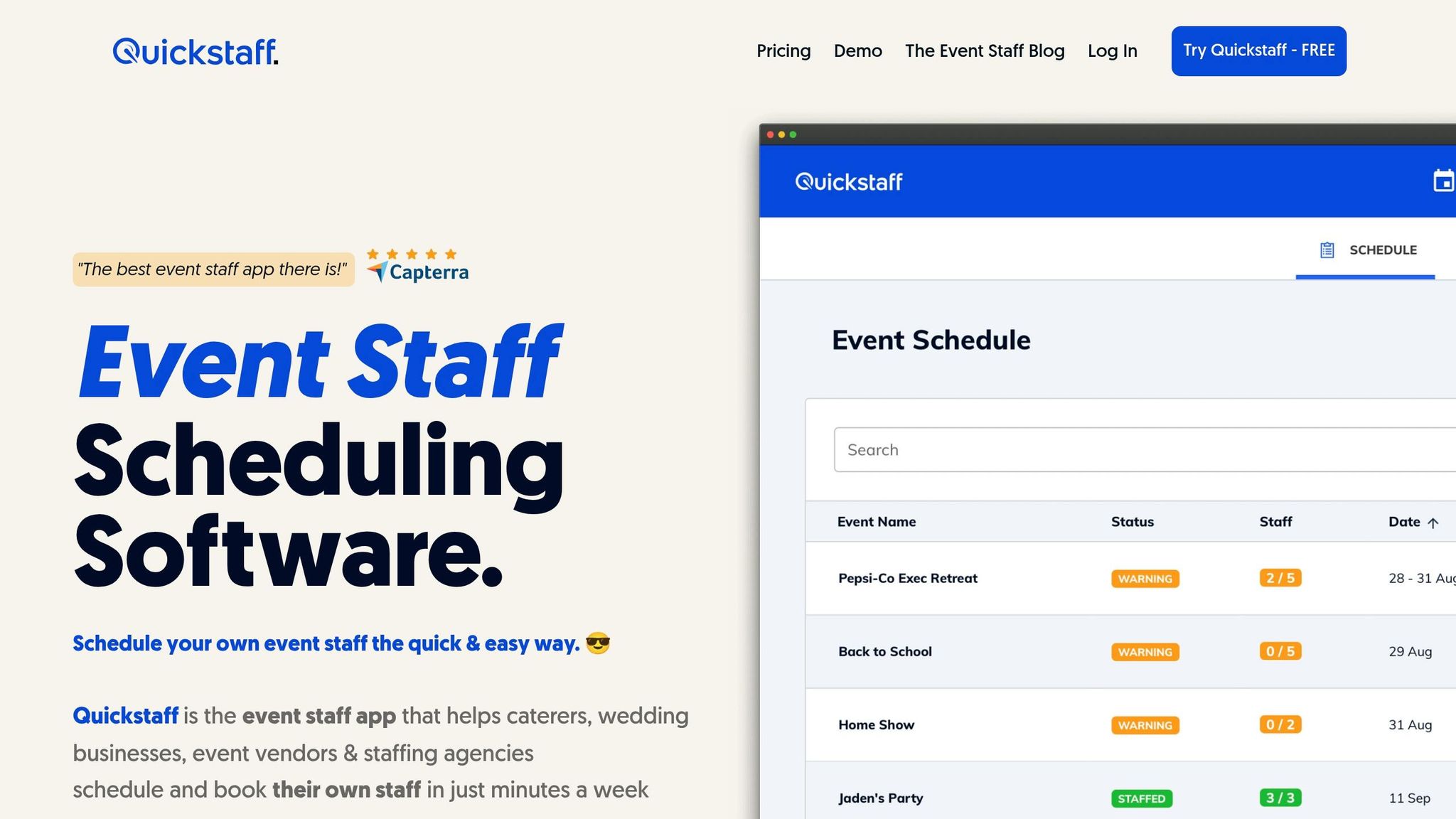
A tool like Quickstaff can turn scheduling into a key retention strategy. Its availability tracking apps and features allows staff to instantly set their preferred days, times, and event types. This helps managers craft schedules that balance individual preferences with business needs. Employees can also block out dates they’re unavailable, avoiding scheduling conflicts altogether.
Quickstaff’s mobile-friendly interface makes it easy for team members to update availability, accept shifts, and view schedules anytime. Meanwhile, managers can assign roles, send reminders, and manage waitlists with automatic email invitations that include simple accept/decline options. With all event details centralized, the chances of losing critical information are significantly reduced.
Since its launch in 2013, Quickstaff has been used to schedule over 20,000 events. By removing scheduling headaches, it builds trust and helps retain top talent. Simplifying scheduling not only improves efficiency but also fosters stronger employee commitment.
When employees feel stuck, they leave. In fact, a whopping 94% of employees are more likely to stay with a company that prioritizes learning and development opportunities. While offering competitive pay and flexible schedules can attract talent, it’s training that secures their loyalty, showing them they have a future within your business.
Start by focusing on the essentials. For example, customer service training equips your team to handle guest interactions professionally, ensuring they represent your brand in the best light. Safety certifications - including first aid, emergency protocols, and OSHA-compliant practices - are crucial for protecting both staff and attendees at your events. On top of that, make sure your team is comfortable with event-specific tools like check-in apps or ticket scanners to avoid hiccups during high-pressure moments. Companies that prioritize training for their event teams have reported a 24% boost in profit margins.
By outlining clear growth opportunities and offering structured training, you can create a workforce that’s both skilled and deeply invested in your company’s success.
Training should be easy to access and practical to apply. Offering digital, self-paced modules and microlearning sessions (short lessons lasting 5–10 minutes) can increase productivity by 20% and improve employee satisfaction by 23%.
For the best results, combine self-paced courses with hands-on learning. Scenario-based drills are a favorite among 64% of employees. These could be quick roleplay exercises before shifts, where staff practice handling situations like helping lost guests, troubleshooting technical issues, or managing long check-in lines. Take a page from Bar Crawl USA’s playbook: they provide event leads with a detailed guide a week before events, allowing staff to prepare in advance. Their leads earn either 10% of event profits or hourly wages ranging from $25 to $100.
Growth opportunities are another key motivator. Leadership training that covers skills like delegation, team briefings, and administrative tasks can prepare standout employees for roles like team lead or manager.
"Increased responsibility signals the potential of career growth within your company, something of high value to your superstars!" - Quickstaff
You can also implement a shadowing or buddy system, pairing less experienced staff with seasoned team members to reinforce learning in real-world situations.
Make learning a part of everyday operations. Regular meetings and communications can include skill-building discussions, keeping development at the forefront. Beyond formal training, encourage cross-training and assign leadership opportunities, like running a team meeting or mentoring new hires, to help employees build confidence and see a clear career path.
Create a workplace where learning feels natural and engaging. Share TED Talks, recommend industry books, or host informal knowledge-sharing sessions.
"Making volunteers feel engaged and excited to learn new skills is a fantastic way of keeping them around, and motivating them to go the extra mile for you" - Kathryn Dinsmore, Flock Events
Keep communication open by maintaining an open-door policy, so staff feel comfortable asking questions or offering feedback on training programs. Post-event debriefs are another great way to identify skill gaps and areas for improvement.
Include everyone - whether they’re temporary staff or volunteers - in briefings and resource sharing. Introduce them to key team members early on and provide access to the same tools and resources as permanent employees. When your team sees you’re invested in their growth, they’ll naturally feel more committed to your business.
Feeling unrecognized at work can push employees out the door - research shows they're twice as likely to leave within a year. On the flip side, 78% of workers say they put in extra effort when their contributions are acknowledged. With temporary and contract staff turnover reaching a staggering 419% in 2022, recognition isn't just a "nice to have"; it's a powerful tool to retain talent and protect your bottom line.
Recognition doesn't have to come with a hefty price tag. Simple gestures like a handwritten thank-you note, a small gift, or even giving someone their birthday off can go a long way. These small tokens of appreciation can make a big difference, especially in an industry where 79% of event professionals say their jobs are more stressful than ever.
Peer recognition is a game-changer. It not only strengthens team bonds but also creates a workplace culture where employees feel valued and are eager to return for future opportunities. A straightforward system where teammates can nominate each other for rewards - like gift cards, small bonuses, or public shout-outs during meetings - can make a big impact.
To make this seamless, integrate recognition into tools your team already uses, like scheduling tools for catering or shared dashboards. Dedicate time at the end of shifts for peer shout-outs, and be specific in your praise. Avoid generic comments like "great job" and instead highlight specific actions: "Thanks for staying late to fix the lighting issue." Sharing these moments on social media or through internal newsletters can amplify their impact.
"Recognition builds long-term relationships between employees and their organizations, promoting loyalty and reducing turnover." - StaffConnect
Pairing peer recognition with tangible rewards takes this to the next level.
Exceptional work deserves more than just a pat on the back. Tangible rewards like cash bonuses, gift cards, additional time off, or even priority scheduling can motivate staff and boost morale. Companies with structured recognition programs report 31% lower voluntary turnover rates.
To keep things fair, establish clear criteria for these rewards. Share a checklist of behaviors and achievements that will be recognized to avoid any perception of favoritism. Personalizing rewards can also make them more meaningful - some employees might prefer cash, while others may value experiences like team outings or the chance to lead a project.
"Incentives are also a great way to motivate staff and reward outstanding performance. If your event company is in the early stages, these programs don't need to be expensive!" - Quickstaff
Poor communication can drain morale and push staff to leave. When employees feel unsure about where to be, what to wear, or who to contact in case of problems, stress and frustration often follow. This is especially true in the event industry, where scheduling issues frequently lead to communication breakdowns. By addressing scheduling challenges with dedicated software, you can often resolve these communication gaps at the same time.
Centralizing event details is key to keeping everyone informed. Staff should have easy access to their schedules, assigned tasks, and event specifics without having to dig for information. Provide a clear and detailed run-down that includes essential information like dress codes, directions, and contact details for every event.
Consider holding a quick 15-minute pre-event briefing to go over the agenda, key moments, and safety protocols. As Becki Cross, Managing Director of Events Northern Ltd, explains:
"This will include practical and logistical information such as what to wear, directions and public transport information, who to ring in case of problems, which entrance to use and who to report to".
To simplify communication further, designate a single point of contact for all inquiries.
Centralized communication becomes even more effective with tools like Quickstaff's messaging features. Quickstaff allows unlimited messaging, keeping your team connected on one platform. When schedules change, you can instantly notify the right staff. The software consolidates event details, roles, and timelines so employees can access everything they need directly from their phones. A built-in reminder system ensures no one misses critical updates, whether it’s a last-minute venue change or clarification about setup instructions. With over 20,000 events scheduled through Quickstaff since 2013, their messaging features are built to handle the practical challenges of event management.
"Don't keep them guessing about their schedules, assigned tasks or event information. Make it simple and consistent with event scheduling software." - Quickstaff
Use these tools to share day-of timelines and specific responsibilities in advance. This approach reduces uncertainty and equips your team with the confidence to handle their roles effectively.
Listening to your staff is a cornerstone of retention. Event workers on the ground often notice issues and solutions that management might miss, making their feedback crucial. To capture this insight, send post-event surveys within 24 to 48 hours, while the experience is still fresh. Avoid sending them immediately after pack-down, as exhaustion can skew responses. Ask focused questions like, "What made your job harder?" to uncover actionable insights. For instance, you might find that sudden schedule changes frustrate staff more than long hours, giving you a clear area to improve.
Make feedback easy to share by using mobile-friendly forms, QR codes for on-site teams, or links sent through messaging apps. Review responses quickly, implement changes, and communicate those updates to your team before the next event. This process of "closing the loop" builds trust and shows staff that their input is valued.
"If staff feel like their feedback goes nowhere, they'll stop sharing it." - StaffConnect
In addition to surveys, regular one-on-one check-ins or daily debriefs can help maintain ongoing communication. An open-door policy fosters transparency and ensures even temporary staff feel supported during the event. When employees see their feedback leading to real improvements, they’re more likely to stay engaged and committed. By prioritizing regular feedback and acting on it promptly, you can strengthen your team’s loyalty and align with your retention goals.
Building strong communication and offering recognition is just the beginning - referral and incentive programs take employee retention to the next level. By tapping into your top performers' networks, you can fill roles faster while reinforcing loyalty, which is key to keeping your best talent.
Your high performers often know others who are just as skilled. Referral programs not only turn your team into recruiters but also make them feel appreciated. Plus, referrals have a 46% retention rate after three years, compared to just 33% for hires from career sites. They also onboard about 55% faster than traditional applicants, giving you a major advantage during peak seasons without compromising quality.
Rewarding referrals also encourages temporary and freelance staff to return. When employees feel recognized and rewarded, even tough shifts feel more manageable, reducing burnout and fostering long-term relationships. These benefits create a strong foundation for incentive programs that keep staff engaged and motivated.
Tiered rewards work well - offer larger bonuses for harder-to-fill positions and split the payout. For example, give part of the bonus after the referred employee completes their first event and the rest after 90 days or a set number of events. Simplify the process with an easy-to-use digital form. A hassle-free system encourages busy staff to participate.
Transparency is crucial. Keep referrers in the loop with automated updates at key milestones, like "interview scheduled" or "hired". Without regular updates, participants might lose trust in the program. For teams with limited budgets, consider alternative rewards like extra paid time off, gift cards, or public recognition during team meetings.
Gamification adds another layer of motivation by making the referral process engaging. Create a points system where staff earn rewards at each stage, from submitting a referral to the candidate being hired. Points can be redeemed for experiences like concert tickets, spa days, or adventure outings, which often feel more rewarding than cash. This approach keeps participation consistent, rather than treating referrals as one-time actions.
Peer-to-peer recognition also strengthens team morale. Encourage employees to nominate colleagues for exceptional performance, with winners receiving small prizes or being entered into monthly draws. Recognition matters - 78% of workers go the extra mile when their efforts are acknowledged. Use digital dashboards or event management apps to track points, milestones, and recognition in real time, ensuring transparency and steady engagement.
Keeping top talent on board takes thoughtful effort: fair pay, career growth opportunities, and a workplace culture that truly supports employees. Offering competitive salaries, meaningful benefits, and ongoing training gives your best team members fewer reasons to look elsewhere. These retention strategies aren’t just good for morale - they’re a smart financial decision, saving you from the steep costs of constant turnover.
Beyond pay and training, efficient scheduling plays a critical role in retention. Tools like Quickstaff help eliminate the scheduling headaches that can lead to stress and burnout. Clear, organized schedules not only reduce friction but also boost employee confidence and their sense of value. As Quickstaff puts it:
"If the team environment is supportive, encouraging, positive and welcoming, employees won't want to leave!"
Recognition and opportunities for growth are equally important. High-performing employees need to see a future with your company - whether through leadership roles, certifications, or consistent acknowledgment of their efforts. A positive workplace culture ties everything together, proving that creating a supportive environment is more than just a nice idea - it’s a powerful retention tool.
Take action now. Build robust referral programs, simplify scheduling with specialized software, and establish open feedback channels that show your team you value them. These strategies, working together, will help you retain a skilled, dependable team that keeps your event business thriving.
To keep your best event staff, start by refining your recruitment process and making employees feel valued. Hiring the right people and creating a great first impression can make all the difference. Beyond that, introducing recognition programs to celebrate their efforts can go a long way in reducing turnover. These strategies build stronger engagement and loyalty, giving you a dependable team that sticks around.
To determine pay rates, focus on offering compensation that aligns with the complexity and responsibilities of each role. Competitive salaries, or even paying above industry standards, signal to employees that their contributions are appreciated - this can lead to greater loyalty and motivation. Additionally, consider enhancing pay with benefits to attract and retain skilled professionals. Take time to assess the demands and significance of each position to ensure your pay structure promotes long-term commitment and satisfaction.
To reduce no-shows and last-minute cancellations, focus on maintaining clear and consistent communication with your team. Regular check-ins before events can help keep everyone informed and engaged. Share schedules well in advance, provide options for shift swaps, and set firm deadlines to avoid confusion.
It's also smart to have a contingency plan, such as a backup list of staff ready to step in if needed. Tools like Quickstaff can make this process smoother by simplifying communication, minimizing scheduling errors, and handling unexpected changes with ease.