Performance Metrics for Temporary Event Staff
April 27, 2026

Managing temporary event staff effectively requires clear performance metrics. These metrics help track staff activities, align their efforts with event goals, and address common challenges like fragmented data and low motivation. Here's a summary of key points:
Studies highlight that performance metrics are key to successful event outcomes because they link staff actions to tangible, measurable results. Dax Callner, Founder and Board President of the Experiential Marketing Measurement Coalition, emphasizes this connection:
"Internal events are often the unsung heroes of company culture, employee engagement, and business success".
This becomes especially important when dealing with temporary staff, who may lack the institutional knowledge of permanent employees.
Aligning temporary staff behavior with an organization’s mission plays a crucial role in achieving desired outcomes. When temporary workers understand and embody expected behaviors - like fostering teamwork or delivering exceptional service - they are better equipped to make meaningful contributions to an event’s success. The Events Industry Council has identified 12 key trends shaping event talent management, including a growing emphasis on wellbeing and the integration of technology.
Another emerging focus is measuring Return on Emotion (ROE), which evaluates the emotional impact of events on both staff and attendees. Mentxu Sendino, CMO at EventsCase, explains:
"Measuring event success means uniting what can be counted with what can be felt".
This perspective highlights how emotional engagement influences staff retention of training, their interactions with attendees, and overall satisfaction throughout the event. However, implementing effective tracking for these metrics presents unique challenges.
Evaluating temporary event staff comes with its own set of hurdles. Research involving 201 temporary help agency workers revealed that "marginal" temps - those with poor prior work histories - are far more likely to engage in counterproductive behaviors, such as tardiness, absenteeism, or carelessness. Pre-hire data, including past pay levels and layoff history, have been shown to be strong indicators of future performance.
The temporary nature of these roles adds another layer of complexity. Laurie Wherley from Jobble notes:
"The very nature of temporary work is transient. These individuals often view their roles as stepping stones to other opportunities, rather than long-term engagements".
This mindset can result in lower motivation and, when combined with high turnover rates, disrupt both operational efficiency and the reliability of performance data. Implementing a scalable event scheduling system can help mitigate these disruptions by automating compliance and availability tracking.
Additionally, data fragmentation continues to be a major issue. Performance data is often spread across multiple platforms, making it technically difficult to consolidate and analyze in real-time . These challenges highlight the pressing need for more integrated and efficient systems to track staff performance effectively.

Core Performance Metrics for Temporary Event Staff
Event organizers rely on a mix of numbers and feedback to gauge how well their staff performs. The trick is choosing metrics that align with your event's goals and are easy to track. With that in mind, here are some practical ways to measure the performance of temporary event staff.
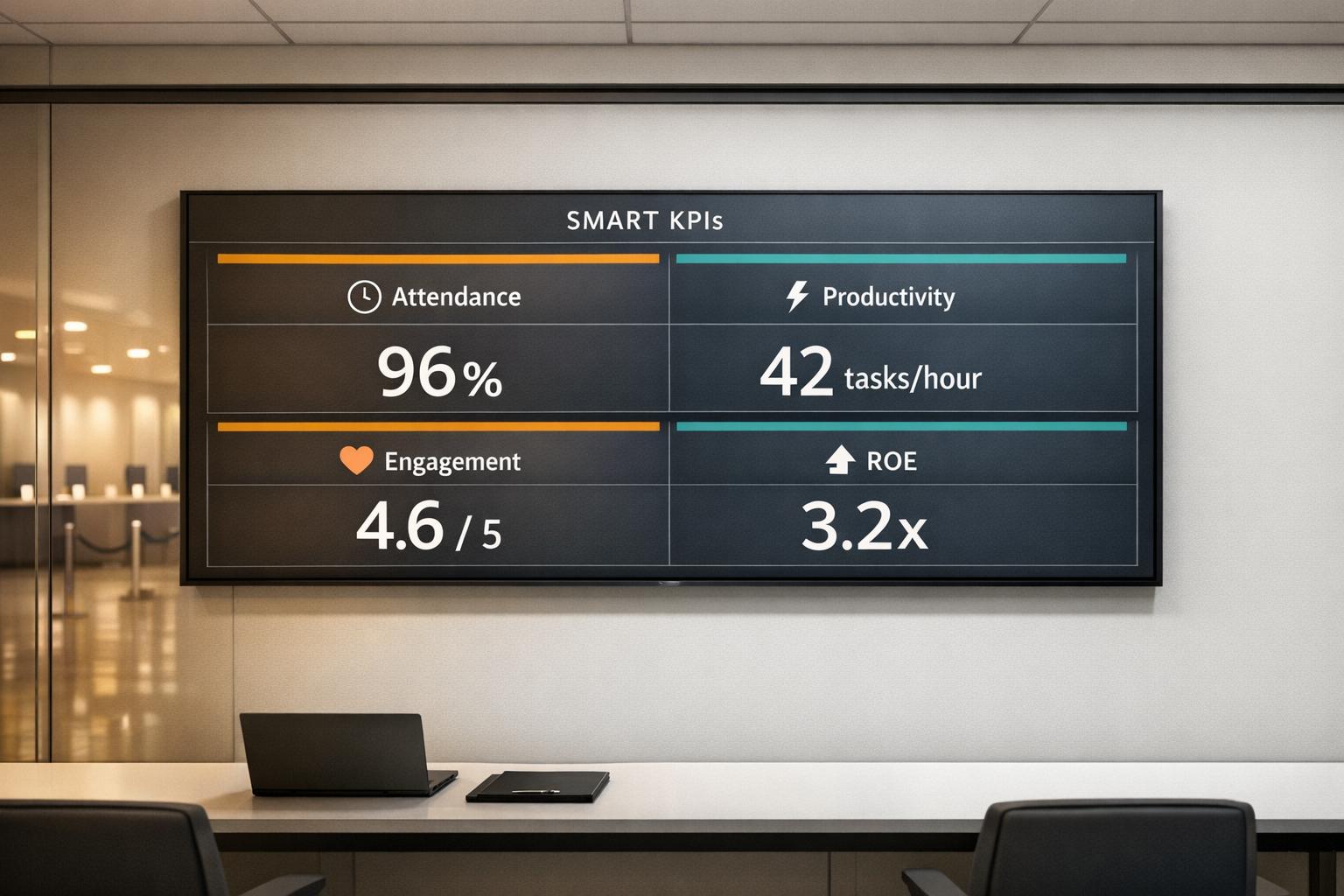
Attendance is a basic but essential metric for evaluating staff performance. Using event staff scheduling software with clock-in/out systems can help you monitor no-show rates, track on-time arrivals, and identify patterns in punctuality. This kind of tracking not only highlights dependable staff but also flags potential issues before they disrupt your event.
Productivity can be assessed by comparing the number of tasks completed - like guest check-ins or service rounds - to the hours worked. Quality matters too, so keep an eye on how often tasks need to be redone or are rejected. For repetitive tasks, measuring the time it takes to complete them can help you plan better for future events. In customer-facing roles, performance often ties directly to measurable results like lead generation or conversion rates.
Feedback tools like NPS, CSAT, and 360-degree reviews provide valuable insights into staff performance. For example:
For staff in engagement roles, track the number and quality of interactions they facilitate, such as networking connections or meeting requests. Digital engagement metrics, like click rates on event apps or how often specific features are used, can also provide real-time insights that traditional methods might overlook. These tools can help you paint a more complete picture of staff effectiveness.
When it comes to evaluating temporary event staff, two types of metrics come into play: quantitative and qualitative. Quantitative metrics provide straightforward data points like attendance figures or tasks completed per hour, which can be optimized through efficient event staff scheduling, while qualitative metrics focus on observations, feedback, and testimonials. In simpler terms, quantitative metrics tell you what happened, and qualitative metrics help explain why it happened.
Using just one type of metric isn’t enough. Numbers alone might miss underlying issues like disengagement or poor team dynamics. On the other hand, relying only on qualitative feedback can be subjective and take a lot of time. Research from the Journal of Applied Psychology highlights the benefits of using both: organizations that combine these approaches report a 30% improvement in performance evaluation accuracy, and 82% of employees prefer this method because it gives a fuller picture of their contributions. For example, a Fortune 500 company found that blending sales data with peer feedback helped identify high-performing employees who were previously overlooked when only numbers were considered. This mix also leads to better engagement - 70% of employees feel more invested in their work when their performance is measured using both types of metrics.
To make this work in practice, assign at least one quantitative KPI (Key Performance Indicator) and one qualitative KPI for each performance goal. Regularly compare the results to uncover trends or resolve discrepancies. This approach ensures a more nuanced understanding of performance.
As Mentxu Sendino, CMO of EventsCase, explains:
"Quantitative metrics provide visibility and comparability, but they don't capture emotion, perception or intangible value. Qualitative metrics fill that gap, revealing why attendees acted a certain way".
Before your event kicks off, establish role-specific KPIs using the SMART framework. Each KPI should be Specific, Measurable, Attainable, Realistic, and Time-bound. For instance, instead of tracking vague goals like "providing good service", focus on measurable targets such as "responding to guest requests within 3 minutes." This approach ensures that staff efforts align with the event’s overarching goals, reinforcing the metrics discussed earlier.
It’s also important to distinguish between strategic KPIs and tactical metrics. Strategic KPIs evaluate progress toward broader objectives, such as overall staff productivity, while tactical metrics focus on specific tasks, like how quickly individual assignments are completed. As Qlik aptly states:
"Don't just measure. Measure what matters".
Collaborate with stakeholders to identify KPIs tailored to your event’s objectives - whether it’s increasing brand visibility, capturing leads, or improving guest satisfaction . Define clear benchmarks, incorporate visual indicators, and set milestones to monitor progress throughout the event. Additionally, clarify whether higher values (e.g., task completion rates) or lower values (e.g., absenteeism) signify better performance.
Timely and specific feedback is essential for improving staff performance. Use models like the SBI (Situation, Behavior, Impact) framework to ensure feedback is fact-based and actionable. Studies have shown that immediate feedback significantly boosts staff effectiveness.
Document feedback with clear action points and timestamps . This is especially important in an industry with high staff turnover - often exceeding 70% annually. Timely recognition can make a big difference; employees who feel acknowledged are 3.7 times more likely to accept future shifts. Megan Hayward, Founder & CEO of TempGuru, emphasizes:
"Timely, constructive feedback is how event staff improve. Without it, they repeat mistakes and never develop expertise".
For a well-rounded evaluation, gather input from various sources, including peers, supervisors, and customers. Use standardized templates to ensure all staff are assessed against the same criteria . Additionally, hold regular calibration meetings with managers to maintain consistency in performance ratings across teams.
Streamline the process by integrating these systems into a centralized platform for easier tracking and management.
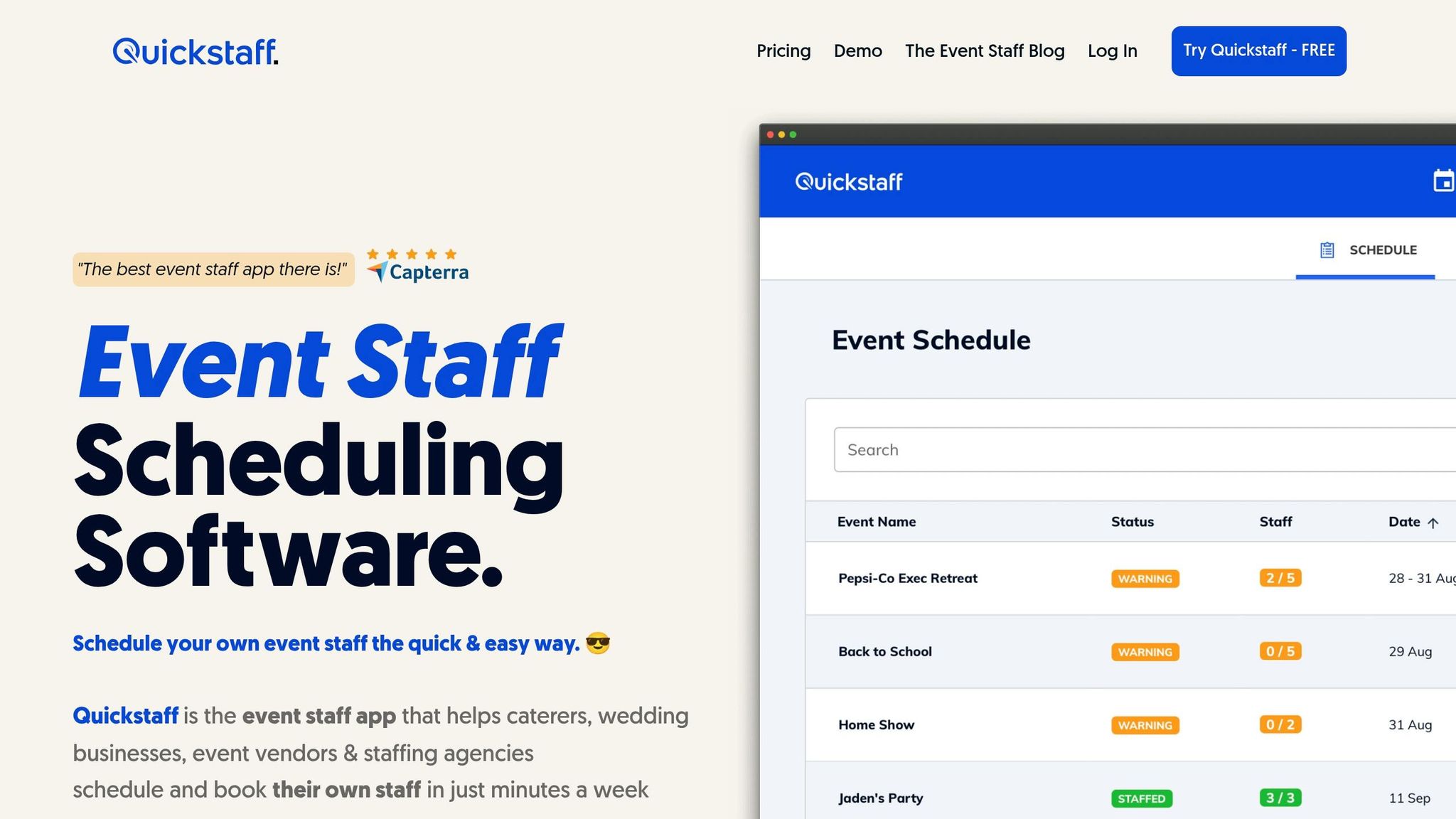
Automated tools like Quickstaff can simplify tracking and scheduling while enhancing feedback systems. Quickstaff’s centralized dashboard allows you to monitor staff availability and shift acceptance in real time. Its unlimited messaging feature supports instant communication, making it easier to provide immediate feedback.
The platform’s reminder system automates check-ins, ensuring consistent monitoring. Quickstaff’s event tracking dashboard gives you a clear view of attendance patterns and punctuality trends across multiple events. For last-minute staffing needs, the automated waitlist highlights staff members who respond promptly, offering another valuable performance indicator.
Quickstaff also allows you to replicate successful staffing arrangements from past events with its event duplication feature. The built-in calendar provides a comprehensive overview of staff allocation, while the mobile-friendly design enables on-site updates to availability and attendance without relying on outdated methods like spreadsheets or paperwork. This makes real-time tracking and scheduling more efficient than ever.
Performance metrics act as the control panel for managing event operations, giving you the tools to evaluate temporary staff, fine-tune processes, and boost productivity. By combining quantitative data - like punctuality and task completion rates - with qualitative insights such as guest satisfaction scores, you get a complete picture of how your staff performs.
These metrics not only help set clear expectations and hold staff accountable but also encourage regular, transparent feedback. This approach highlights areas needing improvement while fostering higher employee engagement and satisfaction. As Coursera Staff notes, such metrics are essential for maintaining oversight and driving meaningful progress.
To put this into practice, start by setting SMART KPIs during the event planning phase. Then, use the Closeout phase after each event to assess whether goals were achieved and to gather insights for future improvements. Tools like Quickstaff can simplify this process by automating attendance tracking, sending reminders, and offering real-time staffing visibility - eliminating the hassle of manual data entry. This streamlined approach not only saves time but also ensures consistent tracking and better staff performance.
When it comes to evaluating temporary event roles, KPIs should center around measurable metrics. These provide a clear and consistent way to assess performance. Some key areas to focus on include:
By tracking these metrics, you can effectively gauge performance and ensure standards are met.
When information is all over the place, performance metrics can serve as a central tool to evaluate staff performance effectively. By bringing data together into one system or dashboard, you can track key metrics from various sources in a single location. Regular reviews of these metrics allow you to assess both individual and team contributions, even when data is fragmented. This approach supports smarter decision-making and improves how performance is managed.
To measure Return on Emotion during an event, pay close attention to participant feedback and social media activity. These qualitative indicators reveal how attendees feel and their level of satisfaction, giving you a clearer picture of the event's emotional impact.