How Skill-Based Matching Improves Event Staffing
April 20, 2026


Finding the right staff for events is easier with skill-based matching. Instead of relying on resumes or availability, this method prioritizes verified skills, aligning staff with roles they excel in. Here's why it works:
Tools like Quickstaff simplify this process with centralized databases, skill tracking, and real-time updates. By monitoring metrics like fill rates and performance, you can refine staffing strategies and ensure smooth events. You can also use an event staffing needs analyzer to determine the ideal headcount for each task. Skill-based matching transforms staffing into a precise, data-driven process that benefits both staff and event organizers.

Skill-Based Matching Benefits: Key Statistics for Event Staffing Success
Skill-based matching focuses on assigning roles based on verified skills and performance data, rather than traditional criteria like availability tracking or academic degrees. This method emphasizes matching individuals to roles by evaluating their proven abilities and unique strengths.
Automated tools powered by natural language processing (NLP) and machine learning play a key role here. These systems analyze candidate profiles through semantic analysis, interpreting the context and intent behind listed skills to find the best fit for specific needs. While technology excels at processing hard skills and data, human judgment is still necessary to evaluate elements like interpersonal dynamics and alignment with team culture. By combining these approaches, event planners and hiring managers can assign roles more effectively, improving overall operations. This is especially critical when using tools for last-minute catering staff scheduling to fill urgent gaps. This method offers a clear departure from traditional staffing practices, as outlined below.
The table below compares traditional staffing methods with skill-based matching, highlighting differences in efficiency, objectivity, and outcomes.
| Feature | Traditional Staffing | Skill-Based Matching |
|---|---|---|
| Primary Criteria | Availability, academic degrees, and subjective judgment | Verified skills, competencies, and performance data |
| Matching Method | Manual screening or basic keyword matching | NLP, semantic analysis, and machine learning algorithms |
| Efficiency | Slower; requires significant manual effort | Highly efficient; automates large-scale candidate evaluation |
| Objectivity | Prone to human bias | Higher objectivity through standardized criteria |
| Turnover Rate | Higher due to potential mismatches in actual ability | 25–70% reduction due to more precise role alignment |
| Training Impact | May require extensive training to bridge gaps | 25–75% reduction in training time and costs |
| Time-to-Hire | Longer due to manual processes | 50–70% faster when using skill-based systems |
Traditional methods often limit the talent pool by focusing on rigid requirements like specific degrees or years of experience. In contrast, skill-based matching broadens opportunities by identifying transferable skills and untapped potential. This approach can cut hiring costs by 70–80% and reduce turnover rates to as low as 4% in some cases.
Skill-based matching takes event staffing to the next level by focusing on individual capabilities rather than treating staff as interchangeable. This approach ensures that every team member is placed in a role where they can shine. Let’s break down how this method improves event operations, team dynamics, and workforce diversity.
When roles are matched to specific skills, efficiency and quality naturally improve. For instance, bartenders with mixology certifications thrive at specialty cocktail stations, while servers with fine dining experience excel in plated service settings. This level of precision leads to smoother operations and happier customers. As Aspect highlights:
"Strategic alignment of employee skills and performance with customer demand minimizes staffing challenges while enhancing service quality." - Aspect
Skill-based matching also offers a quick response to unexpected demand spikes. With a database of pre-vetted professionals - ranging from AV setup experts to catering coordinators - organizations can adapt seamlessly. This not only boosts operational accuracy but also fosters stronger team collaboration and higher job satisfaction.
Matching people to roles that align with their expertise boosts both engagement and productivity. Employees can hit the ground running, contributing effectively from day one.
"Skills-based matching ensures employees enter roles where they can perform from day one. That early alignment drives higher engagement, productivity, and long-term retention." - The Planet Group
It also provides a clear path for career growth. When employees know which skills to develop - whether it’s mastering event design software, refining client communication, or learning point-of-sale systems - they’re more likely to pursue professional development. This targeted growth leads to better retention of top talent. Plus, by focusing on capabilities rather than rigid qualifications, organizations can widen their talent pool significantly.
A skills-first approach opens the door to candidates who might otherwise be overlooked. Research shows that talent pools can grow by up to 19 times when organizations prioritize skills over traditional credentials. For event staffing, this means tapping into professionals who have gained their expertise through diverse paths - like hospitality training programs, volunteer event coordination, or restaurant management.
The benefits don’t stop at hiring. Teams built on skills-based principles see a 12% improvement in overall performance and a 20% increase in employee retention. Additionally, organizations using this approach are 57% more likely to adapt quickly to changes, such as shifting between in-person, virtual, and hybrid event formats. This adaptability is a major asset in today’s fast-changing event landscape.
Skill-based matching can be implemented in three straightforward steps: define the necessary skills, track staff expertise, and use matching tools. These steps build on previous discussions about skill-based matching, offering a practical approach to implementation. For more industry insights, visit The Event Staff Blog.
Start by focusing on the nine essential soft skills every event professional should have: communication, punctuality, adaptability, professionalism, problem-solving, teamwork, attention to detail, customer service, and physical stamina. These skills serve as a baseline for all roles.
Next, categorize roles based on their specific functions. For example:
Beyond these general categories, pinpoint the technical requirements for each role. For instance, a bartender at a specialty cocktail station should have mixology expertise, while a production assistant must understand AV equipment. Isabella Galeazzi, COO of Eleven8 Staffing, emphasizes the importance of preparation:
"Arriving ahead of schedule allows staff to familiarize themselves with the venue, prepare for their roles, and address any last-minute needs".
For long-duration events, consider physical requirements to ensure staff can maintain productivity throughout extended shifts. When hiring for promotional roles, ensure candidates' attitudes align with the client’s brand values. Genuine brand affinity leads to stronger connections with consumers.
Once roles are clearly defined, the next step is to systematically track and analyze these skills.
After identifying the key skills, create a system to monitor and evaluate them. Begin by pinpointing and ranking any skill gaps, such as language proficiency, specialized certifications, or technical expertise. This framework helps match staff to the right roles more effectively.
Use activity-based assessments - like drafting event budgets or proposals - to validate skills. For existing staff, behavioral interviews can highlight problem-solving abilities by exploring past challenges they’ve faced.
Developing detailed employee personas that include background, experience, and skill levels ensures that staff authentically represent the brands they serve. Tracking brand affinity also helps foster more genuine consumer engagement. Additionally, don’t overlook internal recommendations. As Attack! Marketing notes:
"A-players tend to know A-players and may be able to recommend friends and former colleagues".
Technology plays a crucial role in simplifying and enhancing this tracking process.
Technology accelerates the matching process while maintaining a personalized approach. Relying on manual spreadsheets is no longer practical for modern event demands. Advanced tools use algorithms to pair staff with shifts based on their documented skills, certifications, experience, and availability. Research supports this approach, showing that skills-based organizations are 63% more likely to meet their goals compared to those using traditional job-title methods.
Modern tools go a step further by updating performance data in real time. As staff earn new certifications or improve their skills, their profiles are automatically updated. This creates a dynamic skills matrix, visually mapping each team member’s capabilities to specific event needs.
The results speak for themselves. Companies adopting skills-based practices are 98% more likely to retain high-potential employees. Keagan McMahon, Implementation Manager at Together, explains:
"A skills-based approach to talent management enables you to unlock the full potential of your workforce, driving innovation, adaptability, and sustainable growth for the organization".
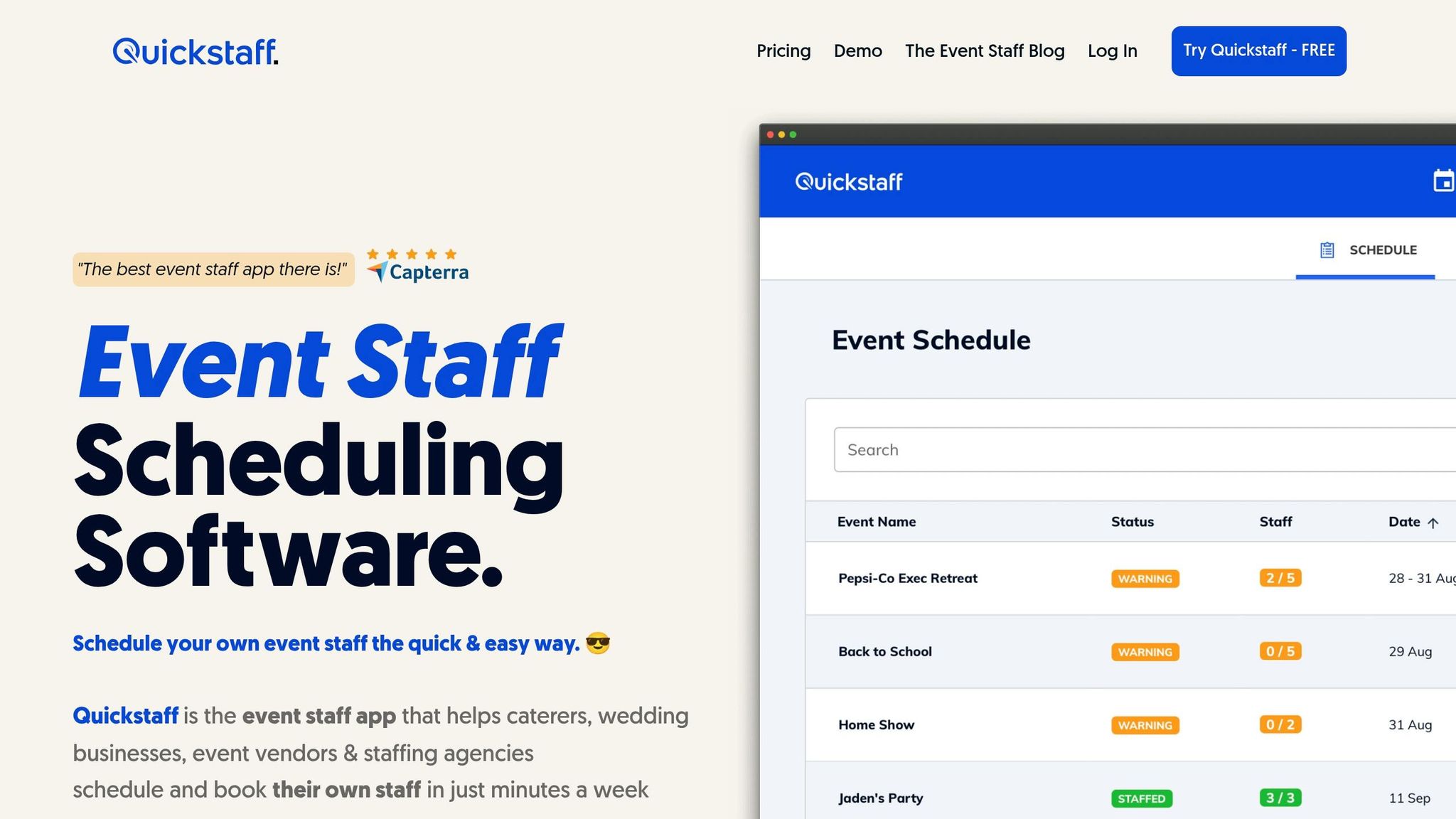
Quickstaff makes event staff scheduling quick and easy by organizing staff details in a centralized database. This database includes essential information like staff names, roles, locations, and event history, ensuring accurate role assignments. By combining technology with real-time updates, Quickstaff takes skill-based matching to a new level of efficiency.
To get started, populate the database with staff roles and details. Assign each staff member primary and secondary roles, which act as skill tags. These tags make it easy to filter and find the right people for specific positions.
The Conflict-Free Availability Checker ensures precision by letting staff block out unavailable dates via the mobile interface. This way, managers only see qualified staff who are available. Jennifer Manley, a Staffing Coordinator, highlights the benefits:
"The sorting function helps isolate events, making it easier to view scheduled roles."
Additionally, the role-based messaging feature ensures that only relevant staff receive specific updates. When creating an event, the system automatically notifies staff of their roles and call times.
To maintain accuracy, tools like the Event Role Skill Checker and Event Staff Skills Checker help audit and update skill tags. These tools provide real-time insights into the workforce’s capabilities. After matching staff to roles, they can confirm attendance with a simple "Accept It" or "Decline It" button, cutting down on lengthy phone calls.
Quickstaff offers flexible plans that include these advanced matching tools, designed to meet the needs of different-sized teams. Each plan supports skill-based matching, with differences mainly in staff capacity limits.
| Plan | Price | Staff Limit | Key Features for Skill-Based Matching |
|---|---|---|---|
| Boutique | $49/month | Up to 35 staff | Centralized database, role-based messaging, availability tracking, sorting function, and skill checkers |
| Growing | $99/month | Up to 70 staff | All Boutique features, plus increased capacity for expanding event businesses |
| Large | $249/month | Up to 175 staff | All features, tailored for high-volume staffing agencies and large-scale operations |
All plans come with a 14-day free trial - no credit card needed - and can be canceled anytime. Quickstaff also integrates with Google Calendar, iCal (Apple), Outlook, and Yahoo, ensuring staff stay updated across platforms.
Steven Townsend, an Event Manager, shares his experience:
"I used to be on the phone all the time to schedule staff. Now, within a few minutes, I can schedule all the staffing I need for my events. Quickstaff is easily the best event staff app out there."
When using skill-based matching, keeping a close eye on staffing metrics becomes essential. The idea is to shift from relying on intuition to using data-driven insights that help refine staffing decisions over time.
Start by assessing fill rates - the percentage of open positions filled with qualified individuals. This metric helps you understand whether your skill requirements are practical or creating obstacles. Pair this with time to fill, which measures how quickly you can find and secure the right talent for each role.
It’s not just about speed - quality matters too. Keep tabs on customer satisfaction scores (such as CSAT or NPS) and task-specific quality metrics to identify high performers. As Aspect highlights:
Aligning talent with the right tasks at the right time is a cornerstone of effective workforce management.
Additionally, track redeployment rates and retention to evaluate long-term success. A well-rounded dashboard should include both results indicators (like revenue or attendance figures) and leading indicators (like training hours or engagement before an event). As Rhythm Systems puts it:
The key is to align your team around the proper KPIs with a good mix of results and leading indicators.
This balanced approach not only reviews past performance but also helps forecast future outcomes, laying the groundwork for predictive analysis.
Beyond traditional metrics, predictive analytics takes things a step further by forecasting performance outcomes. Skill-based matching enhances your ability to predict which team members will excel in specific roles. By analyzing historical data, you can identify trends that guide future staffing decisions.
Real-time performance monitoring also plays a key role. Platforms like Quickstaff enable continuous monitoring, replacing outdated periodic reviews. This allows you to adjust assignments as employees gain new skills or demonstrate strengths in different areas. Integrating this performance data with scheduling tools creates a unified system for more precise predictions.
Skill-based matching transforms event staffing into a precise, data-driven process. By moving away from the outdated "one-size-fits-all" mindset, it allows you to align the right talent with the right tasks. This ensures that every team member is positioned to contribute their best, driving the success of your events.
The impact is clear: adopting skill-based practices has been shown to boost results by 63% and improve retention of top talent by 98%. Using tools like detailed skills mapping and real-time performance metrics, as discussed earlier, ensures your events are staffed with accuracy. When workers are assigned roles that match their expertise, everyone wins - staff feel appreciated and engaged, while events run more efficiently and deliver better experiences for attendees. These improvements lead to smoother operations and a more motivated workforce.
Quickstaff’s platform simplifies this entire process. With features like staff tagging, performance tracking, and scheduling, its mobile-friendly and centralized interface ensures that skill-based matching reduces complexity, not adds to it.
By building a skills matrix and monitoring metrics such as fill rates and customer satisfaction, you can reimagine your event staffing strategy for a competitive edge. As Johnny C. Taylor, Jr., SHRM President and CEO, aptly puts it:
In a knowledge-based economy, you lose if you don't have the best talent.
This shift to skill-based matching is about more than just improving individual events - it's a long-term strategy that positions your business for sustained success in an ever-demanding industry.
Staff skills for events are checked through a detailed process that includes recruiting, training, and managing team members. This approach helps ensure that every team member is ready and equipped to handle their responsibilities effectively during events.
To ensure a successful event, it’s crucial to focus on skills that directly impact performance. Core competencies like communication, customer service, teamwork, problem-solving, and flexibility are essential across most roles. These abilities not only help teams function smoothly but also create a better experience for guests.
For some positions, technical expertise might also come into play. For example, roles involving event setup or equipment handling require specific know-how to ensure everything runs seamlessly.
By keeping track of these skills, you can match individuals to roles more effectively, boost overall team performance, and elevate the guest experience. This approach also aligns with a skills-first mindset, prioritizing abilities over other factors when staffing an event.
Metrics that highlight successful skill-based matching include communication skills, punctuality, problem-solving abilities, teamwork, and attention to detail. These abilities are crucial for event staff to excel and show that individuals are being paired with roles that suit their strengths.