How Digital Tools Improve Staff Retention
February 2, 2026

Struggling with staff turnover? High attrition rates in industries like hospitality and events are costly, with replacing a single hourly worker averaging $4,700. The main culprits? Poor scheduling and ineffective communication.
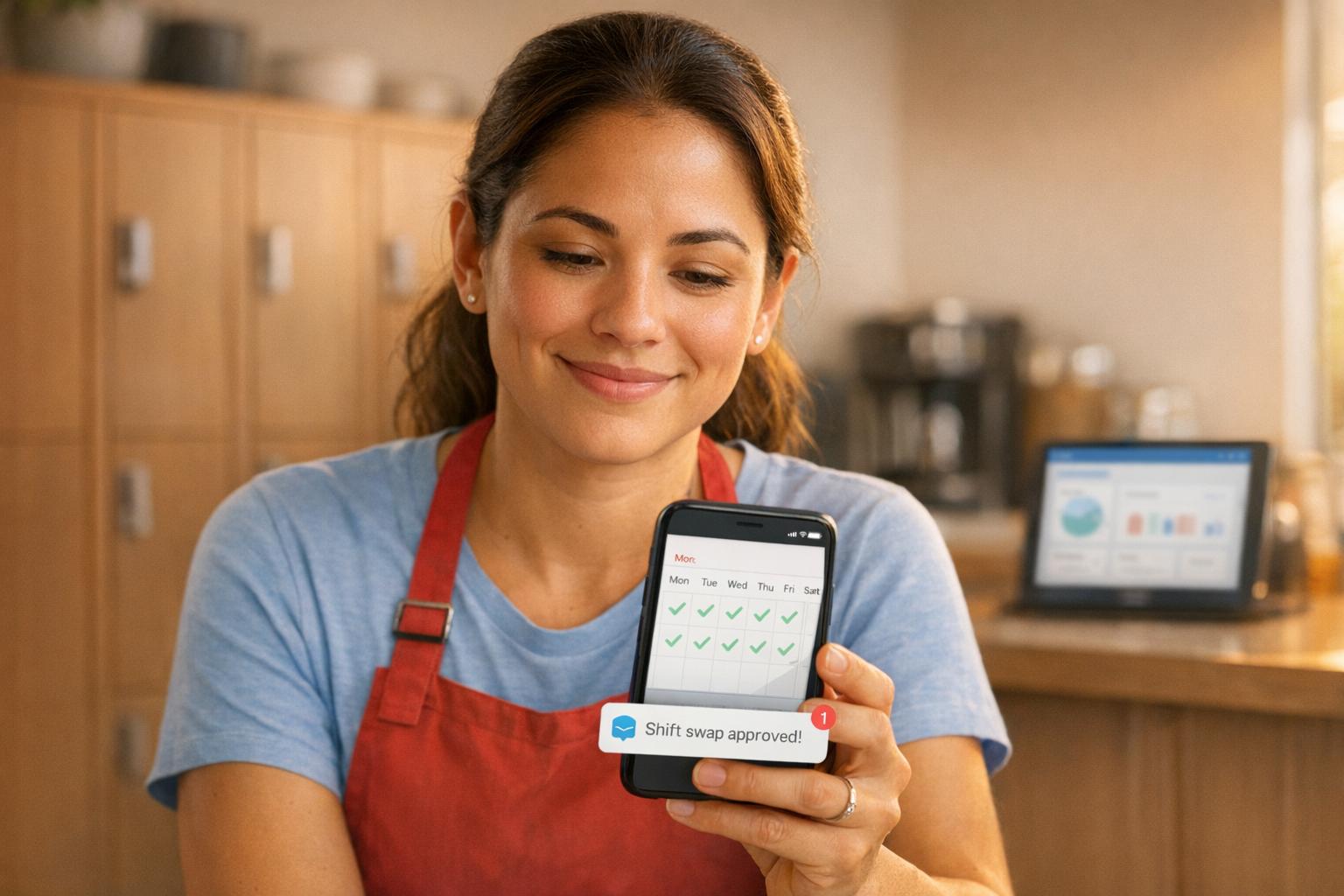
Digital tools are solving these issues by streamlining schedules, improving communication, and giving employees more control over their work-life balance. Platforms like Quickstaff simplify scheduling, track availability, and send real-time updates, reducing stress for both managers and workers. These changes lead to better retention, fewer no-shows, and higher job satisfaction.
Investing in scheduling platforms not only saves time but also shows employees their time is respected, keeping them engaged and motivated.
Staff Retention Statistics: Turnover Costs and Digital Solutions Impact
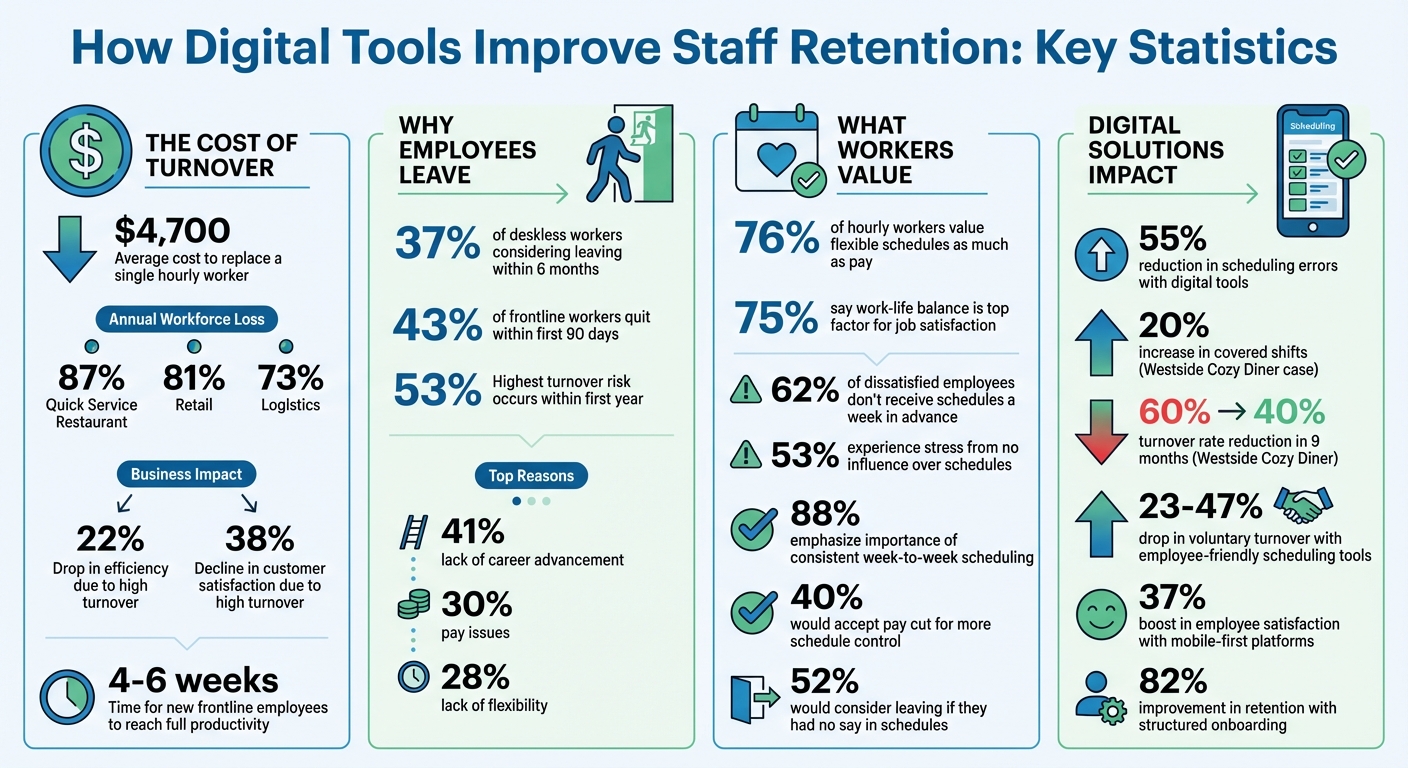
Understanding why employees leave is crucial for improving retention. The event industry faces unique challenges in keeping workers, often stemming from more than just pay disputes. For example, 37% of deskless workers are considering leaving their jobs within six months, and 43% of frontline workers quit within their first 90 days. These statistics represent real people leaving roles that fail to meet their needs for stability and respect.
The event staffing sector is plagued by some of the highest turnover rates across industries. For instance, Quick Service Restaurants lose 87% of their workforce annually, retail loses 81%, and logistics loses 73%. Workers in these industries often face unpredictable schedules, limited advancement opportunities, and a lack of recognition, leaving them feeling stuck. Among frontline workers, the top reasons for leaving include:
Without clear opportunities for growth - such as training programs, promotions, or acknowledgment of their efforts - employees are naturally inclined to look elsewhere. New hires are especially vulnerable, with 53% of HR professionals reporting that the highest turnover risk for deskless workers occurs within their first year. This issue is often worsened when companies fail to provide proper digital onboarding, leaving new staff unprepared for the high-pressure demands of event work.
"The unique experiences of deskless workers are sometimes overlooked in broader workforce strategies and research."
– Ragan Decker, Manager of Executive Network and Enterprise Research, SHRM
High turnover doesn’t just affect employees - it also impacts businesses. Companies with high turnover rates can experience a 22% drop in efficiency and a 38% decline in customer satisfaction. On top of that, it takes 4 to 6 weeks for new frontline employees to reach full productivity, which can leave businesses scrambling to fill service gaps during peak event seasons.
Inefficient scheduling methods - like relying on spreadsheets, whiteboards, or phone trees - often create unnecessary stress for employees. For 75% of hourly workers, work-life balance is the top factor for job satisfaction, ranking even higher than pay or relationships with managers. Yet, 62% of dissatisfied employees report not receiving their work schedules more than a week in advance. This lack of notice makes it nearly impossible for workers to plan basic aspects of their lives, such as childcare, medical appointments, or budgeting.
"Budgeting becomes impossible when they don't know whether they're working 20 hours or 40. Childcare plans fall apart without advance notice."
– Salim Jernite, Chief Product Officer, Fountain
Scheduling issues are often worsened by poor communication. Manual systems make it easy for critical updates - like event changes, shift swaps, or menu revisions - to slip through the cracks. Additionally, 53% of workers say that having no influence over their schedules causes significant stress, while 88% emphasize the importance of consistent week-to-week scheduling.
A telling example comes from Westside Cozy Diner. In September 2025, the diner tackled a 60% annual turnover rate by introducing a workforce scheduling app and an online training portal. Within nine months, their turnover rate dropped to 40%, and covered shifts increased by 20%. These tools allowed employees to set their availability and swap shifts digitally, giving them more control and improving communication.
This case demonstrates how replacing outdated, manual processes with digital tools can directly address retention challenges by empowering workers and fostering better communication.
Keeping up with scheduling demands can feel like a juggling act. Traditional methods - think spreadsheets, whiteboards, and endless phone calls - tend to waste time and create confusion. Thankfully, digital scheduling platforms are changing the game. These tools automate the process and give managers and staff real-time access to accurate schedules. The result? Companies report cutting the time spent on scheduling by as much as 95%.
Modern scheduling platforms go beyond basic time management. They use smart algorithms to match employees to tasks or events based on their skills, availability, and even proximity. Employees can directly enter their availability and time-off requests, reducing the risk of scheduling errors. For example, Quickstaff is a tool tailored for event businesses. It tracks staff availability in real time, manages waitlists, and automatically fills gaps when someone becomes unavailable. This not only saves time but also keeps morale high and improves retention. Plus, organizations using these platforms have seen scheduling mistakes drop by 55%.
Automation is only part of the solution. A centralized dashboard takes things a step further by consolidating all scheduling and event details into one easy-to-access platform. Instead of juggling multiple tools, managers and staff can find everything they need in one mobile-friendly hub. Quickstaff excels in this area for event businesses, letting managers create events, assign roles, and oversee every detail from a single source. Staff can view their schedules, get instant updates on changes, and communicate directly through the platform.
The mobile-first design is a big plus - 81% of hourly workers prefer accessing schedules on their phones. Centralized systems not only streamline coordination but also improve staff satisfaction by reducing uncertainty. Features like syncing with personal calendars further cut down on no-shows and encourage accountability.
Poor communication can throw operations into chaos and leave staff feeling frustrated. Imagine event staff not knowing where to go, what to bring, or how to handle last-minute changes. It’s no surprise that 80% of deskless workers feel more excluded compared to their office-based peers. Even more concerning, 44% of shift workers would consider quitting if they struggled to communicate schedule changes with their employer. That’s not just a communication issue - it’s a retention nightmare. This is where digital tools step in, facilitating real-time updates and fostering better dialogue.
Digital platforms simplify communication by centralizing it in one place, eliminating the need for group texts, phone calls, or scattered sticky notes. With instant push notifications, staff stay informed about schedule changes, cancellations, or last-minute event details. This prevents wasted trips and confusion - something absolutely critical in the event industry. For instance, if a wedding venue changes or a catering event is postponed, managers can notify the entire team instantly through their phones.
Take Solace Pediatric Home Healthcare as an example. Before transitioning to a centralized mobile scheduling system, they coordinated over 3,500 weekly appointments via email - a logistical nightmare. After adopting a system with real-time updates, clinicians began receiving instant notifications about patient changes. Asya Rudikoff, Manager of Physical and Occupational Therapy, shared:
"We regularly hear from clinicians how our centralized, mobile scheduling system is a game changer in the market. It's a huge selling point from a recruiting and marketing standpoint".
For event businesses, tools like Quickstaff offer similar advantages. With unlimited messaging features and a mobile-friendly design, staff can easily access event details, parking instructions, and their specific roles - all from their phones. These instant updates not only streamline operations but also establish a foundation for ongoing, interactive communication.
Transparency is the cornerstone of trust. When staff can access schedules and company updates on a shared platform, they feel more connected and valued. But communication shouldn’t just flow one way. True engagement happens when staff can ask questions, share feedback, and feel like their voices matter.
Westside Cozy Diner is a great example of this in action. Struggling with a 60% annual turnover rate, they introduced a scheduling app that made it easier for staff to communicate availability, swap shifts, and stay connected with management. The result? Turnover dropped below 40% in just nine months, largely thanks to improved communication and transparency.
The same approach works wonders in event staffing. When bartenders, servers, and setup crews can message managers directly, check who’s working with them, or clarify concerns, it fosters a sense of community. This isn’t just about organizing shifts - it’s about creating a team dynamic that encourages loyalty. In fact, 71% of hourly workers say their work schedules directly impact their relationships with colleagues. Clear communication doesn’t just keep things running smoothly; it builds the camaraderie that motivates staff to keep coming back for future events.
Rigid schedules often lead to burnout. In fact, 40% of hourly workers would accept a pay cut for more control over their work schedule. This highlights how crucial flexibility is for retaining staff. Digital tools are stepping in to give employees more control over their schedules while reducing the burden of tedious administrative tasks.
Having the ability to manage one’s own schedule goes beyond convenience - it’s a key part of achieving work-life balance. Consider this: 78% of workers prefer choosing their shifts instead of having them assigned, and 82% say their schedule affects their ability to spend quality time with their families. Digital platforms designed for scheduling, like Quickstaff, allow employees to set their availability, claim shifts that align with their lives, and trade shifts with ease. These tools often come with mobile-friendly features, like blocking off unavailable dates, receiving instant notifications about new shifts, and viewing all upcoming assignments.
Peter Draper, Vice President of Customer Success at Shiftboard, explains:
"Work schedules often serve as blueprints for employees' lives, enabling them to manage their professional commitments alongside personal ones, such as parenting, childcare, and social engagements."
For example, a server can quickly check their calendar while picking up their kids, or a bartender can swap a Saturday shift while running errands. This seamless integration of work and personal life not only improves balance but also minimizes scheduling stress.
Administrative tasks can drain energy that’s better spent on delivering great service. Managers often lose hours calling staff, updating spreadsheets, and chasing confirmations, while employees deal with missed calls and unclear instructions. 70% of workers report having to input the same data into multiple systems to complete their tasks, a frustration that contributes to dissatisfaction.
Automation helps eliminate these headaches. Digital tools streamline processes by tracking invitations, responses, and pending confirmations automatically - no more endless phone calls. Employees get clear event details and role assignments in one place, avoiding the hassle of juggling emails and text messages. A great example is Australia Post, which adopted an integrated workflow platform in 2019. This change cut training time in half and reduced the average number of clicks per transaction from 160 to just 11. Fewer clicks mean less frustration and better retention.
The benefits are clear: Employees without schedule flexibility report 29% lower engagement and are more likely to experience burnout. By automating routine tasks, staff can focus on what they do best - delivering exceptional service - while enjoying a more balanced work-life dynamic.
Making informed decisions about staff retention starts with data. Digital scheduling platforms now offer analytics that help managers identify problems before they escalate. Instead of reacting to resignations, these tools highlight warning signs early, giving teams a chance to address concerns proactively. This approach ties back to earlier discussions on scheduling and communication improvements, creating a well-rounded strategy for retaining employees.
Analytics can uncover patterns that suggest an employee might be thinking about leaving - before they officially decide to. Modern platforms track "flight risk indicators", such as frequent absences, lack of career progression, or reduced participation in training programs. These indicators aren’t random; they act as early warnings that adjustments may be needed.
Take Chipotle Mexican Grill in 2024 as an example. By using data to refine promotions, benefits, and perks, they achieved a 30% boost in employee retention. Similarly, companies that conduct regular listening surveys have doubled their retention rates by acting on employee feedback.
For event managers, platforms like Quickstaff provide similar insights by tracking who consistently accepts shifts, who is frequently unavailable, and which staff members stay engaged with updates. This visibility allows managers to step in and address potential disengagement before it turns into turnover. In fact, organizations that prioritize feedback collection through surveys are twice as likely to retain their workforce.
Once you have the data, the next step is to act on it. Analytics can guide managers in fine-tuning training and scheduling to prevent issues like burnout. For instance, data might reveal which shifts are prone to no-shows or highlight challenges faced by new hires during their first 90 days. Consider this: 80% of employees who feel undertrained are likely to leave their jobs soon. On the flip side, a well-structured onboarding process can improve retention by 82%.
A great example comes from Amteck, a construction company that faced a challenge in 2024 when only 10% of employees could clearly explain the company’s core values. Matt Noble, the Marketing and Communications Manager, saw this as an opportunity for change. By launching a data-driven recognition program, Amteck increased employee understanding of core values by 65% in just three months. This initiative also contributed to an 85% retention rate among employees with over a decade of service.
For event staffing, platforms like Quickstaff can replicate these successes by aligning training and scheduling with staff needs. For example, ensuring employees receive clear instructions and role assignments ahead of events can significantly improve engagement.
Josh Bersin, CEO of The Josh Bersin Co., highlights the impact of these tools:
"The use of AI in these platforms helps provide almost instant results that managers can use to make changes that help boost engagement and retention on their teams".
The financial stakes make this approach even more compelling. Replacing an employee can cost between 16% and 213% of their annual salary. With 42% of voluntary departures linked to burnout or stress, using analytics to optimize scheduling and training isn’t just smart - it’s necessary to reduce turnover and keep teams motivated.
The puzzle of retaining top event talent becomes much clearer when you consider the benefits of automated scheduling and open communication. Clear and consistent scheduling is key, and digital tools help solve common challenges like unpredictability, poor communication, and lack of autonomy. When staff can manage their availability, swap shifts through mobile apps, and receive real-time updates, they feel respected and valued. This sense of control is crucial - 52% of hourly workers say they’d consider leaving their jobs if they had no say in their work schedules.
Companies that embrace employee-friendly scheduling tools have seen voluntary turnover rates drop by 23% to 47%. Meanwhile, businesses using mobile-first scheduling platforms report up to a 37% boost in employee satisfaction scores. For event managers, tools like Quickstaff bring all these features together in one mobile-friendly system, allowing staff to manage their schedules, set availability, and get updates directly on their smartphones.
Automated scheduling also eliminates favoritism and reduces miscommunication, fostering trust through transparency. As Angela Ashenden, Principal Analyst at CCS Insight, explains:
"Technology can not only help to give frontline workers a voice, it can help them feel more valued, more part of the team, and more effective".
The financial side of this equation is hard to ignore. Replacing just one hourly worker costs between $4,700 and $5,864 when you include recruiting, onboarding, and lost productivity. And with 42% of voluntary departures tied to burnout or stress, investing in digital scheduling tools becomes a necessity for creating a stable and engaged workforce. These tools eliminate the administrative headaches that push employees away, replacing them with flexibility and support that encourage them to stay.
A workplace that supports its staff with the right tools sets the foundation for success. Platforms like Quickstaff don’t just streamline operations - they show employees that their time, input, and well-being matter. This approach ensures a motivated, reliable team, which is essential for pulling off successful events.
Digital tools like Quickstaff are making it easier for employees to balance work and personal life by simplifying scheduling and offering more flexibility. With mobile access, staff can quickly check their schedules, update availability, and manage shifts - all from their phones. This level of convenience gives employees more control over their time, helping them align work commitments with personal responsibilities, which can reduce stress.
Quickstaff also improves communication by centralizing updates and reminders. This reduces the chaos of last-minute changes and keeps everyone on the same page. Its mobile-friendly design ensures employees can handle scheduling and communication on the go, allowing them to manage personal tasks like doctor’s appointments or caregiving without jeopardizing their work. By promoting clarity, flexibility, and autonomy, tools like Quickstaff contribute to a better workplace experience, boosting both job satisfaction and employee retention.
High turnover in the event staffing industry is often tied to low job satisfaction, poor communication, and rigid scheduling practices. When employees feel unappreciated or out of the loop, their sense of loyalty fades, leading to higher resignation rates.
Other key issues include breakdowns in communication, lack of scheduling flexibility, and inadequate support for employees’ needs. These problems not only hurt morale but also drive up the costs of hiring, training, and onboarding new staff. Using digital tools to improve communication, simplify scheduling, and foster stronger engagement can make a big difference in keeping employees on board.
Digital tools and data analytics can play a big role in cutting down staff turnover by spotting trends and addressing the factors that influence employee retention. By digging into data about engagement, performance, and turnover patterns, companies can zero in on problem areas - like heavy workloads, communication breakdowns, or low morale - and take steps to fix them.
For instance, analytics can flag warning signs like a drop in engagement or a rise in absenteeism. This gives managers the chance to step in with personalized support or adjustments before these issues escalate. Tools that simplify scheduling, track availability, and improve communication also boost job satisfaction by minimizing inefficiencies and creating a more organized workplace. This data-driven strategy doesn’t just make employees happier - it helps build a team that’s more dedicated and less likely to leave.