Ultimate Guide to Seasonal Workforce Planning
January 13, 2026

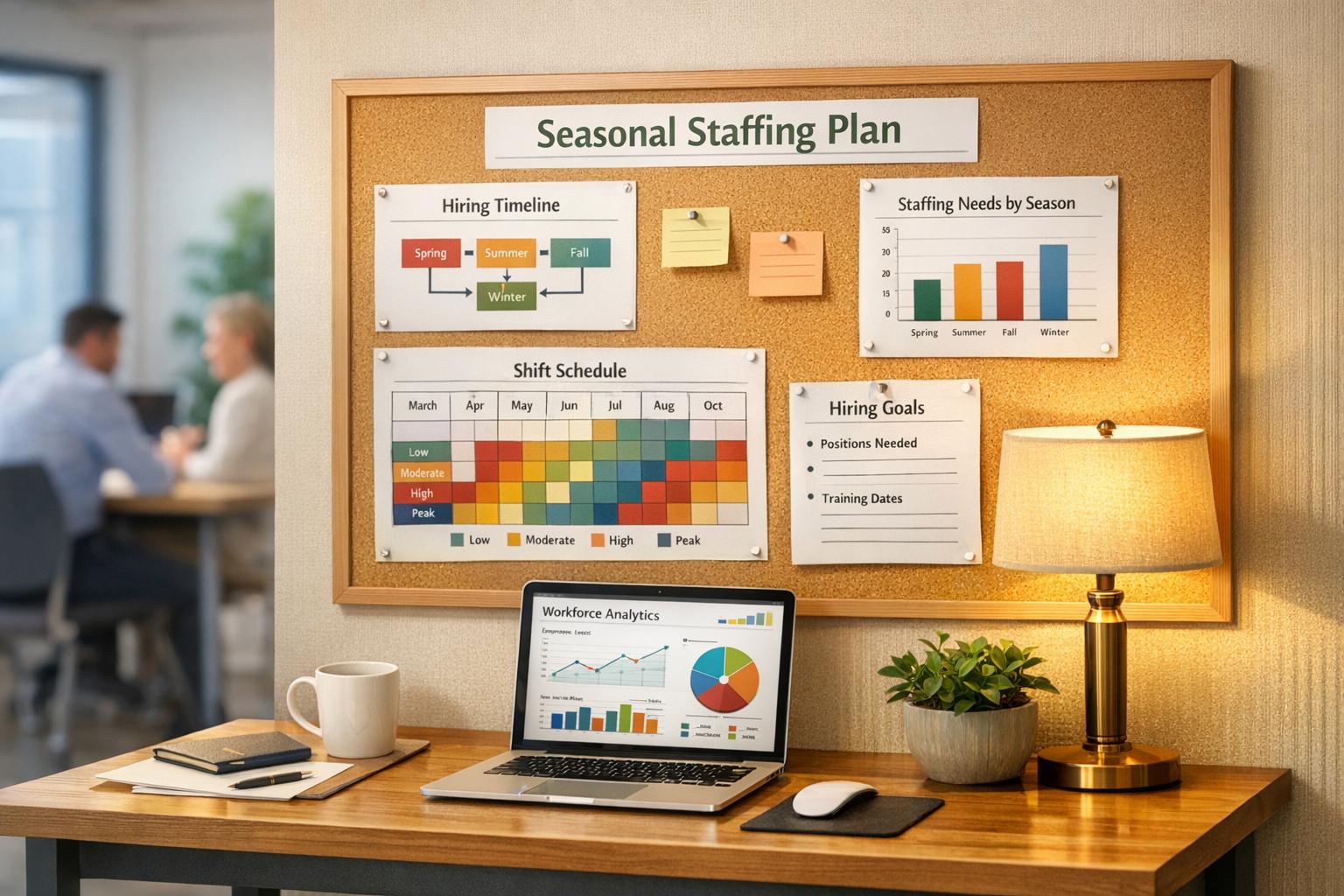
Seasonal workforce planning ensures businesses are prepared for peak demand periods like holidays, summer, or major events. Without proper preparation, companies risk last-minute hires, overworked staff, and missed opportunities to meet customer expectations. Here’s how you can plan effectively:
With proper planning, you can avoid staffing chaos and focus on delivering excellent customer experiences during your busiest times.
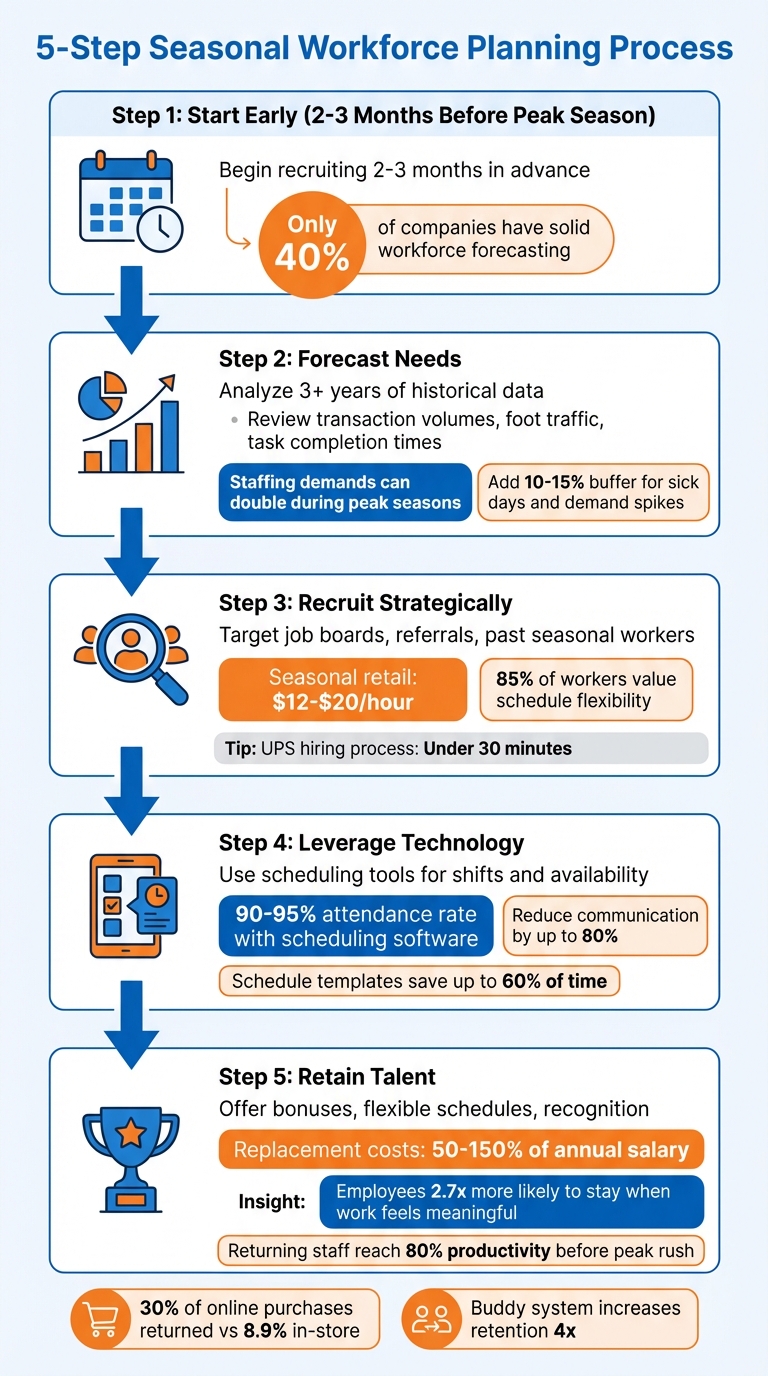
5-Step Seasonal Workforce Planning Process with Key Statistics

To accurately forecast seasonal staffing, start by analyzing past performance, identifying peak times, and matching specific skills to the tasks at hand. Surprisingly, only 40% of companies have a solid grasp on workforce forecasting. This means businesses that master this process can gain a real edge over their competitors.
Start by pulling at least three years of sales and performance data. This helps uncover consistent trends instead of one-off occurrences. Pay close attention to transaction volumes, foot traffic, and task completion times during previous peak seasons. Andrea Towe, an HR Consultant, explains:
Workforce forecasting is the process of estimating an organization's future staffing needs to help ensure it has the right people with the right skills at the right time.
Focus on labor hours rather than just counting heads. For instance, if a peak season demands an extra 500 work hours, decide whether to hire 10 full-time temporary workers or 20 part-time staff. It's also smart to review historical turnover rates and add 10–15% to your staffing plans to account for sick days and sudden demand spikes.
Pinpointing peak times is crucial. For example, wedding venues might be busiest from May to October, while tax preparation services typically see a surge between January and April. Dive into past records of overtime shifts, employee absences, and customer complaints. If these metrics spike during certain months, it’s a clear sign you may have been understaffed. Randstad highlights this point:
An increase in [overtime shifts, employee sick days, customer complaints] may indicate a need for more seasonal employees.
Don't stop at internal data. Consider external factors like school calendars, local events, and even weather patterns. Another often-overlooked factor is product returns. For example, at least 30% of online purchases are returned, compared to only 8.9% of in-store purchases. This can create unexpected staffing needs, especially during the post-holiday rush.
After identifying when extra help is needed, figure out the type of support required. Make a list of tasks that see a surge and the skills necessary to handle them. Positions like customer service, warehouse picking, and event setup are ideal for seasonal hires. For large-scale operations, implementing scalable event scheduling ensures these teams remain organized. Meanwhile, jobs involving complex compliance or dangerous equipment are better suited for permanent staff. Soft skills such as time management and attention to detail should also be prioritized.
Rehiring former seasonal workers can save time and resources since they’re already familiar with your systems. The goal is to align each role with your immediate operational needs while maintaining the quality and standards your customers expect during busy times. Once you’ve nailed down your staffing forecast, you’re ready to create a focused recruitment plan.
Once you've forecasted your staffing needs, the next step is attracting candidates who can handle the demands of peak periods. A well-thought-out recruitment strategy can mean the difference between scrambling for help and having a prepared team ready to hit the ground running.
Start your hiring efforts 2–3 months before your busy season to allow enough time for interviews, onboarding, and training. Marshall Hargrave, a financial writer at QuickBooks, sums it up perfectly:
"As a general rule, planning at least one season (2–3 months) in advance is a strong strategy."
Coordinate your timeline with potential candidates’ schedules. For example, align with college students' availability or reconnect with former seasonal employees, retirees, and past interns. Before diving into recruitment, use historical sales data to fine-tune your staffing forecasts. From there, move through sourcing, screening, and onboarding, ensuring everything is in place before operations peak. A well-planned timeline ensures you're ready to focus on finding the right talent.
Expand your talent pool by tapping into internal databases and employee referral programs. For new hires, explore specialized job boards like Monster and CareerBuilder, university career centers, and targeted ads on social media.
When crafting job postings, be clear about the role's duration, start and end dates, and whether the position is part-time or full-time. Seasonal retail roles typically pay between $12 and $20 per hour. Highlight perks like employee discounts or end-of-season bonuses, and be upfront about any physical requirements such as long hours on your feet or weekend shifts. If there's a chance for the role to become permanent, make sure to emphasize that - especially since 85% of workers value schedule flexibility.
Speed is crucial in seasonal hiring. A drawn-out process can mean losing top candidates to quicker competitors. Keep your application process mobile-friendly and straightforward. For instance, UPS has streamlined its seasonal hiring process to take less than 30 minutes. Automated screening tools can also help you quickly identify strong candidates, moving them through interviews and background checks faster.
Prepare training materials during slower periods to minimize onboarding time. Modern POS systems can make this even easier, with some platforms allowing new employees to grasp the basics in just 15 minutes. To reduce mid-season turnover, consider offering a completion bonus for employees who stay through the entire busy period. As CareerBuilder notes:
"Integrating small but mighty steps into your company's seasonal hiring strategy can mean the difference between being understaffed and having a well-oiled machine during the busy season."
Managing seasonal staff without the right tools often means drowning in spreadsheets and endless phone calls. Using a checklist for choosing shift assignment software helps you find tools that take the chaos out of workforce management by automating key processes, leaving you free to focus on running operations during peak periods.
Top-tier scheduling platforms rely on real-time data to align staff availability with your actual needs. They can automatically check availability, handle time-off requests, and flag conflicts. Employees can set their regular hours as default availability and mark specific dates they can't work as overrides. This simplifies scheduling and reduces last-minute issues.
Features like drag-and-drop schedulers make shift adjustments a breeze, while schedule templates save time by eliminating repetitive tasks. For recurring seasonal events - like weekly farmers markets or monthly catering jobs - templates can slash scheduling time by up to 60%. Some advanced systems even use AI to generate schedules based on employee skills, legal compliance, and business requirements, removing the guesswork from planning.
One organization that adopted scheduling software saw attendance rates soar to 90-95%. Cristen Gros, VP of Special Projects at Connecteam, described the shift:
"I had people that we would just schedule for work and hope and pray that they show up. And now, we have an average of a 90-95% attendance rate."
These tools not only streamline scheduling but also pave the way for integrated systems that can manage every aspect of seasonal workforce coordination.

Shifting from general benefits to a specific solution, Quickstaff (https://quickstaffpro.com) offers a streamlined approach for event businesses managing caterers, wedding staff, or temp workers. The platform lets you create events, assign roles, and track availability - all from one mobile-friendly interface. This eliminates the hassle of juggling spreadsheets and text chains.
The availability tracking feature allows seasonal employees to update their schedules directly in the app, so you’ll know who’s available before creating shifts. If a slot opens up, the automated waitlist notifies qualified staff who’ve shown interest, filling gaps quickly - a lifesaver during peak seasons when last-minute cancellations can disrupt entire events.
With centralized event management, you get a real-time overview of every project, preventing double-bookings and ensuring all events are fully staffed. You can even duplicate past events for recurring bookings, saving time and effort. The event calendar keeps everyone on the same page, making it an essential tool for businesses navigating the demands of high-volume seasonal scheduling.
While scheduling is critical, effective communication is just as important during busy periods. Missed shifts and unclear event details can derail operations. With automated reminders sent via text or email, workers know exactly when and where they’re needed, significantly reducing no-shows. For last-minute updates, push notifications instantly alert your entire team.
Platforms offering unlimited messaging centralize all event-related communication, cutting down on administrative calls and scattered emails. This streamlined approach can reduce back-and-forth communication by up to 80%.
Since most seasonal workers rely on their phones, mobile accessibility is key. When employees can check schedules, clock in using GPS, and communicate directly through their devices, miscommunication becomes a thing of the past. Sam Lovhaug from When I Work puts it well: "Efficient scheduling saves time and boosts morale for seasonal employees". And clear, consistent communication is at the heart of that efficiency.
These technological tools are crucial for executing a seamless seasonal workforce strategy, ensuring your team stays organized and informed during your busiest times.
Keeping seasonal workers on board can save a lot of money. Replacing an entry-level employee costs about 50% of their yearly salary, while replacing mid-level staff can cost up to 150% of their annual pay. By building a reliable team of returning workers, you can avoid the hassle of training new hires every season and maintain smooth operations during busy times.
Seasonal jobs often involve repetitive tasks, which can leave employees feeling undervalued. However, when employees see their work as meaningful, they are 2.7 times more likely to stay. Treating seasonal staff like full team members - by giving them the same uniforms, inviting them to team meetings, and including them in company events [32,35] - helps create a sense of belonging.
A buddy system can also make a big difference. Pairing new hires with experienced workers helps them integrate quickly and can increase retention rates by four times. Michael C. Bush, CEO of Great Place To Work, emphasizes the importance of making new employees feel welcome:
"When someone joins your organization, you should make sure that they know you were expecting them - and that you couldn't wait for them to get here".
Balancing routine tasks with opportunities for meaningful contributions is another key strategy. When workers see how their efforts contribute to larger goals - like ensuring a flawless wedding or a seamless holiday event - their job feels more engaging and less transactional [30,32]. This type of environment not only boosts morale but also lays the groundwork for recognizing and rewarding strong performance.
Small gestures of appreciation can go a long way. Simple thank-you notes, public recognition, or perks like subsidized meals can significantly improve retention during busy periods. End-of-season bonuses are another effective way to reduce turnover and encourage employees to return for future seasons [33,7].
Flexibility is also a powerful retention tool, with about 85% of workers valuing it highly. Using scheduling software that allows employees to update their availability and view their schedules through a mobile app shows respect for their time and simplifies communication. Offering returning staff perks like higher pay, preferred shifts, or "senior seasonal" titles rewards loyalty and provides a clear path for growth.
Tracking performance systematically can help identify standout workers. A weekly scorecard that rates attendance, productivity, attitude, and teamwork on a 1–5 scale can highlight top performers by week three or four. By week six, you can extend offers for permanent roles or add these employees to a priority list for the next season, securing your best talent before they move on to other opportunities [29,7].
To ensure a steady flow of talent for future seasons, a proactive rehiring strategy is essential. Keep records of top performers from previous seasons and stay in touch with them during the off-season through quick emails or updates [31,35].
You can start building this talent pool right from the application stage by asking candidates if they’re interested in returning for future seasonal work. Exit interviews are another valuable tool, providing feedback that can improve the seasonal experience and show workers that their opinions matter [34,35].
Referral bonuses are another smart strategy. Satisfied seasonal workers can recommend friends, bringing in pre-vetted candidates who already have a good understanding of the role [6,7]. Storing seasonal worker data in your HR platform further streamlines the rehiring process, eliminating the need for lengthy applications or extensive training. Returning staff can often reach 80% productivity before the peak rush even begins, making them an invaluable asset.
Seasonal workforce planning is all about creating a system that ensures you have the right talent while maintaining high service standards. The key? Start recruiting early - ideally 2–3 months before the busy season kicks off. This gives you enough time to secure skilled workers and streamline their training. As CoWorx Staffing Services explains:
"The pipelines that you and/or your staffing partner build are only as strong as your forecasting data".
This highlights the importance of a solid foundation built on accurate forecasting and smart use of technology.
Once early recruitment is in motion, use historical data to predict staffing needs and keep labor costs in check. During peak seasons, staffing demands can double, making data-driven decisions critical to avoid overloading your permanent team or overspending on labor.
Technology also plays a vital role in seasonal workforce management. Scheduling tools make it easier to communicate with employees, ensure compliance with labor laws, and track productivity in real time. For businesses that depend on events, platforms like Quickstaff allow workers to update their availability and view schedules on mobile devices, reducing administrative headaches and improving retention.
Retention is the cornerstone of any successful seasonal strategy. Rehiring top-performing staff not only cuts down on training time but also speeds up the onboarding process. Offering perks like end-of-season bonuses, preferred shifts, and fostering a sense of team belonging strengthens your talent pool. Considering that replacing an employee can cost anywhere from 50% to 150% of their annual salary, focusing on retention pays off in both the short and long term.
To plan for seasonal staffing effectively, start by diving into your historical data. Check metrics like headcount, hours worked, and overtime during past peak seasons - think holidays or summer rushes. Compare these numbers with sales figures, bookings, or foot traffic to uncover trends. Don’t forget to factor in external influences like school calendars, local events, weather patterns, and the broader economy, as these can cause year-to-year fluctuations in demand. With this knowledge, you can build a forecast using growth rates and seasonal multipliers, while accounting for turnover, vacation plans, and the time needed to onboard new hires.
Once you’ve nailed down your forecast, tools like Quickstaff can help turn those projections into actual shift schedules. This platform aligns staff availability with specific roles, auto-generates schedules, and tracks fill rates and overtime in real-time. Keep an eye on actual demand throughout the season and adjust your plans as needed to stay agile and manage labor costs effectively.
Retaining seasonal workers starts with ensuring they feel appreciated and supported. Start by providing clear schedules and a smooth onboarding process to minimize any confusion or frustration. Offering competitive wages, flexible shifts, and maintaining open, honest communication helps build trust and motivates workers to return for future seasons.
Leverage tools like mobile-friendly scheduling apps to send shift reminders, track availability, and simplify communication. Show your appreciation by recognizing their efforts - whether through public acknowledgments or small perks like bonuses for returning workers, priority in shift selection, or referral rewards. Once the season wraps up, keep the connection alive by sending a thank-you message and inviting them to consider future opportunities. These thoughtful gestures not only create a positive work experience but also help establish a dependable talent pool for the next busy season.
Technology has revolutionized how businesses handle seasonal workforces, making the process quicker, more precise, and far less overwhelming. With modern tools, tasks like onboarding, scheduling, and tracking employee availability can be automated, cutting down on time and reducing the chance of mistakes. For instance, workforce management platforms now enable employees to complete paperwork, access training materials, and get their schedules sorted in just minutes - what used to take days.
Scheduling software is another game-changer. It helps managers align staff availability with business demand, leading to better shift coverage and happier employees. Tools such as Quickstaff streamline the process of creating events, assigning shifts, and notifying workers instantly. Features like waitlists and automated reminders further reduce no-shows, ensuring operations stay on track.
On top of that, analytics tools leverage past data to predict staffing needs during busy periods, helping businesses avoid hiring too many - or too few - workers. Automated compliance checks also simplify adherence to labor laws and overtime regulations, freeing managers to focus on what matters most: keeping their teams engaged and motivated.


