How Open Communication Improves Staff Retention
May 7, 2026


Open communication is a proven way to reduce staff turnover and boost employee engagement. Companies with effective communication practices are 50% more likely to retain employees and see 21% higher profit margins. The key lies in creating clear, consistent, and open dialogue across teams. Here's what you need to know:
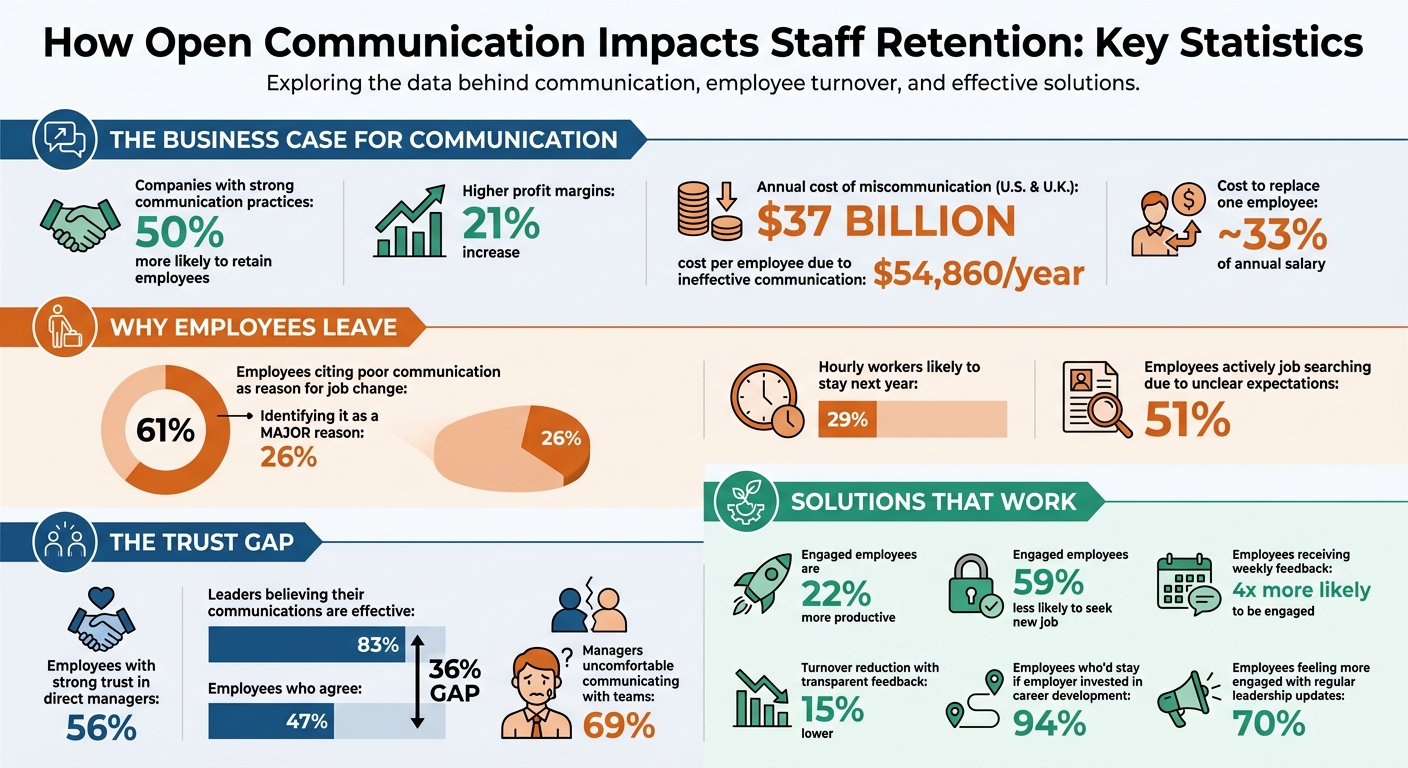
How Open Communication Impacts Staff Retention: Key Statistics
When communication breaks down, employees often decide to leave. In fact, 61% of employees considering a job change cite poor internal communication as a factor, with 26% identifying it as a major reason for their departure. The statistics paint a concerning picture: only 29% of hourly workers feel likely to stay with their current employer over the next year.
The financial consequences are staggering. Miscommunication among employees costs businesses in the U.S. and U.K. an estimated $37 billion annually. On top of that, ineffective internal communication can cost organizations up to $54,860 per employee each year due to wasted time and resources. Add to this the fact that replacing an employee typically costs about one-third of their annual salary, and the true cost of poor communication becomes undeniable.
Fred Cook, Director of the USC Annenberg Center for Public Relations, highlights the importance of communication:
"Maintaining a constructive dialogue with employees can improve morale, increase productivity, build culture and retain valuable employees." - Fred Cook, Director, USC Annenberg Center for Public Relations
Employees rarely quit after a single bad day. Instead, repeated communication failures gradually push them toward the door. When expectations are unclear and contributions go unnoticed, 51% of employees actively start looking for new opportunities.
Trust is another casualty of poor communication. Only 56% of employees report having strong trust in their direct managers, even though managers are the primary conduit for internal communication. This lack of trust impacts daily operations and morale. The disconnect is glaring: while 83% of leaders believe their internal communications are effective, only 47% of employees agree. This gap leaves workers feeling ignored, uninformed, and undervalued.
Inconsistent messaging creates further problems. Employees often have to spend time clarifying tasks instead of completing them, leading to delays and frustration. It's not just employees who struggle - 69% of managers feel uncomfortable communicating with their teams, and 37% find it particularly challenging to give direct performance feedback. This hesitation leaves employees unsure about their performance and future within the company.
Event staffing comes with its own set of communication challenges, which often exacerbate turnover. Among hourly workers, including those in event roles, 46% cite poor communication from managers as a top reason for leaving or declining shifts. These issues are typically operational and immediate: unpredictable schedules, last-minute shift changes, and inconsistent assignment processes, which can be mitigated using budget-friendly staff scheduling tools.
After-hours communication gaps are a major pain point. 85% of hourly workers report needing assistance outside of regular business hours but being unable to get it. For event staff working evenings, weekends, or across multiple venues, the lack of real-time support can leave them feeling stranded when issues arise. Additionally, only 51% of hourly workers feel they have enough control over their schedules, leading to growing frustration when unexpected changes disrupt their plans.
Information silos further complicate matters. In event staffing, communication often flows vertically from management to employees but rarely horizontally between teams. This creates inefficiencies, such as duplicate efforts and slow decision-making, while fostering a lack of shared purpose. Alarmingly, nearly half of managers and over half of employees don’t fully understand their organization’s broader goals. For temporary and event staff, this disconnect makes it hard to see how their roles fit into the bigger picture, leaving them feeling detached from the company’s success. Addressing these challenges with proactive communication strategies is essential to improving retention.
The difference between effective communication and miscommunication can significantly impact retention. Companies that prioritize open communication report profit margins that are, on average, 21% higher. By creating systems that emphasize accessibility, consistency, and relevance, organizations can foster a transparent environment that improves employee retention.
For event staff working across different locations and shifts, having multiple communication channels is essential. Mobile-first platforms are particularly valuable for frontline workers. These tools combine features like engagement, onboarding, and compliance into one easily accessible system. With such platforms, team members can check schedules, receive updates, and connect directly with managers. During live events, two-way radios remain indispensable for instant feedback and quick problem resolution.
Asynchronous communication is another effective strategy for minimizing interruptions while keeping remote teams aligned. Tools like short video or audio messages, automated updates, and scheduled team check-ins allow employees to stay informed without constant disruptions. This approach pays off: engaged employees are 22% more productive and 59% less likely to look for a new job within the next year.
For event staffing organizations, using a comprehensive, mobile-friendly app like Quickstaff (https://quickstaffpro.com) can simplify communication further by integrating scheduling, updates, and messaging into one platform.
By offering multiple communication options, businesses create a foundation for meaningful, ongoing dialogue.
Frequent and meaningful feedback has a powerful impact on employee engagement. Employees who receive feedback at least once a week are nearly four times more likely to feel engaged at work. Additionally, those who have twice as many one-on-one meetings with their managers compared to their peers are 67% less likely to feel disengaged.
Claire Murphy, Director of Customer Success at Great Place To Work®, highlights the importance of consistent feedback:
"Employees who got little to no one-on-one time with their manager were more likely to be disengaged. On the flip side, those who get twice the number of one-on-ones with their manager relative to their peers are 67% less likely to be disengaged."
The structure of feedback matters just as much as its frequency. Weekly or bi-weekly one-on-one meetings - even if only 15 minutes long - should go beyond status updates. These sessions should focus on understanding employees as individuals, discussing their aspirations, and brainstorming ways to improve the business. Complement these meetings with daily team huddles for updates, monthly town halls for two-way communication, and quarterly conversations about long-term career development.
Feedback is only effective if it leads to visible change. After gathering input through surveys or team discussions, summarizing the findings and sharing clear action steps publicly shows accountability. Companies with consistent and transparent feedback practices see approximately 15% lower turnover rates compared to those that don't act on employee input.
Uncertainty about roles, pay, and career growth often leads to higher turnover. While 34% of workers feel they lack opportunities to achieve their career goals at their current job, 94% say they’d stay longer if their employer invested in their career development.
Clarity around current roles and responsibilities is essential. When employees clearly understand their duties and how these align with the company’s goals, workplace confusion and conflicts can decrease by 30%. But clarity about the present isn’t enough - employees also need a clear path forward. For those with one to four years of tenure, having a defined "career path" is the top driver of engagement.
Pay transparency is another key factor in building trust. Sharing pay ranges for each job level eliminates uncertainty and helps employees feel valued. Pair this with visible progress markers, such as new learning opportunities, expanded responsibilities, or cross-departmental projects, to show that growth is recognized and rewarded.
Finally, connecting individual roles to the company’s broader vision ensures employees understand their impact. When leaders explain the reasoning behind major decisions, it helps staff see how their contributions fit into the bigger picture. This connection is especially important for temporary or event staff, who might otherwise feel detached from long-term goals. Companies with clear communication practices are 50% more likely to retain their workforce. Defining roles and career paths not only improves efficiency but also strengthens employee loyalty.
Psychological safety is all about creating an environment where employees can share ideas, voice concerns, or admit mistakes without fear of backlash. This is especially important in event staffing, where decisions made in the moment can significantly impact outcomes. When frontline staff feel comfortable questioning plans or seeking clarity, information flows smoothly across all levels.
This sense of safety directly ties to employee retention. Workers who feel free to speak up report higher morale and deeper engagement. In organizations with high turnover, engaged employees experience 21% less turnover, while in low-turnover environments, the reduction is even greater - 51%. For event teams operating in fast-paced, dispersed settings, this kind of openness allows staff to identify potential risks before they escalate into costly mistakes.
Transparency from leadership plays a key role here. When managers explain the reasoning behind their decisions, it helps employees see how their work fits into the bigger picture, fostering a sense of belonging. The impact is clear: 70% of employees report feeling more engaged when they receive regular updates from leadership.
Establishing psychological safety lays the groundwork for honest conversations, which are essential for building a truly supportive workplace.
Creating psychological safety takes deliberate effort. Leaders can set the tone by being transparent about their decisions and openly admitting their own mistakes. This shows employees that being honest and vulnerable is not only acceptable but encouraged.
Anonymous feedback channels, like suggestion boxes, employee forums, or pulse surveys, can be a great way to encourage candid input from staff who might otherwise hesitate to speak up. HR Addict emphasizes the value of this approach:
"Keeping an open line of communication ensures communication at work is easy, straightforward, risk-free and beneficial to all".
However, simply gathering feedback isn’t enough. Leaders need to act on the common themes raised and communicate the changes being made. This accountability demonstrates that employee input truly matters.
Recognizing and rewarding honest communication is another step. Highlight moments when employees raise concerns that prevent mistakes or save resources. Platforms like Quickstaff (https://quickstaffpro.com) simplify this process for event teams by offering centralized communication tools, ensuring all team members stay connected, even when working across different locations.
Finally, active listening during one-on-one check-ins is crucial. Simple actions like maintaining eye contact, paraphrasing what’s been said, and asking thoughtful follow-up questions help build trust over time. These regular conversations create a safe space for employees to share challenges before they escalate.
Event staffing comes with its own set of communication hurdles. With team members often spread across different venues and time zones, staying in sync can be tricky. Centralized platforms simplify this by consolidating event details, schedules, and updates into one easily accessible hub.
The key is selecting tools that align with your team's comfort level with technology. Lucy Adams, CEO of Disruptive HR, highlights this perfectly:
"We can improve the experience by removing the hassle".
For event teams, this means choosing platforms that are intuitive and require minimal training. Mobile-first tools are particularly effective, ensuring that updates reach remote staff quickly and efficiently.
Take Quickstaff (https://quickstaffpro.com) as an example. It combines event creation, scheduling, availability tracking, and messaging into a single, user-friendly interface. Whether it’s a catering manager updating event details or sending reminders, the entire team gets the same information simultaneously - no more juggling scattered texts, emails, or phone calls.
Reaching staff through multiple channels is critical. Platforms that deliver notifications via various methods, such as SMS for urgent updates, ensure no one misses important details. This approach is especially useful for temporary staff who might not regularly engage with traditional communication tools.
However, technology alone isn’t enough. Clear instructions on how to use these tools are vital to avoid confusion and ensure smooth communication.
Even with the best technology at your disposal, its effectiveness hinges on how well it’s implemented. Without clear guidelines, even advanced tools can fall short. Research shows that companies using digital tools thoughtfully see a 20% boost in employee satisfaction and a 21% increase in productivity.
Start by defining the purpose of each communication channel. For example, use the centralized platform for event details, instant messaging for quick questions, and email for formal updates. When staff know exactly where to find specific information, they save time and avoid feeling overwhelmed.
Set clear expectations for response times. This not only ensures timely communication but also helps maintain a healthy work-life balance. For instance, you might require event confirmations within 24 hours but avoid expecting immediate replies after hours.
Blaise Radley, a contributor at Workday, underscores the value of maintaining open lines of communication:
"Increased engagement and retention based on external economic conditions will only be temporary - long term improvement requires an open dialogue with your staff about what issues are most meaningful to them".
Regular feedback from your team is essential. Ask them how the tools are working and make adjustments based on their input. This not only demonstrates that you value their opinions but also helps address issues before they escalate. By blending effective technology with clear guidelines, organizations can streamline operations and create the kind of transparent communication that keeps teams engaged and motivated.
To improve retention, you need to measure it effectively. Start with your basic turnover rate - compare the number of employees leaving to your total workforce - and break it down by department and manager. If one team has notably lower turnover, dig into their leader's communication style to identify what’s working.
Short pulse surveys with 3 to 10 questions are another great tool to gauge how employees feel about communication clarity and managerial accessibility. Leaders often misjudge how well they communicate. For instance, in 2025, 83% of leaders believed their internal communication was clear, but only 47% of employees agreed. This gap in perception can directly impact retention.
Also, keep an eye on engagement metrics like email open rates and platform logins. These numbers can tell you if your messages are actually reaching and resonating with your team.
| Metric Category | What to Track | Why It Matters |
|---|---|---|
| Engagement | Email open rates, message read time, survey participation | Indicates if your content connects with employees |
| Reach | Platform logins, mobile app usage, page visits | Shows whether your messages are reaching employees |
| Impact | Turnover rates by department, task completion rates, revenue per employee | Links communication to business outcomes |
| Sentiment | Net Promoter Score (NPS), satisfaction survey scores | Reflects employee morale and loyalty |
Once you’ve gathered these metrics, the real work begins: translating feedback into actionable changes.
Data is only useful if you act on it. Responding quickly and visibly to employee feedback is crucial. Without follow-up, even the most thorough surveys lose their value. Take Slack’s People Operations team as an example. They conduct quarterly surveys to evaluate workload balance, then share the results publicly along with specific action steps. This ensures employees see how their input leads to tangible changes.
Use multiple feedback channels to capture a wide range of perspectives. Annual surveys can highlight long-term issues, while weekly pulse surveys help spot emerging concerns early. Conversations like "stay interviews" also provide valuable insights into why employees choose to stay, shedding light on communication practices that support retention. Interestingly, employees who receive meaningful feedback at least once a week are almost four times more likely to feel engaged at work.
Look for recurring themes in your feedback. For example, if employees frequently report missing updates, consider centralizing notifications with scheduling software. On the other hand, if they feel overwhelmed by constant communication, designate "focus hours" to limit non-urgent messages. After implementing changes, follow up with surveys to see if retention improves. Companies that maintain transparent feedback systems and act on them tend to see 15% lower turnover rates compared to those that don’t.
Open communication isn’t just a perk - it’s a practical way to tackle staff turnover. When employees clearly understand their roles, get consistent feedback, and feel their voices are heard, they’re much more likely to stick around. In fact, companies with strong communication practices are 50% more likely to experience lower turnover rates. Plus, organizations that emphasize transparency see 21% higher profit margins. These figures show how better communication directly impacts both retention and overall success.
The strategies outlined - like using multiple communication channels and fostering psychological safety - help create a workplace where employees feel genuinely valued. When team members can express concerns, understand why decisions are made, and see their feedback lead to changes, they build a sense of loyalty that reduces expensive turnover. It’s worth noting that 94% of employees say they’d stay longer at a company that invests in their career growth. This underscores the importance of maintaining open, honest conversations about development opportunities. Together, these approaches build a stronger, more committed workforce.
For event staffing businesses managing teams across different locations, having the right tools makes all the difference. A centralized platform like Quickstaff simplifies communication with features like unlimited messaging, automated reminders, and detailed event updates - all accessible on mobile devices. When staff can easily check schedules, confirm availability, and stay informed in one place, they feel more connected and less likely to miss critical updates that could lead to frustration or disengagement.
If you're looking to lower turnover rates, start by prioritizing clear and approachable communication. This means creating an environment where employees feel comfortable sharing their thoughts and concerns. Be transparent about company processes and decisions, and make it a habit to actively seek out honest feedback.
When employees feel heard and valued, trust naturally grows. And with trust comes stronger engagement - a key factor in tackling retention challenges head-on.
Managers should hold one-on-one meetings on a consistent basis - weekly or bi-weekly works best. These meetings create a space for open communication, allowing managers to address employee concerns, strengthen trust, and ultimately boost retention.
When assessing the effectiveness of open communication within a workplace, certain metrics can provide valuable insights. These include:
By analyzing these metrics, you can better understand how open communication influences employee retention and overall engagement.