How Health and Safety Training Boosts Staff Retention
May 8, 2026


High staff turnover is costly and disruptive, especially in the events industry. Safety training can help solve this problem by reducing workplace risks, improving employee confidence, and creating a sense of loyalty. Here’s why it matters:
Effective safety programs, like hands-on drills and regular refresher courses, not only reduce injuries but also show employees that their well-being matters. This builds trust and keeps teams engaged. Tools like Quickstaff simplify scheduling and tracking safety training, ensuring compliance and boosting retention. Investing in safety isn’t just about avoiding risks - it’s about keeping your best people.

Health and Safety Training Impact on Staff Retention: Key Statistics
The event industry faces annual turnover rates of 20%–30%, which puts immense pressure on operations. According to Meaghan Sabyan and Caitlyn English from Chowgirls Catering:
"In hospitality, high turnover is often treated as an unavoidable part of the job. Quick hires, rushed onboarding, and 'learn-as-you-go' expectations have become the norm, but they don't have to be."
One major factor driving turnover is safety concerns. Less experienced employees are 50%–70% more likely to experience workplace injuries compared to their seasoned counterparts. When new staff are tasked with high-stakes responsibilities - like managing crowds at large-scale events or handling heavy equipment during setups - without sufficient training, it signals a lack of focus on their safety. Proper training could significantly lower these risks. Adding to the challenge, over 60% of event planners report struggling to find qualified candidates for specialized roles, creating a vicious cycle of burnout in already understaffed teams.
Long hours, weekend shifts, and unpredictable schedules, combined with onboarding new event staff inconsistently, often leave new hires feeling overwhelmed and burned out. These issues not only disrupt day-to-day operations but also lead to costly financial repercussions.
High turnover doesn’t just disrupt operations - it’s expensive. Replacing a single employee costs, on average, $4,700 in direct expenses. When you factor in lost productivity, the strain on remaining staff, and operational delays, the total cost can balloon to three or four times the employee’s salary.
Another hidden consequence is the loss of institutional knowledge. Departing employees take valuable insights with them - such as client preferences or undocumented safety practices - leaving businesses to essentially retrain their workforce every two to three years when turnover rates exceed 40%. This constant churn forces companies to rely on costly last-minute hires and puts service quality and reputation at risk.
The financial strain doesn’t stop there. Poor training practices can lead to increased insurance premiums - rising by 20% to 50% or more. A single serious safety incident could even result in the cancellation of insurance coverage altogether, leaving businesses vulnerable to massive liabilities. Courts often view inadequate training as negligence, which strengthens injury claims and drives up settlement costs. As Charles Poole, a digital solutions expert, warns:
"The question is not whether... companies can afford adequate safety training, but whether they can afford the devastating costs of inadequacy."
Safety training does more than just teach procedures - it helps employees feel secure in their roles. When workers know how to handle tasks like lifting heavy objects, managing crowds, or responding to emergencies with an event planner kit, their confidence grows. This sense of security translates into better performance and higher job satisfaction. A 2023 study involving 125 operational-level employees revealed that strong health and safety practices, including clear procedures and risk management strategies, positively impact employee retention rates. Confident employees are more likely to stay, creating a workplace built on trust and stability.
Investing in safety programs shows employees they matter. When organizations allocate resources to injury prevention and overall well-being, it sends a clear message: the workforce's health and longevity are priorities. Employees who feel valued in this way are more inclined to remain loyal. In fact, companies that implement wellness programs have reported a 425% return on investment when it comes to retaining staff. On the flip side, seeing coworkers suffer preventable injuries can push employees to seek safer work environments. Prioritizing safety not only reduces injuries but also fosters a sense of loyalty and commitment among team members.
Proper training is key to preventing accidents and minimizing injuries that lead to absenteeism. When employees feel protected from potential harm or discomfort, they’re more engaged and less likely to leave their roles. By addressing early signs of issues like muscle strain, poor ergonomics, or unsafe practices, organizations can step in before minor problems grow into major disruptions. A safer workplace keeps employees healthier, more productive, and more likely to stick around.
When it comes to safety training, nothing beats real-world practice. Tabletop exercises give teams a chance to simulate emergency scenarios, testing how well they can coordinate their responses. Site walkthroughs are another hands-on approach, helping teams identify specific risks like trip hazards, electrical dangers, or utility locations before an event even starts. And then there are drills and simulations - whether it's for evacuations, fire emergencies, or medical incidents, these exercises create the kind of muscle memory that's critical when quick action is needed.
The events industry comes with its own set of challenges, so training should be tailored accordingly. For example, crowd management training might involve learning how to monitor crowd density and setting up "release valves" to avoid crush risks. Similarly, weather contingency rehearsals can prepare staff for sudden high winds that might affect temporary structures or for managing extreme heat by setting up "cool-off zones". Meanwhile, role-playing exercises are great for practicing de-escalation techniques when dealing with unruly attendees or unauthorized access. Early, practical training like this plays a key role in building a safer event environment.
"We want event organizers to think of safety as an enabler, not a barrier. When safety is done right, it allows the event to be more successful because everyone can focus on the experience."
- Bryan Huneycutt, Vice President of Operations, Halo Solutions
Practical skills are a strong foundation, but ongoing learning is crucial for maintaining safety standards.
Safety training isn't a one-and-done deal. OSHA requires general industry safety training to be refreshed at least once a year - within 12 months of the last session. Certifications like first aid often have a three-year validity, meaning staff need full refresher courses before their certification expires. In higher-risk environments, updates may need to happen even more frequently.
Spaced repetition is a proven strategy to make training stick. Instead of cramming all safety training into one long session, spreading it out - like offering scenario-based training over the first 90 days of employment - helps combat knowledge loss. Quick safety huddles before shifts are another great way to keep safety protocols fresh and address any specific risks for the day’s event. And don’t forget the paperwork - keeping training records for at least five years is essential for compliance during audits.
"Safety training is a cornerstone of workplace safety, but its effectiveness isn't solely determined by frequency. The real challenge lies in balancing the right training intervals with methods that ensure knowledge retention."
- Jim Tormey, CEO, Sentry Road
To make training work for everyone, it needs to fit into the unpredictable schedules of event staff. Mobile-optimized platforms are a game-changer, allowing workers to complete training modules on their smartphones during downtime or on-site. Breaking complex scenarios into micro-learning segments of 3–10 minutes makes it easier for staff to absorb information while staying on schedule.
Interactive formats are far more effective than passive ones. Videos, scenario-based exercises, and even gamified training elements engage multiple senses, making the information more memorable. Just-in-time training, which delivers task-specific lessons right before they’re needed, ensures that critical safety steps are fresh in employees' minds. Regular quizzes and practical evaluations after each module also help confirm that the material is understood. The ultimate aim? To make safety training not just accessible, but also directly useful when it matters most.
Start by conducting a thorough risk assessment to identify potential hazards like trips, electrical issues, crowd management challenges, weather-related risks, fire, medical emergencies, and security threats. Evaluate the likelihood and impact of each risk on both your staff and attendees.
Review your Incident Action Plans (IAPs), evacuation routes, communication systems, and staff role assignments to ensure they align with the specific needs of each venue. Check your physical safety measures, such as the placement of utilities, fire extinguishers, defibrillators, and trauma kits, using accurate facility maps. After each event, gather feedback during the "Closeout" phase to uncover safety gaps. This post-event evaluation often provides the clearest insights into what needs improvement.
"If we're brought in during the design phase, we can catch potential issues before they become expensive or dangerous problems to fix." - Bryan Huneycutt, Vice President of Operations, Halo Solutions
It's also valuable to analyze near misses - those close calls that could have led to injuries but didn’t. Encourage open discussions among employees to share these experiences and refine future protocols. Real-time digital audit tools can help identify patterns in safety lapses during events. Lastly, confirm that your safety practices comply with major standards like OSHA (workplace hazards), ADA (accessibility), and NFPA (fire safety).
Once you’ve identified areas for improvement, collaborate with experts to address the gaps effectively.
After identifying your training needs, choosing the right provider is crucial. Look for organizations that offer certifications aligned with recognized industry standards. For example, a Level 3 Award in Health and Safety in the Workplace typically costs about $385 per participant and requires three days of training. Keep in mind that first aid certifications usually need to be renewed every three years, so plan your budget and schedule accordingly.
Seek providers with experience in event-specific challenges. Generic workplace safety training may not cover scenarios like crowd crushes, weather contingency plans, or managing unruly attendees. Ask providers about their expertise in handling these situations and whether their training includes practical exercises instead of just classroom sessions. Reputable providers should be able to share testimonials and examples of how their training has benefited other event businesses.
To make training more accessible and appealing to your team, integrate it into their regular schedules. Use mobile-friendly platforms that allow staff to complete training during downtime. Breaking content into short, manageable segments of 3–10 minutes can help employees absorb the material without disrupting their workflow.
Tools like Quickstaff make this process easier. You can schedule training alongside regular event shifts, track staff certifications, and send automated reminders for upcoming or overdue training. For quick, event-specific refreshers, consider holding safety huddles - brief 5–10 minute discussions before a shift to review key protocols for the day’s event.
OSHA requires certain safety training to be refreshed annually, within 12 months of the last session. By using scheduling tools, you can plan these refreshers well in advance, avoiding conflicts with peak event periods. The key is to weave training into your operations smoothly, so it feels like a natural part of the workday rather than an interruption.
Integrating training is just the first step - measuring its effectiveness ensures lasting improvement. Track completion rates, conduct quizzes, and monitor incident trends to evaluate how well the training is working. Keep detailed records of employee names, training dates, and topics covered for at least five years to meet audit requirements. Regular quizzes and hands-on evaluations can help gauge how much information employees retain and pinpoint areas where additional reinforcement is needed.
Analyze data on incidents and near misses to see if training is reducing workplace injuries. Compare staff retention rates before and after implementing safety training. Companies with strong safety practices often see lower absence rates and higher employee retention. Post-event surveys are another great way to gather feedback from employees on whether the training was clear and helpful, using their input to improve future sessions.
Automated tracking tools, such as Learning Management Systems (LMS) or Quickstaff, can flag when certifications are nearing expiration. This proactive approach helps you avoid compliance issues and ensures your team stays current. Over time, you’ll notice a clear connection between prioritizing safety and building a more loyal, engaged workforce.
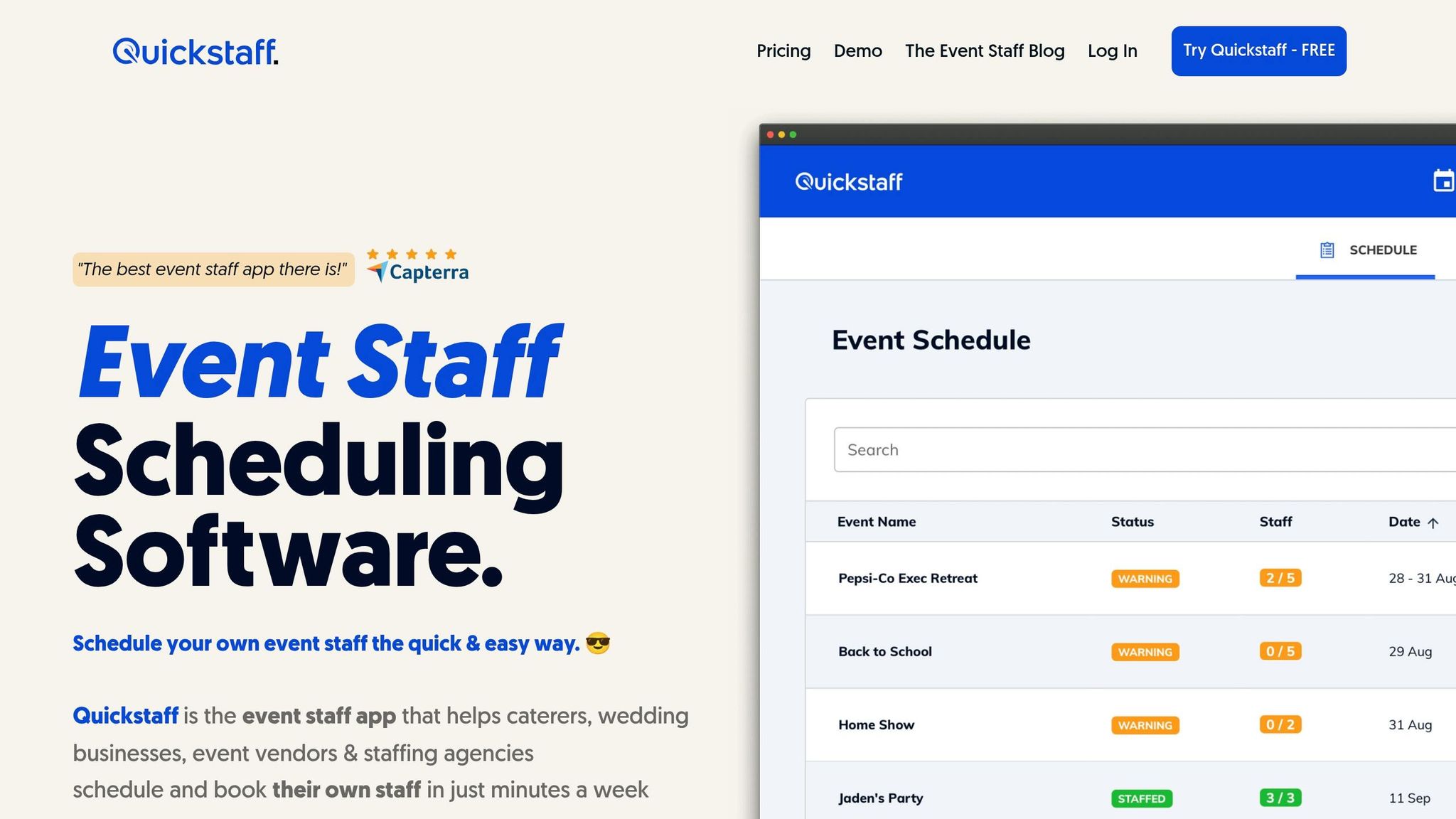
Quickstaff takes the challenge of coordinating health and safety training and simplifies it through its scheduling platform. Managing training across multiple venues, roles, and deadlines can be overwhelming, but Quickstaff treats training sessions like events, providing a centralized hub to schedule, track, and communicate everything your team needs to stay compliant and safe.
Quickstaff makes it easy to set up training sessions with essential details like time, location, and attached materials. You can link safety manuals, PDFs, and training notes directly to each session, ensuring staff have access to crucial information beforehand. This feature is especially helpful for sharing digital versions of health and safety protocols or OSHA documentation.
The RSVP system offers real-time updates on attendance, while role-based targeting and availability tracking ensure the right team members are scheduled without conflicts. For recurring sessions like annual or quarterly refresher courses, you can simply duplicate past events. Additionally, the waitlist feature automatically fills cancellations, so sessions remain fully booked.
"My time spent scheduling has shrunk majorly, leaving me more time to focus on recruiting, on-boarding and training." - Jennifer Manley, Staffing Coordinator
With these tools, Quickstaff helps create a safer and more dependable workplace, which can strengthen employee commitment.
Managing certifications - knowing who’s certified, when renewals are due, and who needs refresher training - can quickly become a logistical headache. Quickstaff’s automated certification tracking simplifies this by consolidating all records into one secure, searchable database. Automated reminders and notifications ensure no expiration dates are missed, with escalation alerts sent to supervisors if necessary.
Through self-service portals, employees can upload and manage their own certifications, reducing administrative workload and encouraging them to take responsibility for their training. By identifying upcoming expirations, you can schedule refresher sessions ahead of time, avoiding last-minute scrambling. This proactive approach ensures compliance and keeps your team’s certifications up to date, promoting a reliable and well-prepared workforce.
Effective communication is key to reinforcing safety training, and Quickstaff’s messaging tools make it seamless. Automated notifications, directions, and event notes help boost attendance and engagement. You can also send targeted messages to specific groups, like those attending a particular session, rather than sending irrelevant updates to the entire team.
The platform’s tracking features align timelines and send automated alerts to ensure training is completed on schedule. This is especially useful for organizing critical sessions, such as hazardous material handling or emergency response training. These communication tools contribute to a safer and more organized work environment, which can help build stronger employee loyalty.
Health and safety training isn't just about meeting regulations - it’s a key driver of employee retention and operational success. Companies with strong safety cultures can lower turnover rates by an impressive 24%–59%. And when you consider that replacing a single employee can cost up to twice their annual salary, the financial benefits of retention become crystal clear.
But the impact goes beyond numbers. Safety training fosters trust and loyalty. As Calgary Safety Consultants aptly put it:
"Companies that make safety personal - not procedural - are the ones people want to work for".
When employees feel genuinely valued and cared for, they’re far more likely to stay and excel. In fact, 94% of employees say they would remain longer at a company that invests in their professional growth and development.
This loyalty translates directly into operational advantages. Retaining experienced staff helps preserve institutional knowledge and minimizes operational risks. Plus, a strong safety reputation makes your company more attractive to potential hires. This is especially important because new employees are statistically at greater risk of workplace injuries due to their lack of familiarity with processes and hazards. Comprehensive training not only reduces these risks but also signals professionalism and stability to job seekers.
In the words of Calgary Safety Consultants:
"Safety culture is the connective tissue between operations, HR, and leadership. When it's strong, it stabilizes everything else".
Quickstaff’s scheduling tools make it easier to organize these critical training sessions, ensuring compliance and a safer, more committed workforce. By prioritizing health and safety training, you’re not only protecting your team - you’re laying the foundation for long-term success in your event business.
Safety training is a must for event staff, as it helps address key workplace hazards and ensures a secure environment for both employees and attendees. Core topics to cover include:
Focusing on these areas not only reduces potential dangers but also helps create a workplace culture that prioritizes safety. This approach can lead to better staff morale, stronger retention, and smoother event operations.
Tracking how safety training influences retention is a smart way to showcase its value. By monitoring employee retention rates over time, you can directly connect improvements to your training programs. Safety training helps reduce turnover by creating a workplace where employees feel secure and supported. When workers see a genuine commitment to their well-being, they’re more likely to stay long-term, fostering a stronger, more dedicated team.
To handle unpredictable event schedules, consider using flexible, modular safety training that aligns with varying timings. Options like short, focused sessions or on-demand online courses allow staff to complete training at times that work best for them. By fostering a culture of safety with ongoing learning and quick refreshers, employees stay up-to-date and compliant - even during hectic periods. This method reduces interruptions while keeping staff well-informed, supported, and engaged.