Ultimate Guide to Hospitality Training for Event Staff
May 10, 2026


Hospitality training ensures event staff deliver smooth and professional guest experiences. It focuses on onboarding new event staff, technical skills, interpersonal abilities, and safety compliance. With 94% of employees valuing career growth opportunities and turnover costs exceeding $5,000 per entry-level hire, investing in training improves retention and guest satisfaction.
Key takeaways:
Training boosts team performance, reduces turnover, and enhances guest satisfaction, with 42% of consumers willing to pay more for friendly service. A consistent approach ensures events leave a lasting impression.
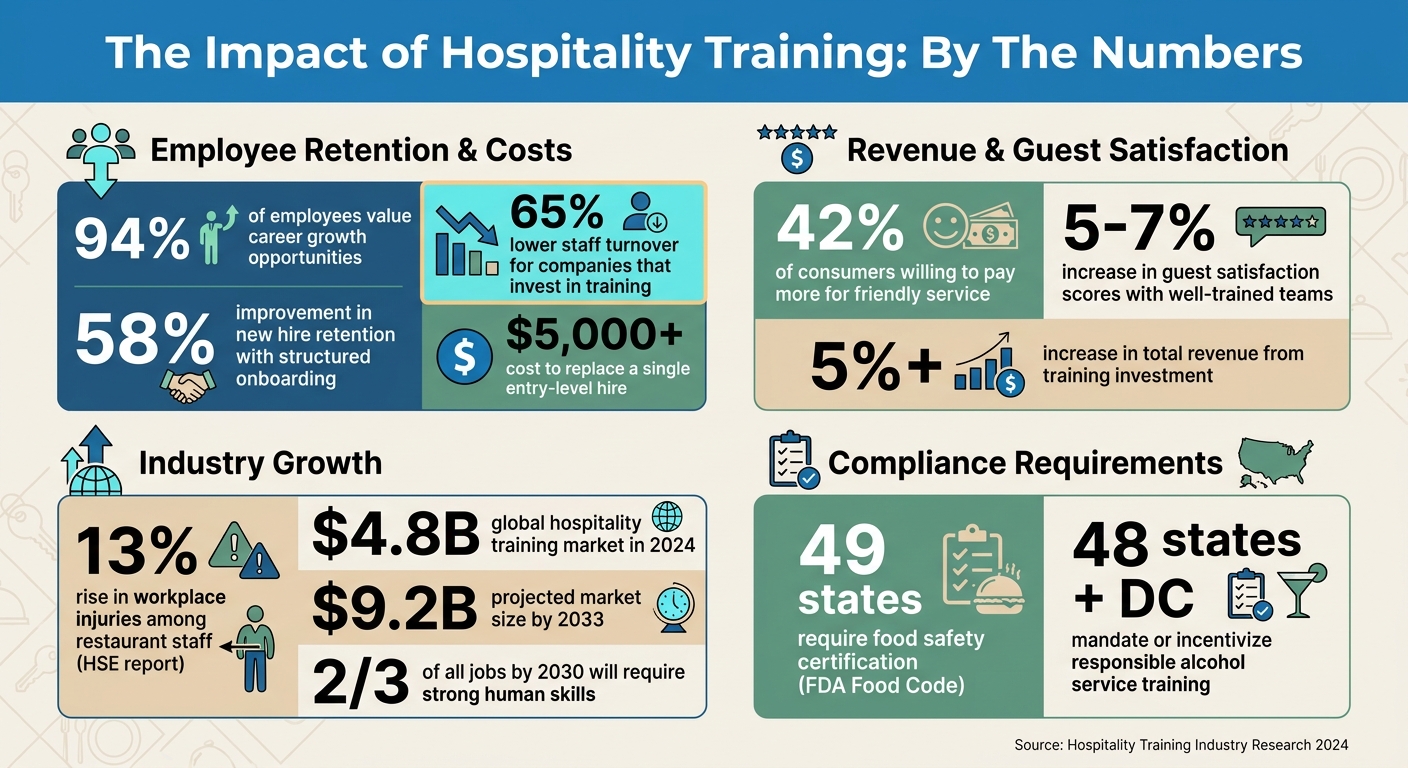
Key Statistics on Hospitality Training ROI and Impact
A well-rounded hospitality training program includes structured onboarding, a mix of technical and interpersonal skills training, and a strong focus on safety and compliance. Together, these elements ensure a smooth operation and exceptional guest experiences.
Onboarding is where employee retention starts. In fact, structured onboarding can boost new hire retention by 58%, a critical improvement in an industry known for high turnover. Breaking onboarding into clear phases ensures new hires are fully prepared for their roles:
"A server training checklist is more than a list of tasks or skills to teach new hires. It's a structured roadmap that ensures every team member receives consistent, complete training - no matter who is leading the session or how busy the restaurant is." - Marlaina Lanese
Pairing new hires with a mentor or "buddy" can be a game-changer. This person not only demonstrates brand standards in real time but also provides support during shifts. To ensure understanding, use the "teach-back" method, where trainees explain or demonstrate processes back to trainers. Avoid overwhelming new hires with lengthy sessions; instead, break training into short, actionable modules they can apply right away.
Hospitality staff need a balance of technical know-how and interpersonal skills. Technical training focuses on tools and logistics, including:
Food safety certification based on FDA Food Code is required in 49 states, and responsible alcohol service training is mandatory or incentivized in 48 states plus Washington, D.C..
Soft skills are just as critical. By 2030, roles requiring strong human skills are expected to make up two-thirds of all jobs. Skills like active listening, empathy, teamwork, and conflict resolution elevate service from good to unforgettable. Staff who can anticipate guest needs, adapt to fast-paced environments, and remain calm under pressure create the kind of experiences that lead to glowing reviews and repeat visits.
Focus training efforts on high-impact areas: educate staff on top-selling menu items, common modifications, and allergens to minimize early mistakes. Tailor learning paths by role - train front-of-house staff on POS systems and back-of-house staff on station setup, rather than using a generic program. Establish 8 to 12 core standards, such as greeting scripts or cleaning routines, that must be consistently followed during every shift.
Safety training is non-negotiable in hospitality. It covers three key areas:
The Health and Safety Executive reported a 13% rise in workplace injuries among restaurant staff, highlighting the importance of ongoing safety education.
"Maintaining good health and safety practices is integral to good hospitality management, as it protects both employees and guests while ensuring business success." - Gabrielle Cayabyab, Content Specialist, SafetyCulture
Use hands-on simulations for fire drills, emergency scenarios, and conflict resolution training. Pre-event briefings - just 10 minutes long - can reinforce key safety topics like spill management, replenishment zones, and escalation protocols for emergencies. Every team member should know exactly who to contact in case of a safety or security issue.
Compliance training should be tailored to specific roles. Bartenders, for example, need responsible alcohol service certification (e.g., TIPS or ServSafe Alcohol) to handle age verification and intoxicated guests. Setup crews benefit from ergonomics training, while kitchen staff require allergen awareness and cross-contact prevention protocols. Digital tools like mobile auditing apps and automated compliance logs can simplify safety checks and reduce paperwork.
Effective training sessions require thoughtful preparation, balancing schedules, staff availability, and the skills you aim to develop. A mix of structured planning and hands-on learning ensures your team is ready for success.
Timing plays a key role in planning training. Aim to schedule sessions during slower periods or off-peak hours to maximize attendance without disrupting operations. For major events or busy seasons, plan sessions well in advance to accommodate everyone's availability. Breaking training into shorter, focused modules helps keep participants engaged and improves knowledge retention. This approach is especially useful for complex topics, like learning a POS system or mastering multi-course service protocols, where multiple shorter sessions are more effective than a single long one.
Digital tools make managing training sessions much easier. Learning Management Systems (LMS) and scheduling platforms can handle the heavy lifting, from organizing sessions to tracking progress. These tools allow managers to schedule, deliver, and monitor training with minimal manual effort. For example, they can automatically coordinate onboarding sessions or refresher courses during peak times. Features like real-time tracking let you see who has completed training, who holds current certifications, and who might need a refresher - all from one dashboard.
Platforms like Quickstaff take this a step further by integrating training schedules with event management. Quickstaff allows you to coordinate training alongside event planning, track staff availability, and send automated reminders. Its mobile-friendly interface enables staff to confirm attendance, review session details, and ask questions - all from their phones.
While digital tools are invaluable, hands-on practice through on-site walkthroughs adds an essential layer of preparation.
On-site walkthroughs bridge the gap between theoretical knowledge and practical application. Touring the venue allows staff to visualize the guest experience, from arrival and registration to seating and departure. It also helps identify potential challenges - like traffic flow or bottlenecks - before they become problems. This step is especially important for large venues like the Javits Center in New York City or sprawling convention spaces in Las Vegas, where navigation can be tricky.
During these walkthroughs, assign specific zones to team members based on their roles. For instance, ushers can focus on crowd flow and seating logistics, while catering staff should familiarize themselves with service points, kitchen access, and areas for dietary accommodations. Use this time to run through potential scenarios, such as handling last-minute seating changes or assisting lost guests. For VIP events, emphasize the importance of meeting elevated expectations, ensuring staff can deliver attentive and discreet service.
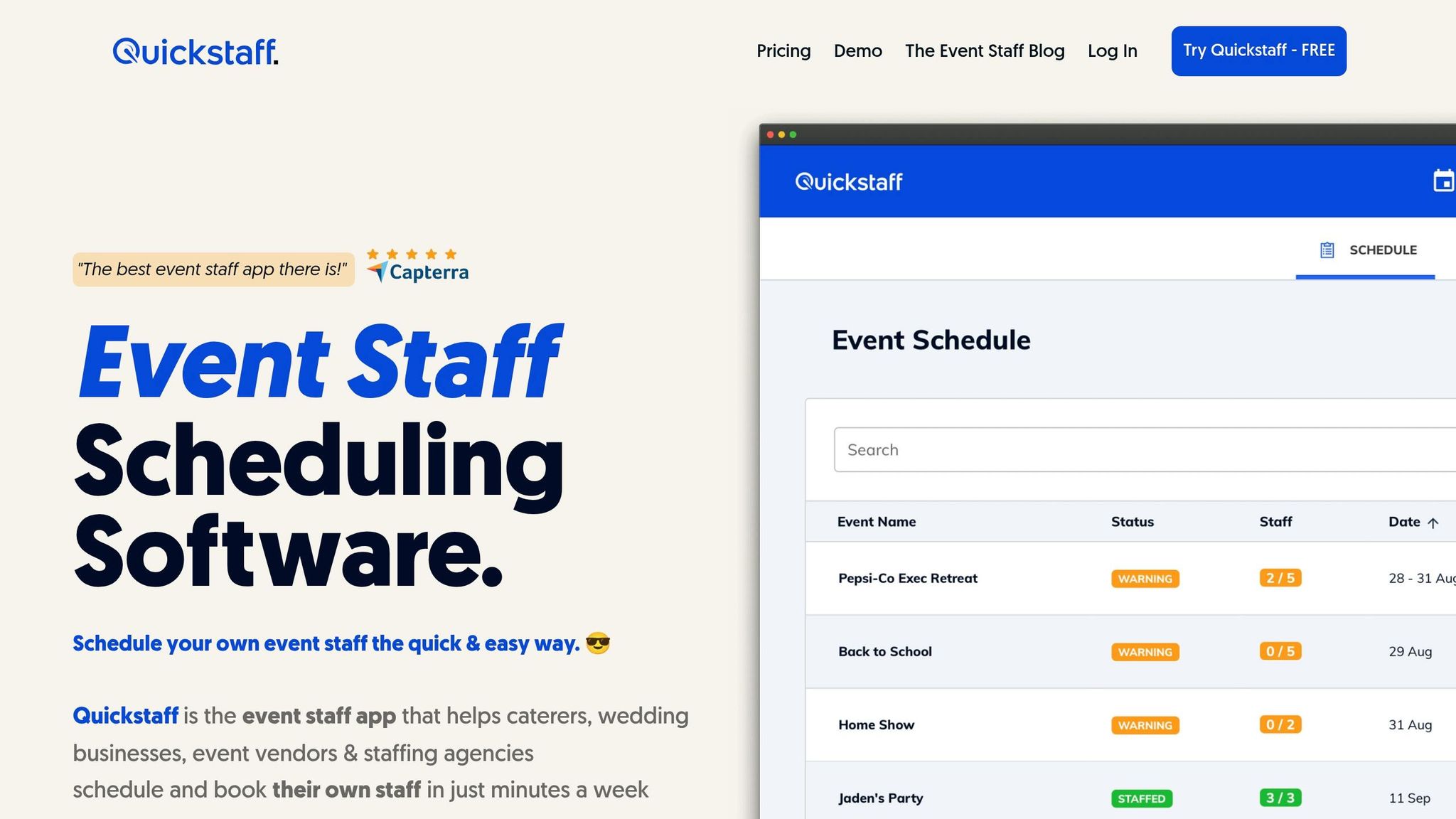
Quickstaff simplifies the process of managing training and event schedules by consolidating everything into one platform. No more juggling multiple calendars or tools.
With Quickstaff, scheduling training sessions is as straightforward as planning any event. You can attach essential materials - like PDF manuals or dress code guidelines - directly to the training session. For recurring sessions, such as monthly safety training or weekly orientations, the "Duplicate past events" feature saves time by letting you clone an existing session and update only the date.
The platform’s role-based scheduling ensures the right team members are invited to the appropriate training. For instance, you can schedule a bartender certification course or a server refresher and invite only those in those specific roles. Staffing Coordinator Jennifer Manley shared her experience:
"My time spent scheduling has shrunk majorly, leaving me more time to focus on recruiting, on-boarding and training."
Quickstaff makes it easy to avoid scheduling conflicts with its benefits of event staff scheduling software like availability tracking. Team members can block out unavailable dates up to three months in advance, so you don’t accidentally invite someone who can’t attend. Invitations are sent via email, and staff can accept or decline with just one click. This gives you real-time updates on who’s attending.
For mandatory sessions, the built-in waitlist feature automatically fills spots when someone declines. Plus, automated reminders and a mobile-friendly interface ensure everyone has quick access to training details, directions, and any attached materials. This seamless tracking integrates effortlessly with the platform’s event calendar.
Quickstaff combines training sessions and live events into a single calendar, making it easier to manage everything at a glance. You can quickly identify which sessions are fully staffed and which need more participants. This unified view helps avoid scheduling conflicts and allows you to plan training during times when staff availability is higher. Kelly from The Abbot KC explained how this has helped:
"The time that we have been able to save by using this staff scheduling software has allowed us to tackle the other issues that we face thereby improving our overall events!"
Quickstaff also includes unlimited messaging, making communication with your team simple. Whether it’s sending reminders to new hires about an upcoming session or sharing updated protocols with bartenders, you can ensure everyone stays informed and prepared.
The work of training doesn’t end when the session wraps up. The real challenge lies in assessing whether it’s making a difference. Without measuring its impact, you’re essentially guessing whether your investment in time and money is leading to meaningful staff improvement.
The first step is gathering feedback from multiple angles. Start with your team - send out post-training surveys within 24–48 hours while the experience is still fresh. Go beyond simple star ratings and ask detailed questions: What did they learn? What was unclear? What would they change? Written responses often provide richer insights than numerical scores.
Don’t forget about guest feedback. Platforms like Google, Yelp, and TripAdvisor can be goldmines for understanding how training affects service quality. Compare training dates to review trends - are complaints about slow service or unfriendly staff decreasing after specific sessions? This can offer a clear picture of whether the training is hitting its mark.
Ongoing feedback is just as important. Monthly check-ins or “stay interviews” give staff a chance to voice concerns about areas where they feel unprepared. And remember, replacing a single hospitality worker can cost over $5,000. These conversations not only help retain staff but also guide future training focus.
Real-time observation during shifts or events is where you’ll see if training has truly sunk in. Use straightforward checklists to monitor key behaviors. For example, are servers greeting guests promptly? Are bartenders following proper pour standards? These observations can highlight gaps between what’s taught in training and what happens on the floor.
Track both hard metrics - like error rates or billing disputes - and softer indicators such as teamwork and customer satisfaction. For customer service, you might evaluate how staff handle complaints using the HEART Model (Hear, Empathize, Apologize, Respond, Thank). These performance reviews are the foundation for assessing your training program’s return on investment.
To calculate ROI: (Net training benefits ÷ Total training costs) × 100. Expert Jack Phillips suggests that while most programs should be evaluated for immediate feedback, only the most expensive initiatives - around 5–10% - require a full ROI analysis.
The hospitality industry never stands still. New regulations, evolving technology, and changing guest preferences mean training materials must keep pace. For instance, many U.S. states now mandate human trafficking awareness training, and FDA Food Code updates continue to refine allergen protocols. Reviewing compliance training every quarter helps ensure you’re staying ahead.
Ditch outdated printed manuals in favor of digital playbooks. These can be updated instantly to reflect changes, whether it’s a new menu item, an updated POS system, or a revised dress code. With the global hospitality training market expected to grow from $4.8 billion in 2024 to $9.2 billion by 2033, it’s clear that modern, adaptable training methods are the way forward.
Guest expectations are also shifting. Regularly review feedback to identify emerging themes. If you notice repeated mentions of sustainability or accessibility concerns, it might be time to weave these topics into your training. As Helena Neves wisely states:
"What gets measured gets managed".
Hospitality training isn't just a task to check off a list - it's the most controllable factor that can turn an ordinary event into a truly memorable experience. Your staff play a crucial role as both the first and last impression for guests. They're not just employees; they're problem solvers and revenue drivers who can elevate routine interactions into something unforgettable.
Companies that invest in employee training see 65% lower staff turnover compared to others. On top of that, well-prepared teams can raise guest satisfaction scores by 5% to 7% and increase total revenue by over 5%. And when replacing a single team member costs upwards of $5,000, the financial benefits of training become undeniable.
The approach to training must keep up with the times. The industry is embracing methods like microlearning, gamification, and VR simulations to engage employees in meaningful ways. Whether you're conducting pre-event site tours, applying the HEART Model to resolve complaints, or using tools like Quickstaff to streamline training and event planning, the real secret is consistency.
There isn’t a one-size-fits-all timeline for training event staff. The length of training depends on how complex the tasks are and how experienced the team members already are. What matters most is ensuring the training is comprehensive enough to cover key responsibilities and customer service skills effectively. Focus on continuous learning and regular reinforcement to build lasting success, rather than sticking to a rigid schedule.
In the United States, event staff frequently need to obtain alcohol service certification, like TIPS or ServSafe Alcohol. Many states require these certifications to ensure responsible beverage service and adherence to local regulations.
Evaluating how training influences guest experience means looking closely at service quality and guest satisfaction. This can be done through tools like feedback forms, online reviews, and surveys. Positive changes in how staff interact with guests and improvements in service quality metrics are also strong indicators of success. By consistently monitoring these elements, you can ensure that training is making a noticeable difference in guest satisfaction and their overall experience.