Ultimate Guide to Leadership Training for Event Staff
February 23, 2026

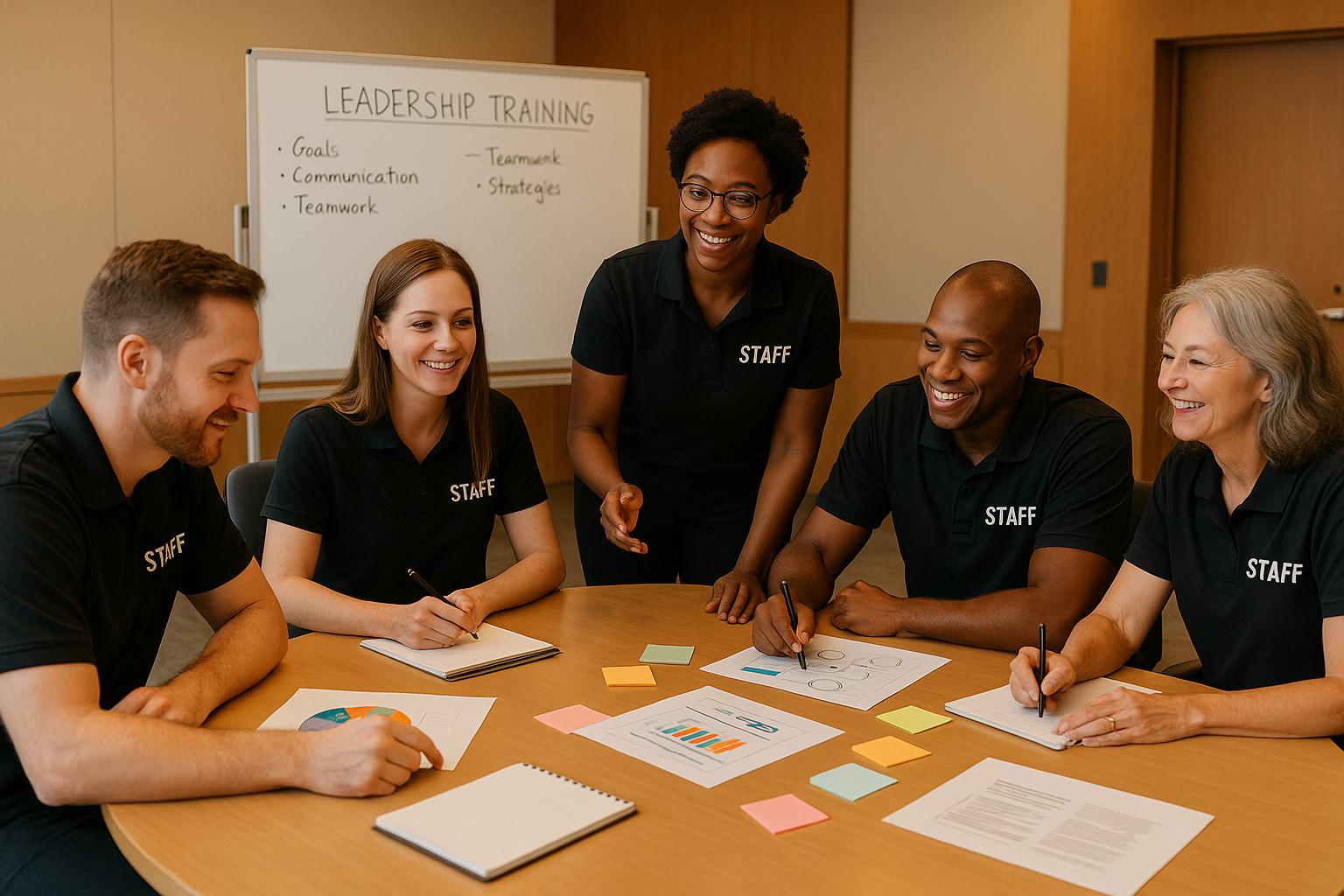
Strong leadership is the key to running smooth, efficient events. This guide breaks down how to train your event staff to make quick decisions, communicate effectively, and handle high-pressure situations. Leadership training not only improves event operations but also helps retain skilled staff in a competitive industry.
Here’s what you’ll learn:
Start small: Focus on scenario-based exercises or assign leadership roles during events. Even small steps can boost team performance and create a more reliable workforce.
Leading an event team requires a unique mix of skills to handle the unpredictable nature of live events. These abilities often determine whether an event runs smoothly or descends into chaos.
Among the most important skills for event leaders are the ability to make quick decisions under pressure and communicate effectively to keep the team motivated. Industry professionals often describe successful leaders as "agile, flexible, collaborative, innovative", and willing to "jump in the trenches whenever needed". These qualities are essential in the fast-paced, high-stakes world of live events. Let’s take a closer look at these key skills.
Event leaders are like the captains of a ship, constantly scanning for potential issues and steering the team toward solutions. When unexpected problems arise - like vendor delays or equipment malfunctions - leaders must act swiftly to prevent things from spiraling out of control.
Having clear guidelines for what can be decided on the spot is crucial. For instance, leaders should know when it’s appropriate to offer comped drinks, rearrange seating, or reassign staff without needing higher approval. Training in decision-making under pressure can boost confidence, and post-event debriefs provide valuable lessons for handling future challenges.
Strong communication is the backbone of any well-run event. Pre-event briefings that outline goals, schedules, and individual roles help ensure everyone is on the same page. During the event, quick updates - either through mobile tools or short team huddles - keep everyone informed about any changes.
Motivating the team is just as important as keeping them informed. A motivated team delivers better service and handles stress more effectively. Recognizing their efforts - whether through public praise, individual shoutouts, or team-building activities - can go a long way. Even experienced team members benefit from continuous learning opportunities, as every event brings its own set of challenges.
Live events are rarely predictable. Sudden weather changes, technical issues, no-show staff, or last-minute client demands often require quick thinking and adaptability. Whether it’s switching to a backup plan during a power outage, reassigning roles on the fly, or managing a surge in attendees, event leaders need to stay calm and resourceful.
Experts stress the importance of preparing teams for uncertainty. Building adaptability - what some call "storm-proofing your team" - can make all the difference. Cross-training team members for different roles, like registration, food service, or ushering, ensures they can step in wherever needed.
Role-playing stressful scenarios, like dealing with upset guests or handling technical failures, helps build resilience. Leaders who remain calm under pressure - acknowledging issues, speaking in a steady tone, and offering clear next steps - set the tone for the rest of the team. Using a simple triage system that prioritizes safety, guest experience, client expectations, and finally costs can help manage multiple challenges effectively.
Developing these skills not only strengthens leadership but also ensures smoother, more successful event execution.
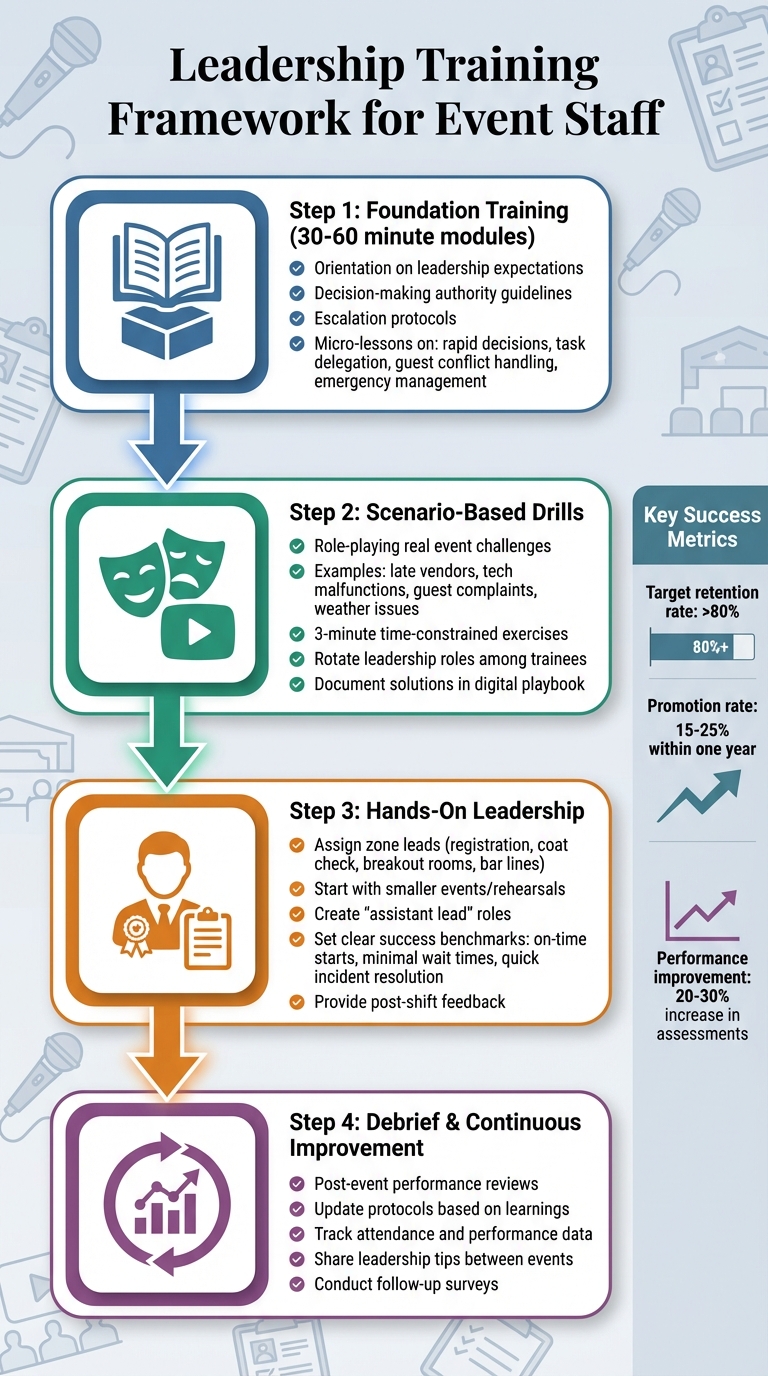
Leadership Training Framework for Event Staff: 4-Step Implementation Process
When designing leadership training for event staff, focus on building skills that enable quick decision-making, clear communication, and flexibility under pressure. The best programs use short 30–60 minute modules that immediately apply to real or simulated situations. Start with an orientation that outlines leadership expectations - clarifying which decisions staff can make on their own, when to escalate issues, and how authority is structured during events. Follow this with micro-lessons on essential skills like making rapid decisions, delegating tasks, handling guest conflicts, and managing emergency situations.
Keep training sessions concise, or weave them into the regular event schedule to ensure critical staff aren’t pulled away during peak periods. After covering the basics, introduce scenario-based drills that mimic high-pressure situations. These exercises should be followed by supervised, hands-on leadership opportunities with clear performance goals. Wrap up each training cycle with debriefs to fine-tune protocols. This approach transforms training into a continuous process of improvement.
Next, let’s explore how scenario-based exercises sharpen decision-making skills.
Role-playing real event challenges is one of the quickest ways to help staff build confidence in decision-making. Use actual past incidents - like late vendors, tech malfunctions, guest complaints, or unexpected weather issues - as the foundation for structured training scenarios. For example, imagine a situation where check-in lines are backing up because a ticket scanner app is malfunctioning just 20 minutes before doors open. The trainee must quickly reassign staff, communicate with waiting guests, switch to backup check-in methods, and escalate the tech issue - all within a tight three-minute window.
Each scenario should include the event’s context, available resources, constraints such as budget limits or venue rules, and a strict time frame to replicate real-world stress. Rotate leadership roles to give multiple team members the chance to practice making fast, effective decisions. After each exercise, debrief to identify what worked, what didn’t, and which procedures need updating. Document the best solutions in a digital playbook that staff can access through your scheduling or communication platform.
True leadership skills grow when staff are given the chance to lead in real settings. Assign promising team members as zone leads for specific areas - like registration, coat check, breakout rooms, or bar lines - so they manage small teams instead of the entire event. Use smaller events, rehearsals, or weekday corporate meetings as low-pressure training opportunities before assigning them to larger, high-stakes events like weddings or conferences. Another option is to create "assistant lead" roles, where a trainee works alongside the event lead, handling tasks like staff check-ins, break schedules, or vendor coordination, while the lead retains final decision-making authority.
Set clear benchmarks for success, such as starting events on time, minimizing guest wait times, resolving incidents quickly, and receiving positive feedback from staff. Supervisors should provide brief, actionable feedback after each shift, either in writing or verbally. To ensure a safe environment, establish clear boundaries of authority, such as dollar limits for comping items or guidelines for escalating issues to the event manager or security. Equip trainees with a simple checklist covering opening, peak, and closing tasks, as well as safety protocols and communication standards. This structure empowers new leaders to make decisions within a secure framework, giving them the confidence to learn from their experiences.
As staff gain practical leadership experience, technology can simplify training management and communication.
Technology is a powerful tool for making leadership training more efficient and trackable. Event staff scheduling platforms like Quickstaff can help organize training sessions, scenario-based exercises, and leadership workshops. These tools allow you to invite specific groups, such as senior staff or experienced brand ambassadors, and schedule sessions during times that don’t interfere with event coverage. This reduces cancellations and ensures better attendance. Additionally, the software tracks training participation, making it easier to identify which staff members are ready for leadership roles and who may need more foundational training.
Centralized communication features streamline the process of sharing training details, pre-work, and follow-up materials, eliminating the need for scattered texts and emails. Automated reminders ensure punctuality and minimize missed sessions - especially useful for managing large, seasonal, or part-time teams. Over time, analyzing attendance and performance data can highlight which training methods lead to better event outcomes, guiding future promotion decisions. Between events, use the same communication tools to share quick leadership tips, updated procedures, or post-event debrief surveys, turning every event into an opportunity for growth and learning.

Quickstaff simplifies the logistics of leadership training, letting you focus on building your team’s skills instead of juggling schedules. By automating the scheduling process, this event staff scheduling software shifts your attention from administrative tasks to meaningful team development. The result? Better quality and consistency in training across your event staff.
With Quickstaff, setting up training sessions is as straightforward as scheduling a wedding or corporate event. You can plan scenario-based exercises, workshops, or hands-on training sessions and assign staff effortlessly using the platform’s intuitive scheduling interface. The visual calendar ensures there are no overlaps, so critical training sessions don’t interfere with other planned events.
Automated reminders and notifications are key here. You can customize these alerts to include details like pre-session preparation - whether it’s reviewing decision-making exercises or coming ready with questions for a workshop. Attendance tracking is built into the platform, making it easy to see who’s consistently showing up and might be ready for leadership opportunities.
Need to fill a spot quickly? Quickstaff’s waitlist feature ensures full attendance without the hassle of manual follow-ups. Plus, the availability tracking tool helps you pinpoint the best times for recurring sessions, like finding out that Tuesday mornings are more effective than Friday afternoons. Over time, attendance reports reveal patterns, helping you fine-tune your training schedule for maximum participation and impact.
This seamless scheduling integrates naturally with Quickstaff’s communication tools.
Say goodbye to endless phone calls or scattered group texts. Quickstaff’s integrated messaging system keeps all training-related communication in one centralized place. You can send targeted updates to specific groups - like staff who’ve completed a conflict resolution module - or make announcements about advanced training opportunities. Organized event threads make it easy for team members to revisit important discussions, whether it’s about handling high-pressure situations or refining motivational strategies.
Private messaging is another powerful tool. It allows you to provide immediate, personalized feedback after a training session, reinforcing key lessons while they’re still fresh. For team-wide insights, you can share updates highlighting common challenges or successes observed during the week, turning individual learning moments into group improvements. This centralized hub ensures that critical updates - like new protocols or emergency procedures - reach everyone through a familiar, easy-to-use interface, increasing the chances that the information is retained.
Quickstaff’s features go beyond training sessions, extending into live events to provide real-world leadership opportunities. Using customizable role tags, you can assign dynamic roles during events. For instance, at a 200-guest wedding, you might designate an experienced staff member as “Event Captain” while assigning a trainee as “Assistant Lead” or “Zone Supervisor” for specific areas like the bar or dessert station. Including role-specific tasks - such as “Coordinate catering handoff at 6:30 PM” or “Oversee cocktail hour staff rotation” - in the event notes ensures trainees understand their responsibilities clearly.
The platform’s task management tools come with built-in checklists for leadership roles, covering everything from opening procedures to peak service duties and closing protocols. Trainees can mark tasks as completed in real time, creating a performance record that you can review during post-event debriefs. This documentation helps evaluate how well a trainee managed challenges like a busy dinner rush or last-minute vendor issues.
Steven Townsend, an Event Manager, highlights the time-saving benefits:
I used to be on the phone all the time to schedule staff. Now, in minutes, I can schedule all the staffing I need for my events.
This efficiency extends to leadership assignments as well. You can quickly assign team leads, adjust roles if someone becomes unavailable, and communicate these changes instantly through the app. The event calendar provides a clear overview of upcoming events, making it easier to gradually increase a trainee’s responsibilities - from smaller gatherings to high-pressure weekend events - based on their growing skills.
To truly enhance leadership capabilities, it's crucial to measure the results of your training efforts. By using clear metrics and observations, you can determine whether your event staff are developing into stronger leaders or simply attending sessions without real growth. The aim is to gather both numbers and feedback that reflect meaningful progress.
One of the clearest indicators of success is your retention rate. This can be calculated as: (staff retained ÷ total trained) x 100. Ideally, retention for event staff post-training should exceed 80%. Leadership programs that focus on building skills like decision-making and communication naturally encourage loyalty. When staff feel valued and see opportunities for growth, they’re more likely to stay with your company.
Another key metric is the promotion rate - the percentage of trained staff advancing to leadership roles within a year. A strong program typically promotes 15–25% of participants. For instance, if 10 out of 50 trained event staff move into lead coordinator roles after demonstrating their ability to handle high-pressure situations during events, that’s a 20% promotion rate. Monitoring these advancements quarterly through performance reviews helps identify patterns and highlights who’s ready for greater responsibility.
Don’t underestimate the value of qualitative insights either. Exit interviews can reveal if fewer employees cite "lack of growth opportunities" as a reason for leaving after implementing training. Anonymous surveys can also provide valuable feedback - high satisfaction scores for "leadership development" programs often indicate that staff feel empowered, which ties directly to reduced turnover.
Next, let’s explore how client feedback and event performance can offer additional insights.
Client and team feedback can add depth to your metrics by showing how training translates into real-world performance. Collect Net Promoter Scores (NPS) from clients and satisfaction surveys from your team. Also, track event success rates, such as on-time completion and incident resolution.
After training, you might notice client feedback evolving from general praise to specific comments like, “The team handled the vendor delay seamlessly,” or “The lead coordinator kept everyone calm during the rush.” These detailed observations confirm that staff are applying their leadership skills when it counts.
To make sense of this data, use dashboards to track trends like repeat client rates or time-to-resolution for incidents. Conduct debriefs right after events while everything is still fresh, and look for patterns that connect back to specific training modules. This approach helps you refine your programs and identify what’s working.
Finally, pre- and post-training assessments can provide a clearer picture of progress.
Conducting baseline assessments before training and follow-up evaluations afterward gives you objective evidence of skill improvement. These assessments should focus on event-specific leadership skills like decision-making, communication, and handling pressure. For example:
Aim for measurable improvement, such as a 20–30% increase in performance. For instance, if staff average a decision-making score of 65% before training and improve to 88% afterward, that 23-point jump is a clear sign of growth.
To track long-term progress, administer online quizzes or surveys immediately before training, right after, and again at 3- and 6-month intervals. A 20-question quiz on event leadership might show a 25% improvement in communication skills, offering concrete data to refine future programs. Combine these results with regular performance reviews and 360-degree feedback to get a full picture of each staff member’s development journey.
Equipping your event teams with solid leadership skills is key to delivering consistent, top-notch experiences that keep clients coming back. When your staff can make quick decisions, communicate effectively under pressure, and take charge when challenges arise, you foster a culture of trust and professionalism that shines through in every event. Strong leadership on the floor reduces avoidable mistakes, keeps teams composed during high-stress moments, and leads to better client feedback. This sets the stage for building a leadership program that works.
Creating a leadership development plan doesn’t have to be overwhelming. Start small - try monthly scenario-based exercises, assign clear lead roles, and set up feedback loops. Tools like Quickstaff can help you streamline these efforts by scheduling training sessions, organizing leadership assignments, and centralizing communication, making your development process consistent and scalable.
The benefits are clear. Businesses that prioritize leadership development often experience higher staff retention, smoother internal promotions, and greater client loyalty. When team members feel valued and see opportunities to grow from entry-level roles into leadership positions, they’re more likely to stay through busy seasons. This reduces recruitment costs and helps you build a seasoned team ready to grow with your business.
Take the first step today. Choose one actionable idea from this guide - perhaps a pilot training for your top five team members in the next 30 days - and put it on your calendar. Even small efforts, like structured debriefs after big events or clearly defined leadership roles, can quickly elevate how your team performs under pressure. In the competitive U.S. event market, leadership training isn’t just a nice-to-have; it’s a necessity for delivering exceptional results.
Effective leadership of event staff hinges on a handful of key skills. Clear communication ensures that every team member knows their role and what’s expected of them. The ability to adjust to unexpected situations, or flexibility, helps the team handle surprises with ease. Strong problem-solving skills allow for quick resolutions when challenges arise during an event. Encouraging collaboration and showing confidence in decision-making also help build a unified, efficient team. When these abilities come together, they pave the way for seamless coordination and top-notch service, driving the success of any event.
Scenario-based exercises are a great way for event staff to sharpen their decision-making skills by mimicking challenges they might encounter during actual events. These simulations give teams a chance to practice managing unexpected situations, spot potential issues early, and gain confidence in tackling problems head-on.
Working through these scenarios in a controlled setting helps team members learn to stay composed, think on their feet, and adjust quickly when real-time challenges pop up. The result? Smoother event operations and more successful outcomes.
Quickstaff simplifies the process of leadership training by providing a single platform to handle scheduling and session management with ease. It offers tools to coordinate calendars, monitor attendance, and maintain clear communication with staff, ensuring everyone is on the same page. This frees up event managers to concentrate on developing leadership skills rather than getting bogged down with administrative work.