Why Soft Skills Matter for Event Staff Retention
May 17, 2026


Soft skills like communication, teamwork, and emotional intelligence are key to retaining event staff. High turnover in the events industry - 18% annually - can cost businesses three to four times an employee’s salary to replace. Poor communication, unclear expectations, and lack of appreciation often push staff to leave. Developing soft skills not only improves team dynamics but also boosts retention by 67%, reduces turnover costs, and enhances guest satisfaction. Focused training, clear scheduling, and tools like Quickstaff can help teams thrive while minimizing stress and confusion.
Key Takeaways:
Investing in soft skills creates a more prepared, confident team while saving costs and improving overall business performance.
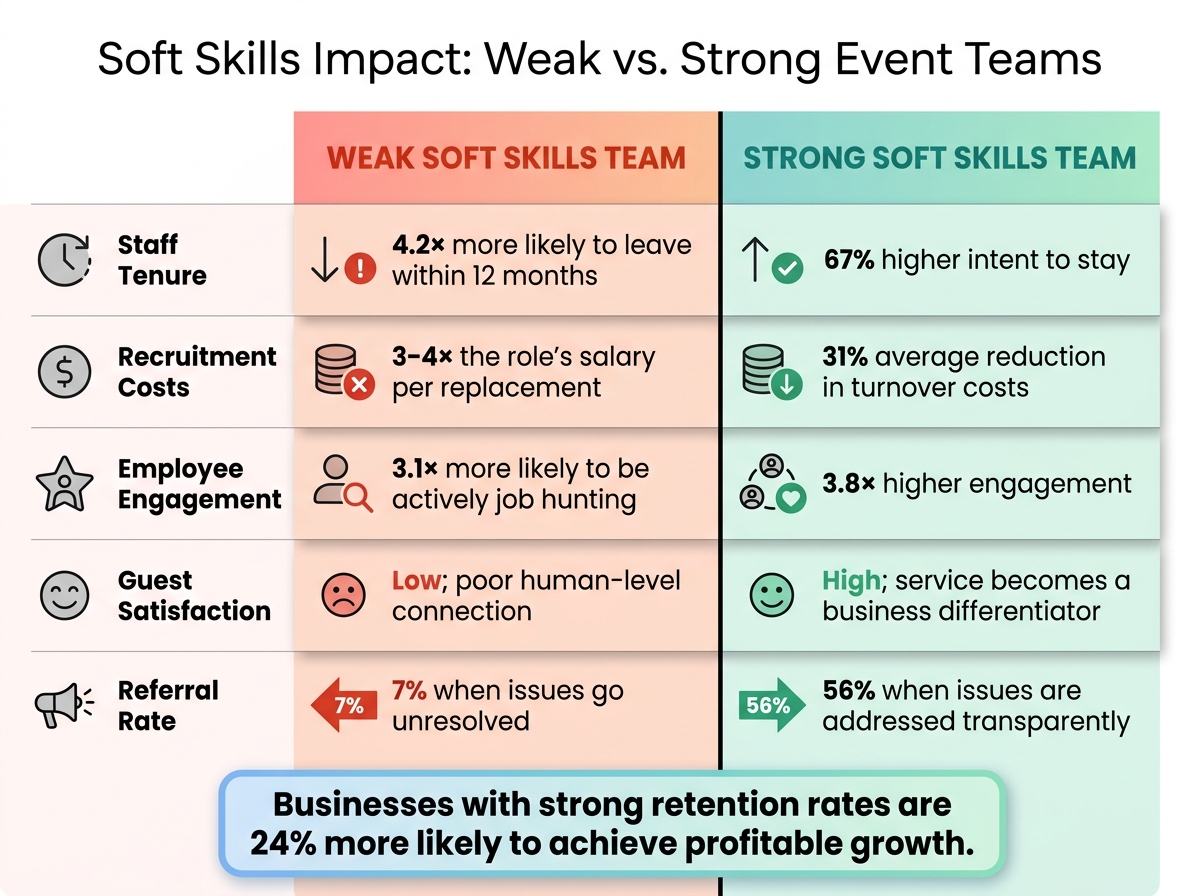
Soft Skills Impact: Weak vs. Strong Event Teams
Weaknesses in soft skills can severely impact both the day-to-day operations and the profitability of event businesses. These shortcomings ripple through communication, teamwork, and employee retention, creating challenges that are hard to ignore.
In the events industry, effective communication and teamwork are critical for success. When communication breaks down, staff miss important cues, leaving guests unattended and dissatisfied. This is especially damaging in an industry where personal interactions often determine whether clients return or not.
The financial toll is significant. Replacing a single employee can cost anywhere from 50% to 200% of their annual salary. Using scheduling tools for caterers can help manage these costs by streamlining the replacement process. For event businesses, where margins are often tight, this can be a major blow. Beyond the monetary cost, poor communication also affects morale. When employees feel undervalued or ignored, they are more likely to leave. Worse, only 7% of employees would recommend their workplace when problems remain unresolved. This creates a vicious cycle, where poor communication not only drives turnover but also makes it harder to attract high-quality replacements.
"Compensation complaints often mask deeper issues: heavy workload, burnout, poor leadership, and limited career paths." - Crystal Perel, M.A., Principal Consultant, Perceptyx
Ultimately, these issues don’t just hurt internal operations - they also damage guest experiences, making it harder to retain customers and maintain a positive reputation.
The events industry faces unique hurdles in retaining staff. Irregular hours, high-stress situations, and the perception of roles as temporary all contribute to high turnover rates. Many temporary employees view their jobs as stepping stones, which lowers their commitment and increases the likelihood of them leaving.
The problem is exacerbated by mismatched expectations. 43% of new hires leave within the first six months when their job experience doesn’t align with what they were promised during the hiring process. In the fast-paced world of events, this often stems from unclear management, unpreparedness for the job’s demands, and a lack of team cohesion. Implementing scalable event scheduling can help mitigate these issues by providing structure and clarity. Additionally, employees who don’t see a clear future in their roles are 4.2 times more likely to quit within a year.
The difference between teams with strong and weak soft skills is stark. Let’s take a closer look at how these two scenarios play out:
| Metric | Weak Soft Skills Team | Strong Soft Skills Team |
|---|---|---|
| Staff Tenure | 4.2× more likely to leave within 12 months | 67% higher intent to stay |
| Recruitment Costs | 3–4× the role's salary per replacement | 31% average reduction in turnover costs |
| Employee Engagement | 3.1× more likely to be actively job hunting | 3.8× higher engagement |
| Guest Satisfaction | Low; poor human-level connection | High; service becomes a business differentiator |
| Referral Rate | 7% when issues go unresolved | 56% when issues are addressed transparently |
The numbers tell a compelling story: prioritizing soft skills isn’t just about creating a better workplace - it directly influences profitability. Businesses with strong retention rates are 24% more likely to achieve profitable growth. Investing in these skills doesn’t just boost morale; it strengthens the entire foundation of the business.
In the fast-paced world of events, some soft skills stand out more than others. Among them, communication, emotional intelligence and empathy, and adaptability play a critical role in ensuring staff retention and their ability to perform under pressure.
Effective communication is essential for any event to succeed. But it’s not just about talking - it’s also about truly listening. Active listening requires focusing entirely on what’s being said, rather than just waiting for your turn to speak. For event staff, this skill is invaluable. It helps avoid misunderstandings, whether they’re addressing a guest’s concern during the event or coordinating with teammates amid a hectic shift. Using event staff scheduling software can further streamline this coordination.
"In customer-focused roles, the feeling of being valued significantly impacts an employee's decision to stay with an organization. Feeling valued includes employee empowerment, career growth opportunities, and development investments - not just salary." - Michael Mian, Ph.D., Principal Consultant, Perceptyx
Emotional intelligence (EQ) is all about understanding and managing your own emotions while being aware of others' feelings. In the high-stakes environment of events, where guests may be stressed and timelines are tight, EQ becomes indispensable.
Staff with strong EQ can calm a frustrated guest without losing their cool. They can also sense when a teammate is struggling and step in to help. This creates a workplace where people feel respected and supported. Research shows that organizations prioritizing emotional intelligence are nearly five times more likely to deliver strong customer experiences and three times more likely to achieve higher customer loyalty.
"Soft skills start with leadership. When managers model empathy and communication, teams follow." - Tamara Grace, Head of Learning Design, Allara Global
Events are unpredictable - things rarely go exactly as planned. Whether it’s a vendor running late, an unexpected surge in guests, or a last-minute setup change, staff who can adapt quickly and solve problems on the fly keep everything running smoothly while minimizing stress.
Problem-solving ties directly to autonomy. When staff have the confidence and authority to make decisions on the floor, they feel more invested in their work. This sense of ownership is a key factor in retention. Studies also show that organizations offering soft skills training, including adaptability and problem-solving, have reduced turnover by as much as 25%. These skills not only improve daily operations but also help build a more stable and satisfied team.
| Soft Skill | Impact on Event Performance | Impact on Retention |
|---|---|---|
| Active Listening | Reduces service errors and boosts guest satisfaction | Helps staff feel valued and understood by leaders |
| Emotional Intelligence & Empathy | Calms tense situations and improves guest interactions | Builds a supportive and collaborative team culture |
| Adaptability | Ensures smooth handling of unexpected changes | Lowers stress and prevents burnout |
| Problem-Solving | Resolves issues without constant supervision | Enhances employee autonomy and job satisfaction |
Understanding which soft skills are essential is only part of the equation. The real challenge lies in improving these skills without disrupting the flow of event operations. Using budget-friendly scheduling tools can also help manage these training blocks without increasing labor costs.
Spotting gaps in soft skills requires a mix of observation and structured feedback. Managers who watch team interactions during events can often identify issues like communication breakdowns or emotional missteps as they happen. Post-event debriefs are another valuable tool, offering a chance for the team to reflect on successes and pinpoint areas for improvement.
For a broader perspective, combine pulse surveys and lifecycle surveys. Together, these tools can help organizations predict turnover with 73% greater accuracy. Exit interviews also provide critical insights, often revealing recurring issues tied to leadership or team dynamics.
"People leave managers, not companies." - Marcus Buckingham
Stay interviews with top performers can uncover problems early. By asking what keeps them motivated and what frustrates them, you can often identify the specific soft skill gaps that need attention.
Once the gaps are clear, targeted training can help close them effectively.
Event teams typically don’t have the luxury of attending lengthy workshops. Luckily, shorter training formats are often more effective. Microlearning, for example, involves quick, five-minute lessons on topics like handling guest complaints or making a strong first impression. These fit seamlessly into pre-shift meetings without disrupting operations.
Scenario-based drills are another powerful option. A quick "What if?" exercise - like "What if the payment system crashes during an event?" - prepares staff to adapt and solve problems in a low-pressure environment, much like having an event day checklist for physical readiness. Pairing these drills with structured frameworks like the L.A.S.T. method (Listen, Apologize, Solve, Thank) equips teams with practical tools for handling conflicts smoothly.
| Training Method | Best Used For | Skill Developed |
|---|---|---|
| Microlearning modules | Pre-shift or quiet service blocks | De-escalation, first impressions |
| "What If?" drills | Pre-event preparation | Adaptability, problem-solving |
| L.A.S.T. method | Guest conflict situations | Conflict resolution |
| Cross-training | Role-swapping between departments | Teamwork, mutual empathy |
Cross-training deserves special mention. When front-of-house staff spend even a few hours in back-of-house roles (and vice versa), it fosters a deeper understanding of each team’s challenges. This reduces the “not my job” mindset that can quietly harm morale. These training methods help ensure that soft skills are practiced and reinforced directly on the job.
Once you've identified gaps and provided targeted training, the next step is daily reinforcement to make these skills stick. Pre-event huddles are a simple yet effective way to do this. A quick exercise where one person describes a problem and others summarize it before offering solutions can sharpen active listening skills in just a few minutes.
Timely, specific feedback is also key. Addressing mistakes privately and immediately - rather than waiting for a formal review - helps employees learn and adjust faster. At the same time, recognizing staff for handling tough situations well creates a positive feedback loop. This approach not only improves performance but also boosts retention by 67%. Daily practice and reinforcement of soft skills can have a direct, measurable impact on team morale and effectiveness.
Training builds the groundwork, but technology reinforces it. Tools like scheduling and communication platforms streamline operations while nurturing essential soft skills.
When expectations are unclear, turnover rates spike. Employees who feel uncertain about their responsibilities are 3.1 times more likely to actively search for new jobs. In event-based roles, where responsibilities can change quickly and last-minute updates are common, this lack of clarity can escalate stress and confusion.
Detailed scheduling helps remove that uncertainty. When staff receive clear, upfront details - such as their role, team members, and location - they can arrive prepared and focused. This clarity reduces pre-event stress and creates an environment where communication and teamwork can thrive. Essentially, it clears the way for teams to apply their soft skills effectively. From there, digital communication tools can further enhance collaboration.
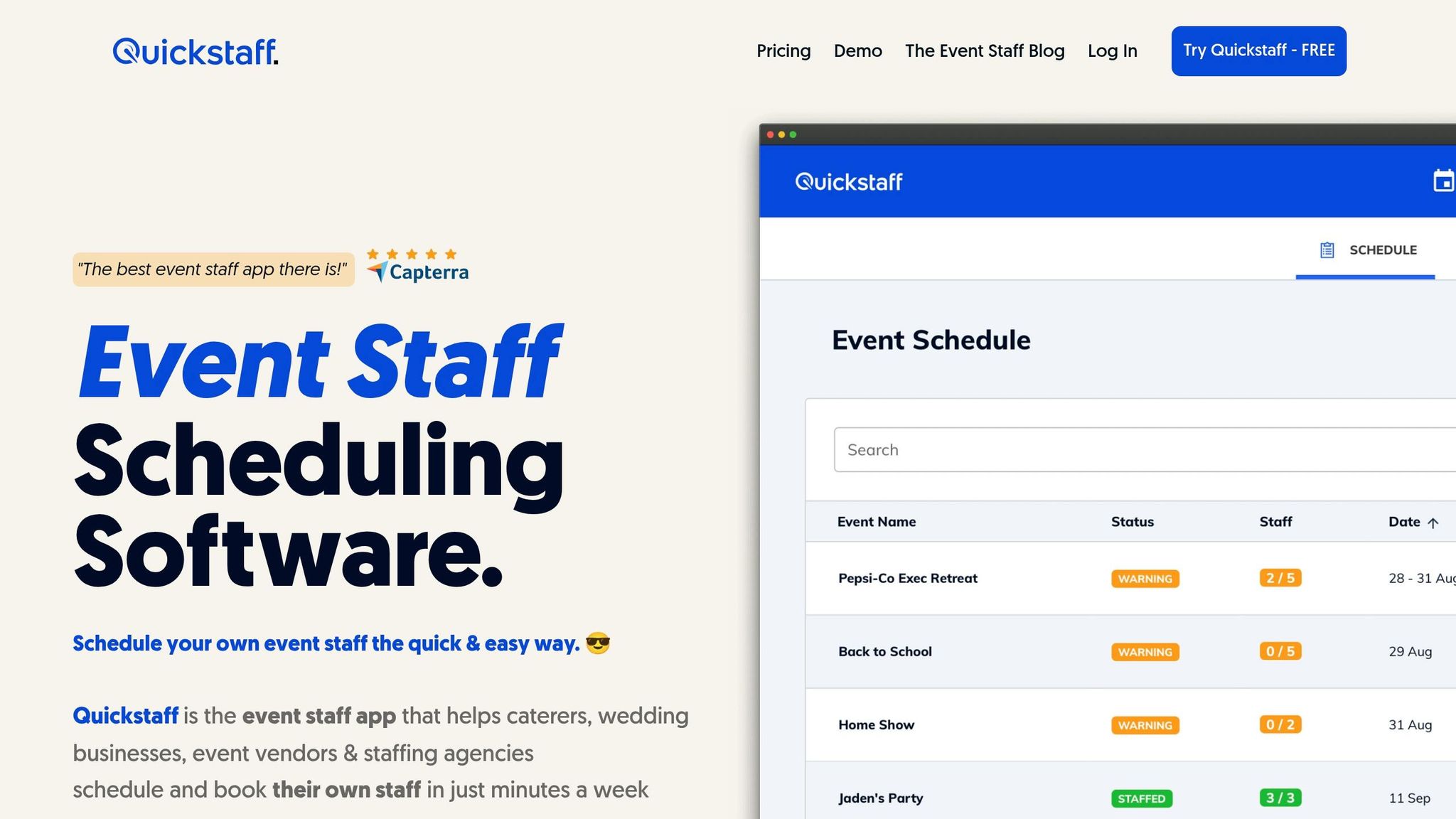
Quickstaff tackles communication challenges head-on with features designed for transparency. Automated reminders simplify logistics, freeing staff from micromanaging their schedules. This allows employees to concentrate on building interpersonal connections, which are critical for developing soft skills. Unlimited messaging ensures everyone stays informed without the need for time-consuming meetings.
"Making employees feel valued drives both engagement and retention." - Crystal Perel, M.A., Principal Consultant, Perceptyx
When employees feel informed and respected, their engagement increases. That engagement pays off: businesses that address communication and workload issues with better tools see an average turnover reduction of 31%.
Beyond automation, event messages play a vital role in setting expectations. These often-overlooked fields can communicate key behavioral guidelines before staff even arrive - like how to greet guests, address complaints, or align with the brand’s dress code.
This level of preparation is more impactful than it might seem. 43% of new hires leave within their first six months when the job doesn’t match their initial expectations. By using specific, consistent event messages, organizations can bridge the gap between onboarding promises and on-the-job realities. This makes professional standards clear, repeatable, and actionable, ensuring employees feel equipped to meet expectations from day one.
Companies that focus on soft skills training see real benefits. For instance, organizations report a 37% drop in employee turnover, and programs geared toward developing these skills can improve retention rates by 12%. This is especially important in fields like the events industry, where every dependable team member plays a vital role in smooth operations and client satisfaction.
The numbers speak for themselves: for every dollar spent on soft skills training, businesses see a 256% return on investment. Considering that replacing an employee can cost three to four times their annual salary, even preventing a few resignations each year can translate to major savings. Beyond financial gains, there’s also a long-term leadership advantage. A staggering 94% of recruiters believe that employees with strong interpersonal skills are more likely to move into leadership roles compared to those who may have more experience but lack these abilities. By investing in soft skills now, you’re setting the stage for a stronger leadership pipeline in the future.
With such clear benefits, there’s no reason to wait. Start by identifying where your team might need help. Tools like pulse surveys or one-on-one conversations can uncover challenges, whether it’s managing tough guest interactions, staying calm under pressure, or adapting to last-minute changes. Even small, targeted actions can make a big difference. For example, roleplay scenarios or setting clear behavioral expectations before an event can improve both performance and retention.
Streamlining operations also helps soft skills flourish. Platforms like Quickstaff can simplify logistics by ensuring staff have clear schedules, timely updates, and consistent communication. When the basics are covered, your team can focus on what really matters: building strong connections with clients and colleagues. A well-prepared, confident staff is the foundation for success - and soft skills are the glue that holds it all together.
For event staff, strong communication skills are the foundation of success. Clear and effective communication ensures that team members stay on the same page, which is critical when managing the fast-paced and often unpredictable nature of events.
Good communication doesn't just help with logistics - it plays a big role in building teamwork. When everyone understands their roles and responsibilities, collaboration becomes smoother. It also makes conflict resolution faster and less stressful, which helps maintain a positive and productive work environment.
In short, mastering communication skills allows staff to coordinate seamlessly, handle challenges efficiently, and deliver a better experience for everyone involved.
To understand how effective your efforts are, focus on three key areas: retention, engagement, and performance. Here's how you can track and measure each:
Additionally, monitoring program completion rates can highlight participation levels and identify areas where adjustments may be needed. By combining these data points, you can build a clear picture of what’s working and where there’s room to grow.
Quickstaff helps tackle turnover by focusing on better communication and organization - two essential elements for keeping employees on board. With clear, well-structured schedules, confusion is minimized, conflicts are avoided, and those dreaded last-minute changes are kept in check. This makes staff feel more supported and appreciated. When employees trust their workplace and experience less burnout, the result is a more positive work environment that promotes loyalty and reduces the chances of staff leaving over scheduling frustrations.