Retaining Top Event Staff for High-Value Clients
May 16, 2026


Keeping skilled event staff is critical for delivering seamless experiences to high-value clients. With industry turnover exceeding 70% annually, losing experienced staff disrupts operations, costs up to 200% of their salary to replace, and risks client satisfaction. However, businesses with strong retention strategies are 24% more likely to achieve profitable growth.
Retention requires consistent effort but pays off with a reliable team and satisfied clients.
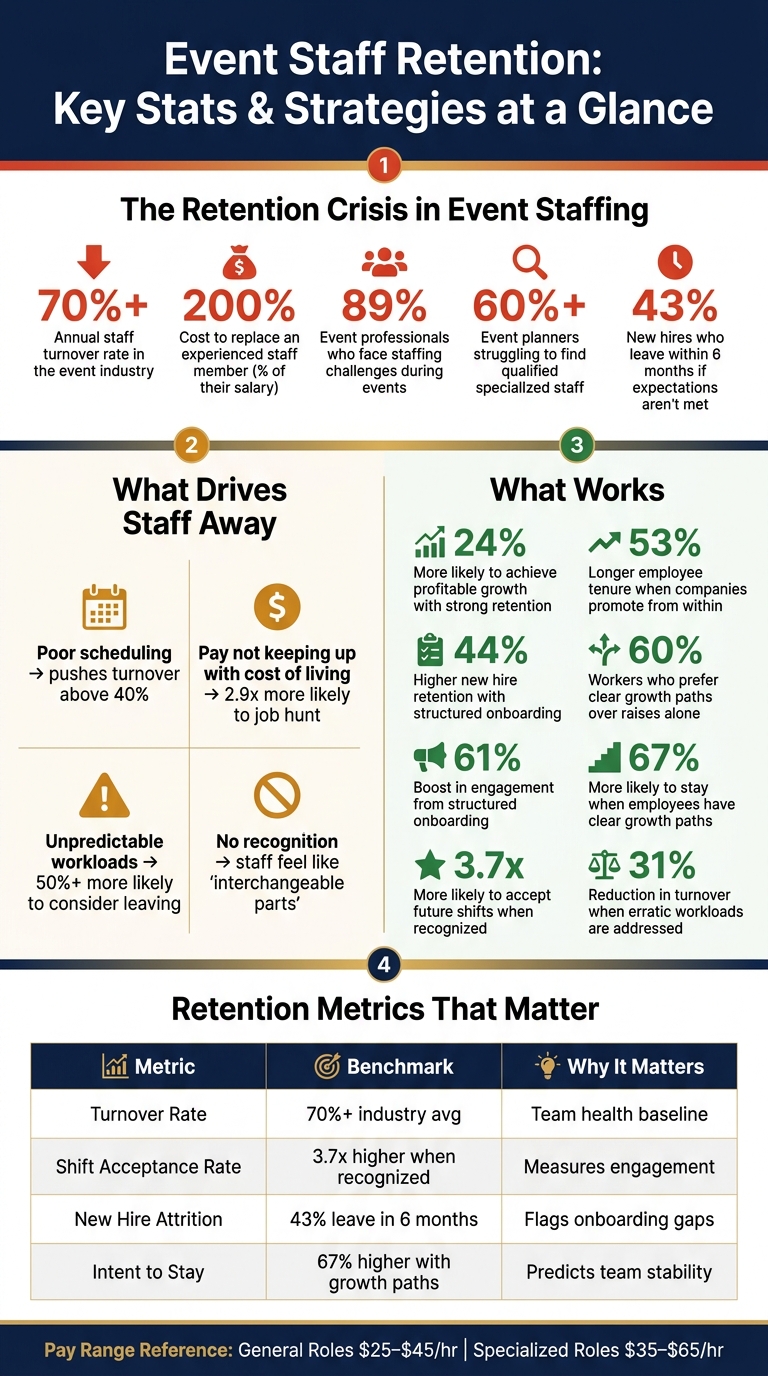
Event Staff Retention: Key Stats & Strategies at a Glance
Keeping event staff engaged and committed is no small feat. The fast-paced nature of the industry often creates hurdles that make it tough to retain skilled workers. While the reasons for staff departures may seem varied, they often boil down to a handful of recurring issues.
A major challenge lies in the disconnect between what staff expect and the reality of the job. When hiring is rushed, new employees often lack the preparation needed to handle the high-pressure demands of premium-client events. This can lead to burnout and stress and compromise the top-tier service these clients expect. It’s telling that over 60% of event planners report difficulties in finding qualified staff for specialized technical and production roles.
"Event staffing is no longer just about filling positions. It's about ensuring that the people you bring on are well-trained, reliable, and flexible enough to adapt to the dynamic demands of modern events." - Grant Morningstar, Event Producer
When staff feel unprepared or overwhelmed, it not only affects their morale but also the overall success of the event.
Disorganized communication and scheduling tools are another major pain point. With updates scattered across emails, WhatsApp messages, and phone calls, it’s easy for staff to miss important details. Last-minute changes, while unavoidable, can lead to confusion and mistakes if not communicated clearly. In fact, 89% of event professionals report facing staffing-related challenges during events.
When a staff member ends up at the wrong location or misses an assignment update, it signals poor planning and a lack of respect for their time. As Rentman highlights:
"The industry traditionally offers lower wages, unstable hours, and mandatory in-person attendance - making many positions unappealing for those seeking a steady lifestyle."
Chaotic scheduling only reinforces these frustrations, making it harder to keep staff engaged and motivated.
Beyond logistical challenges, a lack of appreciation can drive staff away. Event workers don’t want to feel like interchangeable parts. Recognition plays a huge role in retention - workers who feel valued are 3.7x more likely to accept future shifts. Yet, many businesses fail to acknowledge the contributions of temporary staff.
Opportunities for growth are equally important. Without pathways to develop new skills, take on greater responsibilities, or earn loyalty rewards, even the most dedicated employees may leave. This is especially true for skilled professionals in technical and AV roles, who are increasingly drawn to industries like tech and healthcare. These sectors offer better pay, remote work options, and more stable schedules. For the event industry, losing such talent is a costly setback.
Retention starts the moment you hire. The way you bring new staff on board sets the tone for everything that follows. And the numbers don't lie - companies with structured onboarding enjoy a 44% higher new hire retention rate and see a 61% boost in engagement. Considering that annual turnover in the industry exceeds 70%, getting these early steps right is critical.
For high-profile events, it’s essential to hire staff who bring professionalism, composure, and a strong customer-first attitude. Clients attending premium events can easily tell the difference between someone just doing a job and someone who genuinely takes pride in their work.
Interactive assessments are a great way to gauge how candidates perform under pressure. Reliability is key - one no-show at a luxury event could damage client relationships. Referrals from trusted networks are also worth prioritizing, as candidates sourced this way tend to have higher retention rates than those hired through job boards.
"Choosing anybody to staff your high-profile event is a recipe for disaster... the staff you choose must also have the necessary skills and experience." - StaffConnect
Focusing on these traits during hiring sets the stage for smoother onboarding.
Start by providing candidates with detailed job descriptions and clear performance expectations before they even begin. A quick pre-start communication can also help reduce the chances of early drop-offs.
Once on-site, pair new hires with seasoned team members for their first event. This shadowing method ensures service quality remains high while giving new staff a real-world example of what success looks like in your environment.
"When people understand what's expected and feel prepared, they're more likely to return for the next event." - Megan Hayward, Founder & CEO, TempGuru
With clear expectations in place, the next step is to simplify scheduling to avoid unnecessary confusion. Using a checklist for shift assignment software can help you identify the right tools for this task.
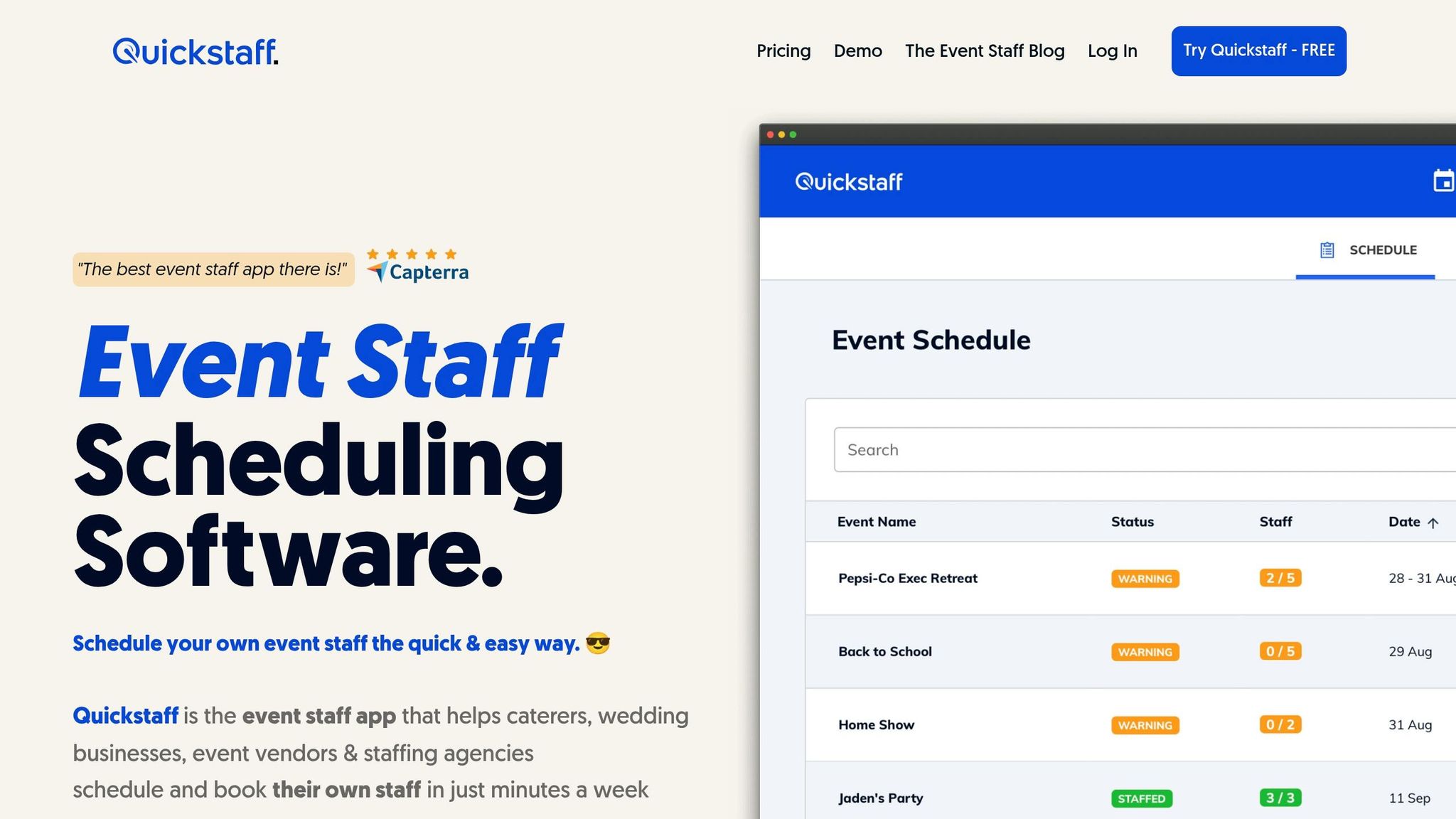
Confusion during the early days often leads to temporary staff leaving. Quickstaff helps eliminate this problem by centralizing event details, schedules, role assignments, and communication all in one platform. This makes it easy for staff to know their roles right away.
The platform also tracks staff availability, ensuring you’re scheduling people who are actually ready and willing to work. This reduces last-minute cancellations and helps you build a more reliable team over time. With tiered plans starting at $49/month, Quickstaff is designed to work for businesses of all sizes. The result? A smoother onboarding experience for new hires and a stronger team that’s more likely to stick around.
Hiring the right people and onboarding them effectively are only the first steps. What truly ensures long-term commitment is how employees are treated on a daily basis. Simple, consistent practices like fair scheduling, clear communication, and meaningful recognition can make all the difference. Addressing common challenges - like erratic workloads - can cut turnover by as much as 31%.
Inconsistent scheduling can quickly undermine trust and morale. In fact, poor scheduling alone can push turnover rates above 40%. Workers dealing with unpredictable workloads are over 50% more likely to consider leaving.
The solution? Start with clear, structured scheduling. Write down your shift distribution rules and make them accessible to everyone. Capture staff preferences in writing instead of relying on verbal agreements, and rotate less desirable shifts equitably. Regularly review past schedules to identify and address any patterns of bias.
"When rosters feel unfair, staff morale dips, retention suffers, and operational cracks start to show." - Ryan Green, RosterLab
Also, give employees plenty of advance notice. Many event staff rely on multiple jobs, and last-minute changes might force them to prioritize more consistent opportunities. Reliable scheduling builds the foundation for better communication and trust.
Even with structured scheduling, scattered communication can create chaos. When event details are spread across text messages, emails, and verbal updates, it’s easy for staff to get confused - or worse, miss their shifts altogether. Centralizing communication ensures everyone stays on the same page.
Platforms like Quickstaff simplify this process by consolidating event details, role assignments, availability tracking, and messaging. Staff can check one place for everything they need, and automated reminders help reduce no-shows. Managers can also send real-time updates without chasing down individual team members. When everyone has access to the same information, operations run more smoothly, and staff feel more prepared and confident.
Recognition is one of the most overlooked tools for improving retention in the event industry. Workers who feel appreciated are 3.7 times more likely to accept future shifts. Unfortunately, many managers only reach out when there’s an issue.
The best recognition is specific and timely. Instead of a generic "good job", call out specific actions, like someone handling a last-minute room change or maintaining enthusiasm through a long shift. Public acknowledgments during end-of-day recaps are free but highly effective. For agency staff, sharing positive feedback with their manager can boost their reputation and strengthen relationships.
Structured rewards can also help. For instance, offering a $25 bonus after three events or $50 after five gives employees a tangible incentive to return.
"Staff who are recognized are significantly more likely to accept future bookings from the same organizer, reducing your recruitment and training overhead on repeat events." - Megan Hayward, Founder & CEO of TempGuru
Combining public recognition with small financial incentives creates a workplace culture where people feel valued. That’s how you turn one-time hires into dependable team members.
Fair pay isn't just a perk - it's the baseline for keeping employees happy. Megan Hayward puts it plainly:
"The foundation of retention is fair pay."
For context, general event roles typically pay between $25–$45 per hour, while specialized positions range from $35–$65 per hour. To retain your team, make sure your rates are at least on par with local market standards. If salaries don’t keep up with the cost of living, employees become 2.9 times more likely to start looking for other opportunities.
A tiered pay structure can also do wonders for loyalty. For instance, offering higher rates to staff who’ve worked 10 or more events with you creates a natural incentive to stick around. Performance bonuses - rewarding tasks like smooth event registration or glowing client feedback - can further encourage excellence.
Transparency is key. Always communicate pay rates and bonus structures clearly and in writing to build trust and credibility.
But competitive pay alone won’t secure long-term commitment. Employees need to see growth opportunities.
While fair pay gets people in the door, career development keeps them there. In fact, 60% of workers favor jobs with clear professional growth over those that only offer raises. If employees can’t envision a future with your company, they’ll look for one elsewhere.
A simple career roadmap - like moving from general staff to team lead, and eventually to event coordinator - can give employees something to aspire to. Promoting from within also sends a powerful message: growth is real, not just lip service. Companies that prioritize internal promotions see 53% longer employee tenures.
Crystal Perel, Principal Consultant at Perceptyx, highlights a common pitfall:
"Compensation complaints often mask deeper issues: heavy workload, burnout, poor leadership, and limited career paths."
To address these underlying concerns, offer training programs, mentorship opportunities, and challenging assignments that show you’re invested in your team’s development.
Retention isn’t just about gut feelings - it’s about numbers. With turnover in the event industry exceeding 70% annually, tracking the right metrics is crucial to staying ahead of problems.
Tools like Quickstaff can help you monitor critical data points such as shift acceptance rates, no-shows, and reliability trends. These insights allow you to identify which staff might be at risk of leaving. Pair that data with client satisfaction scores, and you can pinpoint your most dependable team members - those who consistently impress high-value clients - and focus on keeping them engaged.
Here’s a snapshot of key metrics to watch:
| Metric | Why It Matters |
|---|---|
| Turnover Rate | A baseline indicator of team health; industry average is over 70% |
| Shift Acceptance Rate | Reflects engagement; recognized staff are 3.7 times more likely to accept future shifts |
| New Hire Attrition | Highlights onboarding issues; 43% of new hires leave within six months if the role doesn’t meet expectations |
| Intent to Stay | Predicts stability; employees with clear growth paths are 67% more likely to stay |
Don’t overlook post-event surveys, either. A few targeted questions about communication, resources, and overall experience can reveal problem areas before they lead to turnover. When you consistently use data, retention stops being a guessing game and becomes a strategic advantage.
Keeping top-tier event staff requires a mix of thoughtful strategies. Offering fair, tiered pay, providing clear onboarding, solving common scheduling problems, and showing genuine appreciation all help build long-term loyalty.
Beyond improving day-to-day operations, these efforts pay off in client satisfaction. Megan Hayward, Founder & CEO of TempGuru, explains:
"Staff who feel appreciated work harder, show up on time, solve problems proactively, and deliver better customer service."
This directly benefits high-value clients by reducing mistakes, elevating service quality, and delivering a polished experience that enhances your business reputation.
A dependable team also preserves critical expertise that new hires can't instantly replicate. This consistency ensures your standards and client expectations are met time and again, giving you a long-term advantage that can't be bought - it has to be earned.
To track progress in keeping staff longer, focus on turnover rates, employee satisfaction, and feedback related to scheduling and pay transparency. These indicators reveal how engaged employees feel and highlight opportunities to make positive changes.
To cut down on no-shows and last-minute cancellations, focus on creating a sense of commitment and making sure your team understands how cancellations affect the bigger picture. Clear communication is key - set expectations early, engage with staff personally, and encourage accountability.
Proactive steps, like sending reminders and highlighting the importance of loyalty, can also make a difference. These approaches not only improve reliability but can also boost staff retention, especially for crucial events.
Building loyalty with temporary event staff starts with offering fair and competitive pay. Be upfront about rates, bonuses, and any additional perks - they’ll value the transparency. Consistent recognition of their hard work also goes a long way. Simple gestures like rewards or verbal acknowledgment can make a big difference.
By fostering a positive and open work environment, you not only motivate staff to perform at their best but also encourage them to return for future events. This ensures dependable service, which is crucial when working with high-profile clients.