How CPR Certification Boosts Event Safety
May 11, 2026


Safety at events isn’t optional - it’s a responsibility. With over 350,000 cardiac arrests occurring annually in the U.S., having CPR-certified staff can make the difference between life and death. Quick action during emergencies, like administering CPR within two minutes, can improve survival rates by 81%. Beyond saving lives, CPR certification ensures compliance with legal standards, reduces liability, and enhances attendee confidence. Training takes just 4–6 hours and costs $30–$70 - a small investment for significant impact.
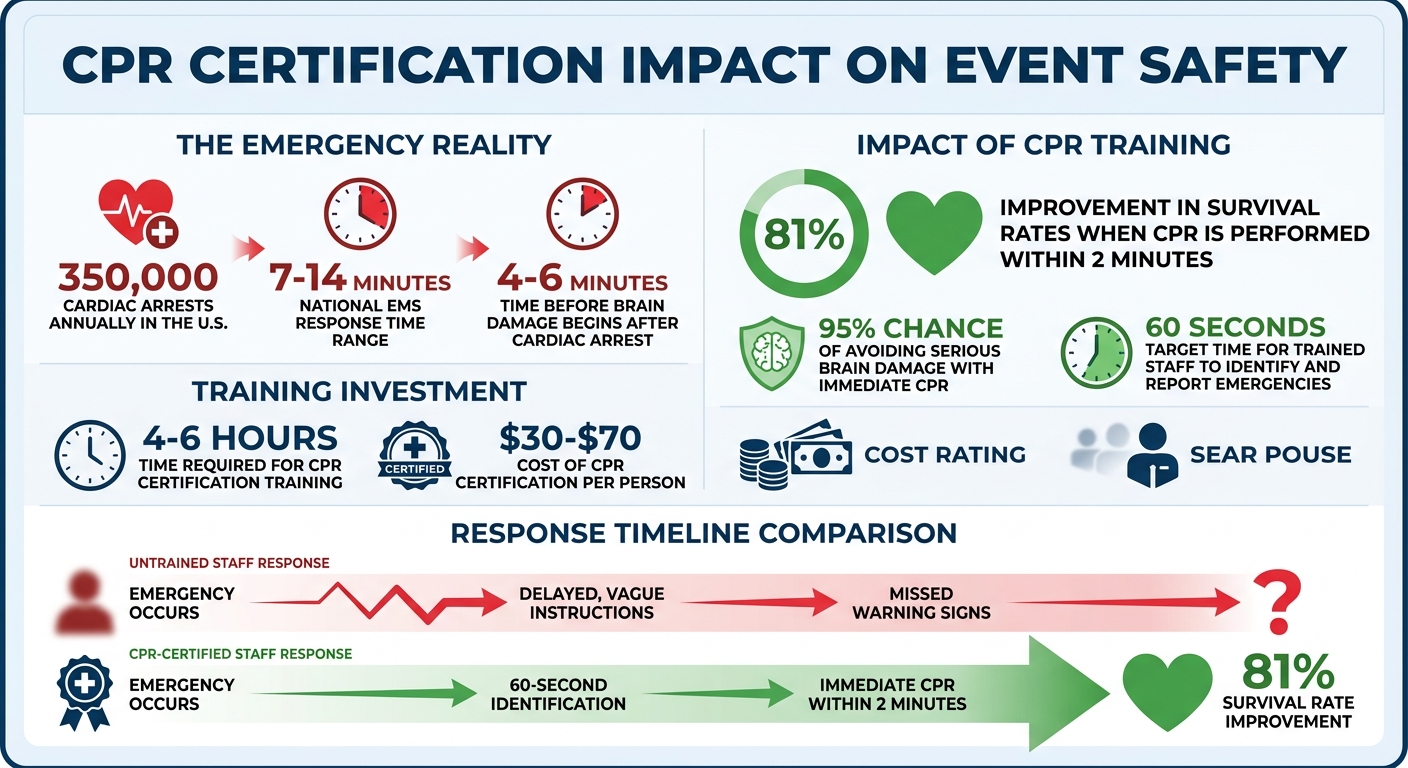
CPR Certification Impact on Event Safety: Key Statistics and Response Times
Events often gather hundreds or even thousands of people in confined spaces, creating an environment ripe for potential risks. Cardiac arrests, choking incidents, heat-related illnesses, and injuries from crowd surges are just a few of the emergencies that can arise. Without trained staff on hand, seemingly minor issues can quickly escalate into life-threatening situations.
For instance, at festivals, untrained personnel might miss early warning signs - like a guest slumping against a barrier, someone sitting in an odd spot, or a line that suddenly halts. These subtle signals, if ignored, can lead to delayed responses. Worse yet, unprepared staff may provide vague instructions such as "over here" instead of clear, precise locations, slowing down emergency medical teams (EMTs). They might unintentionally block critical exit routes or misdirect crowds, further complicating the situation.
"I have seen crowd issues escalate in under a minute; that's why our emergency staff train rigorously on radios, routes, and roles." - CEO, Event Staff
Properly trained emergency response teams aim to identify and report issues within 60 seconds, allowing them to stabilize situations before they get out of hand. Without this training, even manageable problems can spiral into tragedies. Using budget-friendly staff scheduling tools can help ensure the right personnel are always in place to prevent such outcomes. These delayed or inadequate responses not only endanger lives but also open the door to reputational damage and legal consequences.
When emergency responses fall short, the ripple effects can be devastating. Guests notice when staff appear confused, give conflicting instructions, or hesitate during critical moments. Such visible failures can erode trust, spark panic, and create chaos. And in today’s digital age, that chaos doesn’t stay contained - it spreads across social media and news outlets, tarnishing your event’s reputation and making it harder to attract future attendees or sponsors.
Failing to meet state CPR certification requirements can also lead to legal penalties. If an incident occurs and your staff isn’t properly trained, your event faces increased liability, including potential medical malpractice claims. Untrained personnel often neglect to document key details - like what happened, when it was escalated, and what actions were taken - leaving your team vulnerable to lawsuits.
"Staff who follow protocols protect your event, your guests, and your liability exposure." - Daniel Muersing, Founder of Event Staff
Incorporating CPR certification into staff training isn’t just a precaution - it’s a necessity to prevent emergencies from spiraling into larger crises. It safeguards lives, protects your event’s reputation, and reduces legal risks.
Cardiac arrests can happen without warning, and the clock starts ticking immediately. With national EMS response times ranging from 7 to 14 minutes, that window is often too long - brain damage can begin in just 4 to 6 minutes after cardiac arrest. This is where CPR-certified staff step in, bridging the gap with immediate action during those critical moments.
When CPR is performed within two minutes of cardiac arrest, survival rates can jump by 81%, with a 95% chance of avoiding serious brain damage. Certified staff are trained to act quickly, delivering chest compressions, using AEDs, and monitoring vital signs like breathing and consciousness. They can also relay crucial details to EMTs through dedicated communication channels. This kind of rapid response not only stabilizes the situation but also provides valuable support to professional medical teams when they arrive.
It’s not just cardiac issues that benefit from this readiness. Whether someone is choking, suffering from heat exhaustion, or experiencing another medical emergency, trained personnel can intervene early to prevent the situation from worsening. This immediate care can mean the difference between a minor incident and a life-threatening emergency, creating a safer environment for everyone involved.
Safety is a powerful reassurance. When attendees see staff wearing CPR certification badges or spot AED-equipped First Aid stations, they feel more at ease, knowing help is readily available if needed. This visible preparedness allows them to focus on enjoying the event without lingering concerns about their well-being.
For staff, CPR training builds confidence. Instead of succumbing to panic during a crisis, they rely on their training and instinctively follow established procedures. This includes giving clear, calm instructions, ensuring EMTs have easy access to the scene, and managing the surrounding area to prevent secondary accidents like falls or crowd-related injuries. These actions not only keep the situation under control but also boost team morale and job satisfaction.
Moreover, such preparedness creates a ripple effect. When staff handle emergencies with composure, it reduces overall panic among attendees. This operational control not only enhances safety but also ensures compliance with required safety measures, reinforcing trust among all parties involved.
In many places, CPR certification isn’t just a good idea - it’s the law. Numerous states and regulatory bodies require event planners and staff to hold valid CPR certifications to meet safety regulations. Skipping this step can lead to hefty fines that far outweigh the cost of training.
Beyond legal compliance, certification aligns with OSHA standards and industry protocols, offering a structured approach to emergency response. Trained staff maintain detailed records of incidents, noting key details like response times, actions taken, and escalation points. These records serve as critical documentation, demonstrating that your team followed proper procedures and acted responsibly. This not only shields your organization from liability but also strengthens your reputation for prioritizing safety.
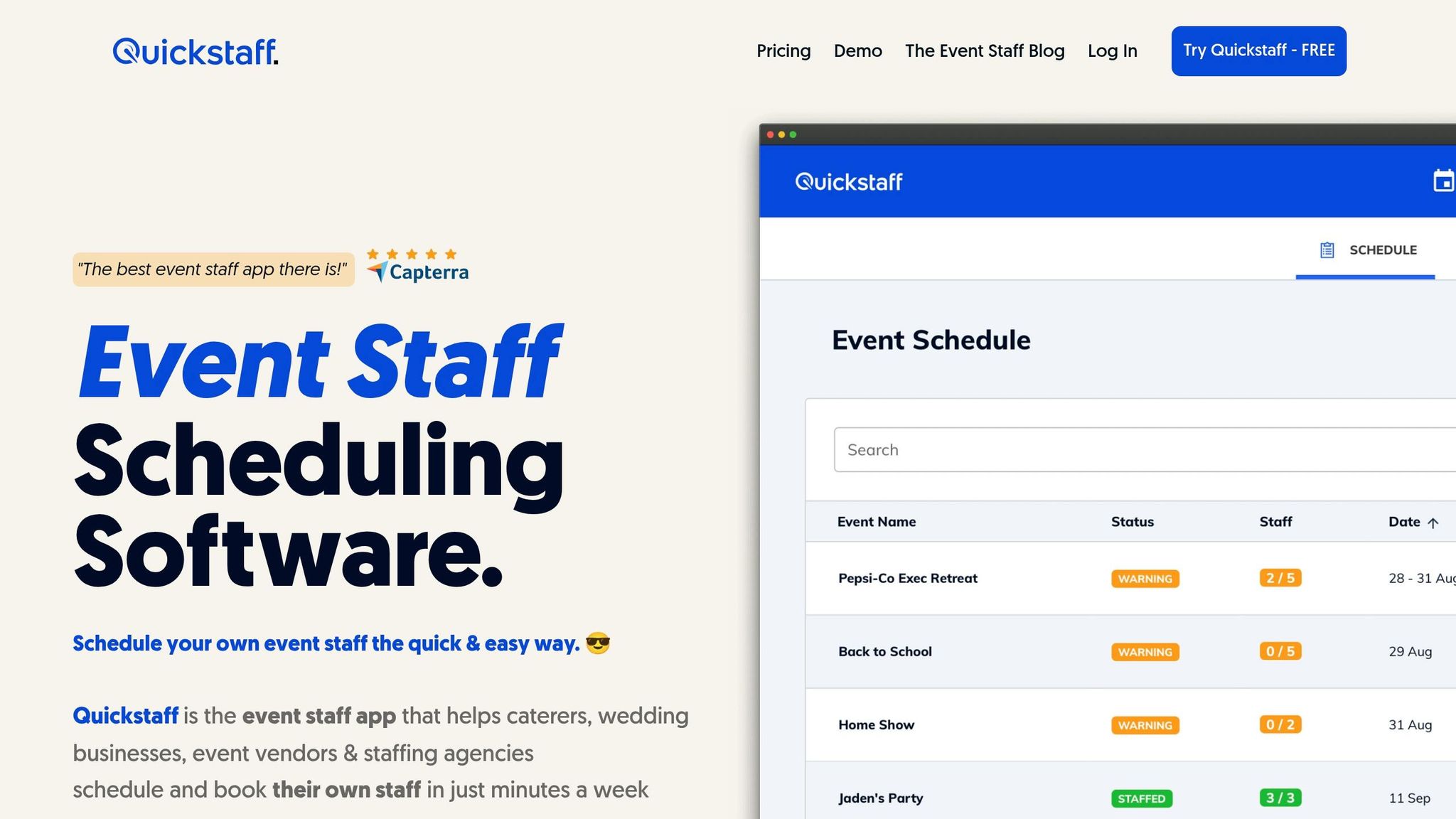
Once you've decided to include CPR-certified staff at your events, the next step is figuring out how to schedule them effectively. It’s not just about assigning generic roles like "staff" anymore. Instead, you'll need to create specific positions such as Zone Supervisors, Observers, or Flow Controllers - each with clearly defined emergency response duties.
Quickstaff makes this process easier by letting you schedule staff based on specialized roles. For example, you can assign positions like "CPR-Certified Server" or "Safety Lead" to ensure your event’s unique safety needs are covered. With its centralized dashboard, you can quickly spot and fill any gaps with appropriately certified personnel.
Positioning these certified staff members in high-traffic or critical areas where emergencies are more likely ensures that your safety measures are both strategic and effective. This targeted approach maximizes your event’s readiness for potential incidents.
Pairing efficient scheduling with a system to track certifications ties your safety plan together.
Keeping tabs on certifications, expiration dates, and staff availability can feel overwhelming. Quickstaff streamlines this by displaying availability, including block-out dates and conflicts, in one place.
You can also upload digital copies of CPR certifications and attach notes for easy compliance checks. This creates a reliable record of your staff’s qualifications, which helps protect you from liability by showing that your team holds up-to-date credentials. As Jennifer Manley, a Staffing Coordinator, shared:
My time spent scheduling has shrunk majorly, leaving me more time to focus on recruiting, onboarding new event staff, and training.
In cases where a certified staff member becomes unavailable at the last minute, Quickstaff’s Automagic Waitlists feature steps in. This tool allows you to instantly invite backup personnel to fill critical roles. Staff receive automated emails with event details and can respond in real time, confirming their availability immediately. This documentation is not just practical - it’s critical in the event of an incident.

Incorporating CPR certification into your event strategy goes beyond ticking a box - it's a critical step toward ensuring safety and operational readiness. When emergencies arise, having certified staff who can respond within 60 seconds not only meets safety requirements but also creates an environment where attendees feel confident and secure.
Certified personnel play a key role in reducing liability by delivering prompt, professional care. Adhering to state regulations helps you avoid hefty fines while meeting client demands for comprehensive safety protocols. Additionally, certified team members enhance operational efficiency, enabling swift crowd control, clear emergency procedures, and seamless coordination with medical teams.
The number of CPR-certified staff required varies based on the size of the event and its potential risks. To enhance safety, having several team members trained in CPR is highly recommended. This ensures faster responses in emergencies, creating a more secure atmosphere and increasing attendees' peace of mind.
AED training is a must-have for event staff. It prepares them to act swiftly and confidently during cardiac emergencies, where every second counts. Knowing how to use an AED can make the difference between life and death, ensuring attendees receive immediate care in critical moments. This not only boosts the safety of the event but also provides peace of mind to everyone present.
CPR certifications typically remain valid for two years. To ensure your certification doesn't lapse, it's important to complete a renewal course within this period. Keeping your certification current not only helps you stay ready to handle emergencies but also ensures you meet required safety standards.