Real-Time Notifications for Event Staff
March 16, 2026


Real-time notifications have transformed how event staff are managed by enabling instant communication and reducing inefficiencies. Instead of relying on outdated methods like phone calls or scattered messages, these systems ensure staff receive updates immediately, improving coordination and response times. Here’s why they matter:
Real-time notifications streamline operations, helping event managers coordinate teams more effectively while ensuring staff stay informed and prepared.
Constant notifications take a toll on mental focus. Research from the University of Kassel reveals that every alert creates two types of disruptions: an "interruption lag" when attention shifts to the notification and a "resumption lag" when returning to the original task - even if the notification isn’t acted upon immediately.
When notifications interrupt active tasks, the brain has to work harder to stay on track. Studies using Event-Related Potentials (ERPs) show that staff need to engage more cognitive resources - reflected by larger N2 brainwave amplitudes - to maintain focus when alerts pop up. This increased mental load often leads to quicker but less accurate decisions, a behavior researchers call "suboptimal strategies".
"Smartphone push notifications produced a decline in task performance... exerting a negative influence on cognitive function and concentration." - Hang-Bong Kang, Department of Media Engineering, Catholic University of Korea
The impact of notifications on decision-making also depends on how much individuals use their devices. According to research from the Catholic University of Korea, heavy smartphone users - defined as those spending more than 2 hours daily on their devices - are more prone to errors and rushed decisions when interrupted by notifications during tasks. These users also experience longer reaction times and reduced decision quality due to the mental strain caused by constant alerts.
These disruptions are not just theoretical - they have measurable effects on task performance and scheduling efficiency.
Notifications disrupt task-switching efficiency. Research shows that only 26.2% of notifications lead to immediate task switching. However, even these brief interruptions have a ripple effect on productivity. Notifications-triggered task switches typically last 74.9 seconds, compared to 133.9 seconds for self-initiated switches. While shorter, these interruptions still disturb workflow.
Interestingly, the content of the notification matters more than its sound. Studies analyzing brain responses (MMN and P3a components) found that work-related alerts demand more attention and cognitive effort than general notification tones. For instance, employees who respond quickly to work-specific alerts, like Outlook pings, often show higher levels of job engagement. This engagement is a critical factor in retaining top event staff over the long term.
"Work-related messages might signal greater attentional switch and effort which in turn may feed into greater job involvement." - Maria Uther, Professor of Psychology, University of Winchester
Batching notifications to three times a day has been shown to improve productivity by the end of the workday. However, this strategy works best for employees with low "Fear of Missing Out" (FoMO) and moderate-to-high "telepressure" - the urge to respond immediately due to perceived social expectations. For those with high FoMO, disabling notifications can have the opposite effect, causing them to check for updates manually and interrupt themselves even more frequently.

Communication Channel Effectiveness for Event Staff Notifications
Real-time notifications simplify event communication by centralizing updates in one place. Instead of juggling a mix of emails, texts, and voicemails, all event-related information is consolidated, ensuring nothing gets overlooked. This makes it easier for everyone involved to stay informed without the hassle of searching through scattered messages.
Automated response tracking is another game-changer. Event managers can instantly see who has accepted or declined a shift, eliminating the need for time-consuming follow-ups. Meanwhile, staff can confirm their availability with just a click, making the process quick and painless. By centralizing updates, communication becomes more efficient, and the workload for administrators is significantly reduced.
Calendar syncing also plays a crucial role in avoiding scheduling conflicts. When staff link their event schedules to personal calendars like Google or Outlook, any new assignments automatically appear on their devices. This ensures double-bookings are minimized. Staff can also block off unavailable dates in advance, saving time and cutting down on unnecessary back-and-forth communication.
This level of clarity ensures smoother operations and allows for quick adjustments when unexpected changes arise.
Real-time notifications don’t just improve planning - they’re essential for handling last-minute catering staff scheduling and other urgent changes. During live events, where timing is everything, quick communication can make all the difference. SMS notifications, with their impressive 98% open rate, are particularly effective for urgent updates like last-minute schedule changes, area reassignments, or emergency instructions.
Different communication channels excel in specific scenarios, as shown below:
| Communication Channel | Open Rate | Best Use Case |
|---|---|---|
| SMS | 98% | Urgent updates, last-minute changes, and emergencies |
| 26.8% | Non-urgent updates like detailed briefings or post-event reports | |
| In-App Notifications | 7.8% | Real-time task alerts and on-site coordination |
In-app push notifications are especially helpful for on-the-spot management. They allow managers to send instant task updates, location changes, or check-in requests directly through the event app. This keeps everyone on the same platform, eliminating the need to juggle between different tools and ensuring seamless coordination during the event.
Event scheduling software has revolutionized the way managers coordinate their teams, replacing hours of phone calls and follow-ups with automated processes. One standout feature is mobile-friendly notifications, which allow staff to accept or decline shifts with just one tap, making coordination faster and easier.
Automated reminders tackle a major challenge: no-shows. According to research, timely notifications can cut no-shows by as much as 35%. These reminders often include key event details, directions, and specific requirements, ensuring staff arrive prepared and on time.
Another game-changer is centralized event management paired with real-time notifications. Managers gain instant visibility into staffing levels for all events, eliminating the need to juggle multiple spreadsheets or scattered messages. This streamlined approach helps address miscommunication, a factor responsible for 54% of project delays.
By improving communication, these tools can reduce labor cost variances by 15–30% and boost employee engagement by 30%. These efficiencies align perfectly with Quickstaff's focus on simplifying event scheduling. For more industry insights, visit The Event Staff Blog.

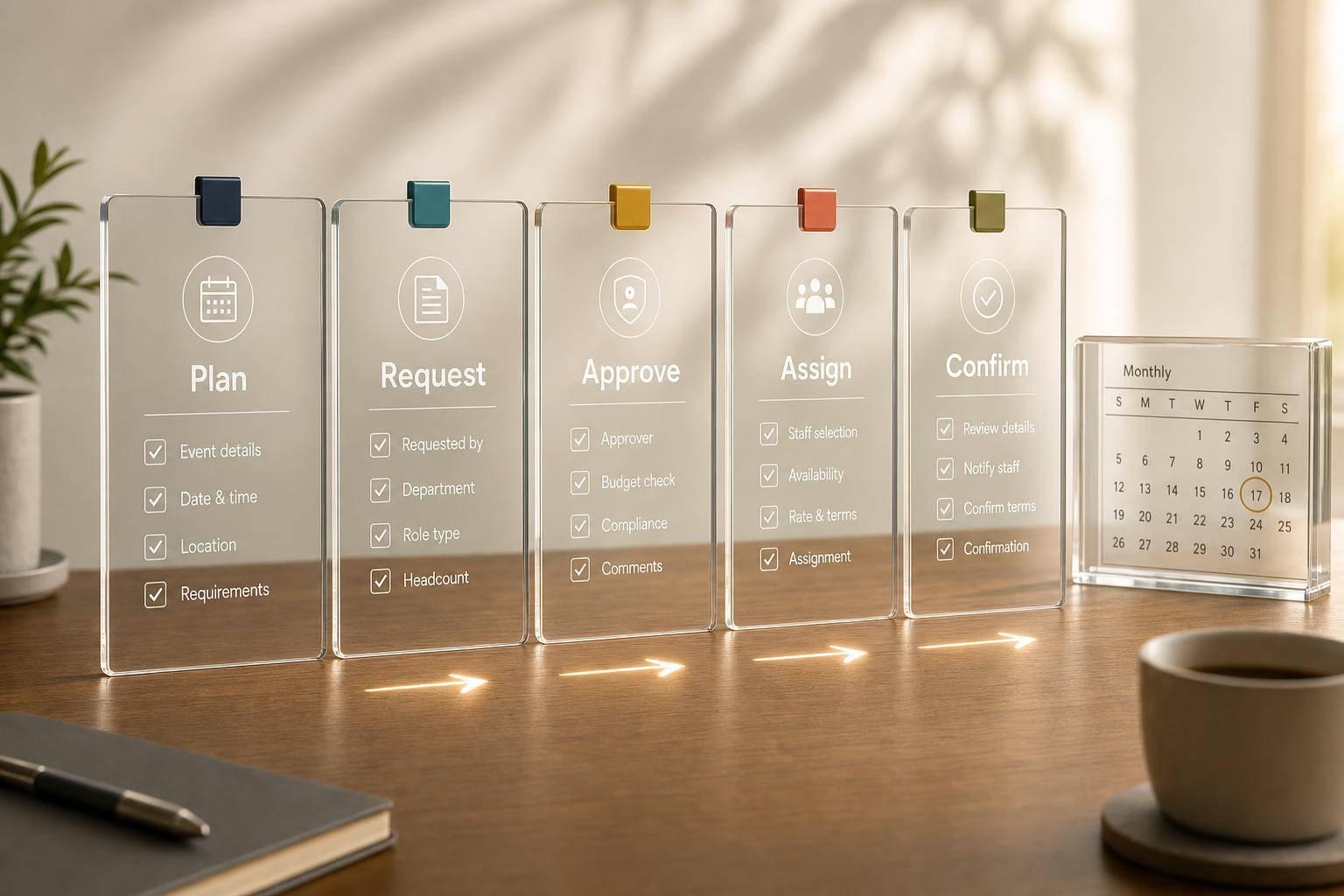
Quickstaff takes scheduling efficiency to the next level with its automated workflow. When a manager creates an event and assigns roles - like servers or bartenders - the system automatically sends email invitations to qualified staff. From their inbox, staff can accept or decline shifts directly, saving time and effort. This streamlined process has supported the scheduling of over 20,000 events since 2013.
The role-based messaging feature ensures that notifications are targeted. For instance, if a bartender position becomes available, only bartenders receive the notification. This prevents staff from feeling overwhelmed by irrelevant messages, keeping communication focused and effective. Additionally, staff can block out dates when they're unavailable, ensuring that invitations are sent only to those who can work.
Calendar syncing with platforms like Google and Outlook is another powerful feature. When staff sync their Quickstaff schedule with their personal calendars, new shifts automatically populate, reducing the risk of double-bookings. Jaime S., VP at Lisa's Catering, shared how this feature transformed her workflow:
"Prior to Quickstaff, I was using Excel spreadsheets to track my employees and their shift availability. My life changed the day I started using Quickstaff!"
The centralized dashboard provides managers with a clear view of staffing commitments and open positions. Event Manager Steven Townsend highlighted the time-saving benefits:
"I used to be on the phone all the time to schedule staff. Now, within a few minutes, I can schedule all the staffing I need for my events".
Based on thorough research and practical performance data, real-time notifications have proven to improve decision-making and execution significantly. They’ve reshaped how event managers coordinate their teams by enabling timely communication and minimizing scheduling errors. Using a multi-channel delivery approach - like SMS for urgent, last-minute updates, in-app notifications for live task updates, and email for detailed briefings - managers can ensure no one is left out of the loop. This system eliminates the inefficiencies of chasing down confirmations.
Beyond improving communication, real-time notifications also promote accountability. For instance, when staff can instantly confirm or decline shifts, managers immediately know where gaps exist. This transparency helps avoid common scheduling problems, such as staff claiming they weren't aware of their schedule, and allows managers to quickly activate waitlists when necessary. Quickstaff’s success highlights how effective this approach can be in real-world event scenarios.
Moving away from manual spreadsheets to automated notification systems reduces the stress and uncertainty that often come with last-minute coordination. When staff receive timely role confirmations, they arrive prepared and confident, leading to better performance and happier clients. By automating notifications, event managers can streamline scheduling and consistently achieve smoother operations and stronger results.
When deciding how to communicate, the right channel depends on the urgency and type of message:
To cut down on notification overload, focus on targeted communication methods like in-app notifications and automated alerts. These tools deliver timely, relevant updates to the right team members all at once. This approach helps reduce unnecessary interruptions and eliminates the need for constant manual follow-ups. By ensuring staff only get the updates they actually need, you can boost both efficiency and concentration.
Quickstaff helps tackle no-shows by strengthening communication with staff. It allows for regular check-ins and keeps track of shift acceptance, ensuring everyone is on the same page. These tools make it easier for staff to stay informed, confirm their availability, and remain engaged - boosting attendance reliability.