How Staff Self-Reporting Improves Scheduling
March 26, 2026


Scheduling doesn't have to be a headache. Staff self-reporting shifts the responsibility of scheduling from managers to employees, allowing them to choose shifts that fit their lives. This approach saves managers time, reduces scheduling conflicts, and boosts employee satisfaction. Here’s why it works:
Self-reporting tools like Quickstaff simplify this process, offering features like real-time shift claiming, automated notifications, and mobile-friendly interfaces. By giving employees control within set guidelines, businesses can reduce administrative burdens and create happier, more reliable teams.

Staff Self-Reporting Benefits: Key Statistics on Time Savings, Satisfaction, and Retention
Staff self-reporting, sometimes called self-scheduling, is a method of workforce management where employees take an active role in choosing their shifts or setting their availability within specific guidelines . Instead of managers assigning every shift manually, they create a framework of available shifts, allowing qualified employees to pick the ones that align with their personal schedules.
This isn't a free-for-all system. It's a structured collaboration where management retains oversight to ensure staffing needs are met while employees gain more control over their work schedules. Modern self-reporting systems use predefined rules to balance shifts fairly, ensuring compliance with labor laws and necessary certifications . By blending oversight with employee autonomy, this method enhances communication and simplifies scheduling.
"This collaborative approach to scheduling not only fosters trust but also reduces the rigidity and stress associated with traditional top-down scheduling systems." – SnapCare
The shift from manager-assigned schedules to employee-driven ones represents a major change in workforce management. Managers set the boundaries, but employees step in to fill gaps, creating a more dynamic and responsive scheduling process.
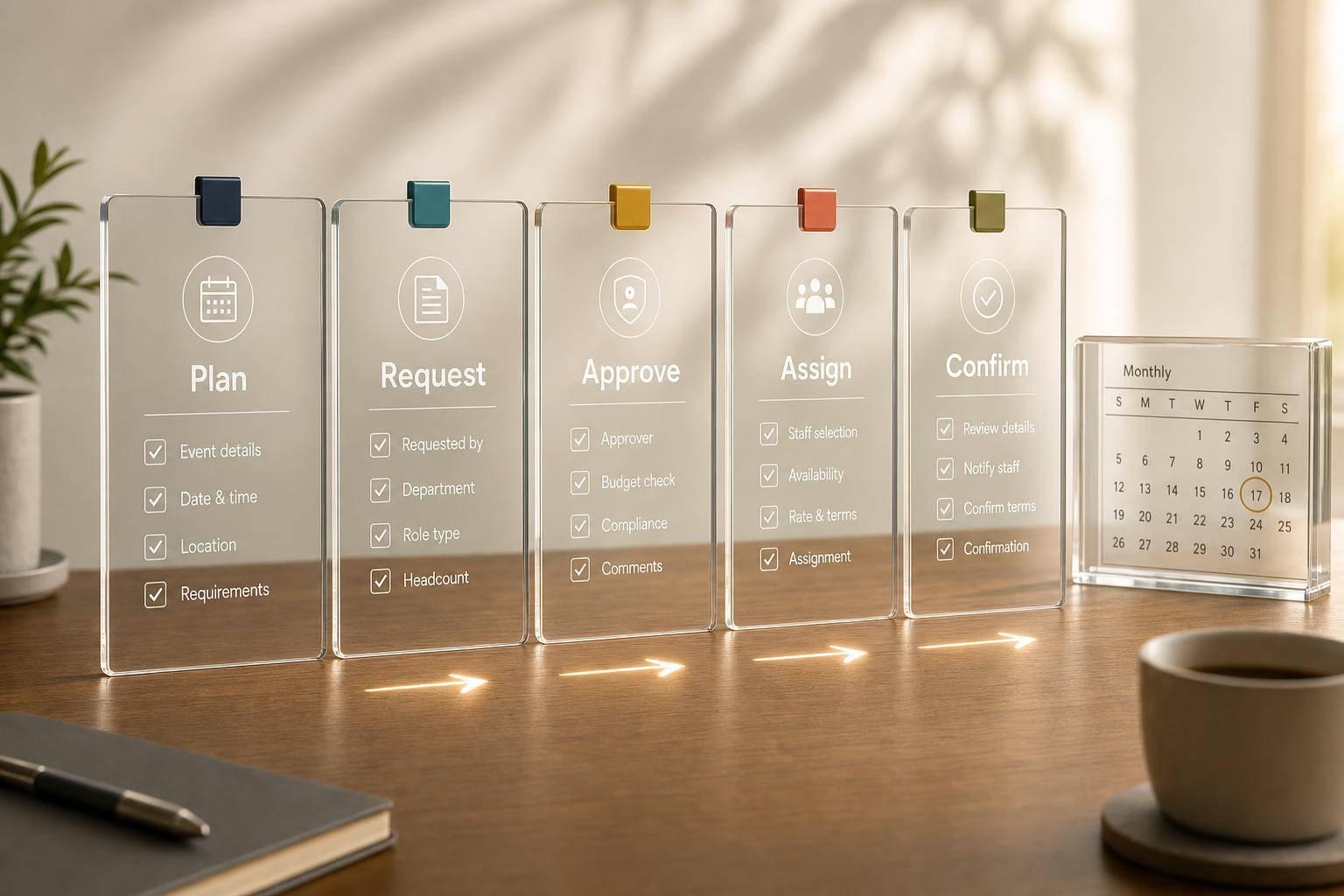
Self-reporting tools are designed to empower employees while making event staff scheduling quick and easy. Here’s how they work:
These features make the process more efficient and give employees greater control over their schedules.
Self-reporting stands in stark contrast to traditional scheduling methods, which are heavily reliant on managerial control. Here's how they compare:
| Feature | Manager-Driven Scheduling | Staff Self-Reporting |
|---|---|---|
| Control | Manager/Scheduler | Employee (within set parameters) |
| Admin Effort | High (manual data entry/adjustments) | Low (automated shift claiming) |
| Transparency | Low (often perceived as arbitrary) | High (rules are visible to all) |
| Flexibility | Rigid (requires manual swap requests) | High (real-time trades and claims) |
| Employee Morale | Lower (less autonomy) | Higher (better work-life balance) |
Traditional scheduling often involves fixed patterns created entirely by managers, which can lead to mismatched shifts and heavy administrative workloads. Self-reporting, on the other hand, offers real-time updates and gives employees the freedom to choose shifts that work for them. This approach has been shown to reduce administrative time by as much as 67%.
Take, for example, a suburban academic hospital with a Level II Emergency Department that transitioned to self-scheduling in December 2024. This hospital, which handles 43,080 patient visits annually, needed to maintain a strict 1:4 staffing ratio and ensure compliance with ACLS, BLS, and PALS certifications. By adopting Medecipher software, they implemented rule-based shift balancing, giving staff more control while maintaining necessary standards.
Self-reporting transforms scheduling from a constant headache into an opportunity for better efficiency and morale. By giving employees more control over their schedules, the positive effects extend across the organization - from happier staff to improved financial performance.
When employees can select shifts that fit their lives, job satisfaction naturally improves. Whether it's picking shifts that allow time for family, school, or simply avoiding exhausting back-to-back night shifts, this flexibility makes a huge difference. In fact, studies show that giving employees control over their schedules can reduce job stress by 20%. This is particularly meaningful in industries like healthcare, where nearly 47% of workers have considered quitting due to burnout and rigid scheduling.
"When people are financially invested, they want a return. When people are emotionally invested, they want to contribute." - Simon Sinek
The financial impact of better retention is hard to ignore. For example, replacing a single bedside registered nurse costs an average of $56,300. Even a small, 1% drop in nurse turnover can save a hospital around $262,500 annually. Companies that embrace flexible scheduling also save approximately $2,000 per employee in turnover costs. Beyond saving money, offering flexible scheduling has become a way to attract top talent, especially in competitive job markets.
Happier employees are more engaged and show up to work more consistently. When staff have a say in their schedules, they feel more accountable, which reduces no-shows and unplanned absences. Organizations with flexible scheduling report a 12% boost in productivity compared to those without it. Employees who choose their shifts tend to be more committed and dependable.
Self-reporting also saves managers a ton of time. Instead of spending hours juggling schedules, managers can set the framework and let employees fill in the gaps. This approach can save up to 15 hours of scheduling work each week. Advanced tools further simplify the process, cutting administrative time by as much as 67%. Features like automatic shift swaps, instant notifications for new openings, and proactive alerts for coverage gaps make managing schedules much easier.
Self-reporting tools improve communication by offering real-time visibility into available shifts. This reduces misunderstandings and perceptions of favoritism in scheduling. Digital platforms use fair, rule-based systems to assign shifts, while employees receive automated updates about new openings. Many tools also allow staff to swap shifts directly through mobile apps, fostering collaboration and trust. When employees feel their preferences are considered, they’re more likely to step up and help cover schedule gaps.
"Self-scheduling is emerging as a powerful tool to meet [staff] needs while maintaining operational efficiency." - Stephanie Gravenor, Co-founder and CEO, Medecipher
Self-reporting doesn’t just save money on turnover - it also helps control labor costs by automatically preventing overtime. Employees can see their hours in real time, and the system enforces shift limits to keep budgets in check. Compliance is another area where these tools shine. Built-in rules ensure only qualified staff can claim specific shifts, verifying certifications like ACLS, BLS, or PALS. For example, a suburban academic hospital with a Level II Emergency Department adopted self-scheduling in December 2024. Using Medecipher software, they maintained strict 1:4 staffing ratios while ensuring all staff met certification requirements.
These advantages highlight how tools like Quickstaff can simplify and improve staff self-reporting processes. When evaluating options, use a checklist for choosing shift assignment software to ensure the platform meets your team's specific needs.

Quickstaff simplifies self-reporting for staff and managers through a user-friendly platform tailored for event businesses and staffing agencies. It allows employees to manage their shifts independently while giving managers real-time insights into staff availability.
With Quickstaff, employees can mark themselves unavailable for specific dates directly in the app. This feature gives managers accurate, up-to-date availability information well ahead of time. Forget the hassle of juggling phone calls and spreadsheets - managers can now check staff availability for upcoming events in just about two minutes.
"Prior to Quickstaff, I was using Excel spreadsheets to track my employees and their shift availability. My life changed the day I started using Quickstaff!" - Jaime S, VP, Lisa's Catering
Additionally, managers can see which staff members have already committed to shifts before finalizing schedules. This minimizes conflicts and streamlines the process. Jennifer Manley, a staffing coordinator, shared that her scheduling time "shrunk majorly", freeing her to focus on other tasks like recruiting and training.
This efficient tracking system sets the stage for even more scalable event scheduling workflows.
Quickstaff enhances communication by automatically sending reminders, directions, and event details to staff. This helps reduce no-shows caused by missed messages or overlooked emails. Managers can also send unlimited messages to specific groups - like servers or bartenders - making it easy to fill shifts quickly without involving the entire team. This centralized communication system brings much-needed "clarity, sanity, and control" to the scheduling process.
"I used to be on the phone all the time to schedule staff. Now, within a few minutes, I can schedule all the staffing I need for my events." - Steven Townsend, Event Manager
Quickstaff works seamlessly in mobile browsers, eliminating the need for staff to download a separate app. Through the mobile interface, employees can update their availability in real time and view a well-organized calendar of upcoming events. The platform also provides access to event-specific notes, directions, and reminders, ensuring better reporting accuracy and improved readiness for events.
To make it easy for businesses to explore its features, Quickstaff offers a 14-day free trial - no credit card required. It’s a risk-free way to see how the platform can transform event staffing.
When you implement self-reporting, tracking the right metrics is crucial to understanding its impact. Combining hard data with employee feedback offers a well-rounded view of how your scheduling process is improving.
One important metric is schedule efficiency, which measures how well staffing levels align with actual needs. To benchmark this, track the percentage of time intervals where staffing falls within 10% of the required levels. For instance, an efficient schedule might show an 86% alignment with staffing needs. Another metric to monitor is the time spent on administrative tasks related to scheduling. Managers often report a drop from 15 hours per week to just 5 hours after adopting self-reporting tools.
Other key metrics include:
Instead of relying on visual graphs, use numeric variance calculations to avoid misinterpretation caused by scale changes.
But numbers alone don’t tell the whole story. Employee feedback is equally important. Conduct surveys 2–4 times a year with targeted questions like: Is the scheduling process easy to follow? Are changes handled promptly? Are schedules released on time?. This input complements your operational data, offering a fuller picture of your progress.
Quickstaff makes it easier to track and analyze scheduling data in real time. The platform highlights staff commitments, availability patterns, and potential conflicts, allowing you to make proactive adjustments. You can also monitor how quickly shifts are filled, track response rates through the messaging system, and identify recurring staffing challenges for specific events.
To get the most accurate insights, gather at least 4–6 weeks of data before making changes. This helps account for seasonal trends and natural variations in work patterns.
A simple comparison table can illustrate the benefits of self-reporting. Here’s an example of typical improvements after implementing these tools:
| Metric | Before Self-Reporting | After Self-Reporting | Improvement % |
|---|---|---|---|
| Schedule Efficiency (within 10%) | 70% | 86% | 22.8% |
| Admin Hours Spent on Scheduling | 15 hours/week | 5 hours/week | 66.7% |
| Employee Satisfaction Score (1-10) | 6.2 | 8.5 | 37.1% |
| Scheduling Errors/Conflicts | 12 per month | 2 per month | 83.3% |
The metrics you prioritize should align with your business goals. For instance, if cutting costs is your focus, efficiency metrics might take center stage. If employee retention is your priority, satisfaction scores could be more relevant. The key is to track consistently and adjust based on what the data reveals.
Staff self-reporting takes the hassle out of scheduling, turning it into a more efficient and employee-focused process. This approach not only lightens the administrative load but also improves team morale, creating benefits for both managers and employees.
The impact goes beyond just saving time. Flexible scheduling can save organizations an average of $2,000 per employee in turnover costs, boost productivity by approximately 12%, and cut turnover rates by up to 45%.
Self-reporting also fosters a culture of accountability and transparency. When employees have a say in their schedules, they’re more likely to show up and stick to their commitments, reducing no-shows and last-minute changes.
For event managers, tools like Quickstaff simplify the transition to self-reporting. Features such as staff availability tracking, automated waitlists, and a mobile-friendly interface help teams update their schedules in real time while ensuring full visibility over event coverage and staffing needs.
To create a fair self-scheduling process, it's crucial to set clear rules for assigning shifts. This helps reduce any chance of bias or favoritism. Using structured approaches - like rotating schedules or automated algorithms - can ensure shifts are distributed more evenly. Tools that track availability and allow staff to self-report their preferences add an extra layer of transparency, giving employees a voice in the process. Platforms such as Quickstaff offer features like centralized scheduling and waitlists, making it easier to maintain fairness across the team.
Managers play a crucial role in maintaining fairness and smooth communication when it comes to staff claiming shifts. To achieve this, it's important to set clear guidelines. For instance:
These practices help strike a balance between giving employees flexibility and meeting the needs of the organization. Plus, they can minimize conflicts when assigning shifts.
Quickstaff minimizes staffing gaps and no-shows by streamlining essential scheduling tasks. It automatically syncs staff availability, identifies potential conflicts ahead of time, and sends out notifications to keep everyone updated. This approach ensures schedules are accurate and helps avoid last-minute disruptions.