5 Training Tips for Retaining Event Staff
May 23, 2026

Event staffing is challenging, with high turnover and labor shortages affecting businesses. Retaining staff is just as important as finding them, especially when replacing an employee can cost 50–200% of their annual salary. The solution? Effective training. When employees feel prepared, supported, and valued, they’re more likely to stay.
Here are five practical tips to help you train and retain event staff:
Investing in training not only reduces turnover but also improves team performance and event outcomes.

5 Training Tips to Retain Event Staff
Effective training is only one part of the equation; event staff scheduling also plays a critical role in keeping your team engaged and organized.
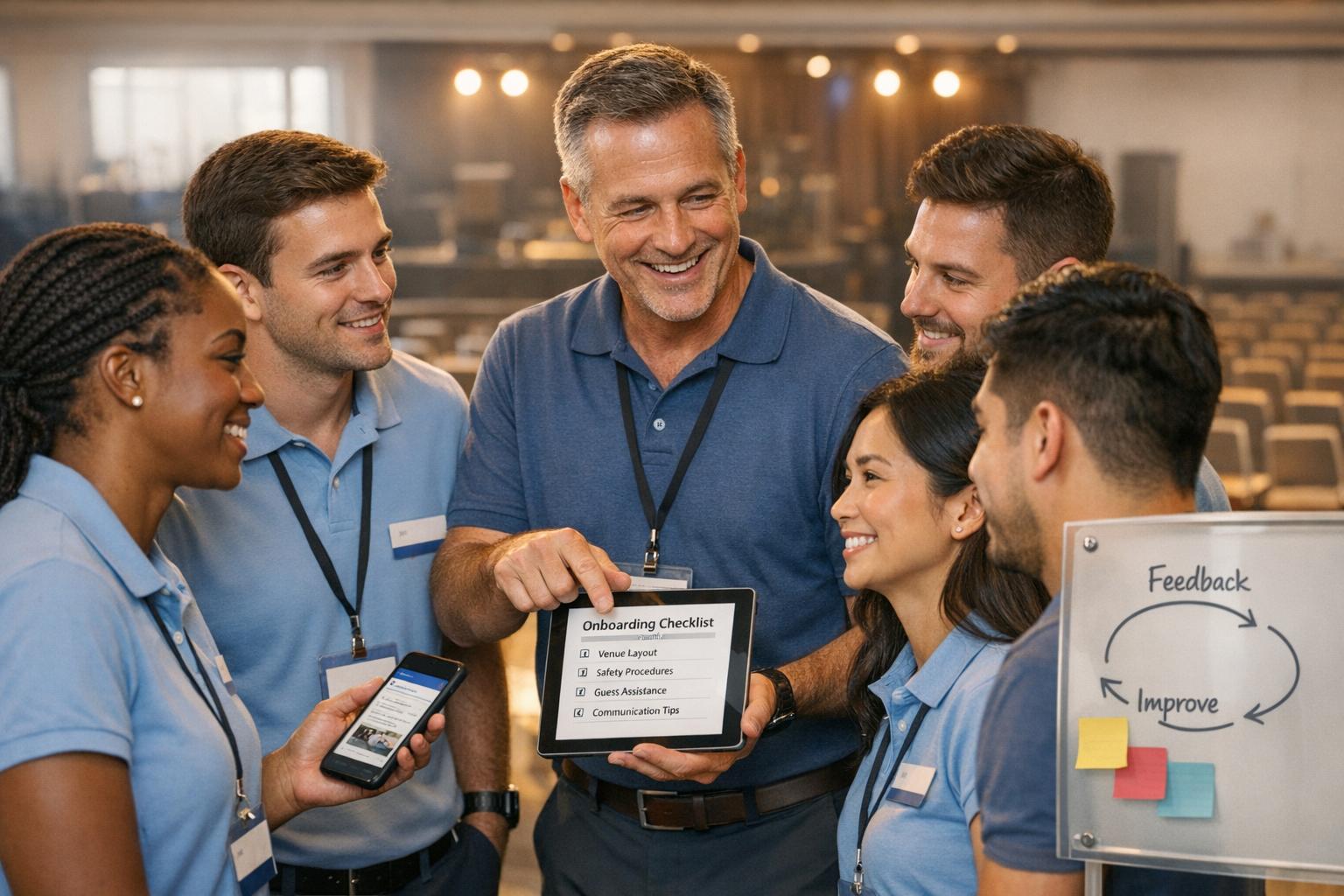
First impressions are everything. As Bank of America notes, "Your process for welcoming and acculturating newbies will set the tone for their experience afterward." This is especially true in event staffing, where workers often juggle multiple gigs and quickly decide whether to return based on their initial experience. A well-organized onboarding process not only keeps things running smoothly but also helps retain staff from the very beginning.
The key is to standardize your onboarding framework while tailoring details to specific roles. Every new hire should go through the same foundational process - covering your organization’s culture, values, and chain of command - while receiving role-specific information based on their duties, like registration, setup, or floor service. This ensures consistency without overwhelming new staff with unnecessary details.
Create digital onboarding guides for each role. These can be concise, 1–2 page documents that focus on the essentials: check-in procedures, dress code, venue layout, parking details, and emergency contacts. Including a simple organizational chart is also helpful, so staff know exactly who to report to from the start. Megan Hayward, Founder & CEO of TempGuru, emphasizes:
"The key is having template systems ready so you can execute rapid onboarding without sacrificing professionalism or legal compliance."
Add shadowing opportunities for hands-on learning. Pairing a new hire with an experienced team member for their first hour allows them to ask questions and learn in real time. This approach builds confidence quickly and minimizes early mistakes, which keeps both staff and clients happy.
Lastly, set up an immediate feedback loop. A quick post-event check-in - whether through a short digital survey or a casual conversation - shows that their experience is important to you. Gathering early feedback not only builds trust but also lays the groundwork for ongoing engagement and targeted training, which are vital for keeping staff around longer. These small gestures can make a big difference in creating a positive, lasting impression.
Once onboarding is complete, the challenge becomes keeping your team engaged and continuously improving. This is where micro training shines. These are short, focused sessions - lasting just 5 to 15 minutes - designed to build job-specific skills. By targeting exactly what someone does in their role, micro training builds on initial training without overwhelming staff.
Why does this matter? It combats the "forgetting curve", which is the natural tendency to forget information unless it's reinforced. Instead of relying on one long training session, these bite-sized lessons provide consistent reinforcement. And it works: companies offering strong learning opportunities see 2.9 times better employee retention compared to those that don’t.
The key to success is tailoring the training to specific roles. For example, a module for registration desk staff should focus on their unique challenges, while floor staff might need training on handling service disruptions. To structure this, consider a 30-60-90 day roadmap:
| Training Milestone | Focus Area | Practical Application |
|---|---|---|
| Day 1–30 | Cultural Immersion & Basics | Pair with a buddy and learn the "unwritten rules" |
| Day 31–60 | Role-Specific Skills | Practice handling common challenges and realistic scenarios |
| Day 61–90 | Advanced Growth | Take on stretch projects or temporary cross-department tasks |
Realism is critical. Use examples from real situations your staff might face, like handling a guest complaint during an event, dealing with a vendor cancellation, or managing unexpected setup delays. When training mirrors actual experiences, it feels relevant and keeps employees engaged. Plus, it pays off - 63% of employee departures could be avoided with proactive engagement and training strategies like these. That’s a lot of potential turnover you can prevent just by consistently investing in your team’s development.
Building essential skills through micro trainings is just the beginning. The next step in improving retention is fostering meaningful personal connections. Structured mentorship programs can create these connections, which are key to keeping employees engaged. In fact, employees who feel a strong sense of community at work are 66% more likely to stay with their organization.
One effective way to start is by pairing every new hire with an experienced team member before their first event. This mentorship setup helps new employees feel supported from day one. Research shows that new hires with a buddy feel 65% more connected to the team culture, and 56% report easier onboarding as a result. To maximize the impact, extend these mentorships for at least 90 days and include weekly check-ins.
"Mentorship benefits both sides: Mentees gain support, perspective and skill development, while mentors experience fulfillment, leadership growth and a deeper connection to the organization." - HR Acuity
Mentorship isn't just about helping new hires. Mentors also benefit by developing leadership and communication skills, while strengthening their connection to the organization. Companies that prioritize internal development through mentorship often see employee tenures increase by as much as 53%.
For success, design your mentorship program with clear, role-specific objectives. Use tools like Quickstaff to schedule and manage regular check-ins, making mentorship a seamless part of your staffing strategy.
Event staff don’t typically work the standard 9-to-5. They often balance multiple jobs, personal commitments, and unpredictable schedules, making rigid, in-person training sessions almost impossible to manage. When training isn’t accessible, the result is often incomplete participation, disengagement, and higher turnover.
To tackle these challenges, make training available on demand. Record live sessions, save them for later, and offer digital downloads so staff can access essential content whenever it fits their schedule. For example, a one-hour webinar can deliver targeted, practical skills without interrupting someone’s entire day.
Once you’ve made training on-demand, the next step is ensuring it works seamlessly on mobile devices. Mobile-first design is crucial but often overlooked. Event staff are constantly on the move, and many don’t have access to a desk or computer. By optimizing training materials for smartphones, you can remove a major barrier to participation. Sean Gates of Navigate Wellbeing Solutions highlights this point:
"Time flexibility is one of the strongest retention strategies in the modern workplace."
This isn’t just theory - 89% of HR professionals report improved employee retention after introducing flexible work and training policies. That’s a major shift that can directly impact your business.
A smart way to structure training is by breaking longer sessions into short, self-paced modules lasting 3–6 minutes. Research shows attention spans drop significantly after six minutes, so keeping content brief helps reduce mental fatigue while allowing staff to complete modules during small breaks in their day. Pair this approach with a mobile-friendly platform like Quickstaff to create a training system that fits seamlessly into your team’s busy lives.
Training doesn’t end when the event wraps up. Some of the best learning happens during post-event debriefs. These moments offer actionable feedback that can drive ongoing improvement through tailored training refreshers.
Timeliness and specificity are crucial when giving feedback. Megan Hayward, Founder & CEO of TempGuru, highlights this perfectly:
"Timely, constructive feedback is how event staff improve. Without it, they repeat mistakes and never develop expertise."
One effective approach is the SBI model (Situation, Behavior, Impact). For instance: “During the cocktail hour, you left your station for 10 minutes, leaving guests unattended and causing a bottleneck at the bar.” This format ensures clarity and helps staff understand exactly what needs to change.
After each event, send out a quick five-question pulse survey to gather insights on what went well, where improvements are needed, and what resources might have been missing. Research suggests that regular check-ins - every six weeks - are more effective than sticking to infrequent formal evaluations.
Documenting feedback is just as important. Use what you learn to create training refreshers that address specific challenges. For example, recurring issues like setup delays signal the need for focused follow-up training. Over time, this feedback loop ensures that event experiences directly inform and improve team readiness. When staff see their feedback being used to enhance training, they’re more likely to feel engaged and committed to the team’s success.
Keeping event staff engaged and committed starts with building strong training habits. A well-structured onboarding process sets the stage, role-specific micro-trainings develop skills without overwhelming the team, and mentorship creates meaningful connections that encourage loyalty. Offering flexible training options acknowledges the unique challenges of a variable workforce, while post-event feedback turns real-world experiences into actionable improvements.
These approaches don’t just enhance staff performance - they also reduce turnover. In fact, companies with top-tier training programs report 53% lower attrition rates compared to those that overlook development. Prioritizing training not only boosts employee morale but also positively impacts your bottom line.
Well-trained staff directly improve guest experiences. As Inspirus highlights:
"Happier employees are more engaged. That engagement encourages collaboration, better problem solving and more innovation."
This level of commitment leads to smoother events and a team that genuinely cares about delivering great results.
For event businesses managing a variable workforce across the U.S., coordination is just as critical as training. Quickstaff’s scheduling and communication tools bridge the gap, ensuring training efforts lead to flawless event execution. With features like centralized scheduling, staff availability tracking, and timely messaging, Quickstaff helps caterers, wedding vendors, and staffing agencies keep their teams organized and ready for every event.
A strong, well-prepared team is the foundation of success - put these strategies into action to build a workforce that lasts.
When onboarding event staff, it's important to cover all the essentials to ensure smooth operations and a well-prepared team. Here's what to include:
By covering these points, you set your event staff up for success and minimize potential hiccups.
Regular micro-trainings for event staff can make a real difference. These short, focused sessions - lasting just 2 to 5 minutes - are most effective when spread out over time. Scheduling them weekly or bi-weekly works well, but they should also be triggered by specific events like incidents, updates, or performance challenges. Why does this matter? Research shows that spaced repetition helps people retain knowledge better, ensuring skills are reinforced and stay fresh.
To collect feedback effectively, use a straightforward and organized template. Include fields such as name, event, date, and dedicated sections for feedback type, behavior, and suggestions. Promote open communication by inviting staff to share their thoughts, creating an atmosphere of trust and collaboration.
Make sure feedback is timely, specific, and constructive. This approach helps employees feel appreciated and motivated to engage, while also contributing to their skill growth and overall involvement.