Staff Communication Plan Template
July 8, 2026

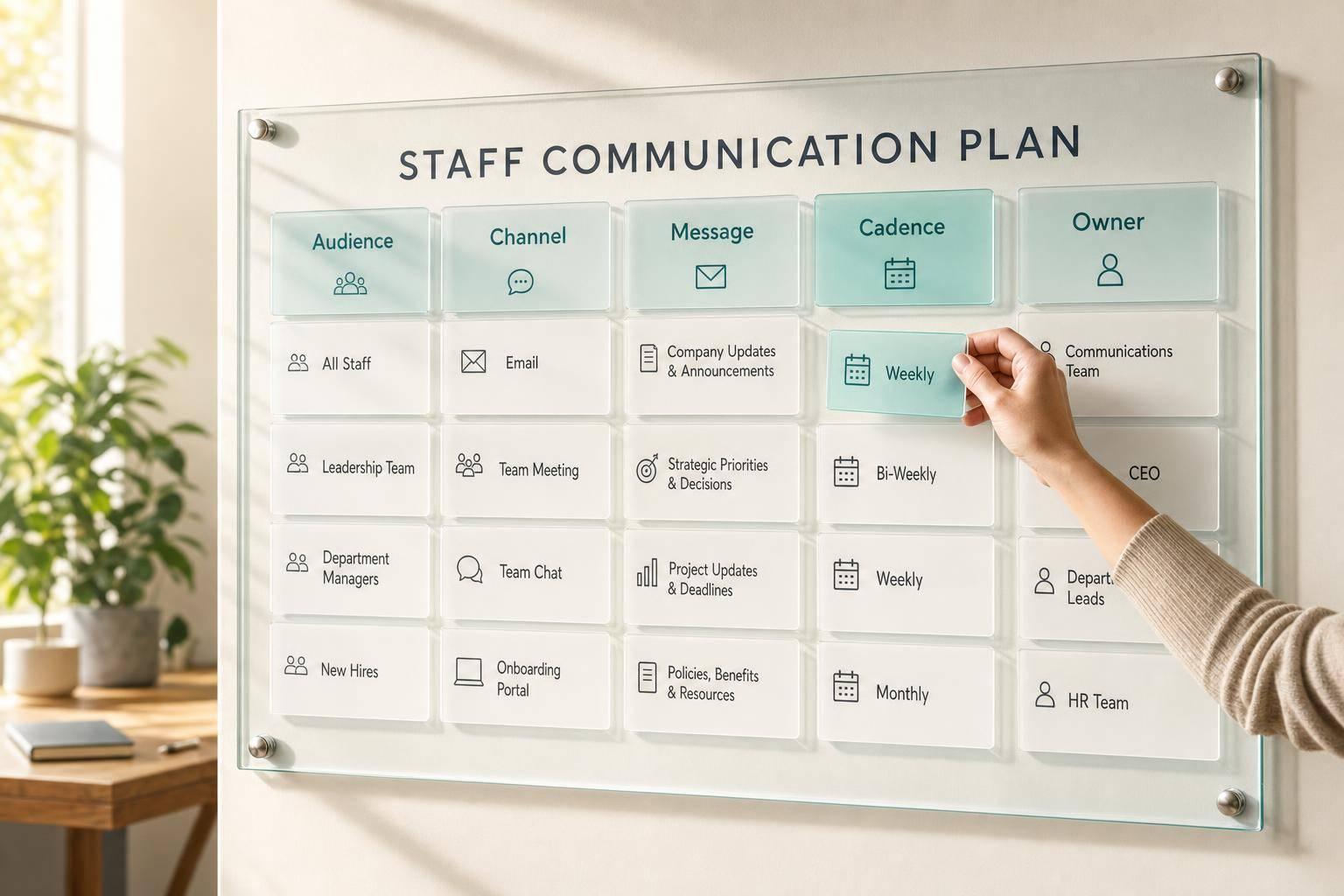
A strong staff communication plan template helps teams stay aligned, reduces confusion, and makes important updates easier to manage. For growing businesses, internal communication often becomes inconsistent across departments, managers, and locations. A structured plan solves that by defining who needs what information, how messages should be delivered, and when communication should happen.
This tool is designed for practical day-to-day operations. You can map audience groups, assign communication channels, set frequency, and document ownership in one place. That makes it easier to support onboarding, change management, policy rollouts, frontline updates, and remote team communication without relying on memory or disconnected documents.
Instead of starting with a blank page, this staff communication plan template generates a usable framework based on your inputs. It can also include urgent communication procedures, acknowledgment steps, review schedules, and compliance notes when needed. The result is a more organized internal communication plan that teams can copy, adapt, and use as a working reference. For managers and HR teams, that means less guesswork and a more consistent employee experience across the business.
It’s designed for business owners, team leaders, operations managers, and HR professionals who need a straightforward way to organize internal communication. Whether you’re building a company-wide plan or a department-specific process, the tool gives you a practical structure without forcing you into overly formal language or rigid templates.
Yes. If you choose to include crisis communication procedures, the generated plan adds a dedicated section for urgent messaging. That section can outline escalation paths, approved channels, ownership, and fast-response expectations, which is especially useful for operational incidents, safety issues, outages, or other time-sensitive updates.
A generic template usually gives you headings and leaves you to figure out the rest. This tool builds a more usable communication plan based on your actual workplace inputs, including audience groups, channel frequency, responsibilities, feedback loops, and review schedules. The result feels closer to something you could put into practice right away rather than a blank document you still need to rewrite.