How Mentorship Boosts Staff Retention
May 25, 2026


Mentorship programs can reduce turnover, save costs, and improve team performance in the events industry. High staff turnover is a persistent issue, with up to 50% of new hires leaving within five months. Mentorship tackles this by building trust, improving onboarding new event staff, and creating career growth opportunities. Studies show mentored employees are 2.85x more likely to stay, cutting turnover rates by 12% and boosting retention by 17%.
Key takeaways:
Investing in mentorship not only reduces hiring costs but also builds a stronger, more reliable team.

How Mentorship Boosts Staff Retention: Key Stats & Impact
Structured mentorship programs have been shown to reduce staff turnover by 12% while increasing retention by 17%. For event businesses, which often rely on temporary workers, these improvements translate into significant cost savings and more consistent operations.
The early stages of a career are when employees are most likely to leave. Without proper support during those critical first weeks, new hires are far more likely to quit. Mentorship during this period provides a sense of stability and purpose, encouraging employees to stay and grow within the organization. This contrast between mentored and non-mentored teams underscores the measurable benefits of providing structured guidance.
Studies comparing mentored and non-mentored teams reveal striking differences. Turnover rates dropped from 12% in groups without mentorship programs to 9% in those with active mentorship. Similarly, preceptorship programs increased retention rates from an average of 78% to 88.46%. Programs that combine mentorship with robust onboarding and career development have achieved retention improvements of up to 24% above baseline. The takeaway? The more structured the support, the better the results.
"There are positive outcomes towards nurses' retention, job satisfaction, and intention to stay following a successful mentorship program." - Evra Yusandra and H. A. Heidy Diana, Lincoln University College
These findings aren't limited to one field. Similar trends in other high-turnover industries demonstrate how mentorship universally impacts staff retention.
Event staffing shares many challenges with industries like nursing and hospitality, making these insights directly relevant. For example, in 2022, turnover among full-time nursing staff reached 11.6%, with new graduates at 10.3%. These numbers closely mirror the struggles faced by event teams.
Proven strategies from these fields can be adapted to event staffing. Extended orientation programs lasting 8 to 12 weeks have reduced turnover by 17.6% over a four-year period. Externship-style initiatives, where new hires shadow experienced employees, boosted retention from 80% to 86%. These models offer practical solutions that event managers can implement immediately. Utilizing scheduling tools for catering staff can further streamline these efforts.
"Nurse retention is a complex and multifaceted issue. No single intervention works in isolation; but rather, a network of strategies and interventions is necessary to effectively reduce turnover and retain nursing staff." - BMC Health Services Research
The same principle applies to event staffing. Mentorship delivers the best results when paired with comprehensive onboarding, strong leadership support, and clear career advancement opportunities. It’s not a standalone solution but rather a key part of a broader retention strategy.
Mentorship plays a key role in helping employees feel connected, valued, and prepared for the challenges of their roles. It supports career growth, builds a sense of belonging, and ensures smoother onboarding - all of which contribute to keeping staff around longer.
People are more likely to stick with a job when they see opportunities to grow. Mentorship helps create that sense of possibility, transforming what might feel like a temporary job into a clear career path.
Warwick Davies, Founder of The Annabelle Project and Principal of The Event Mechanic!, explains why young professionals often leave the events industry:
"The next generation isn't rejecting a career in events because they're uninterested in what we do. They're walking away because we haven't given them a compelling reason to stay, a clear path to get started or proof that the investment of their time and energy will actually pay off." - Warwick Davies, Founder of The Annabelle Project
His approach focuses on offering young talent access, accountability, and a clear career path. In April 2026, Davies launched a mentorship initiative that moved away from traditional recruitment methods, like career fairs, and instead focused on engaging college-age individuals. The goal? To shift their mindset from being "industry-curious" to "industry-committed." The results spoke for themselves.
The events industry, like many others, can be incredibly demanding, and without a strong support system, burnout is almost inevitable. Mentorship provides that much-needed support by giving employees someone to rely on during tough times.
A study published in November 2024 tracked 125 early-career professionals over five months. Initially, there were no differences between those with mentors and those without. However, by the end of the study, the mentored group showed a 60.3% improvement in retention, with the most notable gains in high-pressure environments. Mentored employees were found to have 2.85 times higher odds of staying in their profession compared to their non-mentored peers.
Research from Kyambogo University adds to this, showing that mentorship - especially when it includes role modeling and social support - makes employees feel appreciated and valued. This, in turn, lowers their likelihood of leaving.
"Mentorship enables employees to feel that [the organization] values them and felt grateful to stay and work for it." - Getrude Namusoke, Kyambogo University
This sense of belonging not only helps employees stay but also creates a strong foundation for building new skills and thriving in their roles.
The first few months in a new job are often the most critical. Many new hires leave within their first five months. Mentorship helps bridge this gap by providing hands-on guidance and real-time feedback, which accelerates the onboarding process as part of a scalable event scheduling system and helps new employees feel more at ease.
Professor Berrin Erdogan of Portland State University found that mentoring significantly reduces burnout, stress, and low morale - all common reasons employees quit. Mentors not only help new hires develop practical skills but also offer the emotional support needed to navigate challenges. This combination of career development and psychosocial support helps turn new hires into long-term, dedicated team members.
Knowing why mentorship works is just the starting point. The real challenge lies in creating a program that fits the fast-paced nature of event work and can withstand the demands of busy seasons.
Without a solid structure, even the best intentions can fall apart under the weight of packed schedules and missed meetings.
Start by defining a clear goal. Whether it’s reducing turnover within 90 days, creating a stronger talent pipeline, or improving performance during high-pressure events, having a goal shapes everything - pairing decisions, meeting schedules, and how success is measured.
Thoughtful matching is also critical. Pair mentors and mentees based on their experience, work styles, and shared objectives. This approach works far better than random assignments. Both parties should go through a brief orientation that outlines program expectations, including how often they’ll meet, what topics to cover, and how to give constructive feedback.
Aim for at least one hour per month over a one-year period. This consistent time commitment builds trust and allows progress to be tracked. To keep meetings productive, encourage mentees to prepare a short agenda with two or three key questions or topics. This keeps the conversation focused and avoids turning meetings into casual chats.
Another helpful tool is a Mentoring Action Plan (MAP). This is a simple document where the mentee identifies specific skills they want to develop and how they’ll apply them at work. It creates accountability and gives both the mentor and mentee clear goals to revisit during their sessions.
Finally, using scheduling tools can make all of these structured efforts easier to manage.
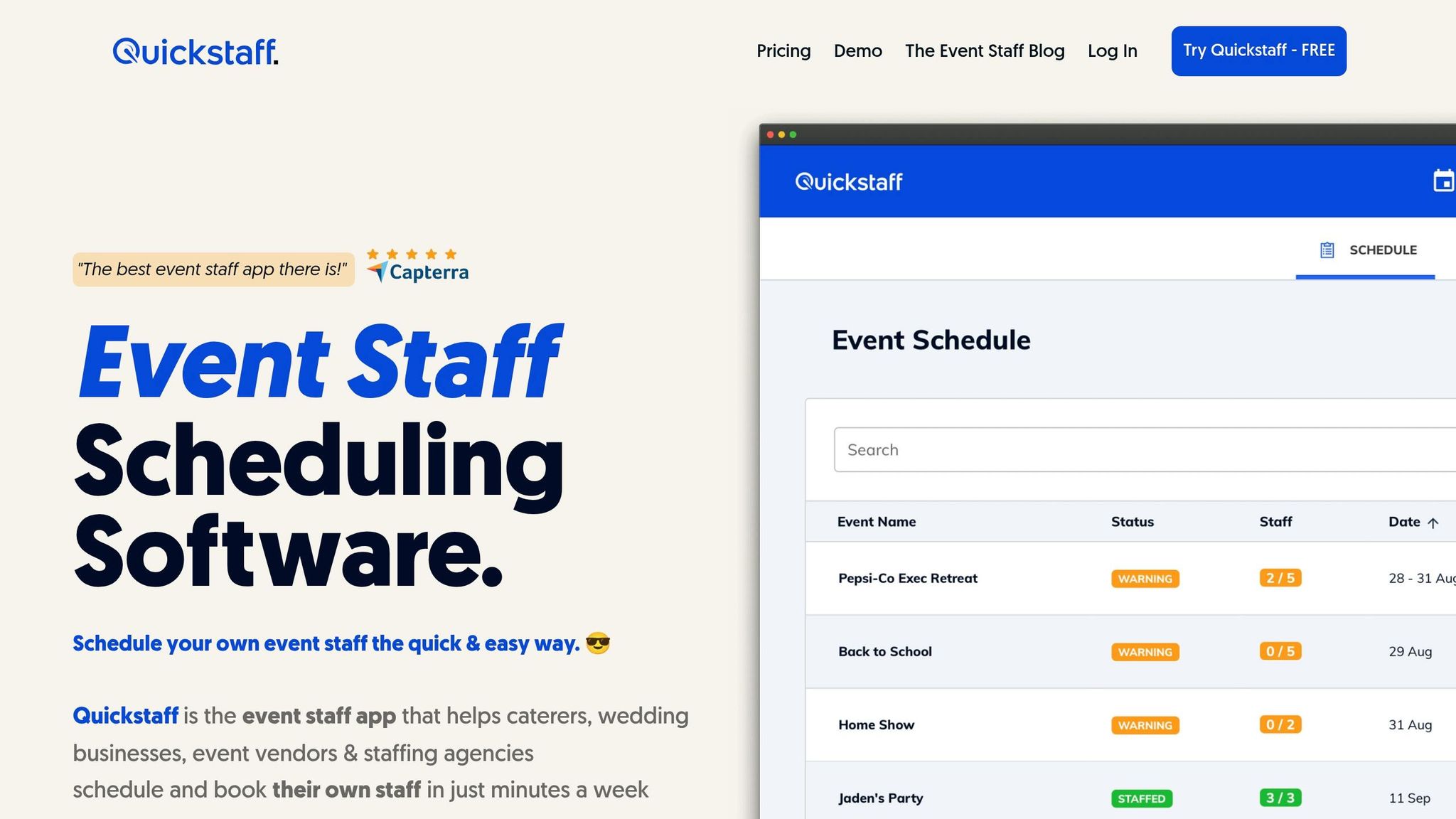
One of the biggest hurdles in event staffing is the fact that team members are often scattered across different locations and events. With constantly shifting schedules, keeping mentor-mentee pairs connected can be tricky.
This is where tools like Quickstaff can make a big difference. Its centralized scheduling and messaging features help track mentor-mentee pairings, even when staff are spread across multiple events. For example, managers can use Quickstaff to assign a new hire to work alongside their mentor at an event. The platform’s unlimited messaging feature also gives mentors a simple way to check in between events, discuss recent experiences, or flag topics for future meetings.
"Without this move to technology, our program would not have been manageable at [the current] size. One of the key aspects of MentorcliQ's mentoring software is the automated SMART matching capability… Not having to manually match our growing participant pool saves us time and money." - Sadaf Amini, Talent Development Manager at SOLV Energy
While technology helps keep everyone connected, the format of the mentorship program itself is just as important.
Informal mentorship often happens naturally in event teams - like a seasoned bartender teaching a new hire or a veteran coordinator guiding someone through their first event setup. While this kind of on-the-job learning is valuable, it has its drawbacks. It’s hard to scale, difficult to measure, and often leaves some team members without guidance.
Structured mentorship programs, on the other hand, provide a consistent framework that ensures every team member has access to mentorship. Here’s a quick comparison:
| Feature | Informal Mentorship | Structured Mentorship |
|---|---|---|
| Consistency | Low; depends on individual effort | High; follows a set framework and timeline |
| Scalability | Difficult as the team grows | Scales easily across departments |
| Inclusivity | May leave out underrepresented staff | Ensures equal access for all employees |
| Measurement | Hard to track impact | Easy to measure with KPIs and feedback |
| Goal Alignment | Focused on personal rapport | Aligned with organizational goals |
For smaller teams of 5–10 people, an informal buddy system might be enough. For teams of 20–35, one-on-one pairings with scheduled check-ins work well. For larger teams of 35–50 or more, a formal program with proper training and tracking becomes essential.
"Structure isn't restrictive. Structure frees people to do their best work." - Mentorly Blog
Once your mentorship program is underway, it’s crucial to assess its impact by focusing on measurable outcomes.
One of the simplest ways to gauge success is by comparing turnover rates between mentored and non-mentored employees. Studies reveal that mentored staff are 2.85 times more likely to stay in their roles than those without mentors. In high-turnover settings, this translates to a 27.1 percentage point retention boost within just five months.
Here are additional metrics to track:
| Metric | Metric Details | Why It Matters |
|---|---|---|
| Retention Rate | Compares turnover between mentored and non-mentored staff | Highlights the retention benefits of mentorship |
| Turnover Intentions | Employee sentiment surveys | Helps predict potential attrition |
| Internal Mobility | Tracks promotions and role changes | Reflects leadership development |
| Feedback Frequency | Tracks mentor-mentee meeting regularity | Ensures active participation, not just nominal involvement |
Surveying employees about their likelihood of staying over the next six months can be a proactive way to address potential issues before they result in turnover.
Operational data provides another angle to evaluate mentorship programs. Tools like Quickstaff allow managers to monitor key indicators, such as how often mentored staff take on additional shifts, the speed at which new hires achieve independence, and whether mentor-mentee pairs frequently work together.
For instance, if new hires paired with mentors consistently accept more shifts and stay engaged longer, this signals that the program is driving positive outcomes. Quickstaff simplifies these comparisons by consolidating scheduling and performance data, eliminating the need for separate tracking systems.
"The ROI: a new hire who reaches full productivity 2 to 3 weeks faster, who asks their manager 50% fewer logistical questions, and who reports higher satisfaction with their onboarding experience." - FirstHR
Mentorship programs don’t just improve retention - they also save money. Replacing an employee can cost anywhere from 50% to 200% of their annual salary, and the average hiring cost is about $4,129. Even modest retention improvements can result in significant financial gains.
A study by Sun Microsystems and Gartner revealed that, over five years, mentees had a 72% retention rate, mentors had 69%, and non-participants lagged behind at 49%. This difference saved $6.7 million in turnover costs, delivering a mentoring ROI of over 1,000%.
To calculate potential savings, use this formula:
(Turnover Rate for Non-Participants − Turnover Rate for Participants) × Number of Participants × Average Replacement Cost.
"Retention is typically the largest financial benefit of mentoring." - MentorNeko
Mentorship is more than just a feel-good initiative - it’s a powerful strategy for improving event staff retention. By 2026, companies with structured mentorship programs have reported retention increases of up to 35% among mentored employees. That’s a game-changer in an industry where turnover is a constant challenge.
Mentorship doesn’t just address retention; it also helps build stronger, more capable teams. It’s particularly effective at reducing early turnover, especially within the first 45 days when 20% of turnover typically occurs. Additionally, it ensures smoother event operations over time. Engaged mentors pass on knowledge quickly, while mentees ramp up faster, keeping valuable expertise within the organization. This creates a ripple effect of stability and efficiency, as highlighted earlier in this article.
"Mentorship isn't a nice-to-have anymore. It's the infrastructure that keeps people learning fast, adapting even faster, and staying long enough to make an actual impact." - Mentorly
With these benefits in mind, event managers have a clear path forward to implement mentorship programs that make a difference.
To translate these insights into action, event managers can start with focused, practical steps. For smaller teams (under 20 people), pairing new hires with a peer mentor for 30–90 days can significantly improve retention rates. The key? Match individuals based on personality and goals, not just seniority. Research shows that match quality determines about 80% of a mentorship program’s success.
Once the program is in place, structure is crucial. Include a Day 15 check-in, define mentor and mentee roles clearly, and recruit mentors who are enthusiastic about the role. These steps align with the retention data and reduced early attrition rates discussed earlier. Tools like Quickstaff can simplify the process by helping track schedules and measure program effectiveness. For example, you can monitor whether mentored employees are taking more shifts and staying engaged longer. The metrics will provide valuable insights into what’s working and where adjustments might be needed.
"If you want your people to grow at the speed your business demands, mentorship is the fastest way there." - Mentorly
Choose mentors based on shared goals and compatible personalities, rather than focusing solely on seniority. In smaller teams, managers might consider nominating mentors who are enthusiastic and have a moderate level of experience. These individuals often provide better guidance than highly skilled experts who may lack interest in mentoring. Introducing informal buddy systems - pairing new hires with colleagues at a similar level - can be a great starting point. This approach helps newcomers settle in, get answers to practical questions, and feel more connected to the team, which can lead to improved productivity and stronger employee retention.
For seasonal or part-time teams, the easiest way to structure mentorship is through quick, focused onboarding and training. This might include digital training modules or shadowing experienced team members. These approaches ensure new hires can get up to speed quickly while keeping things running smoothly in fast-paced settings.
When discussing the value of mentorship, it’s powerful to back it up with real numbers. For instance, mentorship can lead to higher retention rates - like a 27.1 percentage point increase over just five months for teachers. It can also result in significant cost savings, such as avoiding $480,000 in turnover expenses.
To make your case even stronger, use data from your own organization. Show trends that highlight how mentorship programs drive measurable outcomes and contribute to your bottom line. Numbers like these make the benefits of mentorship impossible to ignore.