Eco-Friendly Catering Supplies: What to Know
April 29, 2026

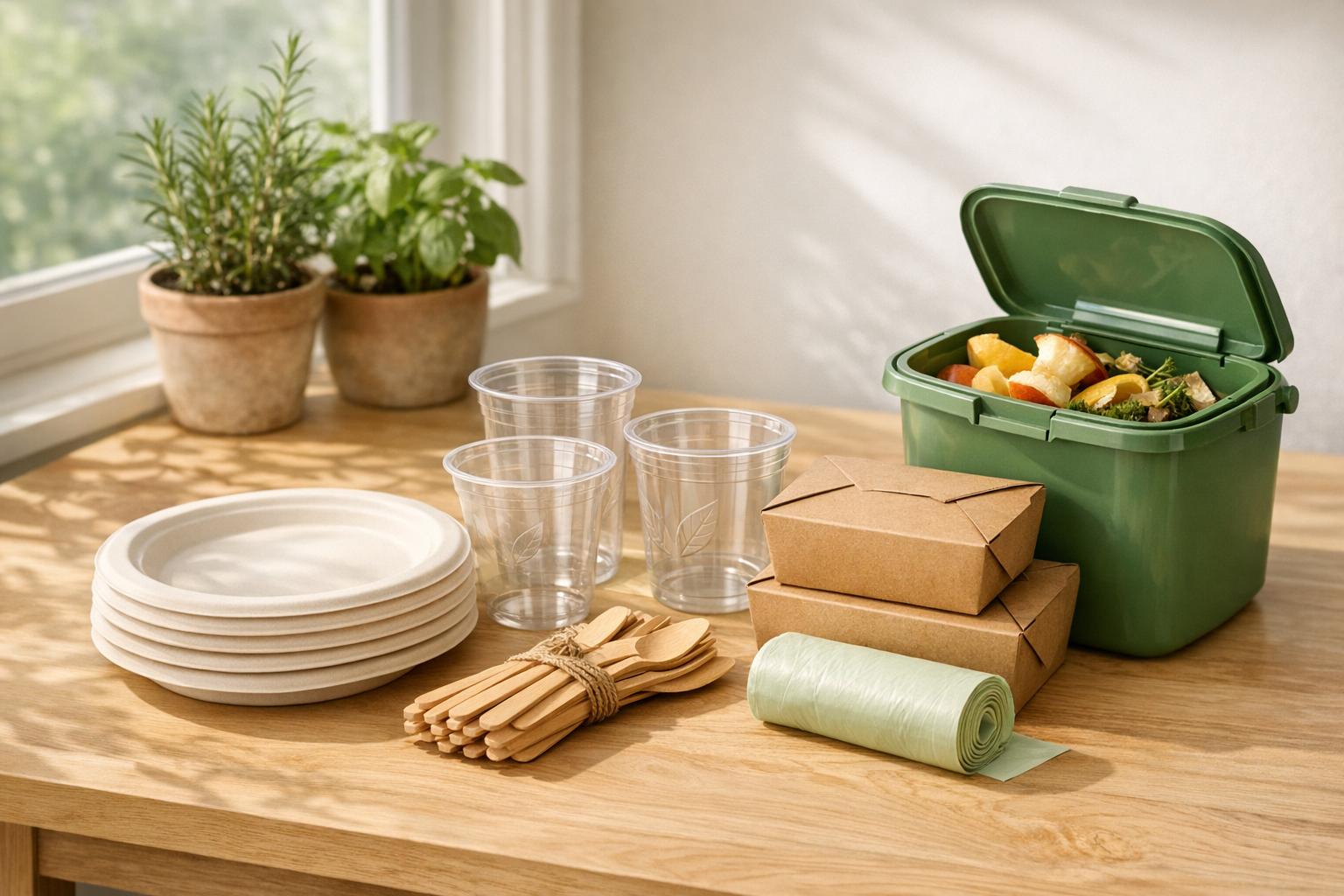
Eco-friendly catering supplies are transforming event planning by addressing waste and pollution concerns. Weddings alone produce around 400 pounds of waste and emit 63 tons of CO2, with single-use plastics making up 20% of the trash. These alternatives - made from materials like bamboo, bagasse, and PLA - are designed to decompose naturally or be recycled, offering a greener solution.
Switching to compostable supplies isn’t just a trend - it’s becoming a practical choice for caterers to meet client expectations and legal requirements while reducing environmental impact.
Eco-friendly catering supplies are tableware and serving tools made from renewable, plant-based, or recycled materials, designed with compostability or recyclability in mind. Unlike conventional single-use plastics, which can linger in landfills and oceans for centuries - often cited as 500+ years - these alternatives are crafted to break down naturally or be repurposed. This makes them a thoughtful choice for those looking to reduce environmental impact while balancing performance and cost.
These supplies often come from agricultural by-products or naturally shed materials, turning waste into something useful. Take bagasse, for instance - it’s the fibrous material left after extracting juice from sugarcane, making it a perfect example of a circular economy product. Similarly, palm leaf plates are made from naturally fallen Areca leaves, using a process that causes no harm. These plates not only showcase their unique natural grain but also handle temperatures up to 350°F with ease. Bamboo, another popular option, grows incredibly fast and produces 35% more oxygen than hardwood trees. Then there’s PLA (Polylactic Acid), a plant-based thermoplastic derived from fermented starches like corn or sugarcane. While it mimics the clarity of traditional plastic, it requires industrial composting temperatures of 140–170°F to decompose. Knowing these material details is key to understanding their costs and sourcing options, which we’ll explore later.
Modern sustainable supplies don’t just meet environmental goals - they also deliver a premium feel and practical benefits. For instance, bamboo naturally contains "bamboo kun", which reduces bacterial growth by 71% compared to plastic after 24 hours. Bagasse, on the other hand, excels with hot, oily foods, thanks to its grease resistance and heat tolerance of up to 212°F.
As the market has grown, sustainability has become a core element of event planning. Organizers now actively seek compostable options that not only meet functional requirements but also complement their event’s aesthetic goals. This shift reflects a broader commitment to integrating eco-conscious choices into every aspect of design and planning.

Cost and Performance Comparison of Eco-Friendly vs Conventional Catering Supplies
At first glance, eco-friendly catering supplies do come with a higher price tag compared to traditional plastic options. For instance, plastic plates range from $0.05 to $0.15 per unit, while bagasse plates cost between $0.25 and $0.50, and bamboo plates range from $0.40 to $0.80 each. Similarly, plastic cutlery sets are priced at $0.02 to $0.04, whereas birch wood options cost $0.05 to $0.08, and bamboo sets range from $0.12 to $0.18. This disparity largely stems from the smaller scale of production for eco-friendly materials compared to the well-established plastic industry.
Among eco-friendly options, bagasse stands out as the most affordable. Its lower production costs make it a practical choice for businesses aiming to make the switch from plastic without breaking the bank. As Growood highlights:
"Using bagasse has the advantage of giving high-quality products at a cheaper price [than bamboo]. This makes it easier for any business organization to transition from traditional materials".
Bamboo, on the other hand, offers durability that offsets its higher upfront cost. With the ability to withstand 100–500 uses, the cost per use for bamboo products drops to approximately $0.15 to $0.30.
While the initial investment in eco-friendly supplies is higher, these costs can be recouped over time. For one, compostable materials significantly reduce waste disposal fees. Additionally, they cut cleanup labor by 40–60%, saving four to six hours for a 200-person event, which can be further optimized using scheduling tools for caterers. Many businesses report a return on investment within 12 to 18 months, driven by greater customer loyalty and lower regulatory expenses. As Ecovue notes:
"Eco-friendly food packaging can create new business opportunities... It can also help companies save money by reducing their waste disposal costs".
There are ways to make eco-friendly supplies more affordable. Bulk purchasing can lead to savings of 20–30%. To avoid price hikes, businesses should secure pricing 8–10 weeks ahead of peak seasons. Starting small - such as replacing plastic stirrers with wooden ones - can also ease the transition. Lastly, verifying certifications like BPI, FSC, or OK Compost ensures you're investing in genuinely compostable products.
| Item Category | Conventional Plastic | Eco-Friendly Alternative | Key Considerations |
|---|---|---|---|
| Plates (per unit) | $0.05–$0.15 | $0.25–$0.50 (Bagasse) $0.40–$0.80 (Bamboo) |
Bagasse decomposes in 60–90 days vs. 500+ years for plastic |
| Cutlery (per set) | $0.02–$0.04 | $0.05–$0.08 (Birch) $0.12–$0.18 (Bamboo) |
Bamboo can be reused 100–500 times; plastic is typically single-use |
| Bulk Savings | Standard discounts | 20–30% off for large orders | Order 8–10 weeks ahead to lock in pricing |
| Long-Term Savings | High waste disposal fees | Reduced landfill fees plus 40–60% labor reduction | Compostable options lower disposal fees and cleanup costs |
Once you've assessed costs and performance, the next step is finding dependable suppliers for eco-friendly catering supplies. Thanks to growing demand in the U.S., several trusted vendors now offer a wide range of options tailored to sustainable catering, though managing the logistics of these events often requires specialized catering software.
For instance, Restaurantware is a one-stop online store with specialized collections like Cater Tek for large events and Basic Nature for compostable essentials. They offer bulk options in 100–500 count boxes, and their Green Hero Foundation has planted over 337,000 trees through a partnership with Veritree.
Green Paper Products stands out for its customer service, offering up to 15 free sample items to help you evaluate quality. They also boast a 97% customer satisfaction rating. World Centric, a certified B Corp, not only supplies compostable plates, utensils, and other catering supplies that decompose within 180 days under commercial composting conditions but also donates 25% of its profits to grassroots social and environmental initiatives. Operating since 2009, Food Biz Supply specializes in biodegradable items for restaurants and catering, with free ground shipping across the U.S.. For wholesale buyers, TreeChoice offers specialty items like palm leaf plates and bamboo dinnerware, with free shipping on orders over $5,000.
When choosing a supplier, shipping and logistics are key factors to consider. Always request samples to test product quality before placing large orders. Verify that products meet ASTM D6400 or ASTM D6868 standards to ensure they are truly compostable. Shipping thresholds vary by vendor: Green Paper Products provides carbon-neutral free shipping on orders over $89, Bio & Chic on orders over $149.99, and TreeChoice on larger orders.
Suppliers with U.S.-based warehouses are a smart choice for faster delivery and consistent inventory, especially for recurring needs. Many vendors also offer perks like rewards programs and custom branding services, which can help offset costs for high-volume operations. For more specialized items, Bio & Chic focuses on elegant, eco-friendly dinnerware and takeout packaging, while SelfEco manufactures plant-based PLA caterware that is both tree-free and petroleum-free, all made in the U.S..
To maximize cost efficiency, adopt smart ordering practices. Bulk purchasing can save you 20–30%, and increasing wholesale orders from 10,000 to 100,000 units can cut per-unit costs by up to 50%. However, limit your stock of compostable items to a 12-month supply, as exposure to heat or moisture can cause them to break down prematurely.
Caterers often wonder how eco-friendly supplies stack up against conventional options in terms of performance. The good news is that modern sustainable materials not only hold their own but sometimes even surpass traditional choices.
For instance, bamboo scores an impressive 9/10 in durability, just shy of plastic's perfect 10. It’s the strongest natural option for cutlery, easily handling heavy foods and even steak knives without breaking. Bamboo plates are also highly durable, being 85% less likely to break than ceramic and able to survive a 4-foot drop. Similarly, bagasse is three times stronger than recycled paper and matches plastic in resisting oil. A 10-inch wood plate, on the other hand, can support up to 5.2 lbs.
When it comes to heat resistance, eco-friendly materials shine in their own ways. Palm leaf plates can withstand temperatures as high as 350°F, making them ideal for hot dishes. Bamboo and bagasse are heat-resistant up to 200°F, while wood tolerates up to 212°F. In comparison, conventional plastic starts to warp at around 170°F. Hygiene is another area where eco-friendly materials excel - wood naturally eliminates 99.9% of bacteria within 24 hours, and bamboo fiber products show 71% less bacterial growth than plastic after a day of use.
However, liquid resistance can be a sticking point. While plastic scores a perfect 10, palm leaf earns a 9, bamboo an 8, and bagasse a 6. Recycled paper lags behind with a score of just 2. This means choosing the right material depends on the menu. For example, bamboo or palm leaf is ideal for hot entrees and steak, while wood or bagasse works well for lighter items like salads, desserts, and appetizers. One material to avoid in certain situations is PLA (polylactic acid), which can warp in direct sunlight if temperatures exceed 113°F - making it unsuitable for outdoor summer events.
| Material | Durability | Heat Resistance | Disposal Time (Industrial) | Guest Perception |
|---|---|---|---|---|
| Bamboo | 9/10 | 200°F | 60–90 Days | Premium / Modern |
| Bagasse | 7/10 | 200°F | 45–60 Days | Clean / Standard |
| Wood | High | 212°F | 45–90 Days | Rustic / Organic |
| Palm Leaf | 8/10 | 350°F | 60–90 Days | Luxury / Unique |
| Paper | 3/10 | 140°F | 20–45 Days | Budget / Basic |
| Plastic | 10/10 | 170°F | Never | Low / Outdated |
When it comes to eco-friendly catering supplies, certifications play a key role in separating products that are truly sustainable from those that just claim to be. With terms like "biodegradable" often used loosely, certifications are your best tool to avoid falling victim to greenwashing. For example, a product labeled "biodegradable" might take decades to decompose, yet still carry that label. In contrast, certified compostable items are rigorously tested to ensure they break down within specific timeframes in actual composting systems.
One of the most trusted certifications in the United States is BPI Certification. It guarantees that products meet ASTM D6400 (for solid plastics) or D6868 (for coated paper) standards, ensuring they decompose safely without leaving harmful residues, microplastics, or PFAS chemicals behind. To avoid being misled by logos on websites, always ask suppliers for verifiable test certificates. As BPI explains:
"BPI's Certification Mark gives composters confidence to accept these materials and helps consumers avoid greenwashing - where misleading 'biodegradable' claims obscure the truth".
For items made from wood or paper, such as birch cutlery or kraft napkins, the FSC (Forest Stewardship Council) certification is essential. This ensures the materials come from responsibly managed forests. If your venue lacks access to industrial composting, look for certifications like OK compost HOME or opt for materials like wood, bamboo, or palm leaf, which naturally break down at lower temperatures.
| Certification | Primary Focus | Standard Met | Best For |
|---|---|---|---|
| BPI Compostable | Industrial Compostability | ASTM D6400 / D6868 | PLA plastics, lined cups, cutlery |
| FSC | Sustainable Forestry | Forest Management Standards | Wood cutlery, paper bags, napkins |
| OK compost HOME | Home Compostability | TÜV Austria Standards | Bagasse, wood, palm leaf |
| EN 13432 | Biodegradability | European Packaging Standard | General compostable packaging |
Always align your choice of certifications with your venue's waste disposal options. For instance, if industrial composting isn't an option, avoid using PLA-based products - they won't break down in home compost bins or landfills.
Using eco-friendly supplies effectively goes beyond just having them on hand - it requires proper staff training on how to handle and dispose of these materials. The real challenge lies in making sure your team knows exactly where each item belongs. For instance, PLA-based cutlery needs industrial composting at temperatures between 140–170°F to break down, whereas birch wood and bamboo can go into regular organic waste bins. Incorrect sorting can lead to contamination of waste streams, undermining your sustainability goals.
The best results come from a combination of digital training and hands-on practice. Online lessons offer convenience and accessibility, but they should be paired with in-person training sessions at the actual venue or kitchen where the staff will work. This approach helps ensure everyone can distinguish between materials that can decompose at home and those requiring specialized facilities. To make things even smoother, consider assigning "waste ambassadors" to monitor disposal stations during busy periods - this simple addition can improve proper waste sorting from 30% to 85%.
Once training is in place, assigning specialized roles can further streamline waste management. Tools like Quickstaff (https://quickstaffpro.com) can help you allocate team members to specific tasks, organize training sessions, and align staff schedules with vendor deliveries for compostable supplies. With 98% of couples now factoring sustainability into their wedding plans, having the right people in the right roles is crucial for meeting client expectations. This system ensures eco-friendly practices are upheld throughout the event, reflecting the growing emphasis on sustainable catering.
Pre-event preparation can significantly reduce stress during the event itself. Train staff to assemble compostable cutlery and napkin kits ahead of time, and set up clearly labeled waste stations with pictorial signage - guests are far less likely to notice or follow text-only signs at busy events. Post-event waste audits are another valuable tool, helping your team analyze usage patterns and improve ordering for future events.
To tie it all together, think of managing eco-friendly supplies as a scheduling puzzle rather than just a procurement task. With accurate headcounts provided by scheduling software, vendors can avoid over-preparing food and wasting supplies. Additionally, assigning dedicated breakdown teams - one for clearing tables and another for handling equipment - keeps the process moving quickly and efficiently.
Switching to eco-friendly catering supplies aligns with client expectations and evolving regulations. With the average wedding producing roughly 400 pounds of waste, compostable materials offer a practical way to cut down on this environmental impact significantly.
While eco-friendly options might come with a higher upfront cost, the long-term benefits often outweigh the initial expense. Bulk ordering can reduce per-unit costs by up to 50% when scaling from 10,000 to 100,000 pieces, and high-quality disposables can cut cleanup labor by 40% to 60% with efficient event staff scheduling. These savings, combined with reduced disposal costs, make eco-friendly supplies a smart investment.
Performance is another area where these materials shine. Modern alternatives like sugarcane bagasse and palm leaf plates are not only durable and heat-resistant but also break down quickly in composting systems. To ensure you're making the right choice, match the material to your menu and verify certifications like BPI Certified Compostable or FSC. It's also essential to confirm disposal options with your venue - materials like PLA need industrial composting, while bamboo and birch wood can often be composted at home.
Businesses that prioritize compostable tableware are setting themselves up for long-term success. As Marina Tran-Vu, Founder of EQUO, explains:
"Sustainable events are no longer niche - they are becoming the standard".
The best material for eco-conscious choices varies based on your needs, but compostable tasting plates crafted from sugarcane bagasse and bamboo utensils stand out. Both options are biodegradable and help minimize waste while still offering durability and functionality.
Compostable supplies often require industrial composting facilities to fully break down. These facilities create controlled environments with the high heat and humidity needed to ensure decomposition happens within 60-90 days. Without these specialized conditions, compostable items may not break down as efficiently or quickly.
Switching to compostable and biodegradable tableware can actually save you money. These options are often priced lower than traditional plastic products. Plus, with many suppliers offering competitive rates, it’s easier than ever to find eco-friendly alternatives that fit your catering budget.