Top 5 Traits of High-Performing Catering Staff
March 30, 2026

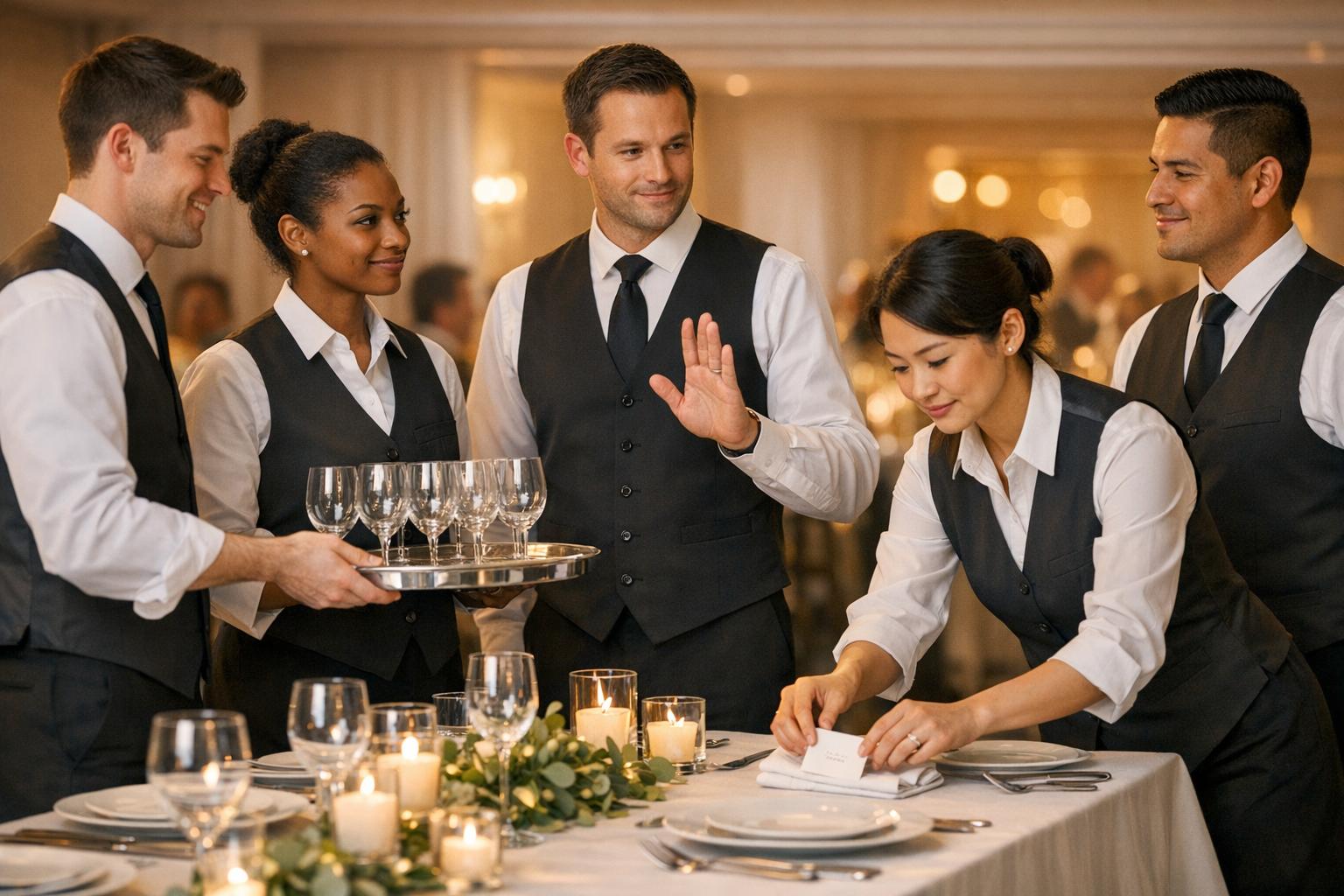
What makes catering staff stand out? It's not just about serving food - it's about creating unforgettable experiences. The best catering teams share five key traits that enable them to handle challenges, deliver flawless service, and leave guests impressed.
Key Traits:
These qualities are the backbone of successful catering teams, ensuring every event runs smoothly and leaves a lasting impression.

5 Essential Traits of High-Performing Catering Staff
When it comes to catering events, things rarely go exactly as planned. Maybe a guest shows up early with unexpected dietary needs, a team member calls out at the last minute, or a sudden change in weather forces an outdoor reception indoors. In these moments, being flexible and quick to adjust is what sets top-notch staff apart.
Jhonatan Cano, Director of Operations at Bresca & Jônt, highlights the importance of this skill:
"Adaptability is a key skill to possess as there is never one right answer. Every situation, every day, every guest, every team requires a different decision that aligns with the overall goal of the organization".
The numbers back this up. In 2026, 61.9% of event professionals reported facing budget constraints, while over 60% of event planners struggled to find skilled staff for specialized roles. This is where adaptability becomes a game-changer. For example, a server stepping in to help with bartending or a line cook assisting with plating can keep the event running smoothly, even under pressure.
Tom Amos, CEO and Co-Founder of Sidekicker, sums it up perfectly:
"Adaptability is the key in hospitality. It's what helps teams roll with the punches, keeps customers smiling, and makes the difference between a good shift and a great one".
One practical way to build adaptability is through cross-training. By training staff to handle multiple roles, you create a team that's ready to pivot when challenges arise. Pair this with real-time communication tools, like Quickstaff's event staff scheduling software, which offers mobile-friendly updates and centralized event management, and your team is equipped to tackle last-minute surprises head-on. This flexible approach not only keeps operations running smoothly but also lays the groundwork for delivering service with precision and attention to detail.
In catering, what separates a good event from a truly memorable one often boils down to the little things. A single misstep - a smudge on a plate or a slight delay in service - can overshadow an otherwise flawless experience. This is why precision matters in every aspect, from how the food is presented to the timing of its delivery.
Research backs this up. A 2022 study found that beautifully plated dishes not only look better but are also perceived as tasting better, adding to the overall value of the meal. Similarly, Oxford University research highlights that exceptional food presentation can increase the perceived worth of a dish, allowing caterers to justify higher menu prices.
So, how do you achieve this level of precision? Start with the basics. Always wipe plate edges clean before serving, and consider using the clock face method for plating: place protein between 3 and 9, starch from 9 to 12, and vegetables from 12 to 3. This ensures a consistent and visually appealing presentation. As Chef Michael Welch wisely states:
"Subtraction is your best ingredient".
Every detail on the plate - whether a garnish or a sauce - should have a clear purpose. Beyond aesthetics, timing is equally critical in delivering an exceptional dining experience.
For plated meals, servers have about 30 seconds to deliver hot dishes before they lose their ideal temperature. Top-tier events often assign one server for every 10–12 guests, exceeding typical industry standards. Many high-end caterers even rehearse service drills to ensure plates are served within that crucial 30-second window.
Tools like Quickstaff help streamline these efforts, ensuring staff follow precise service protocols from start to finish. And with 86% of consumers willing to pay more for an upgraded experience, nailing the details isn’t just about good service - it’s smart business.
Catering is all about teamwork. Servers, kitchen staff, and event managers need to work in sync to keep things running smoothly. When coordination falters, even the best-planned event can fall apart. As Social Tables explains:
"You can have the best menu, but miss out on a large portion of repeat business without the right staff to show it off."
Teamwork isn’t just about logistics - it’s a key ingredient in creating a memorable event experience.
In high-pressure situations - like trade shows where 81% of attendees have buying authority - even minor delays can have a big impact. For instance, a 10-second delay in greeting a guest can reduce engagement by 5% to 15%. That’s why having a well-coordinated team is so important.
To build effective teamwork, consider these strategies:
But teamwork isn’t just about what happens during the event. Strengthening team bonds outside of work can make a big difference. Monthly team-building activities can boost morale and confidence. Creating an open feedback loop allows staff to share ideas and managers to fine-tune their approach. For example, Chef Alan Wong once held team discussions where head cooks presented new takes on existing dishes. Instead of critiquing, he encouraged collaboration by asking questions about seasoning, balance, and execution. These sessions became opportunities for growth and learning.
Tools like Quickstaff can also simplify coordination by automating scheduling. With clear role assignments, your team can focus on delivering top-notch service and making every guest feel valued.
Building on the importance of teamwork, effective communication plays a key role in delivering top-notch service. It’s what turns a competent team into a well-oiled machine, ensuring smooth operations and happy guests. As Shawna Westmoreland from Cater2.me explains:
"Communication is the fabric of everyday life and paramount to success... quality communication allows everyone to understand their roles and responsibilities, it boosts productivity, improves team dynamics, and enhances professional growth."
Clear communication helps define roles, increases efficiency, and fosters better collaboration.
One vital element of communication is active listening. This means fully understanding client needs and manager expectations. Techniques like maintaining eye contact, asking open-ended questions such as "Could you elaborate on that?" and repeating instructions back for clarity - "So, you’d like us to focus on..." - can prevent costly mistakes [23, 25]. Since 65% of communication is nonverbal, paying attention to body language and tone is just as important as listening to words.
Pre-event briefings are another cornerstone of effective communication. Morning meetings, for example, are particularly impactful, as attention levels are 67% higher during this time. These sessions allow staff to absorb critical details - like guest preferences, event schedules, and any special requests. Setting specific goals, such as "refill water glasses every 15 minutes during dinner service", provides clear direction and avoids ambiguity.
During events, real-time coordination ensures everyone stays on the same page. Instant messaging apps are especially useful for handling last-minute updates, such as changes in dietary restrictions or schedule adjustments. This prevents delays and helps maintain client trust. The Workstaff Team emphasizes that "Regardless of how delicious the food is, poor service is guaranteed to dampen the event, leading to potentially negative reviews".
Platforms like Quickstaff also play a key role by centralizing event details, roles, and schedules with event staff scheduling software. This streamlined flow of information minimizes confusion and helps maintain the high standards expected at every catering event.
Strong communication might keep a team on the same page, but it’s professionalism and punctuality that truly cement client satisfaction. In a competitive industry, reliability isn’t just appreciated - it’s expected.
Punctuality plays a crucial role in delivering a seamless experience. This means serving food and beverages at just the right moments during an event. Delays can quickly lead to frustrated guests and even "seething anger", which can sour the entire atmosphere. Kasikannu Catering World highlights this point:
"Food and beverages should be served punctually and in a courteous manner. The guests should feel welcomed".
Beyond timing, professionalism is about how catering teams handle the unexpected. Whether it’s dealing with equipment malfunctions or managing a sudden influx of guests, top-tier staff remain calm and efficient. They also take full responsibility for tasks like post-event cleanup, ensuring every detail is managed with care. As The Workstaff Team puts it:
"The success of any event gathering hinges in part on the professionalism and efficiency of a good and dedicated catering staff".
Professional and dependable staff aren’t just employees - they’re the face of the brand. Their consistent performance helps secure repeat clients and valuable referrals.
To support these efforts, tools like Quickstaff simplify operations by centralizing call times, roles, and confirmations using a catering staff scheduling checklist. With features like precise time tracking and automated reminders, it ensures that team members show up prepared and on time for every event.
Adaptability, attention to detail, teamwork, communication skills, and professionalism are more than just buzzwords - they are the backbone of successful catering operations. These traits, outlined above, drive meaningful engagement and exceptional service. When your team embraces these qualities, they become the driving force behind your business's growth. As Anthony Lambatos, Owner/CEO of Footers Catering, aptly states:
"When you hire people who can persevere through difficulty, have great teamwork skills, are willing to take initiative, and have an overall positive outlook, they will be the catalysts that take your business to the next level."
This quote underscores the real-world impact of these qualities on your team's performance. The stakes couldn’t be higher. In 2023, the U.S. catering market was valued at $72.26 billion, with projections suggesting it could grow to around $124.36 billion by 2032. In such a competitive environment, your staff’s ability to deliver exceptional service directly affects your reputation and bottom line. Even the best food won’t shield you from the fallout of poor service, as dissatisfied clients are quick to leave critical reviews.
To make the most of these traits, focus on targeted recruiting and onboarding. Start by crafting job descriptions that attract candidates who align with your vision. When budgets are tight, prioritize hiring versatile individuals who can wear multiple hats. Even experienced staff benefit from onboarding programs that emphasize teamwork, clear communication, and top-notch customer service. During interviews, pay close attention to candidates who show resilience and the ability to recover from challenges.
Technology can also play a vital role. Tools like Quickstaff simplify operations by streamlining scheduling, communication, and time tracking, enabling your team to focus on delivering exceptional experiences. By fostering these traits within your staff, you not only improve service but also ensure every event leaves a lasting impression on your clients.
To evaluate how someone navigates change, focus on behavioral questions that dig into their past experiences. For instance, ask: "How do you handle changes in your responsibilities?" or "Can you share a time when you adjusted your approach to successfully complete a task?" These types of questions help uncover their ability to adapt and solve problems under shifting circumstances.
You can also explore how they manage juggling priorities or working with tight resources. Questions like "How do you handle managing multiple projects at once?" or "How have you achieved results with limited resources?" provide insight into their resourcefulness and effectiveness in fast-paced or unpredictable environments.
A catering event checklist helps staff stay focused on the details that matter most. It includes essential areas like client requirements, menu planning, equipment needs, and logistics. By following this checklist, teams can ensure they're well-prepared and ready to deliver a seamless event experience every time.
Quickstaff minimizes day-of-event confusion by simplifying staff scheduling, monitoring real-time availability, and organizing event management in one place. Its features promote clear communication and deliver timely updates, ensuring everyone stays on the same page for a hassle-free event.