How Career Path Planning Boosts Staff Retention
June 23, 2026

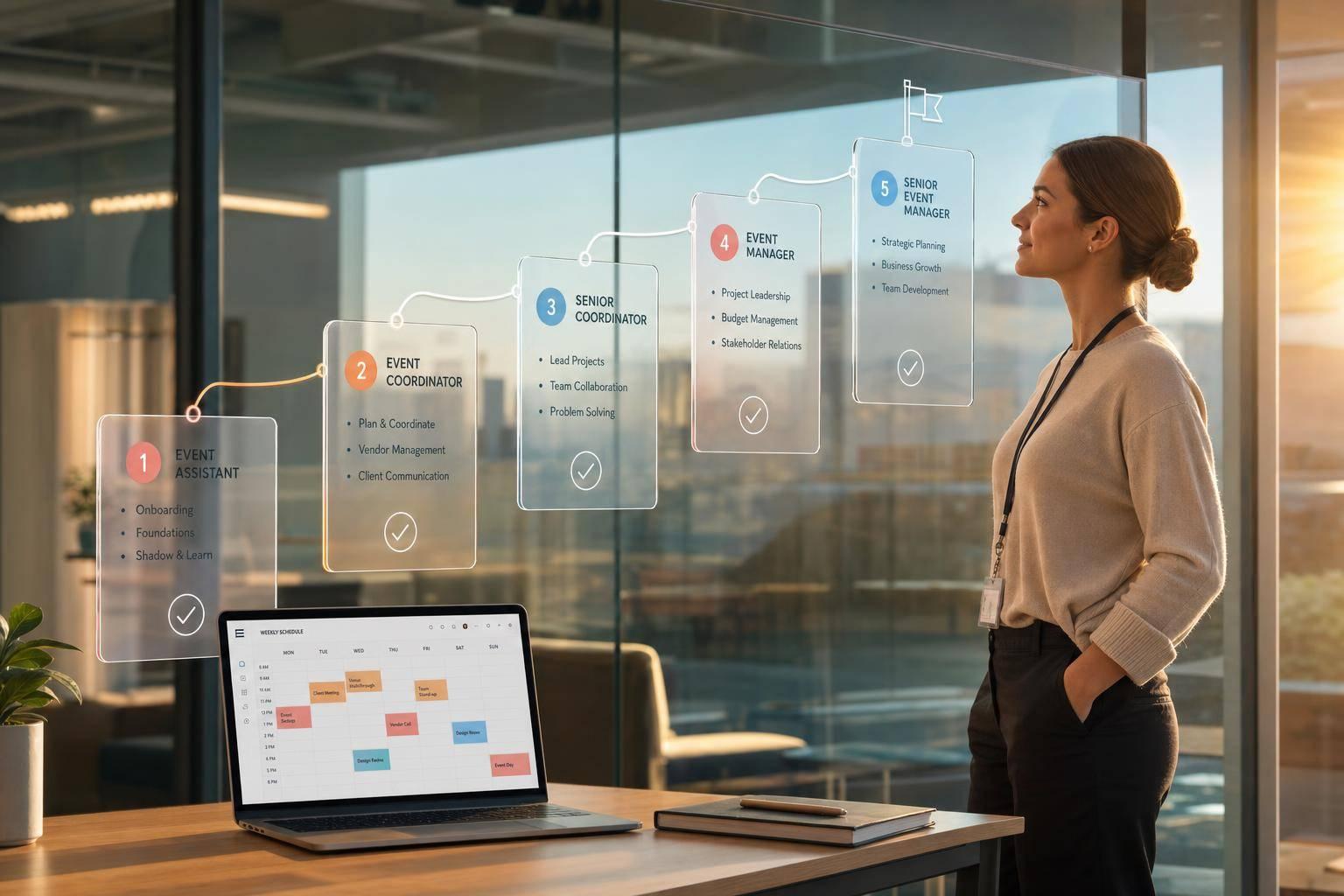
If event staff can’t see a next step, many leave fast. In event and hospitality work, turnover reached 419% for temp and contract staffing, and 42% of new hospitality hires leave within 90 days.
I’d sum up the fix like this: show people how they can move up, what they need to do, and track it using scalable event scheduling systems. When staff can see a path from entry-level work to lead, team leader, and manager roles, they’re more likely to stay, put in stronger work, and take more shifts. That matters when replacing one worker can cost $2,000 to $5,000.
Here’s the article in plain English:
A few numbers stand out. 80% of employees are likely to leave if their skills go unrecognized. Companies with strong internal mobility keep staff 41% longer, and clear advancement paths make 54% of workers more likely to stay.
If I were putting this into one sentence, it would be this: career path planning turns “just a shift” into a job with a future.
Replacing even one staff member can cost $2,000 to $5,000 in turnover expenses - lost continuity, retraining time, and service disruption. For event teams, that’s not some abstract HR issue. It’s a direct retention cost. Career path planning helps by making growth easy to see and possible to reach. In many cases, the strongest reason someone stays isn’t a perk. It’s a clear next step.
When promotion rules are fuzzy, frontline workers often assume favoritism is at play. Once that happens, effort can start to feel pointless.
Clear promotion criteria change that. If staff know what the company expects - reliable arrival, clear communication, spotting problems early, and staying calm under pressure - they have something concrete to work toward.
That matters because 80% of employees are likely to leave an organization if their skills go unrecognized. Clear, merit-based criteria help recognition feel fair and earned. And when people can see how effort connects to progress, commitment tends to grow.
Good staff who are ready for more responsibility shouldn’t have to leave the company just to move up. Next-step roles like VIP liaison, hospitality coordinator, or operations manager give them room to grow while keeping strong performers in the business.
There’s another upside here too: internal mobility helps keep institutional knowledge in-house. When staff move into new roles, the company keeps the venue know-how, client preferences, and operating experience they’ve built over time. That kind of knowledge is hard to replace.
Once people see a path forward inside the business, everyday performance starts to carry more weight. A normal shift is no longer just a shift. It becomes part of a bigger path.
Career pathing also changes how people show up for regular work. When strong performance can lead to better assignments or higher pay, staff are more likely to arrive prepared, communicate well, and take ownership of their area.
Entry-level staff may finish assigned tasks. Staff who see a path ahead tend to do more than that. They help protect the guest experience by spotting problems early, managing flow, and keeping things calm when pressure builds. For catering companies, wedding businesses, and event vendors, that kind of day-to-day engagement matters most on high-stakes days.
To make those paths feel real, teams need a way to assign work by level and track readiness over time.
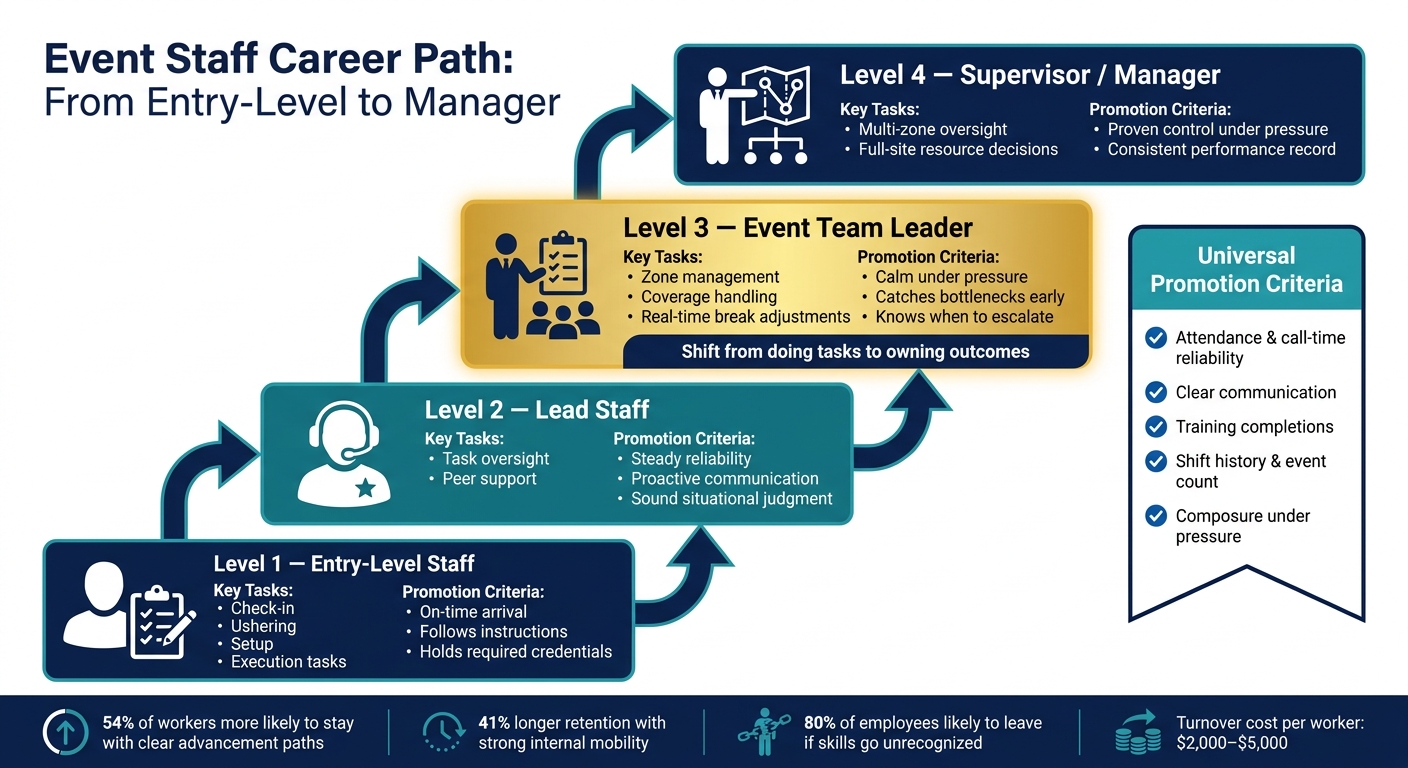
Event Staff Career Path: From Entry-Level to Manager
A clear event career path needs a ladder people can grasp fast and managers can use without turning it into paperwork.
The simplest way to build that ladder is to map roles to the way event work already happens on site. A practical four-level path lines up with how teams actually operate.
Promotion should depend on steady performance under pressure: showing up on time, communicating clearly, and spotting bottlenecks early. Put safety first, client commitments next, and efficiency after that.
When people can see the next step, a shift feels less like the same old loop and more like forward motion.
Each level should have clear competencies attached to it. For entry-level staff, that means arriving on time, following instructions, and holding any required credentials. For lead staff, it means steady reliability, proactive communication, and sound situational judgment. For team leaders, it means staying calm, catching bottlenecks early, and knowing when to escalate.
Then tie those skills to concrete milestones, like completed training and a minimum number of events worked. That makes the next move feel within reach instead of fuzzy or political.
Of course, milestones only help if people can actually see them.
Nothing kills a career path faster than vague promotion rules. If staff don't know what "ready for promotion" means, they'll fill in the blanks themselves - and usually not in a good way.
Spell out the criteria: minimum event count, call-time reliability, feedback scores, and training completions. Put that information in onboarding materials and bring it up again during regular check-ins.
That kind of visibility gets even more useful when scheduling data shows who’s ready for the next assignment.
Visible promotion criteria only work if scheduling data is accurate and easy to find. That’s where scheduling software comes in. It turns a career path from a document on paper into something staff can use in day-to-day work.
When events are scheduled by role, staff can spot the next step right in the schedule. Growth becomes visible in the same place where shifts are assigned. That shifts career planning from a written policy to part of the daily routine. And when people can see a path forward, they’re more likely to stay engaged.
Managers can also use the schedule to assign stretch shifts with intent. For example, a dependable entry-level staff member can be placed in a lead role for one shift. That gives managers a direct way to see how that person performs in a more advanced spot.
Once roles are assigned this way, promotion decisions can rely on proof instead of memory. Scheduling software builds a record of who worked which events, in what role, and how often they showed up as expected.
Managers can track:
Looking at patterns across several events - not just one standout shift - makes it easier to spot steady reliability and composure. That cuts down on guesswork and helps advancement feel earned.
"An event team leader is not promoted for effort alone but for proven control under pressure." - Daniel Meursing, Founder, Eventstaff
Businesses with strong internal mobility retain staff 41% longer than those without structured advancement paths.
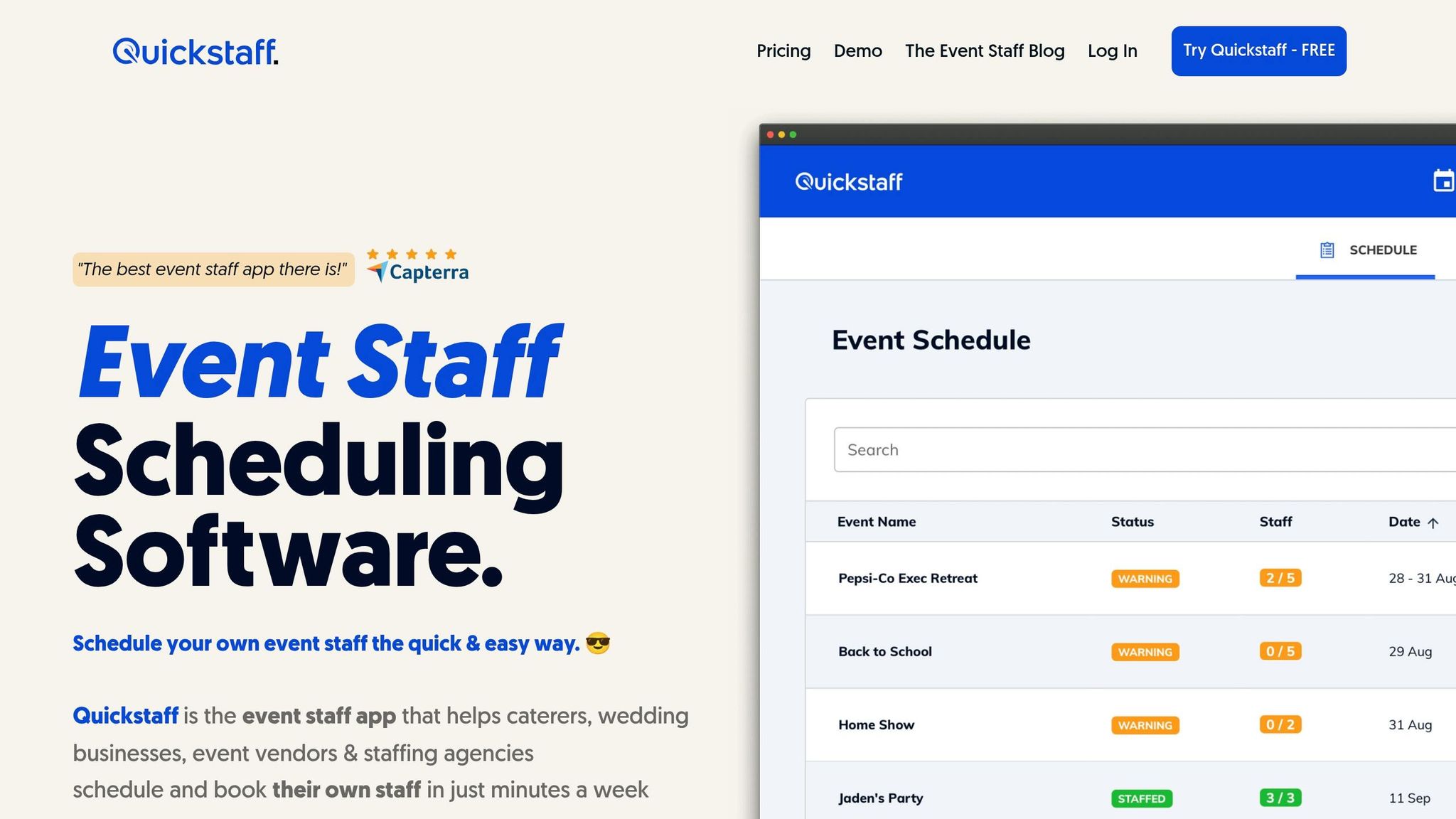
For event teams, that means the scheduling system becomes part of career growth, not just staffing. Quickstaff brings role-based scheduling, availability tracking, reminders, and messaging into one place, so managers can assign stretch shifts and track readiness without jumping between tools.
Once the path is visible in scheduling, start small. Pilot one existing path with one team, and set only the milestones people need to hit to move forward.
Write down what each step calls for. That can include:
Keep the criteria simple. Keep it written down. A basic checklist is enough at the start.
The point isn't to build a complex system. It's to give staff something clear and concrete to work toward.
Measure the pilot against your current baseline using the same scheduling data. In plain English: use the same scheduling records to compare retention before and after rollout, so you're looking at an apples-to-apples comparison.
The table below shows what a structured path can change:
| Metric | Without Career Path Planning | With Career Path Planning |
|---|---|---|
| Turnover Rate | High - up to 419% for temporary and contract staff | Lower due to increased loyalty and engagement |
| Average Tenure | Short stays | Longer stays |
| Engagement | Low; staff feel interchangeable | Higher; staff feel like talent |
| Internal Promotions | Reactive, based on personality | Proactive, based on consistent performance |
Clear advancement paths make 54% of workers more likely to stay with their current employer. For any event business dealing with constant turnover, that's a big deal.
When staff can't see a future in a role, they leave. Structured career paths change that. They make growth visible, measurable, and tied to actual scheduling decisions instead of guesswork or personality.
Start with one team, one documented path, and one simple checklist. Use Quickstaff scheduling data to keep progress visible and track retention over time.
Visible career paths turn event jobs into longer-term roles.
Start by looking at each team member’s skills and past feedback to spot where they need to grow. From there, set SMART learning goals and tie those goals to a clear career path, like entry-level to senior staff to team lead.
If it fits how your team works, Quickstaff can help keep this process in one place. You can centralize scheduling, track training progress, and share learning materials so staff can see a clear path to moving up.
Promotions in event staffing should reflect verified skills, role-specific ability, and measurable impact on business results.
A clear, structured process should link advancement to SMART goals, such as earning certifications, learning event tech, or taking on new responsibilities. Performance reviews, feedback, and skill-based metrics can help confirm when someone is ready for roles like team lead or coordinator.
Scheduling software can help staff grow by giving managers one place to track professional development, performance, and skill progress. With tools like Quickstaff, teams can see who has finished a learning path, spot patterns over time, and match people to roles that fit their career goals.
It also makes availability and scheduling easier to manage in a steady way. That can help cut burnout and give staff more space to build skills for long-term growth.