Best Practices for Recognizing Event Staff Efforts
June 5, 2026

Event staff are the backbone of any successful event, yet their hard work often goes unnoticed. This oversight can lead to high turnover (over 70% annually) and lower morale. But when staff feel appreciated, they’re more likely to stay, perform better, and accept future shifts.
Here’s the key takeaway: Recognition isn’t just about being polite - it directly impacts performance, retention, and event success. Simple gestures like timely praise, small bonuses, and personalized thank-yous can make a big difference. Recognizing staff during events, immediately after, and consistently over time ensures they feel valued and motivated.
Key points to implement recognition:

The ROI of Recognizing Event Staff: Key Stats & Benefits
Recognition isn't just a nice gesture - it has a measurable impact on your team and the success of your events. Event work is demanding, both physically and mentally, with 79% of event professionals describing their roles as more stressful than ever. When staff feel valued and acknowledged, it helps alleviate that stress. Without recognition, the result can be burnout and higher turnover rates.
Everyone wants to know their efforts matter. Feeling appreciated fosters a sense of belonging and pride in one’s work. The data underscores this: over 90% of employees say recognition motivates them to work harder and maintain consistent performance. For event teams, this translates to better service, faster problem-solving, and an atmosphere that guests notice and appreciate.
"Staff who feel appreciated work harder, show up on time, solve problems proactively, and deliver better customer service." - Megan Hayward, Founder & CEO, TempGuru
Regular recognition amplifies these benefits. Employees who receive weekly acknowledgment are 9x more likely to feel a sense of belonging and 2.6x more likely to perform at their best. A simple, consistent "thank you" can have a profound impact.
High turnover is a major challenge in event staffing. Replacing just one team member takes time, money, and resources (which is why scalable event scheduling is so critical) that could be better spent elsewhere. Recognition can help: high-quality acknowledgment reduces turnover likelihood by 45% over two years.
"Workers do not leave agencies because they found a better hourly rate. They leave because another agency made them feel like their time was respected." - Edin Pandur, Liveforce
When staff know they’re appreciated, they’re more likely to stay loyal, even in a competitive industry. This loyalty doesn’t just reduce turnover; it also enhances performance, as experienced team members become more confident and capable over time.
Recognized staff bring more to the table. They’re not just familiar with your standards and expectations - they’re also better equipped to handle surprises without needing constant oversight. 78% of workers say they put in extra effort when their work is acknowledged. That effort shows in the details: smoother check-ins, faster service, and guests leaving with positive impressions. Utilizing tools for last-minute catering staff scheduling can further ensure these operational standards are met even when gaps arise.
Here’s how recognition drives operational success:
| Benefit | Impact of Recognition | Operational Outcome |
|---|---|---|
| Morale | Validates effort in stressful environments | Higher energy and better guest service |
| Retention | 45% reduction in turnover probability | Lower recruiting and training costs |
| Performance | 78% increase in effort | Fewer mistakes, smoother event execution |
| Culture | Strengthens team bonds | Reliable core staff who refer peers |
A motivated and loyal team doesn’t just make your job easier - it creates a competitive edge that improves every aspect of your events.
Acknowledging your event staff at the right time can make a world of difference. A well-timed "great job" not only lifts spirits but also reinforces positive actions right when they matter most.
Recognizing staff in the moment is incredibly powerful. When someone handles a tricky situation, like managing a demanding guest or stepping in during a hectic setup, calling out their effort right then boosts morale and motivates the entire team. Using the SBI framework (Situation, Behavior, Impact) ensures your praise is clear and meaningful. For instance:
"During the registration rush, you kept the line moving seamlessly, which prevented a bottleneck before the keynote."
"Real-time recognition is more meaningful than post-event praise and keeps energy levels up throughout the event." - Megan Hayward, Founder & CEO, TempGuru
Studies show that performance improves by 32% when recognition is paired with specific feedback. This immediate acknowledgment not only energizes your team but also sets a positive tone for the remainder of the event.
The first 24–48 hours after an event are crucial for follow-up. At this point, the experience is still fresh, and a thoughtful, personalized note can leave a lasting impression. For example, if a team member successfully resolved a last-minute vendor issue, highlighting that specific contribution shows you noticed their effort and value their work.
For freelance or agency staff, taking the extra step to share positive feedback with their staffing agency can enhance their professional reputation and open doors for future opportunities. A simple, genuine acknowledgment during this window keeps the momentum going and strengthens long-term engagement.
Consistent recognition matters just as much as timely praise. Sometimes, the most dependable team members are overlooked because their excellent work becomes expected. Avoid this by implementing a steady recognition strategy. For instance, offering small bonuses - like $25 after three events and $50 after five - shows that their reliability hasn’t gone unnoticed.
Another great way to recognize loyal staff is by giving them opportunities to grow. Letting a returning team member take on a leadership role, like running the registration crew, highlights their dependability while supporting their professional development. A simple statement like, "You were so dependable last time, I want you leading this team today", can have a big impact.
Keep in mind, recognition loses its effect after 72 hours. Setting calendar reminders or scheduling regular check-ins with your top performers ensures that no effort slips through the cracks. Small gestures like these can build loyalty and keep your team motivated for future events.
Recognition doesn't have to involve grand gestures or hefty budgets. What truly matters is that it feels sincere and fits the situation.
People have different preferences when it comes to recognition. Some thrive on public acknowledgment, while others appreciate a quiet "great job" after the shift ends. A simple way to balance this is to give a brief public shoutout during the end-of-day recap - perhaps highlighting someone who managed a catering rush perfectly - then follow up with a personal message. This approach sets a positive example for the team while keeping the feedback meaningful. In fact, studies show that employees who receive even one quality instance of recognition are 2.9x more likely to stay engaged.
"Recognition isn't fluff. It shapes retention, engagement, and your credibility as a manager." - PeakPerf
To make this process even smoother, ask during onboarding: "Do you prefer public or private recognition?" This simple question eliminates guesswork and ensures you're meeting individual preferences.
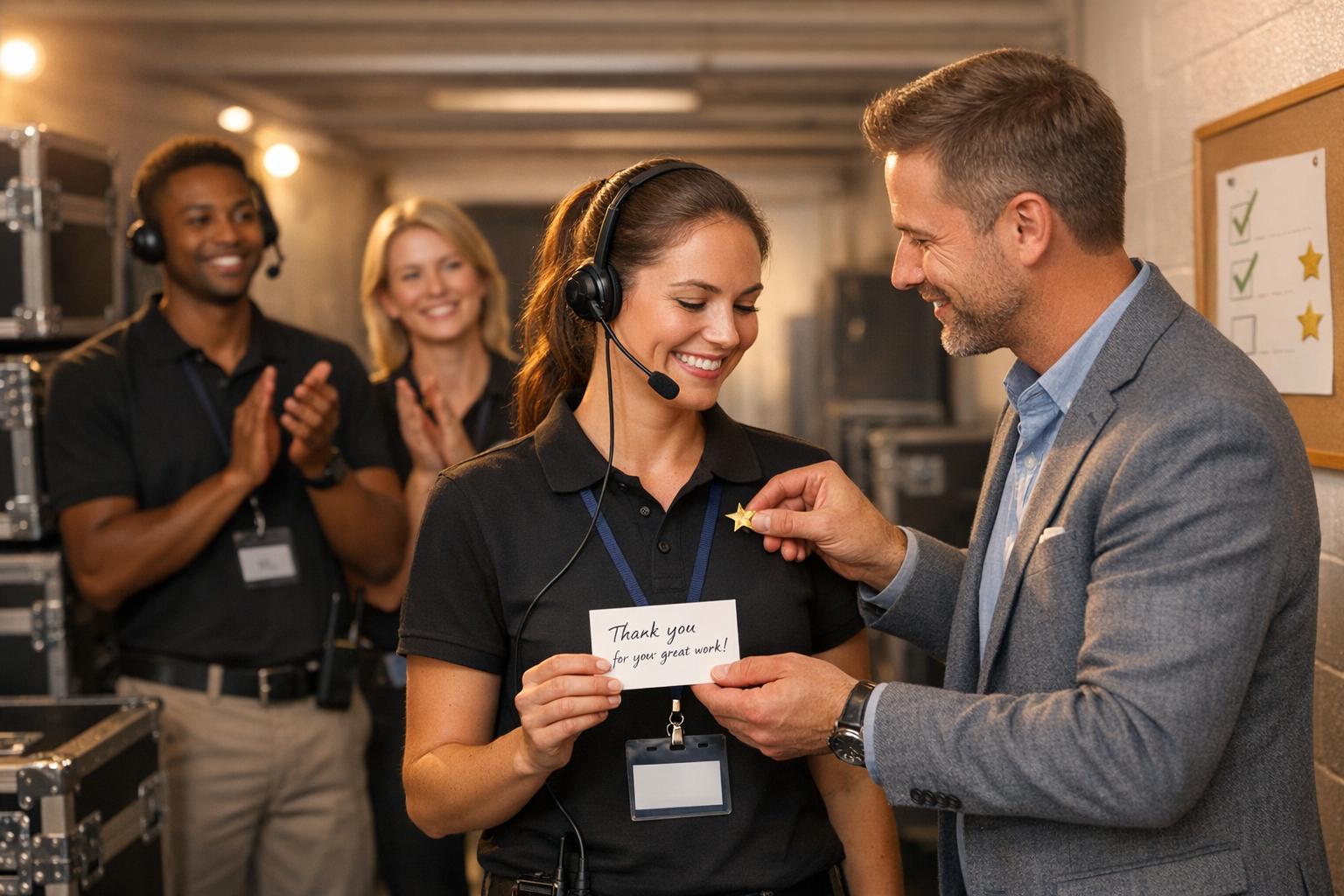
In addition to verbal recognition, small rewards can make a big impact. Gestures like handwritten thank-you notes or LinkedIn endorsements are personal and thoughtful. For freelance or contract staff, a LinkedIn endorsement not only acknowledges their work but also helps build their professional reputation.
Financial incentives are another effective way to show appreciation. A $25–$50 performance bonus for achieving goals - like smooth guest registration or a flawless event breakdown - can motivate and reward effort without breaking the bank. These gestures show that you care about both their performance and their well-being.
| Reward Type | Examples | Why It Works |
|---|---|---|
| Financial | Performance bonuses ($25–$50), gift cards | Provides immediate motivation for specific results |
| Non-Financial | Ride-share credits, priority rebooking | Shows respect for their time and well-being |
| Recognition | LinkedIn endorsements, public shoutouts | Builds loyalty and enhances professional reputation |
| Development | Fast-tracking to lead roles, training | Encourages growth and long-term engagement |
Acknowledging milestones - like a staff member's 10th event, reaching a personal goal, or stepping into a leadership role - shows you're paying attention. A quick team message, a small bonus, or giving them first choice of shifts communicates that you value their contributions over the long term, not just for one event. This kind of acknowledgment strengthens loyalty and trust.
Even with the best intentions, it’s easy for recognition to slip through the cracks when things get busy. That’s where tools like Quickstaff come in handy. This platform helps event managers stay organized with features like centralized communication and built-in reminders. It ensures that high-performing staff members get the acknowledgment they deserve before the next event.
Operational systems like this not only streamline your processes but also show respect for your team's time. As Edin Pandur of Liveforce explains:
"Workers do not leave agencies because they found a better hourly rate. They leave because another agency made them feel like their time was respected."
Consistency in recognition doesn’t require complex systems - just dedication and the right tools to keep it all on track. These strategies align perfectly with the fair and consistent practices discussed in the next section.
Even with the best of intentions, recognition can backfire when it seems random or biased. This can quickly erode trust, especially if praise appears to favor highly visible roles or personal favorites.
"Recognition fails when people do not trust it. The fastest way to lose trust is unclear criteria, uneven access, or recognition that feels like favoritism." - One10
The following tips can help ensure recognition feels fair, meaningful, and consistent across all roles.
Before any event, outline 3–5 specific behaviors you want to reward - things like "solving customer problems creatively" or "stepping up during tight deadlines." Make sure to share these criteria with your team beforehand so everyone understands what "success" looks like. This transparency helps recognition feel earned, not arbitrary.
When recognizing someone, focus on observable actions and their direct impact. For instance, instead of offering a vague compliment, highlight exactly what they did and why it mattered. This level of detail not only reinforces fairness but also builds trust within the team.
Recognition loses its impact if it becomes too frequent or routine. Consider a tiered approach:
This structure ensures each acknowledgment feels intentional and meaningful. Also, focus on recognizing specific contributions rather than generic participation. Employees who receive specific weekly recognition are about 4x more engaged than those who don’t or who receive generic praise. So, while frequency matters, the quality of recognition matters even more.
It’s easy to spotlight front-facing staff because their efforts are more noticeable. However, behind-the-scenes roles - like setup crews, registration teams, and logistics coordinators - are just as essential to an event’s success. Be mindful of this and ensure recognition is evenly distributed.
For example, during a post-event recap, call out someone from a less visible role. Highlight a setup team member who arrived early or a logistics coordinator who resolved a last-minute issue. Recognizing these contributions sends a strong message that every role matters. When recognition is equitable and meaningful, employees are 3x more likely to feel connected to their organization.
| Practice | Unfair/Inconsistent | Fair/Consistent |
|---|---|---|
| Criteria | Vague praise based on popularity | Specific behaviors tied to event goals |
| Visibility | Praise focused on client-facing roles | Recognition spread across all roles and shifts |
| Timing | Delayed, weeks after the event | Immediate post-event thank-yous |
| Process | Complicated and inconsistent | Simple and integrated into weekly workflows |
For catering businesses, maintaining this consistency is easier when using specialized scheduling software to track performance and availability.
Measuring the success of a recognition program is essential to ensure it’s making a difference.
One of the clearest indicators is your shift acceptance rate. Employees who feel valued are 3.7 times more likely to accept future shifts. By tracking both acceptance rates and response times, you can better understand how recognition influences willingness to work.
Other helpful metrics include performance indicators like leads captured per hour or engagement quality scores. Tailor these metrics to suit the event type - focus on "Output Volume" for sampling events and "Engagement Quality" for brand activations.
| Metric | What It Tells You |
|---|---|
| Shift Acceptance Rate | Indicates if staff are motivated to continue working with you |
| Repeat Booking Rate | Reflects loyalty and retention over time |
| Performance KPIs | Shows how recognition impacts productivity |
| Reward Redemption Rate | Measures whether your rewards resonate with staff |
| Staff Satisfaction Score | Gauges overall employee sentiment about their experience |
These numbers provide a foundation, but they don’t tell the whole story. Pair them with staff feedback for a more complete picture.
Post-event surveys are a great way to uncover insights that metrics might miss. A short survey (under 10 questions) sent within 24–48 hours can reveal how employees felt about their experience. Questions like "Did you feel your efforts were appreciated?" or "Were the resources and event day essentials adequate?" show that you care about their input.
"If staff feel like their feedback goes nowhere, they'll stop sharing it. This step is about closing the loop." - StaffConnect
To build trust, share the survey results and outline specific changes you plan to implement before the next event. This transparency encourages more honest and actionable feedback in the future.
Incorporating staff appreciation into your everyday event management practices can create a loyal and motivated team. Recognition works best when it’s part of your regular workflow - not something tacked on as an afterthought after a busy event. Megan Hayward, Founder & CEO of TempGuru, sums it up perfectly:
"Recognizing and appreciating event staff is more than good manners - it's sound business practice."
The numbers back this up: 78% of workers say they put in more effort when their work is recognized. That’s a compelling reason to make appreciation a consistent habit.
Instead of treating recognition as a one-off program, think of it as a behavior system. This means weaving it into every stage of your event process - whether it’s during pre-event briefings, post-event debriefs, or ongoing communication between bookings. Simple, consistent gestures like confirming the next shift, sharing positive client feedback, or sending a personalized thank-you note can go a long way in building trust and loyalty with your team.
Tools like Quickstaff can make this process easier by streamlining communication and tracking acknowledgments. When you show respect by valuing your team’s time and effort, they notice - and it makes a difference.
Start small. Add a personalized shoutout to your post-event wrap-ups. Set reminders to send thank-you messages within 24 hours of an event. Use scheduling data to recognize and reward staff who consistently show up and perform well. Recognition isn’t just about good intentions - it’s about acting on them. Platforms like Quickstaff can help you stay organized and ensure your appreciation efforts are both timely and meaningful.
Recognizing event staff doesn’t have to break the bank. Instead, focus on thoughtful, timely, and specific gestures that show genuine appreciation. For example, a handwritten thank-you note or detailed feedback about their performance can go a long way.
Low-cost ideas include offering snacks, meals, or creating a cozy break area where staff can recharge during the event. If your budget allows, small financial rewards, like $25–$50 spot bonuses, can make a meaningful impact.
Additionally, using tools like Quickstaff for flexible scheduling and clear communication is another way to show you value their time and contributions. These small efforts can leave a lasting impression.
To avoid favoritism, establish clear and transparent criteria for recognition ahead of each event and communicate them openly with your team. Make it a habit to review these criteria regularly to maintain fairness. Ensure everyone has an opportunity to be acknowledged - not just the high achievers. Tools like pulse surveys or one-on-one conversations can help uncover and address any disparities that might impact team morale.
To gauge how effective your recognition efforts are, focus on tracking key metrics such as staff retention, turnover rates, and engagement levels. Post-event surveys can be a great way to collect feedback about employees' experiences and identify areas for improvement.
Keep an eye on how often employees participate in recognition programs and how frequently peer-to-peer appreciation occurs. Tools like Quickstaff can be incredibly useful here, helping you spot top performers. These standout employees, who consistently earn positive feedback, might be ideal candidates for higher-visibility roles. Recognizing their contributions in this way can build loyalty and contribute to a more stable, long-term workforce.