Staffing Agency vs Client: Workers' Comp Duties
October 7, 2026

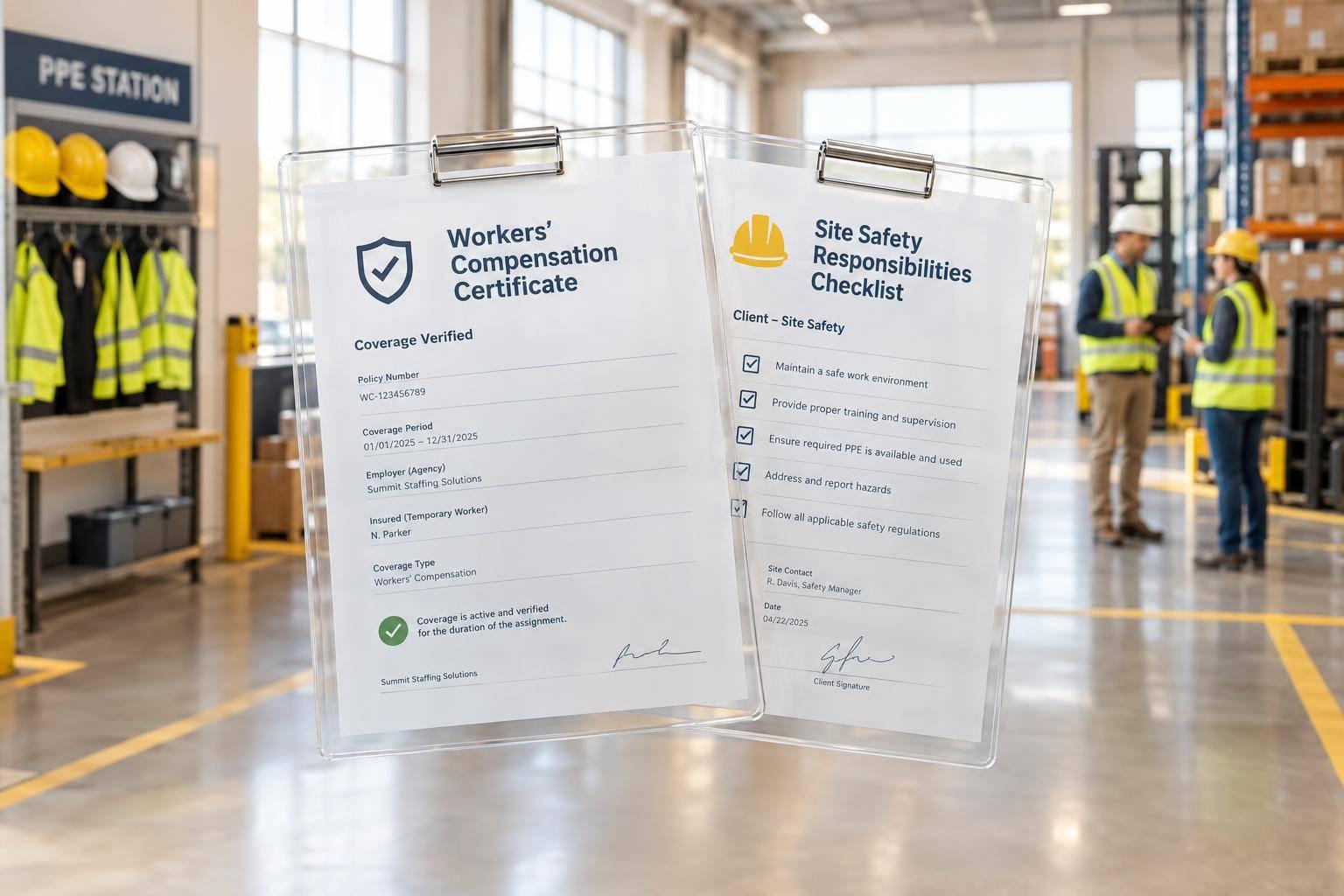
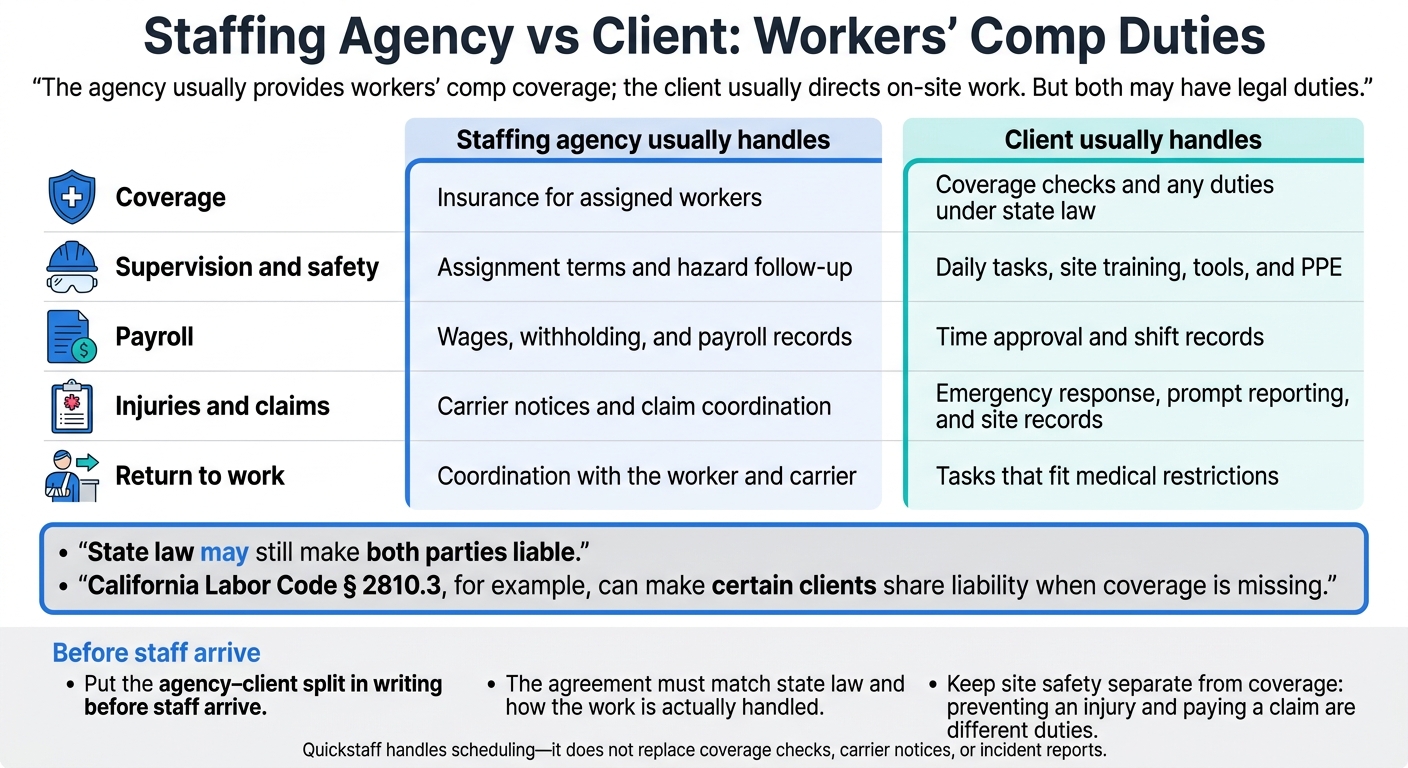
The agency usually provides workers’ comp coverage; the client usually directs on-site work. But both may have legal duties. Before your event, I recommend verifying coverage and writing down who handles supervision, payroll, safety, and injury reports. California Labor Code § 2810.3, for example, can make certain clients share liability when coverage is missing.
Here’s the split I would check before placing staff:
Quick Comparison
| Area | Staffing agency usually handles | Client usually handles |
|---|---|---|
| Coverage | Insurance for assigned workers | Coverage checks and any duties under state law |
| Supervision and safety | Assignment terms and hazard follow-up | Daily tasks, site training, tools, and PPE |
| Payroll | Wages, withholding, and payroll records | Time approval and shift records |
| Injuries and claims | Carrier notices and claim coordination | Emergency response, prompt reporting, and site records |
| Return to work | Coordination with the worker and carrier | Tasks that fit medical restrictions |
My rule: <u>make the contract match the actual work</u>. Confirm allowed tasks, reporting contacts, and deadlines before staff arrive. You can also use an event day checklist to ensure all safety gear and documentation are ready. Use Quickstaff for assignment and scheduling records - not as a replacement for insurance, payroll, or incident records. And keep site safety separate from coverage: preventing an injury and paying a claim are different duties.
Staffing Agency vs Client: Workers’ Comp Duties
Who controls the work usually drives the split in duties. That includes who directs tasks, provides equipment, and has authority to remove workers. Under state law, the client may also have coverage duties or qualify as a special employer.
The split usually falls into four areas: coverage, supervision, payroll, and claims.
| Duty | Staffing agency typically handles | Event client typically handles |
|---|---|---|
| Employment administration | Hiring records, W-2s, and initial intake | Daily supervision and on-site performance logs |
| Workers' comp coverage | Maintaining coverage for assigned staff | Possible shared liability if coverage is missing |
| Payroll | Wage payments, tax withholding, and payroll administration | Timekeeping and assignment records |
| Safety preparation | HR intake and follow-up on reported hazards | Site-specific training, tools, equipment, software, and site conditions |
| Injury reporting | Carrier notification and claim coordination | Immediate incident reporting and site records |
| Return to work | Coordinating with the carrier and worker | Offering tasks within medical restrictions |
The agency usually manages employer records and payroll. But handling those tasks doesn’t settle legal responsibility. Coverage should match both the states where staff work and the duties they perform.
When a worker is injured, the agency should notify its carrier, provide wage and assignment records, and cooperate with claim requests. Return-to-work plans should follow medical restrictions - not simply place the worker in the next open event shift.
On site, the client should control conditions and report incidents promptly.
The client should direct daily tasks, manage site conditions and tools, and promptly report hazards and injuries through the agreed agency contact.
Keep incident reports, shift records, logs, and supervisor messages. These records can help show who controlled the work. The client should also cooperate with claim inquiries and check that any return-to-work assignment fits the worker’s approved restrictions.
The contract, supervision records, and payroll records should reflect those duties.
Put the agency–client split in writing before staff arrive. Assign primary responsibility for coverage, supervision, payroll, and claims. The agreement must match state law and how the work is actually handled. For temporary event staff, document that split in these records or use event staff scheduling software to track assignments.
| Area | Agency records | Client records |
|---|---|---|
| Coverage | Current coverage information | Coverage verification before placement |
| Supervision | Agreed assignment duties | Task changes, overtime approvals, and site-removal authority |
| Payroll | Wage payments and reconciled hours | Approved time records and shift changes |
| Injury reporting | Required claim notices and reporting deadlines | On-site reports, notification times, and witness details |
Before placement, name the party responsible for coverage and verify that coverage directly. Include notice deadlines, indemnity terms, and reporting contacts in the agreement.
The written split must reflect who controls shifts and can remove staff from the site. Keep the client’s site control separate from the agency’s payroll and employment decisions.
Specify who can approve overtime, change duties, or remove staff. Removal from the site is not the same as termination of employment. Record hours and shift changes, then reconcile shift reports with time records, entry logs, and supervisor messages.
The contract should state who reports an injury first. Get emergency help first, then notify the supervisor and agency immediately.
Assign responsibility for injury reports and required claim notices, with clear deadlines. Preserve assignment records, time records, on-site photographs, and witness details. Both parties should cooperate on claim review and restricted-duty placement at the event site. A client’s request to remove a worker should not automatically end the assignment after an injury report.
Use Quickstaff to track event locations, staff, availability, shift times, roles, reminders, and assignment messages. Compare scheduled shifts with actual time records to check that they match.
Keep scheduling details separate from insurance documents, payroll records, and incident reports. Quickstaff handles scheduling - it does not replace coverage checks, carrier notices, or incident reports.
Use the assignment records to confirm placement terms.
Once assignments are logged, check the contract before releasing staff. Confirm how the agency and client divide workers’ comp duties.
| Check | What to confirm before placement |
|---|---|
| Employment roles and coverage | Verify active coverage, certificates, and endorsements for the assigned duties, locations, and states. |
| Payroll and audits | Confirm payroll classification and procedures for approving time. |
| Supervision and safety | Assign responsibility for site supervision, safety training, PPE, and equipment maintenance. |
| Allowed tasks | List permitted duties and require approval before any change. |
| Injury procedures | Confirm injury contacts, reporting deadlines, and return-to-work steps. |
| Contract protections | Review indemnification and dispute procedures with qualified insurance professionals and employment counsel for the relevant states and event locations. |
Resolve any unanswered coverage or task questions before confirming the assignment, not after staff placement.
The staffing agency usually provides workers’ compensation coverage and coordinates claims. The client usually manages on-site supervision, safety, and the immediate response to an injury.
State law may still make both parties liable.
California Labor Code § 2810.3 is one example.
Before staff arrive, put the division of duties in writing and keep supporting records. Check the coverage requirements that apply, document each party’s duties and contacts, and specify who reports injuries and coordinates claims. Keep assignment, shift, and incident records ready to show who was on site and who directed the work.
Before work starts, confirm in writing who provides workers’ compensation insurance. Most states require coverage, so request policy documents or written confirmation as part of your contract or service agreement.
If you hire temporary staff directly - not through an agency - you must add them to your own policy. Notify your insurer immediately so coverage starts on their first day.
Yes. Courts and enforcement agencies look at day-to-day control, not just contract labels, when deciding joint employer status [2]. Your business may be a joint employer if it sets schedules, directs on-site tasks, manages breaks, or has the power to discipline or remove workers [2].
If so, both your business and the staffing agency can be held fully accountable for wage-and-hour violations, safety failures, and discrimination claims - regardless of what your contract says [3][4].
Workers’ compensation is generally no-fault, so it typically covers injuries that occur during employment - even when a worker performs an unapproved task.
The staffing agency and host employer share responsibility. The host directs daily tasks, while the agency manages the employment relationship. Both may face liability or regulatory scrutiny.
Report all injuries immediately to both the agency and host employer so they can properly document what happened.