How to Improve Guest Services with Role-Specific Training
June 10, 2026

Role-specific training is the key to delivering better guest experiences. Instead of generic guidelines, this approach focuses on preparing staff for their specific responsibilities, ensuring they handle situations with confidence and precision. Here's why it matters and how to implement it:
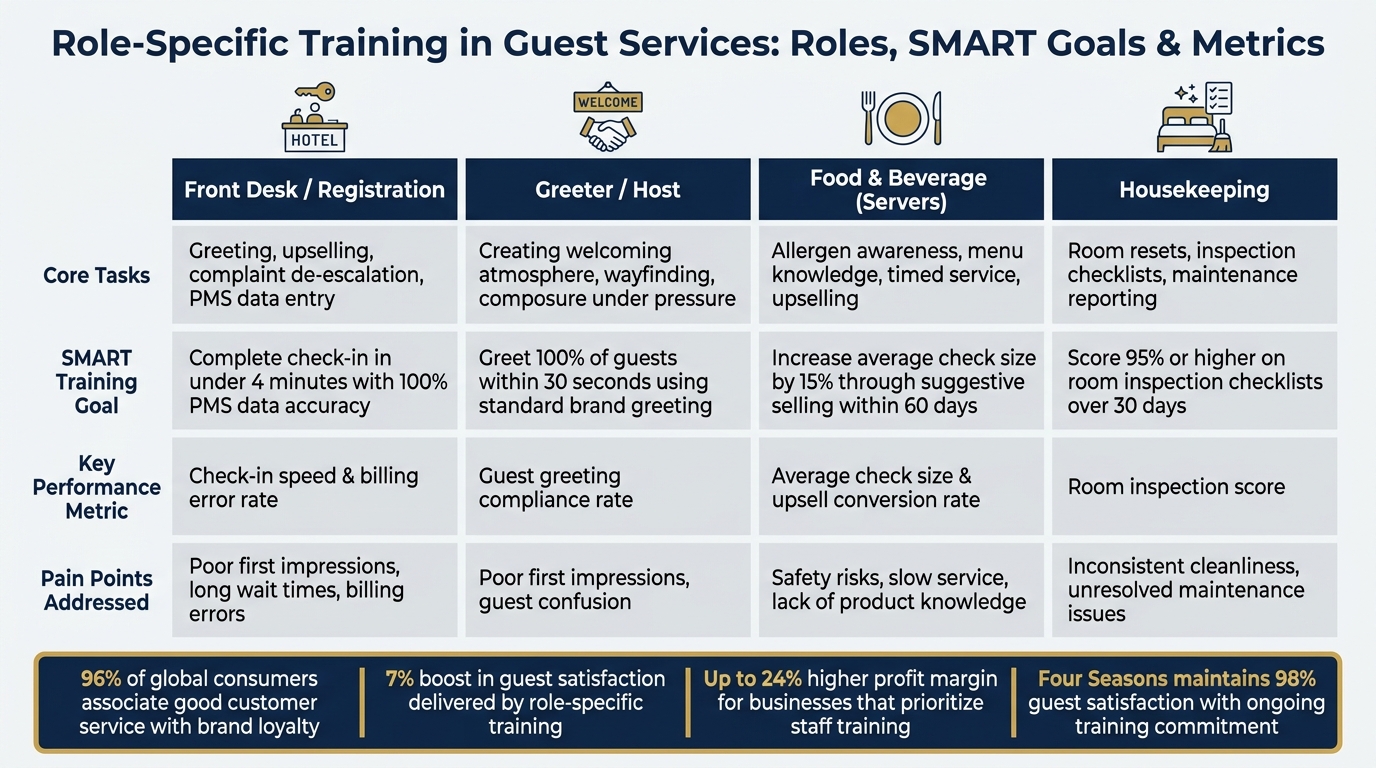
Role-Specific Training: Key Roles, Goals & Metrics in Guest Services
Every role in guest services plays a specific part in shaping the overall experience. To optimize this, it’s essential to break down each role, pinpoint where they fit into the guest journey, and tailor their training accordingly.
The guest experience can be divided into four main stages: pre-event, arrival, event, and post-event. Each stage has distinct roles that influence how guests perceive the service:
Each role operates at a specific point in the journey, and their performance can significantly impact the guest’s overall impression. For instance, a greeter must combine warmth with efficiency, while a VIP liaison needs to balance discretion with problem-solving. On the other hand, servers must excel in timing and menu expertise. Treating these roles as interchangeable or training them in the same way often leads to noticeable service gaps where they matter most.
One effective way to address this is through cross-role walkthroughs during onboarding. When team members understand each other's responsibilities, it improves communication. For example, servers who know the registration process can quickly involve the right person to resolve check-in issues, minimizing delays.
By aligning roles with common guest pain points, businesses can better address service issues. Guest surveys, feedback forms, and reviews provide valuable insights into where breakdowns occur and which roles are responsible.
Here’s a breakdown of how roles connect to tasks and guest concerns:
| Role | Core Tasks | Pain Points Addressed |
|---|---|---|
| Front Desk / Registration | Greeting, upselling, complaint de-escalation | Poor first impressions, long wait times, billing errors |
| Food & Beverage | Allergen awareness, menu knowledge, timed service | Safety risks, slow service, lack of product knowledge |
| Housekeeping | Room resets, inspection checklists, maintenance reporting | Inconsistent cleanliness, unresolved maintenance issues |
| Management | Performance coaching, conflict resolution, labor oversight | Common scheduling problems, high turnover, and inconsistent standards |
Using feedback to directly address role-specific issues ensures training is targeted. For example, if surveys highlight slow service, the focus should be on refining F&B training rather than retraining the entire team. It’s worth noting that 96% of global consumers associate good customer service with brand loyalty. This statistic underscores how addressing role-specific challenges can have a direct impact on guest satisfaction and long-term loyalty.
After identifying roles and their challenges, the next step is creating training programs tailored to each one. This approach refines skills and ensures measurable improvements in guest service.
Each guest-facing role requires a unique set of skills. For instance:
To streamline training, group these into technical, communication, and soft skills categories or use scalable event scheduling templates to organize role requirements.
Setting clear objectives is essential before developing training content. Jennifer Quirk, Director of Training at Burtons Bar & Grill, emphasizes:
"Before you build a single module, write down how your business defines good service. Make it specific enough that two different managers would describe it the same way."
This means creating role-specific targets using the SMART framework (Specific, Measurable, Achievable, Relevant, Time-bound). Vague goals like "improve guest interactions" won’t cut it. Instead, focus on concrete, measurable objectives. For example:
| Role | SMART Training Objective |
|---|---|
| Front Desk Agent | Complete check-in in under 4 minutes with 100% PMS data accuracy |
| Greeter/Host | Greet 100% of guests within 30 seconds using the standard brand greeting |
| Server | Increase average check size by 15% through suggestive selling within 60 days |
| Housekeeping | Score 95% or higher on room inspection checklists over 30 days |
These benchmarks not only guide managers but also give staff a clear picture of what success looks like. With these goals in place, the focus shifts to creating effective training content.
Tailored content ensures staff meet and exceed the guest service standards defined earlier. Each role benefits from training methods designed to suit their responsibilities:
Two methods stand out for building skills quickly:
Kristin Ingram, a senior hospitality executive, also highlights the value of checklists:
"Using checklists adapted for the position that you're training for, can be a great 'textbook digital tool.' Checklists can outline the daily routines, how to go through the process step by step."
Digital checklists are particularly effective for roles like housekeeping and registration, where consistency is key. They’re easy to update, serve as quick-reference guides during shifts, and ensure tasks are completed in the right order.
Technology has transformed role-specific training, especially for teams managing multiple events.
Gone are the days of bulky binders and single-day orientation sessions. Training has shifted to mobile devices, allowing staff to learn during breaks or pre-shift. With Learning Management Systems (LMS), managers can create tailored learning tracks for different roles. For instance, a front-of-house greeter might complete modules that differ from those assigned to a catering server or a registration agent. This ensures the training stays relevant and to the point.
Bite-sized modules - under 15 minutes - are particularly effective. They not only improve completion rates but also help with retention. Businesses that prioritize staff training see real financial benefits: a 24% higher profit margin, over 5% more revenue, and guest satisfaction scores that can climb by up to 7%. Additionally, sending role-specific materials 24–48 hours before an event helps staff retain information better than if they received it weeks earlier. Ajitesh Abhishek, Founder of Tough Tongue AI, captures this idea perfectly:
"A 2-hour training session is worthless if staff don't complete it. A 15-minute focused session they actually finish is gold."
This shift to concise, targeted training is reshaping how hospitality teams prepare.
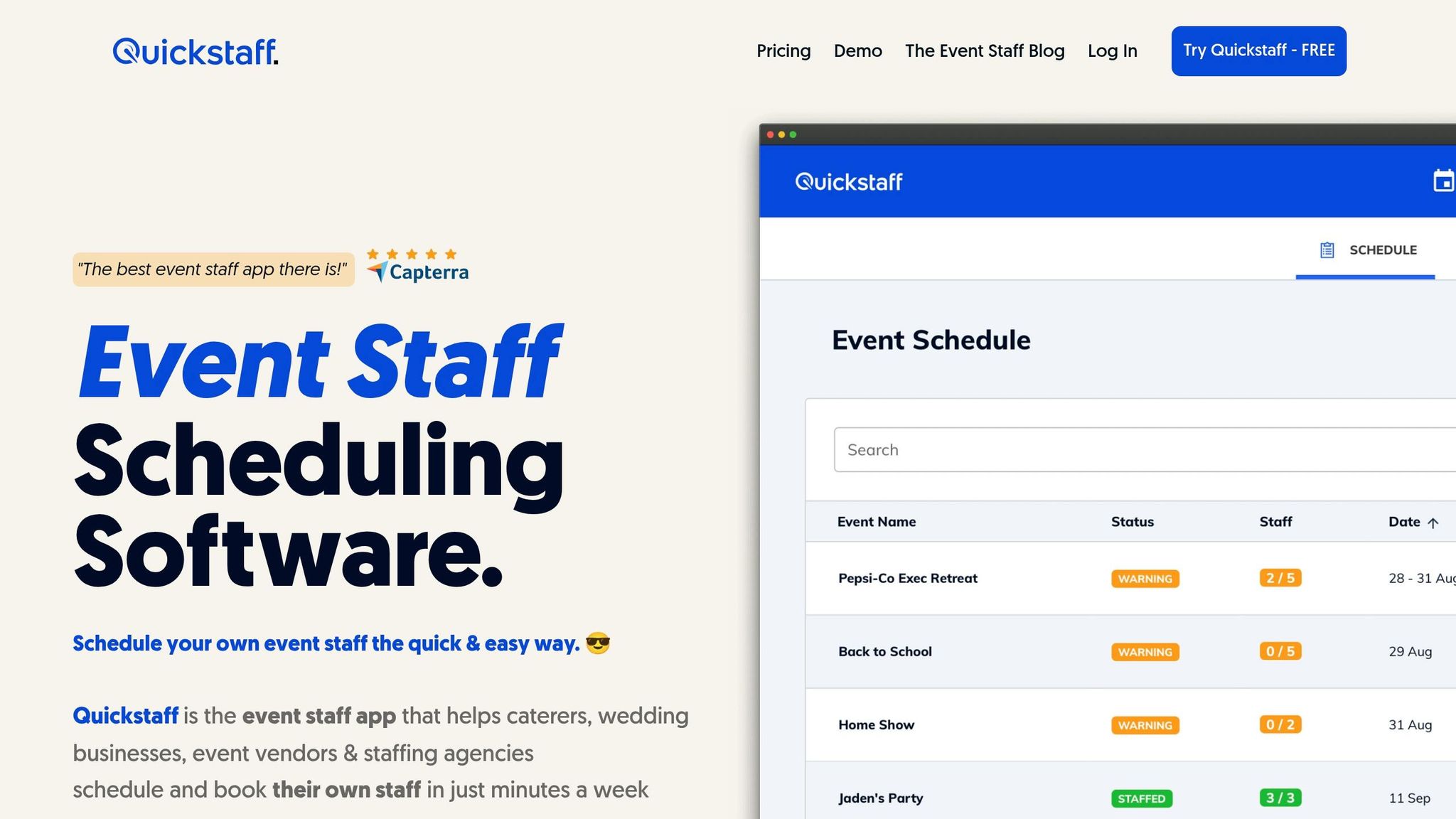
Effective training depends on reaching the right people at the right time. Quickstaff simplifies this process, making it easy to deliver and track role-specific training. Built for event-based teams like caterers, wedding vendors, and staffing agencies, Quickstaff ensures temporary staff are equipped for their specific roles. When scheduling staff, managers can assign roles for each event, triggering targeted training reminders and pre-event communications. Automated notifications make sure everyone knows their duties well before they arrive.
Quickstaff’s centralized event management view is a game-changer for staying organized. Managers can see staff assignments, availability, and communication history all in one place. This streamlined approach helps maintain consistent service quality, even across multiple events.
Once role-specific training is implemented, it’s essential to measure its success and refine it through a continuous feedback process to enhance performance over time.
Tracking the right metrics helps establish a clear connection between role-specific training and improved guest services. Each role has unique indicators that reveal how well training translates to on-the-job performance. For example:
Broader metrics, such as Net Promoter Score (NPS), overall guest satisfaction ratings, and online review sentiment, provide a bigger picture of how training impacts the guest experience.
To ensure training is translating into real-world results, schedule structured follow-ups at 30, 60, and 90 days after the training ends. These check-ins provide insight into whether employees are applying their skills effectively on the job. For instance, Four Seasons Hotels achieves a 98% guest satisfaction score and maintains an annual turnover rate of just 22% - a significant improvement over the 70% industry average - thanks to its steadfast commitment to ongoing staff training. Metrics like these not only measure success but also highlight areas needing immediate attention, allowing for targeted improvements.
While metrics show trends, feedback uncovers the story behind the numbers. Post-shift debriefs, even quick 10-minute team huddles, can reveal challenges that data alone might overlook. These discussions often highlight service bottlenecks, guest frustrations, or moments of exceptional performance that can shape future training.
Guest feedback is another goldmine for identifying training gaps. Analyzing recurring themes from online reviews or post-event surveys can pinpoint specific issues. For example, Jennifer Quirk, Director of Training at Burtons Bar & Grill, reviewed nearly 1,000 AI-powered staff search queries and discovered that 70% of them were related to menu allergens. This insight prompted a renewed focus on training around ingredient knowledge and food safety. Quirk emphasized the importance of management’s role in training:
"Management disengagement is one of the biggest roadblocks to training. The delegate button exists to help managers, not to let them off the hook."
Treat training as an evolving process. Regularly update content - monthly, if possible - based on feedback from guests and staff. Involve employees in identifying problems and crafting solutions. When team members feel invested in the process, they’re more likely to put those improvements into practice during their shifts.
Role-specific training lays the foundation for dependable guest service. When team members clearly understand their responsibilities, where they need to be, and how to tackle crucial moments, the entire operation flows more efficiently. This kind of focused preparation leads to noticeable boosts in both revenue and guest satisfaction - results that stem directly from intentional, role-centered training.
Training does more than sharpen skills; it builds confidence. Think about a server who knows the menu inside and out, a front desk agent who can resolve billing issues without skipping a beat, or a bartender who’s always restocked and ready before the rush. These aren’t random successes - they’re the outcome of proper preparation. As Daniel Meursing, CEO of Premier Staff, explains, an untrained catering team quickly shows its flaws through small mistakes that snowball into larger service problems during an event.
However, even the best training falls short without the right operational support. That’s where Quickstaff steps in - bridging the gap between training and execution. By combining role-specific training with streamlined staff scheduling, Quickstaff simplifies everything from role assignments and availability tracking to pre-event communication. With a mobile-friendly platform, it ensures that well-trained staff can perform at their best without getting bogged down by last-minute logistical issues.
Exceptional guest experiences aren’t created on the spot - they begin well before the event. They’re built on clear role expectations, training that focuses on real-world scenarios, and an operational system that ensures everything runs smoothly.
To begin, carry out a skills and needs audit to pinpoint where your team may be falling short. Tap into resources like guest feedback, mystery shopper evaluations, and operational challenges to uncover performance issues. Then, assess your team’s current skill levels against the demands of their roles by analyzing performance data or gathering insights from manager reviews. Focus on training efforts for positions that play a critical role in guest experiences - such as front desk or food and beverage staff - since their skills are directly tied to both guest satisfaction and revenue outcomes.
The quickest approach involves using short, mobile-friendly resources, such as 1- to 2-page briefing documents that highlight key responsibilities, logistics, and emergency protocols. Break down complicated tasks into manageable 5- to 15-minute micro-sessions, and confirm understanding through the teach-back method. Tools like Quickstaff can simplify scheduling and onboarding communication. Meanwhile, digital checklists and pre-recorded guides provide consistent, on-demand access to essential training materials.
To understand how role-specific training impacts guest service, keep an eye on key metrics that tell the full story. Start with guest satisfaction scores (CSAT), Net Promoter Scores (NPS), and online review ratings - these directly reflect how guests feel about their experience.
Operational efficiency is another area to watch. Metrics like shorter check-in times or quicker order delivery can highlight improvements in service speed. On the revenue side, look for trends like higher average check sizes or increased revenue per room.
Don’t forget to track complaint reduction and the outcomes of quality audits or mystery shopper evaluations. These can provide clear evidence of how well the training translates into better service on the ground.