How to Build Strong Interpersonal Skills for Event Staff
June 9, 2026

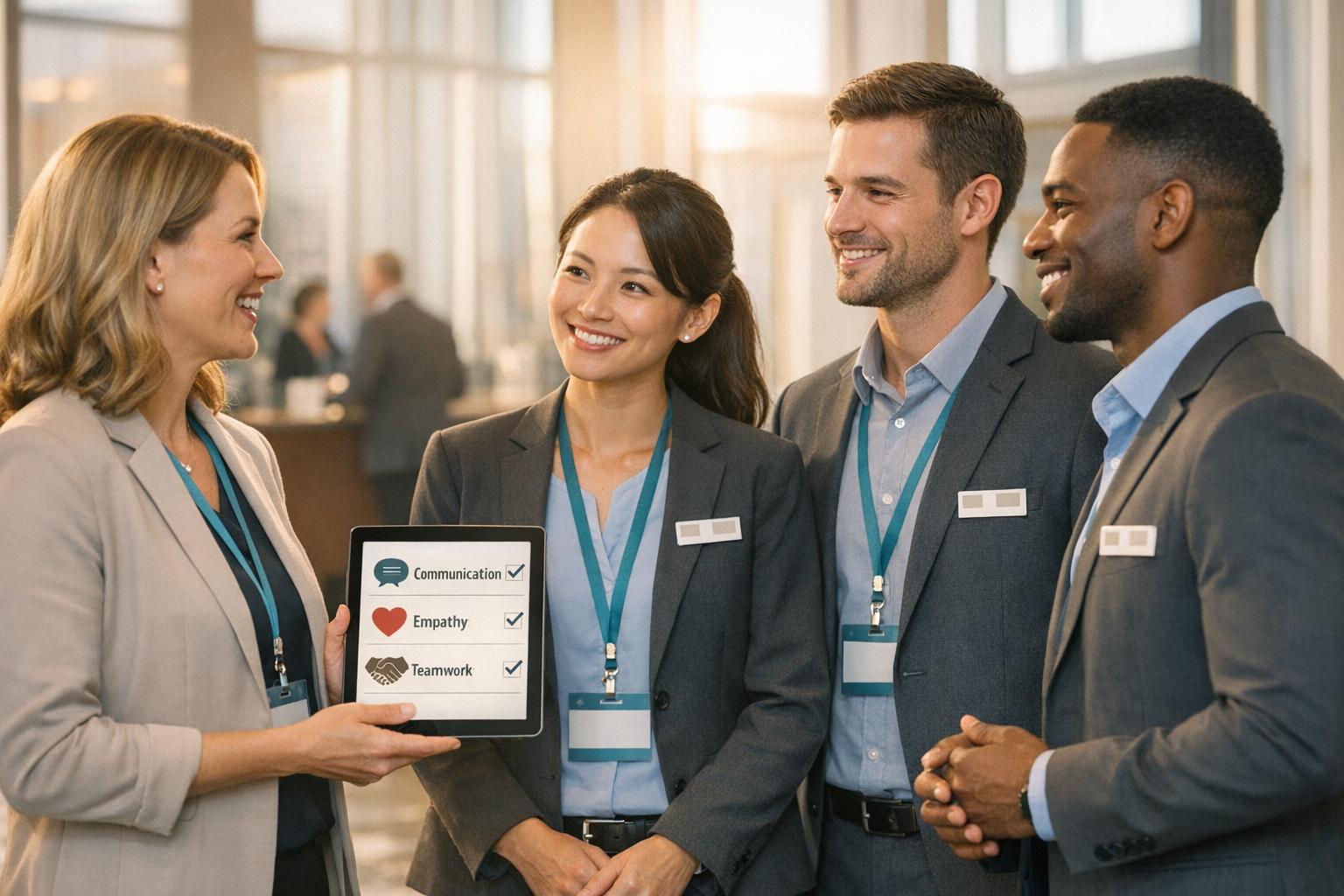
Interpersonal skills are critical for event staff because they directly impact guest experiences and team efficiency. These skills - communication, empathy, and teamwork - are essential for ensuring smooth operations, resolving challenges under pressure, and leaving a positive impression on attendees.
Key Points:
To improve these skills:
Investing in these areas helps create a reliable and guest-focused event team, ensuring both operational success and client satisfaction. For more industry insights, visit The Event Staff Blog.

When it comes to event staff, three essential skills can make all the difference: communication, empathy, and teamwork. These aren't just about handling individual interactions - they're the backbone of smooth backstage operations and guest satisfaction.
Strong communication is the foundation of any successful event. According to the Event Management (EVM) Institute, 85% of job success stems from interpersonal and communication skills, while only 15% is tied to technical knowledge. Interestingly, nonverbal cues like body language, tone, and facial expressions account for up to 93% of communication effectiveness. For instance, maintaining eye contact and an open posture can project confidence. Even small shifts in language - such as replacing casual phrases like "No problem" with "Certainly" or "My pleasure" - can leave a more professional impression.
Clear communication isn't just about exchanging information; it's about connecting with others. And that connection becomes even more critical in high-pressure situations.
Event planning ranks as the third most stressful job in the world, and that stress often trickles down to the event staff. Whether it's managing a last-minute schedule change or resolving a technical issue, staying calm under pressure is key - not just for the staff member but for everyone around them.
"When staff members maintain a calm demeanor, they create a domino effect that radiates calmness to both team members and attendees." - StaffConnect
Empathy plays a huge role here. It’s about recognizing what others need before they even ask. This might mean noticing a guest’s empty glass or picking up on a client’s subtle body language that signals they need reassurance. Training programs that focus on identifying emotional cues can help staff develop these skills.
While empathy helps staff connect with others, teamwork ensures that everyone is working together toward a common goal.
No event can succeed without a team that works well together. Poor collaboration can cost workers up to six hours of productivity each week, with 64% of employees reporting at least three hours lost due to inefficiencies. Effective teamwork means more than just completing tasks - it’s about understanding roles, supporting one another, and maintaining clear communication. For example, punctuality is critical; when staff stick to schedules, they prevent delays and build trust among team members.
"Technical skills execute the task; soft skills protect the brand." - Daniel M., CEO, Premier Staff
Ultimately, while technical expertise gets the job done, it's these interpersonal skills that ensure the event runs smoothly and leaves a lasting positive impression.
Before improving your team's interpersonal skills, you need to understand where they currently stand. This requires more than just intuition - you'll need a structured evaluation approach.
Live events provide a great opportunity to see your team in action. Pay attention to how they greet guests, listen, handle unexpected situations, and support one another. Look for specific behaviors like pacing, attentiveness, conflict management, and teamwork. These observations can help you pinpoint strengths and areas that need attention.
A useful tool for this process is the SBI framework - Situation, Behavior, Impact. This method helps you move beyond vague observations. For instance, instead of writing "seemed unfriendly", you might note:
"During the cocktail hour [Situation], the staff member walked past three guests without making eye contact [Behavior], which left those guests uncertain about where to go [Impact]."
"Timely, constructive feedback is how event staff improve. Without it, they repeat mistakes and never develop expertise." - Megan Hayward, Founder & CEO, TempGuru
Recognize positive behaviors as well, like successful conflict resolution or smooth guest interactions. Pair these observations with direct feedback to get a fuller picture of your team's performance.
To get a comprehensive view of team dynamics, collect insights from multiple sources. Use guest surveys, peer feedback, and self-assessments to understand how your team interacts with others. When sharing this feedback, separate coaching conversations from disciplinary ones. This ensures that feedback feels like an opportunity to grow, not a reprimand.
Consistency is key when tracking progress. Record dates, observed behaviors, feedback, and plans for improvement to monitor development over time. Platforms like Quickstaff help centralize this process by keeping staff profiles, event performance, and communication history in one place. This makes it easier to see who’s improving and who might need extra guidance.
"If you want your message to stick and your expectations to be met, then become a leader who invests in your people, and not just a manager who directs them." - Quickstaff
An effective way to nurture growth is by matching staff to roles that suit their current abilities while gradually introducing new challenges. This approach helps them build confidence and refine their interpersonal skills over time.
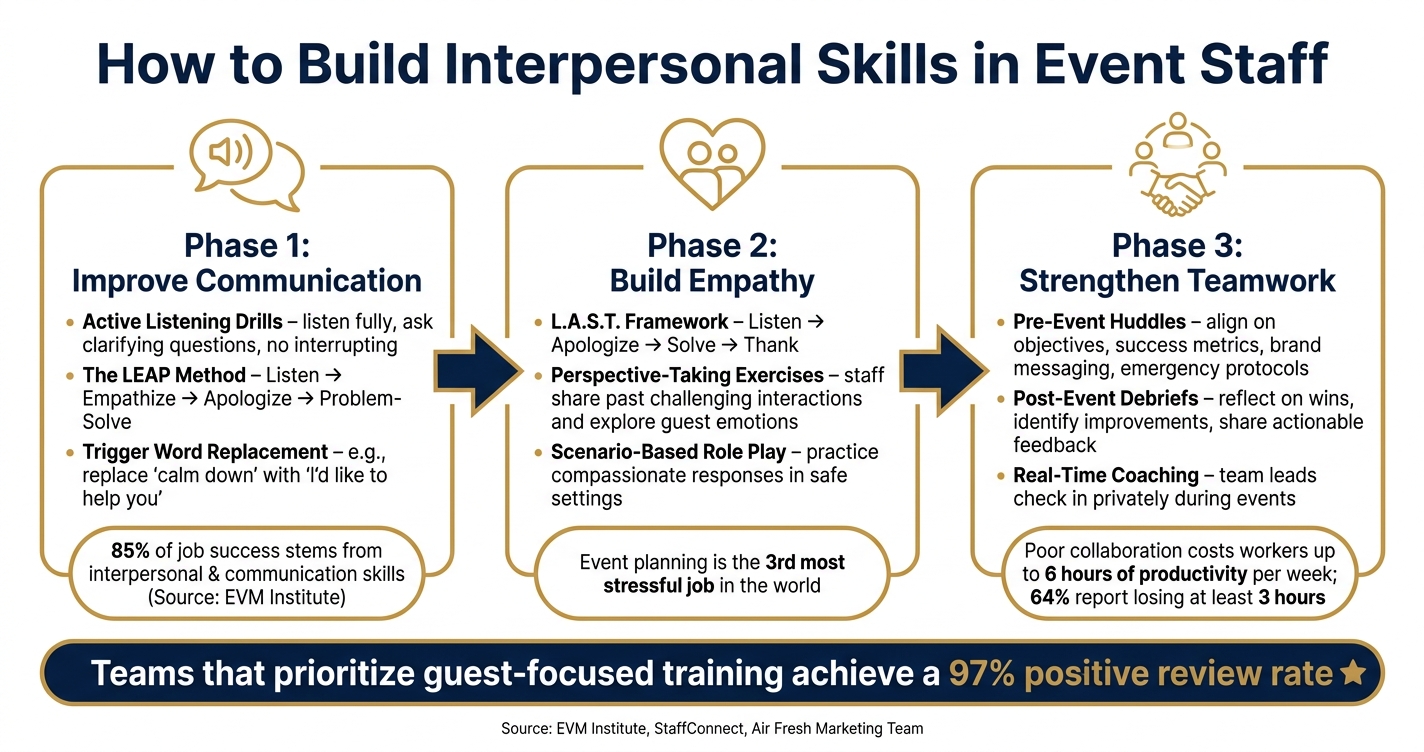
How to Build Interpersonal Skills in Event Staff: A Step-by-Step Framework
Once you've assessed your team's current abilities, it's time to focus on targeted training to sharpen their communication, empathy, and teamwork. These skills are essential for ensuring smooth event operations and leaving a positive impression on guests. Here's how to approach training effectively.
Role-playing is a powerful way to enhance both verbal and nonverbal communication. By simulating real-life guest interactions, staff can practice handling situations like assisting a confused first-time attendee, addressing a frustrated VIP, or managing a last-minute request.
"The quality of your event staff training program directly determines the quality of every consumer interaction at your brand activations, trade shows, and experiential marketing campaigns." - Air Fresh Marketing Team
Here are some exercises to include:
After each role-play scenario, provide immediate, constructive feedback and allow staff to practice until they feel confident. With communication covered, shift the focus to empathy-building.
Empathy training helps staff connect with guests on a deeper level. Scenario-based exercises, like the L.A.S.T. framework - Listen without interruption, Apologize sincerely, Solve by finding a mutually agreeable solution, and Thank the guest for their feedback - create a safe space for employees to practice handling challenging situations.
Another effective tactic is perspective-taking exercises. Ask team members to share a challenging past interaction and explore what the guest might have been feeling during the encounter. By shifting attention to the guest's emotions and experiences, staff can better understand how to respond compassionately in future situations.
"Showing empathy, listening, and offering assistance/guidance can go a long way to making a staff member feel comfortable and excited about running events for you." - Bar Crawl USA
Once individual skills are honed, the next step is to enhance teamwork through structured communication practices.
Teamwork thrives on clear and consistent communication. Pre-event huddles are an excellent way to align the team on key objectives, success metrics, brand messaging, and emergency protocols. These quick meetings ensure everyone is on the same page and ready to deliver a seamless experience.
Equally important are post-event debriefs. These sessions allow the team to reflect on what went well, identify areas for improvement, and share actionable feedback. This fosters alignment while encouraging continuous growth.
During the event, team leads should check in privately with staff to provide real-time coaching and address minor issues before they escalate. These practices build trust, promote accountability, and ensure that both guest experiences and operational efficiency improve over time.
One-off training sessions only go so far. Teams that consistently deliver outstanding guest experiences are the ones where skill-building is part of daily management - not just a checkbox before an event.
To show that interpersonal skills truly matter, make them a formal part of performance evaluations. Start by setting clear expectations during onboarding and in job descriptions. This way, staff know what "good" looks like long before they're evaluated.
When it’s time for reviews, avoid vague feedback. Instead, rely on specific examples like event data, guest feedback, and observations from team leads. Use this information to create personalized development plans. These plans should outline skills that need improvement, available resources, and milestones for growth. A structured system that promotes staff from roles like registration to leadership positions based on interpersonal skills provides clear goals and motivation. Combine these formal reviews with short training sessions and mentorship to keep skills sharp.
Micro-training sessions - short, targeted refreshers during pre-event briefings or team meetings - help maintain skills without requiring lengthy workshops. For example, a five-minute exercise on handling challenging guest interactions can be just as effective as a longer session.
Pair micro-training with peer mentoring for a cost-effective and impactful approach. Assign new hires to experienced staff for their first few events. This gives newer employees a chance to observe effective communication and guest engagement in action, while mentors reinforce their own skills by teaching others.
"Every hour spent in training generates returns through higher-quality consumer interactions, fewer on-site problems, better data capture, increased sales conversions, and stronger brand representation." - Air Fresh Marketing Team
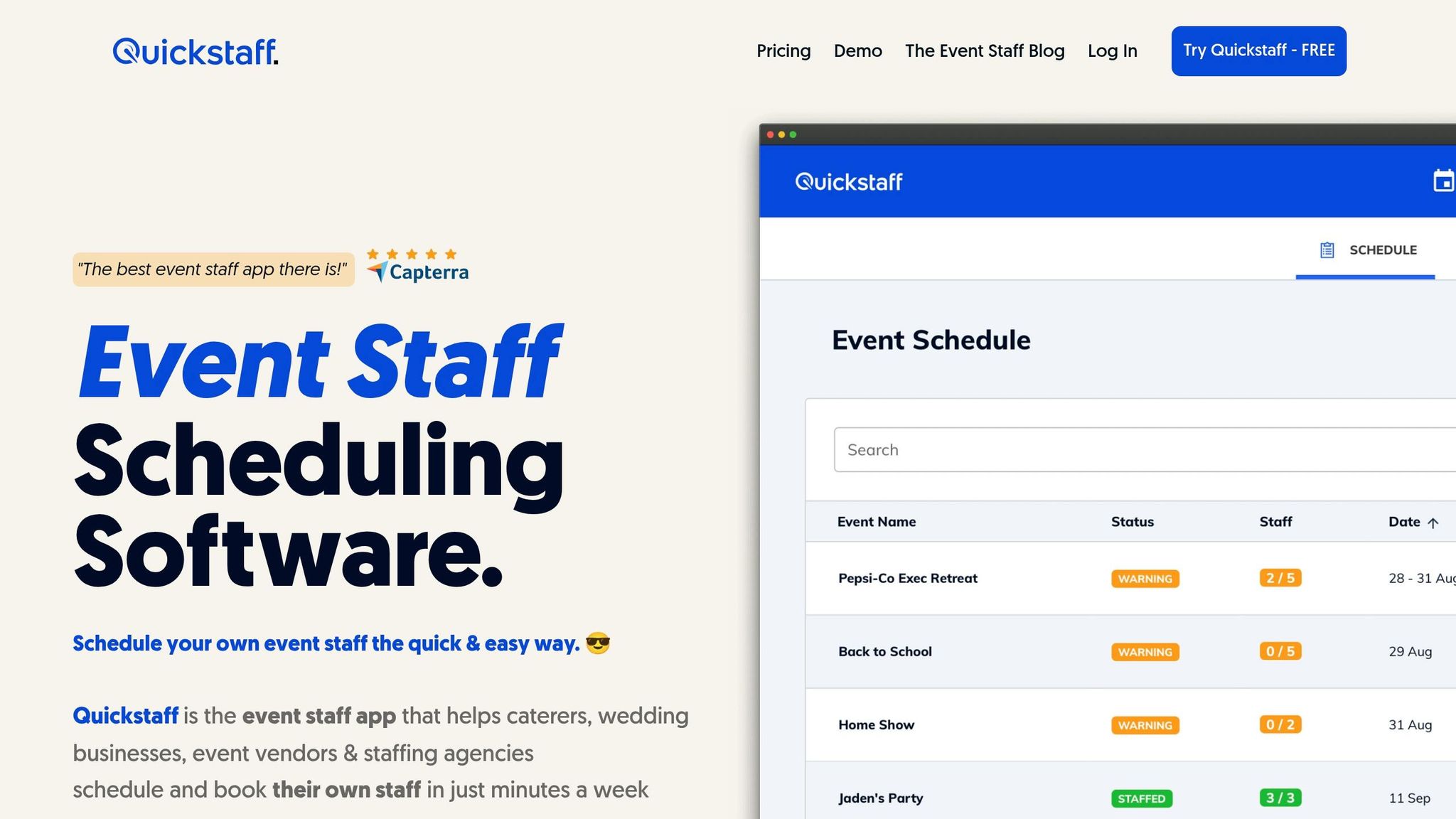
Technology can make ongoing development much easier to manage. For example, Quickstaff offers tools to simplify staff training and role assignment across multiple events.
With Quickstaff, managers can track which team members have completed specific training and use that data to make smarter staffing decisions. For instance, staff with strong interpersonal skills can be placed in guest-facing roles, while those still learning can be assigned to positions where they can practice without overwhelming pressure. This role-matching reduces operational hiccups and ensures the right people are in the right roles at every event.
"If you want your message to stick and your expectations to be met, then become a leader who invests in your people, and not just a manager who directs them." - Quickstaff
Quickstaff also offers unlimited messaging and a mobile-friendly interface, making it easy to send event details and expectations ahead of time. This ensures staff arrive well-prepared, ready to focus on meaningful guest interactions rather than scrambling to catch up. That clarity in communication translates directly into better guest experiences.
Developing interpersonal skills is an ongoing effort that leads to a more cohesive and effective event team.
These skills don’t emerge overnight - they thrive in environments where regular assessment, dedicated training, and a focus on valuing every team member are prioritized. When you invest in your staff, you’re not just addressing challenges - you’re turning them into opportunities for smoother events and better guest experiences.
Consider this: teams that prioritize guest-focused training have achieved a 97% positive review rate. On the flip side, 64% of workers say poor collaboration costs them at least three hours of productivity weekly. Bridging this gap starts with mastering the basics - clear communication, empathy under pressure, and teamwork that stands firm during the busiest moments.
"Hospitality staff are not an optional addition. They are a strategic investment. Their presence safeguards against guest dissatisfaction, ensures brand reputation remains intact, and allows organizers to focus on strategic priorities." - CEO, Event Staff
Make these skills a core part of your team’s routine. Incorporate them into performance reviews, pre-event briefings, and peer mentoring sessions. When growth becomes second nature, the results speak for themselves.
To nurture interpersonal skills without interrupting the flow of an event, consider weaving brief, actionable training moments into the existing schedule. Pairing new hires with seasoned team members as mentors can provide immediate guidance and support. You can also use the teach-back method, where employees explain concepts or tasks back to you, ensuring they've grasped them fully.
During quieter periods, scenario-based drills can be a great way to simulate high-pressure situations, helping staff build confidence and problem-solving skills. Additionally, tools like Quickstaff simplify scheduling and communication, allowing your team to stay focused on delivering excellent service rather than juggling logistics.
The fastest method is to actively observe how your staff interacts. When evaluating communication, watch for paraphrasing - rephrasing guest requests to ensure clarity - and active listening signals such as maintaining eye contact or nodding. To gauge empathy, see if they pick up on non-verbal cues like body language and facial expressions, or if they step in to support teammates under stress. Tools like Quickstaff simplify scheduling and communication, allowing you to dedicate more time to observing these critical skills.
Quickstaff simplifies the process of tracking soft-skill development by combining training schedules with event management tools. With a centralized dashboard, managers can easily oversee certifications, track training completions, and manage onboarding sessions. Additionally, the platform offers a way to assess leadership efforts by monitoring metrics such as staff retention rates, internal promotions, and client feedback. This data provides a clear picture of how skills evolve and improve over time.