How Many Servers Do You Need Per Guest?
June 11, 2026

When planning an event, the number of servers you need depends on the guest count, service style, and event specifics. Here's a quick breakdown:
Adjust these ratios based on factors like the menu complexity, venue layout, and event formality. Always include a 10–15% staffing buffer to handle unexpected needs. Proper planning ensures smooth service and satisfied guests, while tools like Quickstaff can streamline scheduling and coordination.
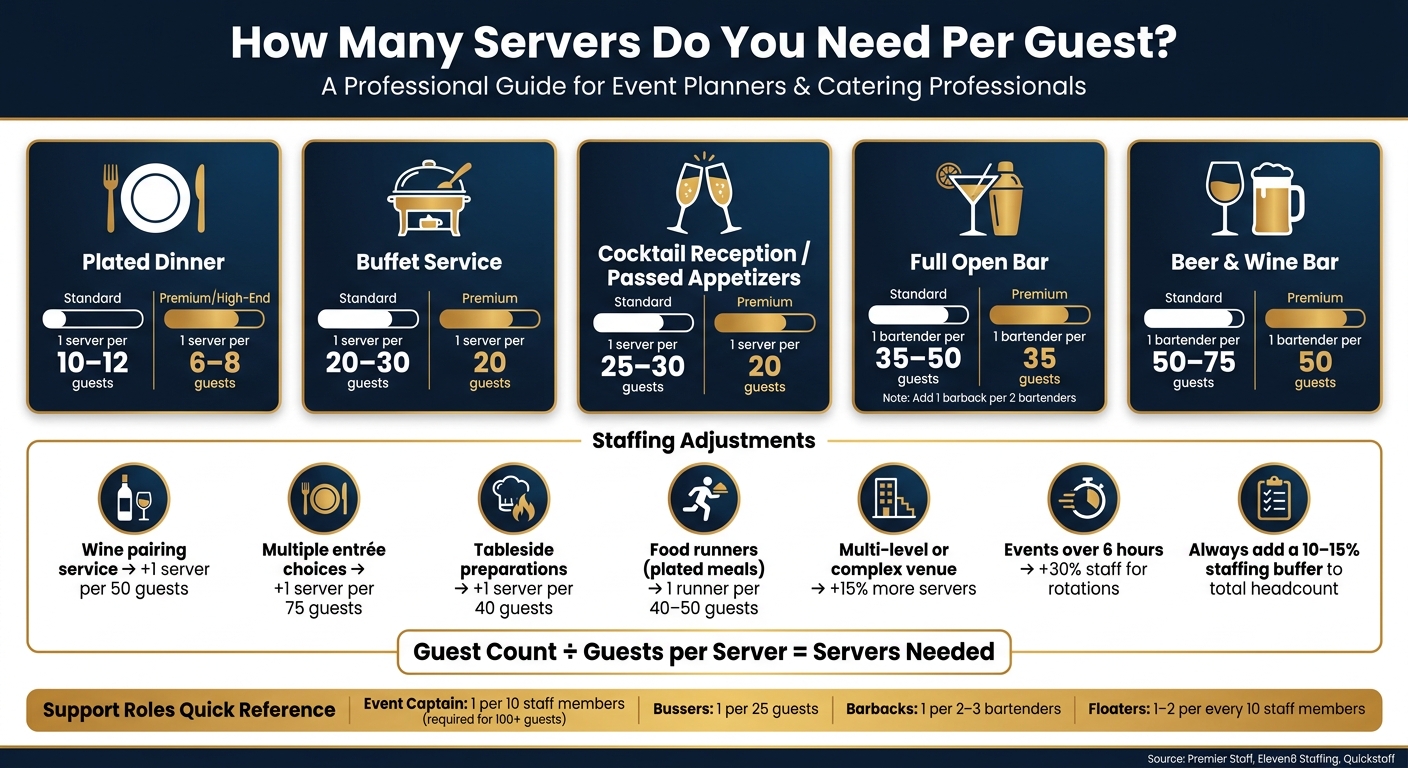
Server-to-Guest Ratios by Event Type & Service Style
Not all events are the same - and neither are their staffing requirements. Here's a breakdown of staffing ratios tailored to different catering formats.
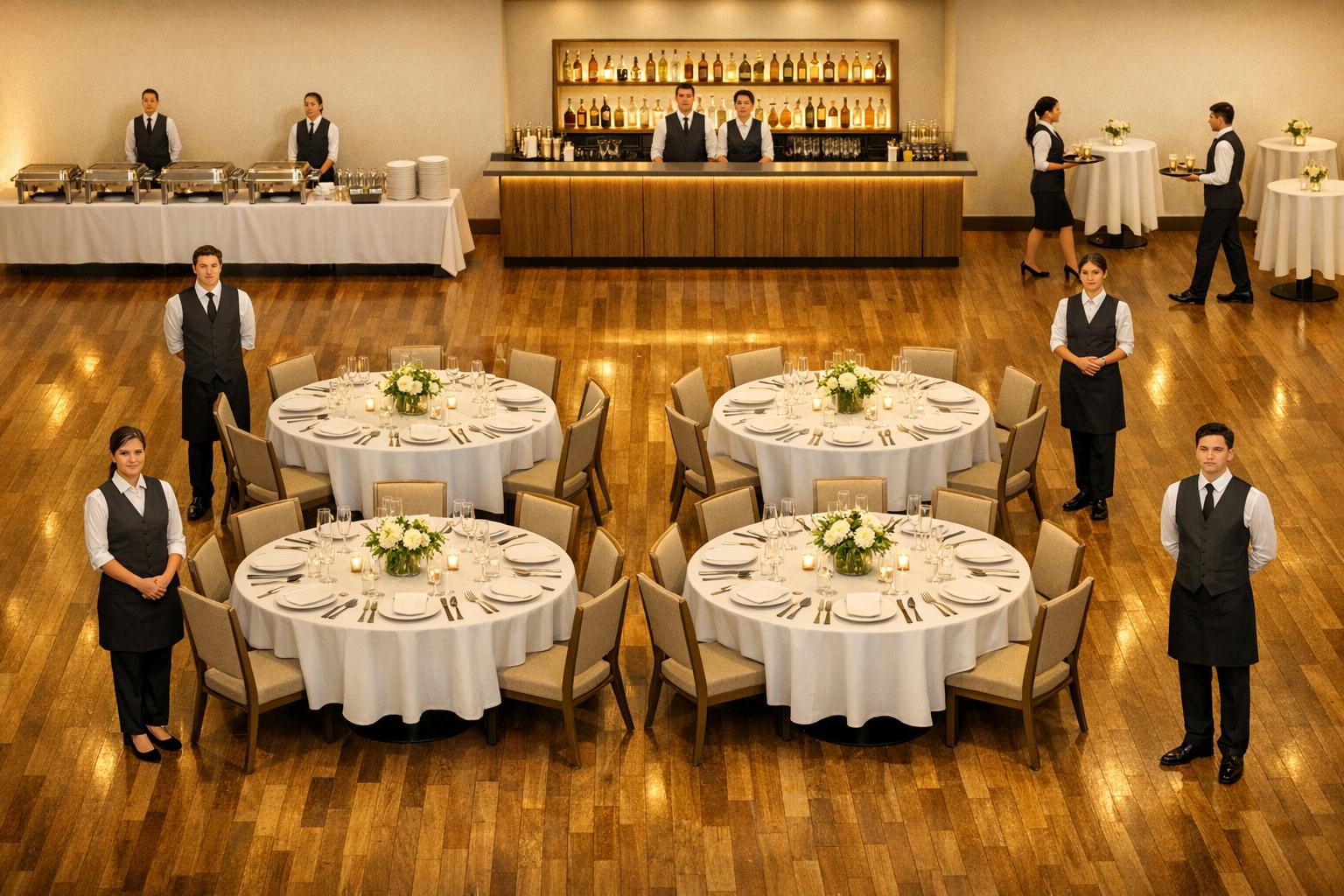
Plated dinners require the most servers. The general guideline is 1 server for every 10–12 guests at corporate dinners or wedding receptions. For high-end events like galas or fine dining, this ratio shifts to about 1 server per 6–8 guests to ensure a more attentive experience.
Timing is everything. Servers need to deliver hot plates within a 30-second window to keep food at its best. Even a slight increase in guest numbers can disrupt this delicate balance.
Buffet-style events are less labor-intensive. Since servers aren’t delivering plates to tables, the ratio can go up to 1 server per 20–30 guests. Their main tasks include refilling buffet dishes, clearing tables, and managing the line flow. Efficiently managing these roles often requires event staff scheduling software to track availability. For a 120-guest event, you’d need significantly fewer servers compared to a plated dinner.
Cocktail receptions with passed appetizers typically follow a ratio of 1 server per 25 guests. If there are fewer appetizers being passed, this can stretch to 1 server per 30 guests. Each tray pass takes about 15–20 seconds, with servers heading back to the kitchen every 3–4 minutes to restock. If you’re short-staffed, using scheduling tools for caterers can help, as it quickly becomes obvious, as guests may find themselves waiting too long for service.
Bar staffing is calculated separately from food service but is just as crucial for guest satisfaction. For beer and wine service only, plan for 1 bartender per 50–75 guests. If you’re offering a full open bar, the ratio tightens to 1 bartender per 35–50 guests. Craft cocktails require even closer attention, making the lower end of this range more appropriate.
Daniel Meursing, CEO of Premier Staff, sums it up perfectly:
"That 20-minute bar line is all guests will remember. The right event staffing ratio isn't a line item; it's your event's insurance policy."
For full-bar setups, you’ll also need about 1 barback for every 2 bartenders to handle tasks like restocking ice and glassware, so bartenders can stay focused on serving.
| Service Style | Standard Ratio | Premium/High-Demand Ratio |
|---|---|---|
| Plated Dinner | 1 server per 10–12 guests | 1 server per 6–8 guests |
| Buffet Dinner | 1 server per 20–30 guests | 1 server per 20 guests |
| Passed Appetizers | 1 server per 25–30 guests | 1 server per 20 guests |
| Full Open Bar | 1 bartender per 35–50 guests | 1 bartender per 35 guests |
| Beer & Wine Bar | 1 bartender per 50–75 guests | 1 bartender per 50 guests |
Standard ratios provide a helpful starting point, but they don’t always fit every event perfectly. Several key factors can influence how many servers you’ll actually need.
The type of event and its level of formality play a huge role in determining staffing needs. For formal events like weddings or corporate galas, guests expect polished service - timely plate clearing, drink refills, and seamless attention during moments like toasts or speeches. On the other hand, casual gatherings, like networking luncheons, can function well with fewer staff since guests are typically more self-reliant.
A good rule to follow is 7 servers per 100 guests, with an additional 2–4 servers for formal plated meals or wine service. For high-stakes events, it’s smart to include a 10–15% staffing buffer to avoid any service hiccups.
"Understaffed service turns a $200 per plate dinner into disappointment." – Premier Staff
The venue’s layout can significantly impact staffing needs. A simple, single-room setup with a nearby kitchen is much easier to manage than a sprawling venue or one with multiple levels. Outdoor spaces or venues with separate cocktail and dining areas also require more staff to cover the additional ground.
Grant Morningstar, CEO of Eleven8 Staffing, explains:
"Multi-level spaces require additional staff. Add 15% more servers for: Separate cocktail levels, Outdoor/indoor transitions, Multiple room layouts."
For events exceeding 100 guests or those with multiple service areas, it’s essential to assign a dedicated floor manager or captain. This person ensures smooth service by addressing any gaps across the venue. Beyond layout, the complexity of the menu also affects staffing.
The intricacy of the menu and the number of courses can dramatically change your staffing requirements. A multi-course plated dinner, for example, demands far more coordination than a basic two-item buffet. Each additional course means quicker plate delivery, faster clearing, and tighter kitchen synchronization. If your event includes wine pairings, plan on adding 1 extra server per 50 guests. Similarly, offering multiple entrée options typically requires 1 additional server per 75 guests.
For plated meals, dedicated food runners - about 1 for every 40–50 guests - help ensure timely service. Labor-intensive tableside preparations, like carving stations or flambéed desserts, often require 1 extra server per 40 guests.
| Menu/Service Factor | Staffing Adjustment |
|---|---|
| Wine pairing service | Add 1 server per 50 guests |
| Multiple entrée choices | Add 1 server per 75 guests |
| Tableside preparations | Add 1 server per 40 guests |
| Food runners (plated) | 1 runner per 40–50 guests |
| Buffet restocking | 1 server per 3 chafing dishes |
Using the server-to-guest ratios mentioned earlier, you can turn event planning into precise staffing requirements.
First, confirm the key details of your event: guest count, service style (plated, buffet, etc.), menu, bar setup, and event duration. Always add 10–15% to your guest count to prepare for last-minute additions. It’s worth noting that over 60% of service-related issues arise from staffing decisions made before the event, not during it. Once these details are set, you can move on to applying the proper ratios or using an event staffing needs analyzer.
The basic formula is straightforward: Guest Count ÷ Guests per Server = Servers Needed. Here’s a breakdown of standard ratios for different service areas:
| Service Area | Ratio | Example (150 Guests) |
|---|---|---|
| Plated dinner | 1 server per 15–20 guests | 8–10 servers |
| Buffet | 1 server per 20–30 guests | 5–8 servers |
| Full open bar | 1 bartender per 50 guests | 3 bartenders |
| Beer & wine only bar | 1 bartender per 75–100 guests | 2 bartenders |
Adjustments are necessary for certain scenarios. For events lasting more than six hours, plan to increase staff by 30% to allow for breaks and rotations. If your venue has multiple levels or transitions between indoor and outdoor spaces, you’ll need about 15% more servers to manage the layout effectively.
"Guests remember temperature and timing far more than fancy ingredients." – Grant Morningstar, CEO, Eleven8 Staffing
Once you’ve calculated your main staffing needs, don’t forget to account for supervisory and support roles. For events with over 100 guests, having a dedicated event captain is essential. This person oversees the floor and coordinates with the kitchen, freeing other staff to focus on their tasks. A good rule of thumb is 1 captain for every 10 staff members.
Additionally, don’t overlook these key roles:
These roles might seem secondary, but they’re often the difference between a smooth event and a chaotic one. Proper planning here ensures everything runs seamlessly.
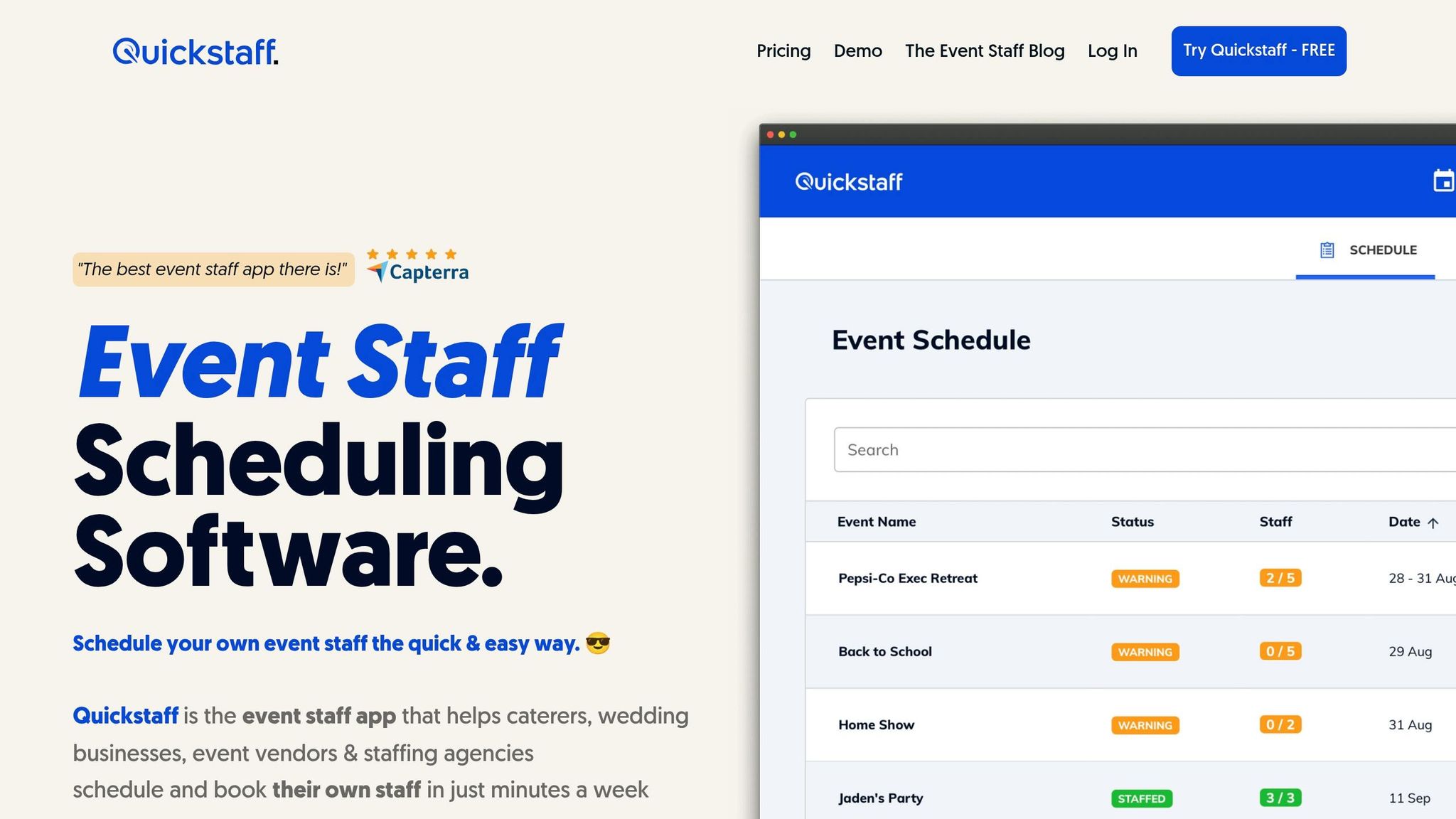
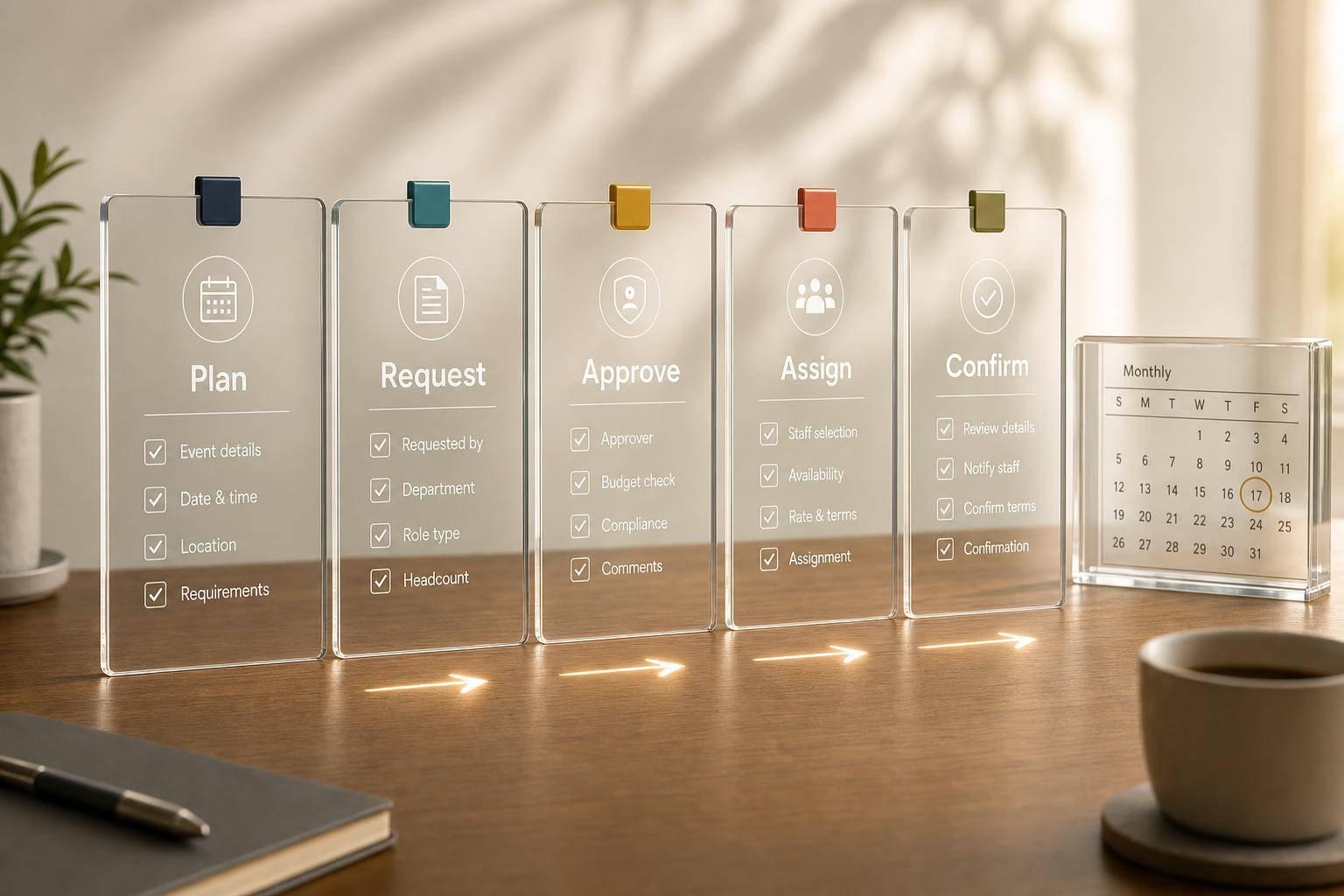
Once you’ve nailed down your staffing requirements, the next hurdle is scheduling. After figuring out how many servers, bartenders, bussers, and event captains you’ll need, the real challenge lies in getting the right people confirmed and ready to go before event day. Effective scheduling doesn’t just meet your staffing ratios - it directly impacts the guest experience. That’s where Quickstaff comes in, making the process smoother with features like role-specific organization, live availability tracking, and centralized event management.
With Quickstaff, you can plan your staffing by specific roles, ensuring every position is covered. Whether it’s for a wedding reception or a corporate luncheon, you can set up events with pre-defined role types and headcounts, saving time on recurring events. Need to adapt for a larger guest list or a different service style? No problem - just tweak a previous template instead of starting from scratch. The platform also allows you to break shifts into smaller segments, so your team knows exactly when and where they’re needed.
Quickstaff simplifies filling shifts by tracking your team’s availability in real time. You’ll know instantly who’s confirmed, who’s pending, and where you still need coverage. If someone cancels, the automated waitlist can step in to fill the gap. Need last-minute help? Send a mass announcement to your entire staff pool for emergency coverage. Plus, Quickstaff tracks confirmation and attendance rates, giving you insights into who’s most dependable for critical events. This dynamic system ensures you’re never scrambling for staff at the last minute.
One of Quickstaff’s standout features is its centralized event management. Everything you need - guest counts, service styles, shift schedules, role assignments, and venue details - is stored in one easily accessible location. This ensures everyone is on the same page well before the event. Your team can access all the details, confirm shifts, and even get reminders through Quickstaff’s mobile-friendly interface. With clear communication and advanced preparation, your event runs smoothly from setup to teardown.
Careful staff planning plays a crucial role in pulling off a successful event.
If you miscalculate server numbers - whether by having too few or too many - you risk either service delays and unhappy guests or unnecessary costs. For example, being short by just three servers at a catered event can lead to cold food, long waits, and dissatisfied guests. On the flip side, hiring extra staff for a 50-person buffet could inflate labor expenses by 30% without adding any real benefit to the guest experience.
Stick to the recommended staffing ratios: 1 server per 10–12 guests for plated dinners, 1 per 25–30 for buffets, and 1 per 20–25 for cocktail receptions. Adjust based on the event's specific needs, like the complexity of the venue, the length of the menu, or the formality of the occasion. Always include a 10–15% staffing buffer, as it’s far better to have a little extra help than to scramble on the day of the event.
"Understaffing a catered event by three servers does not produce a minor inconvenience -- it produces a catastrophe that clients remember and post about." - Profession Calculators
Proper staffing doesn’t just elevate the guest experience - it also protects your team from exhaustion, ensuring smooth and consistent service throughout the event.
Once your staffing plan is ready, tools like Quickstaff can simplify the process. From creating role-based schedules and tracking availability in real-time to managing waitlists and centralizing event details, it helps ensure every detail is handled before the big day.
For venues with multiple rooms or levels, it’s important to factor in the extra travel time and limited staff visibility that come with these setups. To address these challenges, experts recommend boosting your baseline staff numbers by at least 15%. If your venue includes features like separate cocktail areas or indoor-outdoor spaces, you might need even more team members to ensure everything runs smoothly.
One way to stay organized is by centralizing event details and keeping a close eye on staff availability. This helps you distribute your team effectively across all areas, making sure service remains seamless no matter how complex the layout.
When planning your event, it's important to align staff roles with the service style, complexity, and size of the occasion. Here are a few key roles to consider:
By assigning these roles thoughtfully, you can help ensure your event runs seamlessly.
For events lasting more than 5-6 hours, it's smart to plan for extra staff to cover breaks and rotations. Adding a 20% buffer helps manage transitions or split shifts smoothly. To prevent burnout, consider using separate teams for setup and service. Also, include 1-2 floaters for every 10 staff members to handle breaks or step in during busy moments. Scheduling tools like Quickstaff can make organizing shifts easier and ensure steady coverage throughout the event.