Event Staffing Ratios for Catering Success
March 10, 2026

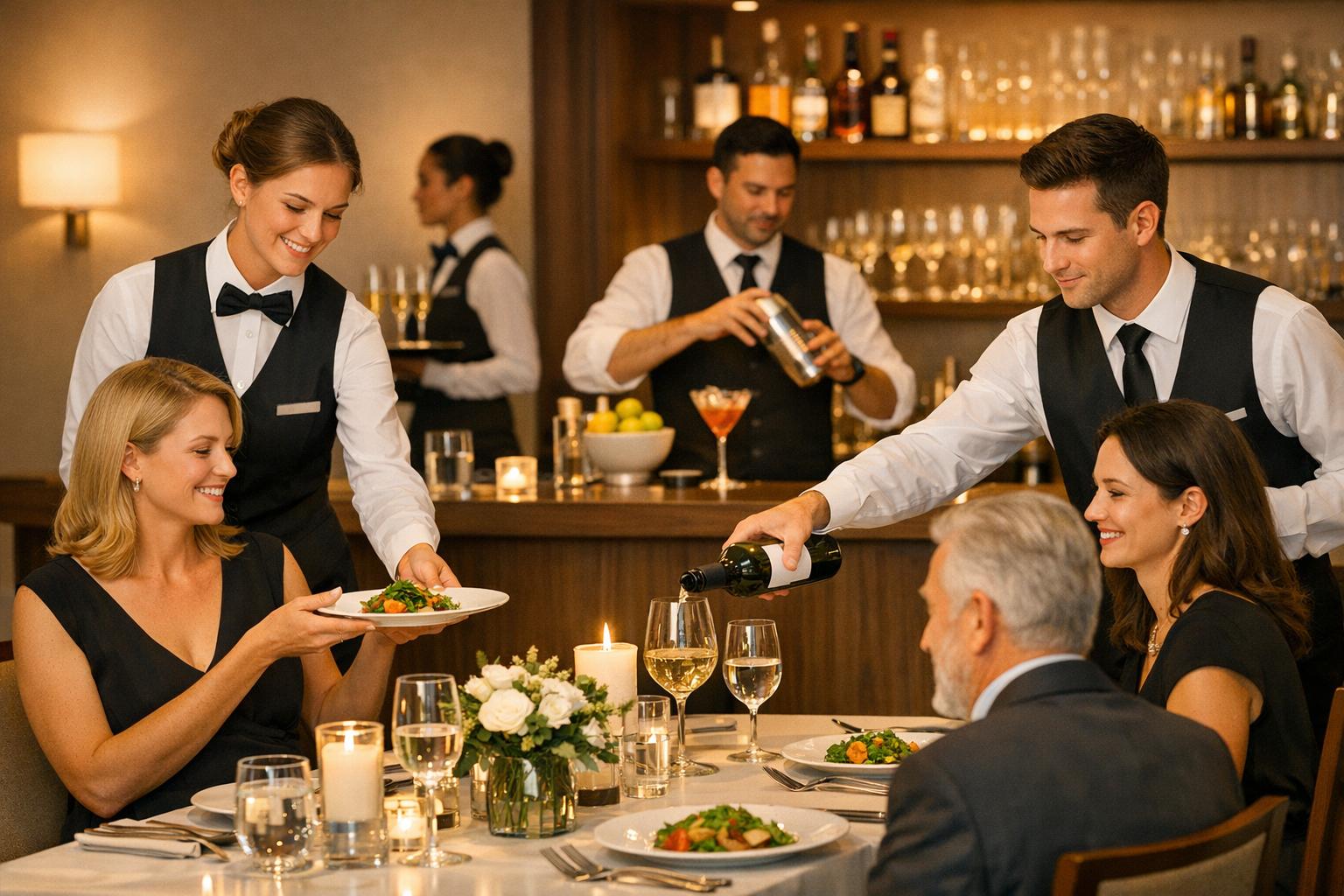
Proper staffing ratios are the backbone of a successful event. Whether it's a plated dinner, buffet, or cocktail reception, balancing staff numbers ensures smooth service, satisfied guests, and controlled costs. Here's what you need to know:
Adjust ratios for factors like venue layout, menu complexity, and event duration. For instance, larger venues or multi-level spaces may require a 15% increase in servers. Events lasting over six hours should include 30% more staff to cover breaks.
Tech Tip: Use tools like Quickstaff to calculate staffing needs, manage last-minute changes, and replicate successful plans for similar events.
Balancing staffing isn't just about headcount; it's about ensuring every guest has a great experience while keeping costs under control.
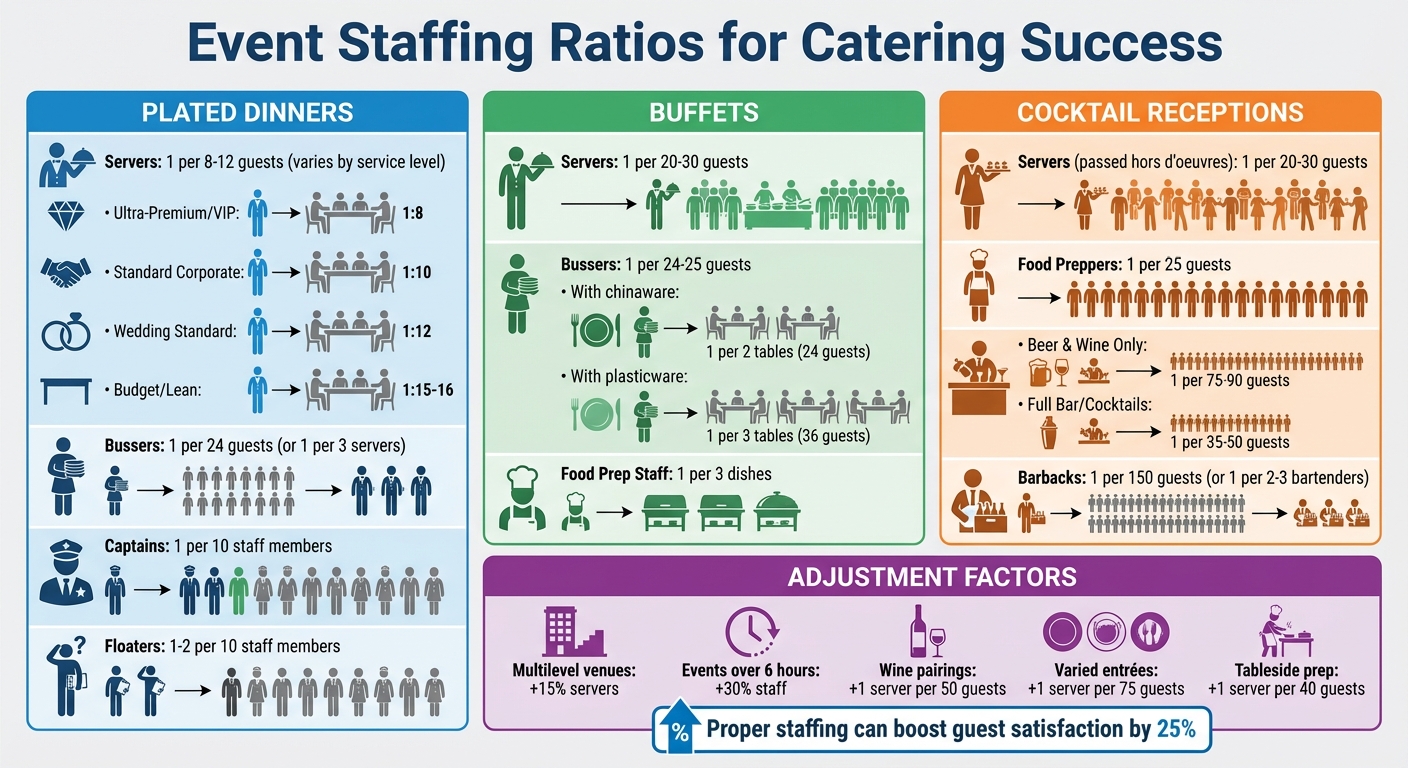
Event Staffing Ratios Guide: Servers, Bartenders, and Support Staff by Event Type
When planning plated dinners, getting the staffing right is critical to keeping service smooth and ensuring guests enjoy their meals at the right temperature. Unlike buffets, where attendees serve themselves, plated service demands a well-coordinated team to deliver meals quickly and efficiently to every guest.
For plated dinners, the general guideline is 1 server for every 8 to 12 guests. This ratio ensures servers can deliver hot plates promptly without compromising quality. Grant Morningstar, CEO of Eleven8 Staffing, highlights the importance of this balance:
"A single server handling more than eight guests during a plated service creates a domino effect of service issues."
The ideal ratio depends on the event type and expectations:
Additional factors like menu complexity or venue layout can influence staffing needs. For example, wine pairings may require an extra server for every 50 guests, and venues with multiple levels or long distances from the kitchen often need about 15% more staff to handle the logistics.
| Service Level | Server-to-Guest Ratio | Ideal For |
|---|---|---|
| Ultra-Premium / VIP | 1:8 | Galas, upscale corporate dinners, fine dining |
| Standard Plated | 1:10 | Professional corporate events, formal dinners |
| Wedding Standard | 1:12 | Large ballroom receptions, traditional weddings |
| Lean / Single Course | 1:15–1:16 | Casual or budget-friendly plated events |
To keep service running smoothly, support staff are just as important as the servers themselves.
Bussers play a vital role in ensuring tables are cleared, water glasses are refilled, and settings are reset for the next course. A common guideline is 1 busser for every 24 guests when using chinaware or 1 busser for every 3 servers.
For events with six or more staff members, it’s essential to have a captain or supervisor. This person coordinates service timing with the kitchen and manages the flow of the event. The typical ratio is 1 captain for every 10 staff members. For instance, a plated dinner for 150 guests might require 3 bussers and 2 captains to ensure seamless service.
Adding flexibility to your team can also make a big difference. Including 1 to 2 floaters for every 10 staff members allows you to address bottlenecks, whether during the entrée service or when covering short breaks.
Buffet events require a specific approach to staffing. The focus shifts from individualized service to managing self-service stations, keeping food replenished, and ensuring the space stays clean and organized.
Buffet-style events demand less direct service compared to plated meals, but they require staff to oversee stations and assist guests. The standard staffing guideline is 1 server for every 20 to 30 guests. These servers take care of tasks like refilling food trays, managing the buffet line, topping off water glasses, and answering any questions about the menu. Daniel Meursing, CEO of Premier Staff, highlights the importance of this ratio:
"A buffet setup requires a 1:20 to 1:25 ratio. Here, the staff's primary role is clearing, refilling water, and managing the buffet line itself."
In some cases, a leaner operation may stretch the ratio to 1 server for 40 guests, though this can impact the quality of service. A more detailed guideline suggests assigning 1 server or runner for every 3 chafing dishes to ensure food is replenished on time and heating elements are properly maintained.
Keeping the dining area clean and tables cleared is critical for a smooth buffet experience. The industry standard recommends 1 busser for every 24 to 25 guests. If using chinaware, plan for 1 busser per 2 tables (about 24 guests). For events with plasticware, 1 busser can manage up to 3 tables, serving approximately 36 guests.
Behind the scenes, food prep staff or runners play a key role in maintaining the buffet's flow. They transport food from the kitchen, replace empty trays, and monitor chafing dishes to ensure proper heating. For a buffet featuring 6 dishes, you’ll typically need 2 food prep staff members, following the 1 staff member per 3 dishes guideline.
For larger buffet events, having a service captain to oversee and coordinate the team can significantly improve efficiency and organization.
Just like buffets, cocktail receptions require specific staffing arrangements to ensure smooth service and guest satisfaction. With guests mingling and drinks being served continuously, the right ratios help keep lines short and the event flowing seamlessly.
For cocktail receptions featuring passed hors d'oeuvres, plan for 1 server for every 20 to 30 guests. These servers move around with trays, offering appetizers while also clearing empty plates and glasses. Behind the scenes, having 1 food prepper for every 25 guests keeps the appetizers coming, ensuring uninterrupted service.
The type of beverages served significantly impacts bartender requirements. For events offering beer and wine only, aim for 1 bartender for every 75 to 90 guests. However, if you're serving a full bar with cocktails, you'll need 1 bartender for every 35 to 50 guests. This is because crafting cocktails takes more time and may involve guests seeking drink recommendations. Jenn Stafford from EventPlanning.com emphasizes:
"A bartender to guest ratio of 1 to 75 will usually provide efficient service"
This applies primarily to simpler drink menus.
| Service Type | Bartender Ratio | Service Speed |
|---|---|---|
| Beer & Wine Only | 1 per 75–90 guests | Faster service |
| Full Bar / Cocktails | 1 per 35–50 guests | Slower preparation |
| Standard Mixed Events | 1 per 75 guests | Balanced approach |
To keep the bar running smoothly, barbacks are indispensable. Assign 1 barback per 150 guests or 1 per 2–3 bartenders. As Grant Morningstar, CEO of Eleven8 Staffing, explains:
"One barback for every 150 guests... handle crucial tasks like ice management, restocking supplies, and glassware collection"
For events with more than 200 guests, setting up multiple bar locations is a smart move to avoid congestion. Each bar should have at least 5 linear feet of space per 100 guests, with about 4 feet of working room per bartender. These guidelines help ensure cocktail receptions run smoothly, with efficient service and happy guests.
While standard staffing ratios work for many events, unique conditions often call for adjustments. Venue layout is a key factor - multilevel spaces, outdoor areas, or venues with multiple rooms typically require a 15% increase in servers to maintain smooth service. Why? The extra walking time between floors or across large spaces reduces the time servers can dedicate to guests.
Menu complexity also influences staffing needs. For example, wine pairings call for one extra server per 50 guests, varied entrées need one additional server per 75 guests, and tableside preparations require one per 40 guests. Event duration is another critical element - events lasting over six hours demand a 30% increase in staff to accommodate rotations and mandatory breaks. Grant Morningstar, CEO of Eleven8 Staffing, highlights that VIP sections or high-end corporate events often require a tighter ratio of 1 server per 8 guests to ensure personalized and anticipatory service.
Guest demographics also play a role. High-profile gatherings benefit from having one service captain for every five servers to handle on-the-spot problem-solving. Daniel Meursing, CEO of Premier Staff, underscores the importance of proper staffing:
"Want to ruin a $100k event? Try to save $300 by cutting one bartender. That 20-minute bar line is all guests will remember."
For events prone to sudden surges or bottlenecks, include 1–2 unassigned "floater" staff for every 10 scheduled workers. These floaters can respond to issues as they arise. Additionally, always assess venue logistics - a long trek from the kitchen to the dining area or a cocktail hour held in a separate space may require tweaking your ratios. These adjustments are vital to delivering top-notch service, no matter how complex the event.
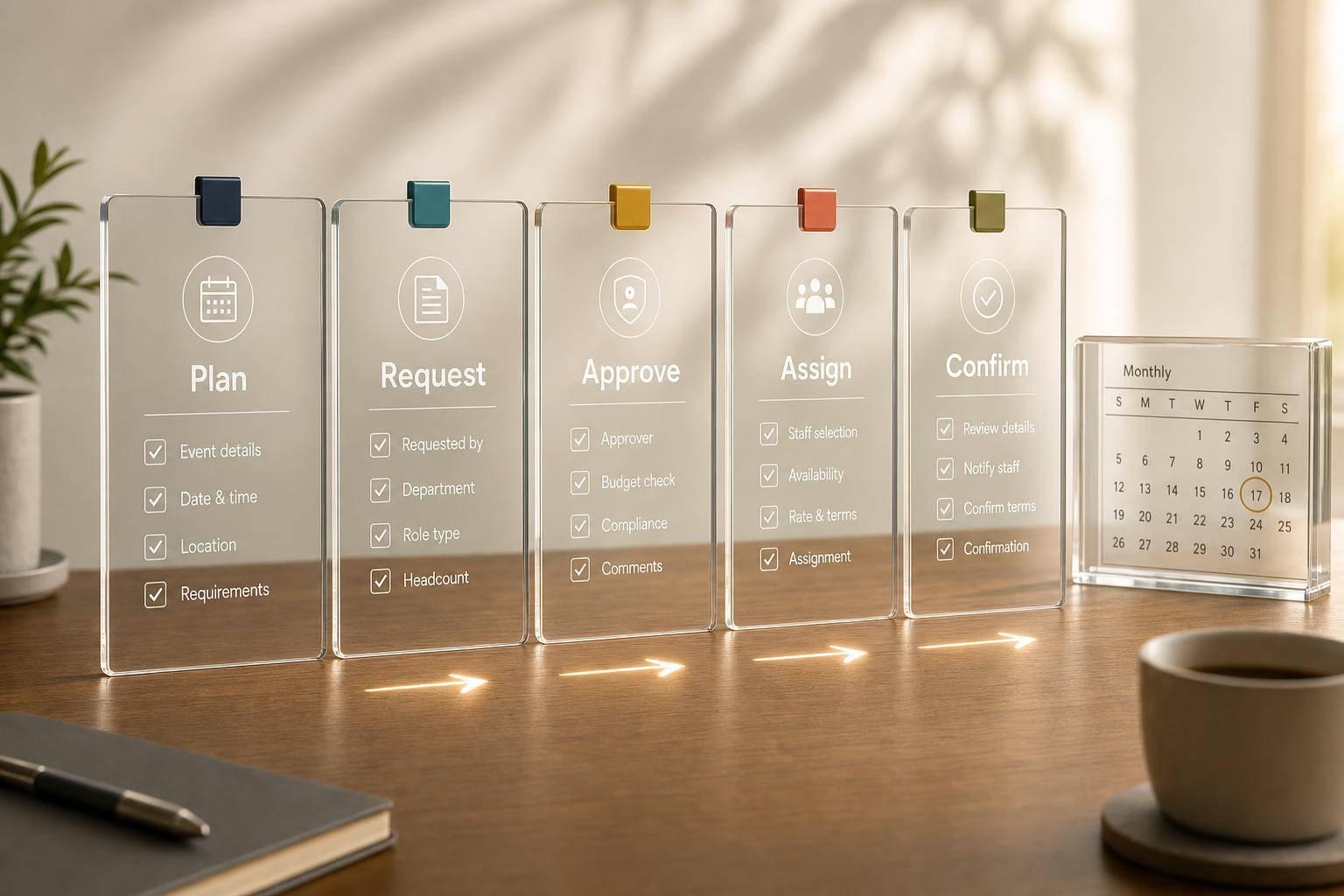
Managing these variables can get tricky, which is where technology steps in. Automated tools streamline the process of calculating staffing needs. Quickstaff (https://quickstaffpro.com) is one such platform, designed to simplify event planning by offering tools for event creation, role-specific scheduling, and real-time availability tracking. This software is particularly helpful for handling last-minute changes, such as unexpected guest count increases or staff call-outs, ensuring you can plan with precision.
With its mobile-friendly interface, Quickstaff allows you to adjust ratios on the go, check staff availability for specific roles, and manage waitlists when preferred team members aren’t available. Features like centralized event management and unlimited messaging make it easy to communicate updates to your team instantly. The event duplication tool is especially handy - once you’ve nailed the staffing plan for a 150-guest plated dinner at a multilevel venue, you can reuse those ratios for similar events, tweaking them as needed for factors like menu complexity or event length.
Getting the staffing ratios right is essential to protecting both your event's reputation and its profitability. In fact, proper staffing can boost guest satisfaction scores by as much as 25%. Whether you're planning a plated dinner with a 1:10 ratio, a buffet at 1:20, or a cocktail bar at 1:35, these guidelines provide a solid foundation. Of course, adjustments should be made based on factors like the venue's layout, the complexity of the menu, the event's duration, and the type of guests attending.
The line between a flawlessly executed event and a chaotic one can often hinge on just one staff member. Too few staff? Guests get frustrated, your team becomes overwhelmed, food quality suffers, and your reputation takes a hit. Too many staff? You're burning through your budget unnecessarily.
Thankfully, technology has made staffing calculations much easier. Tools like Quickstaff allow event planners to fine-tune staffing needs based on specific variables. These platforms can handle last-minute guest count changes, track real-time staff availability, and even replicate successful staffing plans for similar events. And with mobile-friendly features, you can quickly adapt if a server calls out or the client adds more guests at the eleventh hour.
Venue layout significantly influences staffing needs by shaping how staff navigate the space, how guests move around, and how service stations are positioned. For instance, a sprawling venue with multiple areas - like a ballroom with separate bar zones or breakout rooms - demands more staff to ensure everything runs smoothly. In contrast, a smaller, single-room setup allows fewer staff members to manage the event effectively.
Several factors come into play here: the square footage per guest, the number of service stations, and room segmentation. A larger venue offering more than 10 square feet per guest often requires additional servers or runners to keep service prompt. Likewise, having multiple bars or buffet stations means assigning dedicated staff to avoid service bottlenecks. For events spread across multiple rooms, it's essential to station personnel in each area to prevent delays and ensure guests are attended to.
Leveraging a scheduling tool like Quickstaff can make all the difference. It helps you adjust staffing plans as layouts evolve, ensuring the right team members are assigned to the right spots for a smooth and efficient event.
For events that run longer than six hours, while the article doesn't offer detailed recommendations, it's smart to think about key elements like staff fatigue, meal breaks, and shift rotations. These factors are crucial for keeping service levels consistent throughout the event. Taking the time to plan for these adjustments in advance can make a big difference in ensuring everything runs smoothly for both your team and your guests.
Managing last-minute staffing changes can be a headache, but Quickstaff makes it simple. With its real-time availability tracker, you can see at a glance which team members are free, making it easy to reassign shifts in just a few clicks. Need backup staff? The platform’s waitlist feature ensures that when a vacancy pops up, backup team members are notified instantly - cutting down on delays and eliminating the need for frantic calls or emails.
Quickstaff also keeps everyone in the loop with automatic in-app notifications and reminders. Any schedule updates are communicated immediately, reducing the chances of miscommunication and ensuring your team stays aligned. The centralized event dashboard is another game-changer, letting you adjust staffing ratios on the spot while monitoring labor coverage and budget. Even with unexpected changes, Quickstaff helps keep your event running smoothly.