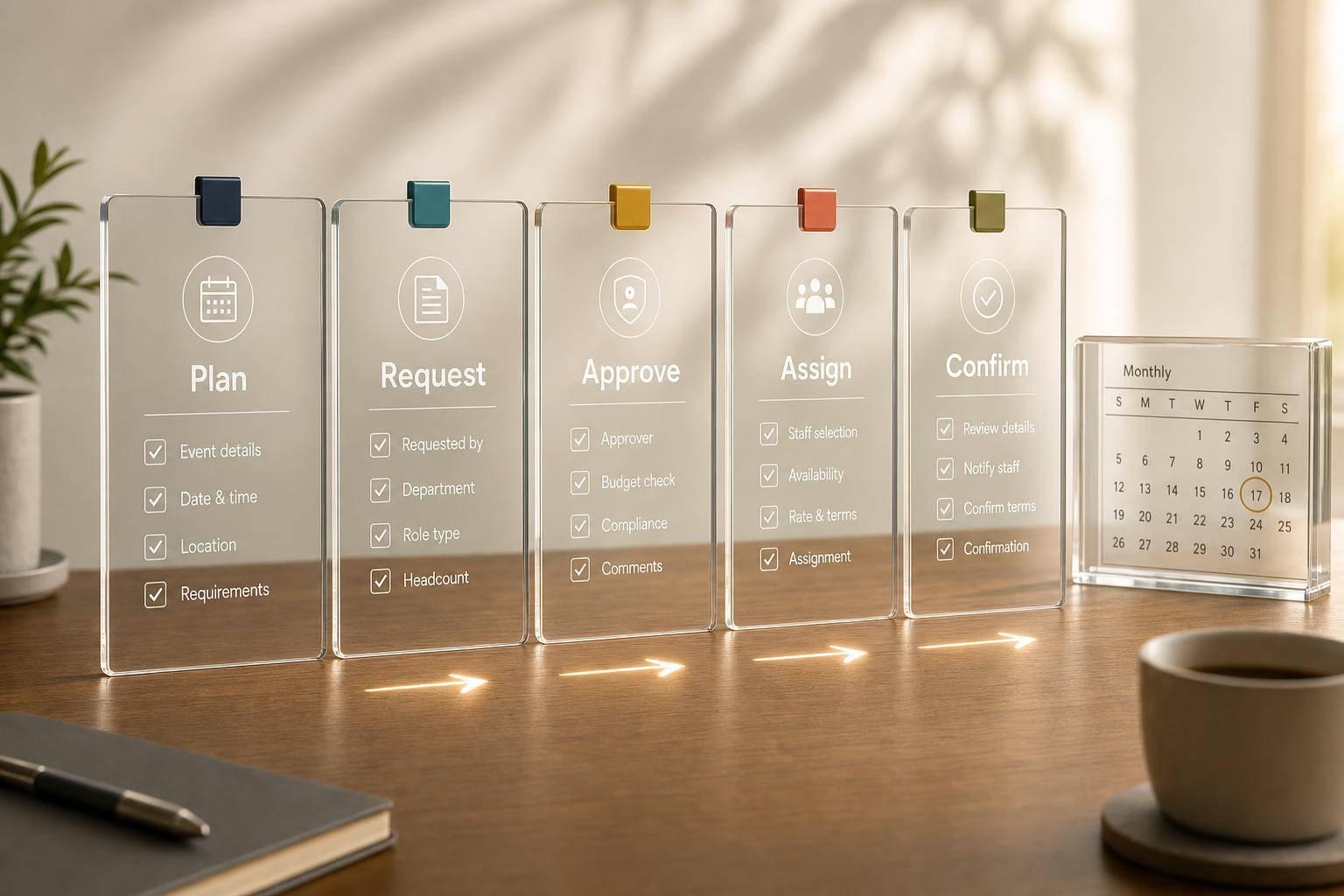
How Event Managers Support Staff Mental Health
August 7, 2026

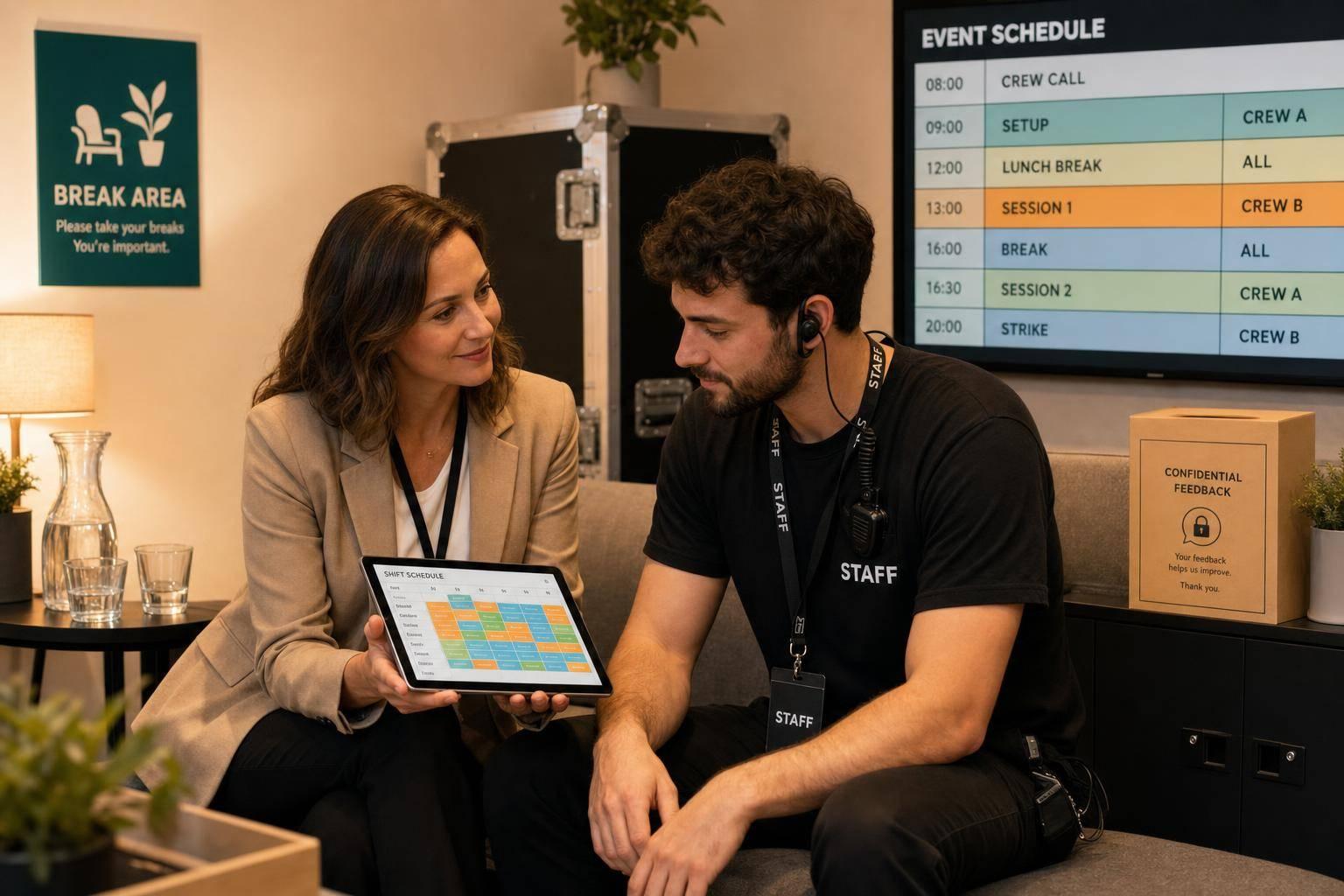
Event staff burn out fast when schedules change late, breaks disappear, and no one knows who to talk to. If I want to support staff mental health at events, I need to fix the basics first: send schedules 2–3 weeks ahead, rotate tough shifts, do short private check-ins, protect breaks, set one main contact plus one backup, and review strain after each event.
Here’s the short version:
What I’d focus on:
This is not about adding HR systems or spending more money. It’s about running events in a way that puts less strain on the people doing the work.
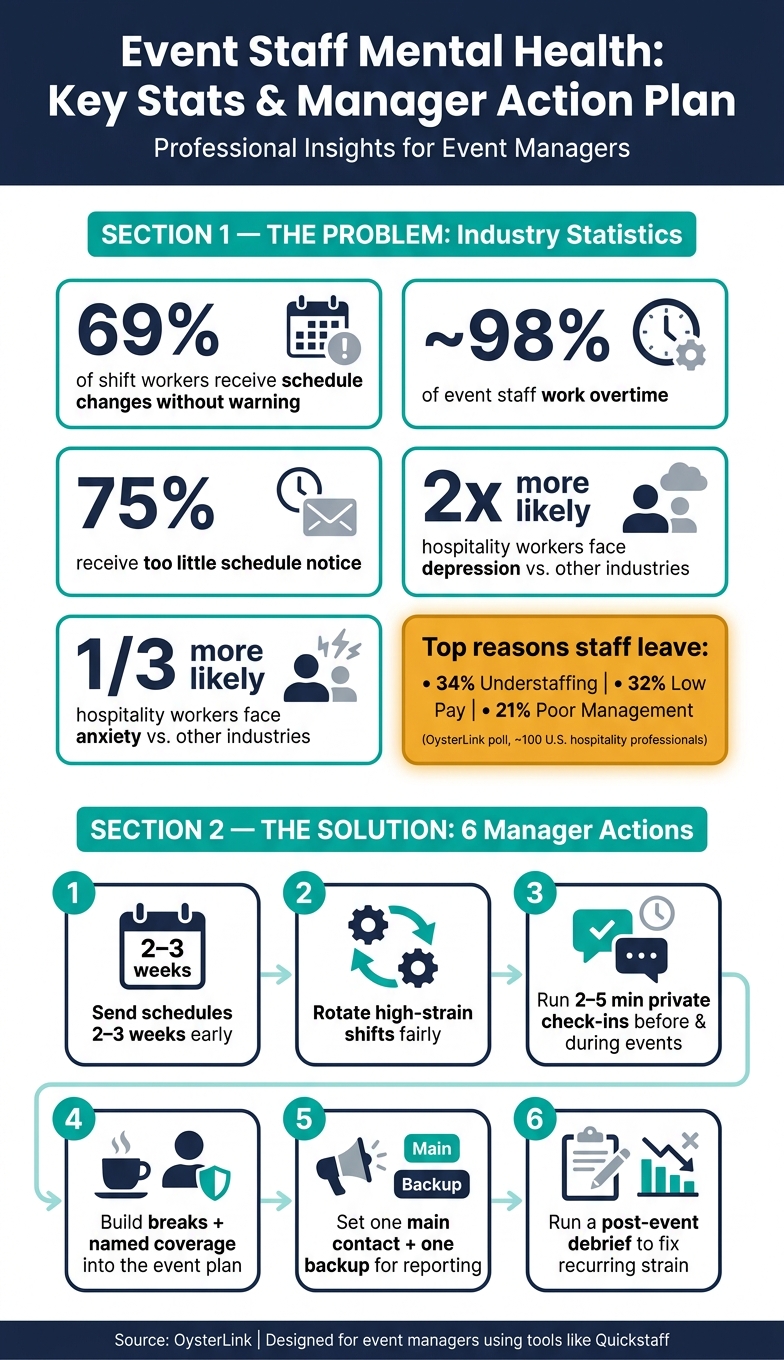
Event Staff Mental Health: Key Stats & Manager Action Plan
Clear schedules and even shift flow can take a lot of pressure off staff. When people know what’s coming, stress drops. The three pain points mentioned earlier - unpredictability, overload, and unclear assignments - can all be eased through better scheduling. The fastest way to help is simple: make schedules predictable and fair.
Publish schedules at least 2 weeks before the event. 2–3 weeks is better. That gives staff time to set up childcare, line up second jobs, or just plan their week without a scramble.
Each schedule entry should spell out the basics clearly:
Use a clear U.S. format like Saturday, September 12, 2026, 3:00 PM–11:00 PM. No one should have to decode a shift notice. Quickstaff can keep event details, assignments, and reminders in one place, so staff aren’t left filling in the blanks.
Last-minute changes should be rare, not routine. If a change has to happen, explain the reason and get the employee’s confirmation.
Timing is only part of it. Fairness matters just as much. Late-night teardown, summer heat, peak bar service, and early load-in are the shifts people feel the most. If the same two or three staff members keep getting those jobs, resentment starts to build, and burnout usually follows.
A rotation plan helps. Track high-strain tasks across events, and pair experienced staff with newer team members so the heaviest work doesn’t keep landing on the same shoulders. Also, swap 16-hour days for two 8-hour shifts, and leave 10–12 hours between shifts during multi-day events.
It also helps to track a few simple fairness markers:
Those numbers can flag imbalances early, before they turn into morale problems.
Once the schedule is locked in, managers still have to watch for stress as it happens. Event staff scheduling helps, sure. But live events have a way of going sideways. People get tired, the pace changes, and some staff members hit a wall without saying a word. Two simple habits can help spot trouble early: short check-ins and planned breaks.
These moments can prevent small issues from turning into mistakes, tension, or missed breaks.
A check-in doesn’t need to be formal. Two to five minutes, done in private, is often enough.
Before doors open, a manager can quietly ask a few direct questions:
The point isn’t to judge performance. It’s to catch confusion, fatigue, or concern before service starts.
During the event, do the same thing at natural pauses, like after a course is cleared, during a band break, or when guest traffic slows. Keep it calm and out of sight of guests. Neutral language usually works better than pointing out that someone looks tired. And if a staff member says they’re fine, but they’ve been standing for hours with no break, that tells you a lot.
For managers who also work a station, Quickstaff's mobile-friendly messaging can help send discreet check-in notes when stepping away in person isn’t an option.
Staff skip breaks when no one plans coverage. The fix is simple: treat breaks like scheduled tasks, not favors.
When building the run-of-show, map the event timeline and look for lower-intensity windows at each station. Then assign every person:
Short breaks give staff time to reset and cut down on fatigue.
Put break windows in the same schedule as call times and roles. During the pre-event huddle, make it clear that breaks are automatic once coverage is ready. When breaks are visible on the schedule, staff know they’ll have time to eat and reset. If the timeline shifts, move the break instead of canceling it. That protects trust and helps the team stay steady.
When staff still feel stuck, they need one clear way to raise concerns.
Once check-ins and breaks are set up, staff still need a simple way to speak up when a problem doesn’t go away on its own.
A lot of people stay quiet when speaking up feels risky or useless. That’s where simple reporting paths help. They give managers a chance to spot stress, conflict, and overload before those issues slide into burnout. And when staff feel safe speaking up, they’re more likely to stay.
For a small event team, keep the setup simple: one main contact and one backup contact. In most cases, that backup should be the owner or a senior lead. This matters most for serious issues like harassment, discrimination, or any problem that involves the main contact.
Share this setup in onboarding materials and again during pre-event briefings. Put both names and contact details on call sheets or event briefs so staff don’t have to dig around for them later.
Be clear about confidentiality. Tell staff who will see the report, when a safety issue means it has to be escalated, and that reporting won’t affect shifts or future bookings. Then stick to that. People pay close attention to how managers handle feedback in real situations.
It also helps to encourage early reporting. If stress or conflict starts affecting focus, mood, guest service, or safety, staff should say something then, not after things get worse. When someone does raise a concern, ask for the basics:
If one contact isn’t enough, give staff a few clear ways to report concerns. A mix of live and written options works well because not everyone is comfortable speaking up the same way.
| Reporting Option | Best Use Case | Privacy Level | Responsiveness Potential |
|---|---|---|---|
| Private manager report | Workload strain, scheduling concerns, conflicts hard to raise in person, issues staff want documented | High | High to moderate, depending on manager availability |
| Private text or email to manager | Scheduling strain, conflicts hard to raise in person, issues staff want documented | High | High to moderate, depending on manager availability |
| Direct escalation to owner or senior lead | Harassment, discrimination, unresolved or manager-related issues | High | Moderate - slower, but signals seriousness and allows independent review |
Quickstaff can store event-specific contact instructions so staff know exactly who to reach. That cuts down confusion in the moment. Event-linked messages also make follow-up faster and clearer.
Log concerns after each event so it’s easy to spot patterns the next time around.
Check-ins and reporting help you catch problems while the event is still happening. The follow-up afterward helps keep the same pressure from showing up again next time.
After the event, go back through the notes and reports you gathered in real time. A short debrief with team leads - about 15 to 20 minutes - plus a 3 to 5 question survey is usually enough to spot the main patterns.
Cover the same areas each time:
Add one stress-rating question to every survey. For example, ask staff to rate the event from 1 to 10 and explain what would have lowered that score by two points. If the topic may feel sensitive, give people a private or anonymous way to answer.
Once the feedback comes in, write down two or three strain points and one or two things worth repeating next time. If one station keeps getting overloaded, shift staffing or add support for similar events. If breaks were skipped again, that's a scheduling problem - not a one-time issue.
Then carry those lessons into the next schedule. If you use Quickstaff, attach notes to the event or role so the same strain points show up when you build the next one.
The steps in this article don't require a large team or a big budget. Clear schedules sent early, fair shift rotation, short check-ins, protected breaks, simple reporting paths, and a brief post-event review may sound small on their own. Put together, they help build a workplace where staff feel seen, backed up, and less likely to burn out.
An OysterLink poll of roughly 100 U.S. hospitality professionals found that understaffing is the top reason workers leave hospitality jobs (34%), followed by low pay (32%) and poor management (21%). Most of those issues sit within a manager's control. When staff trust that workload is fair, concerns are heard, and feedback leads to change, they're more likely to stay - and more likely to show up for the next event.
The process is simple: plan well, support your team in real time, then learn and adjust. Repeat that loop, and each event gets steadier than the last.
When schedules change at the last minute, the top priority is clear, centralized communication. Without it, things can get messy fast. Digital tools can send instant updates about shift swaps, reassignments, or time changes, so everyone gets the same information at the same time instead of chasing scattered texts.
For unexpected absences, automated waitlists and backup lists help fill open shifts fast. It also helps to set simple communication rules, like managing all shift changes in one scheduling platform. That keeps updates transparent, fair, and organized.
Plan ahead by building in a buffer. That might mean adding one more team member than you think you need or leaving transition time between event phases so the crew isn’t scrambling from one task to the next. It also helps to cross-train staff, so one person can step in when someone else needs a break.
During service, keep a close eye on workload and energy levels. If one station starts getting slammed, shift tasks before things spiral. Clear written shift coverage protocols also make a big difference. They help teams protect breaks even when plans change mid-service.
Create psychological safety by making it clear that people can speak up without getting shut down or blamed. That starts with open communication, respectful listening, and a steady focus on fixing the issue instead of pointing fingers. Timing matters, too. If a concern comes up, talk about it in private and during slower periods, not in the middle of busy event hours.
To draw out honest feedback, use a few simple touchpoints:
A steady communication channel like Quickstaff can help as well. It gives staff a simple, predictable place to report concerns, which can make speaking up feel a lot easier.