How to Use Feedback to Boost Morale
June 7, 2026

Want to improve team morale and retention in event management? Feedback is your strongest tool. Here's why:
To make feedback impactful:
Feedback isn’t just about improvement - it strengthens trust and teamwork. Use tools like Quickstaff to streamline communication and track progress, ensuring feedback becomes a consistent part of your process.
Start small, stay consistent, and watch your team thrive.
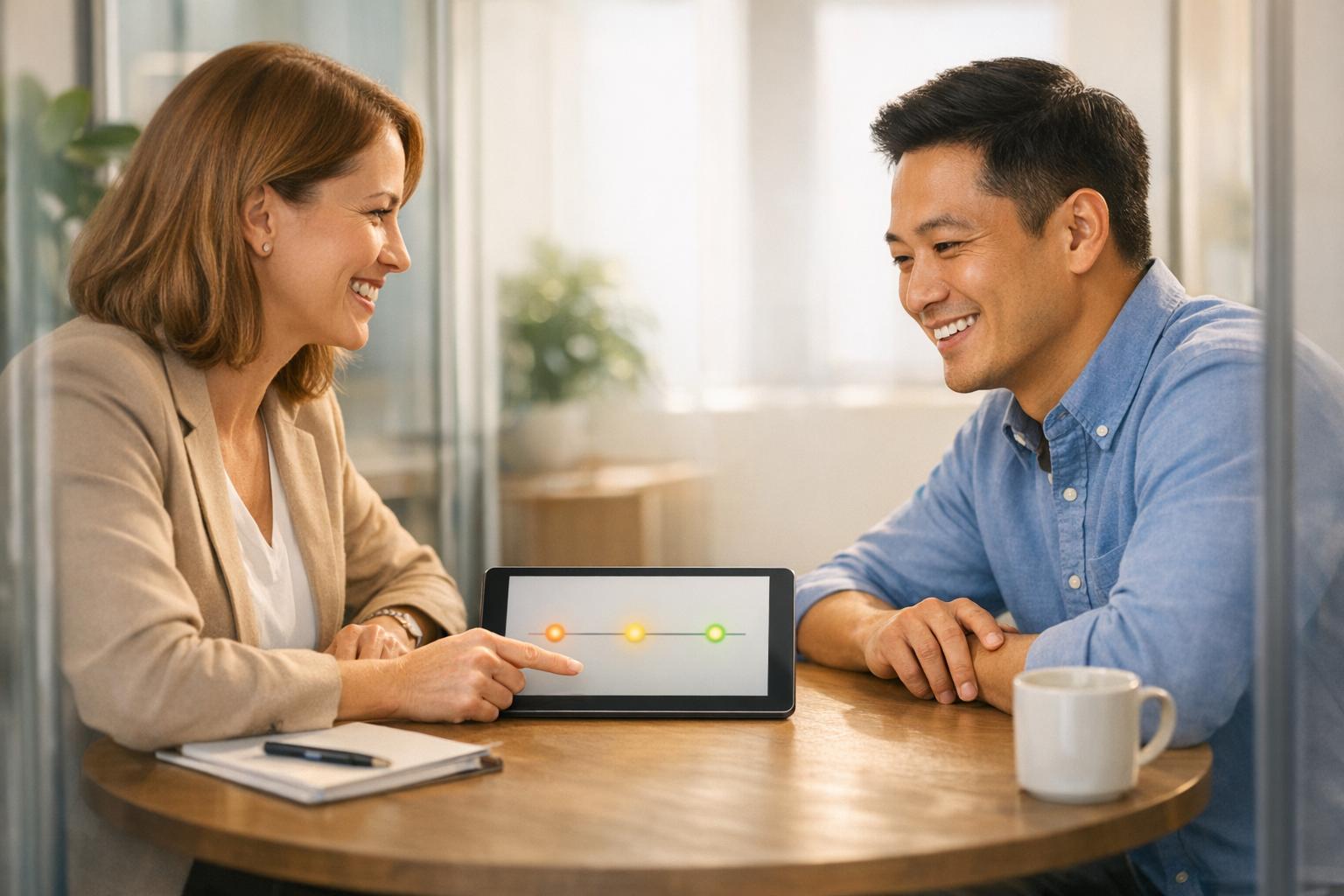
Feedback sends a message. Every comment tells your team: "I notice you. I appreciate you. I care about your growth." The way you deliver feedback shapes how your team feels about their work and their place in it.
Event teams often work under intense conditions with limited time for lengthy performance reviews. That’s why feedback is especially important in this environment. Done right, it fosters psychological safety - a feeling that it’s okay to ask questions, admit mistakes, or raise concerns without fear of judgment.
"Genuine learning requires psychological safety. If debriefs feel like evaluations with consequences, staff become defensive and hide problems." - Megan Hayward, CEO, TempGuru
Frequent, meaningful feedback can make employees 5x more engaged and connected to their roles. But when feedback is harsh, unclear, or overly personal, it can lead to disengagement. Staff may withdraw, avoid communication, or even decline shifts altogether, missing out on the benefits of using event staff scheduling software. In an industry that thrives on collaboration and efficiency, this kind of quiet detachment can pose serious challenges.
Recognizing these dynamics is the first step toward understanding the types of feedback that truly boost morale.
Three kinds of feedback can uplift event teams while enhancing performance:
Positive reinforcement is an instant morale booster. Highlighting specific actions - like saying, "You handled that last-minute table change flawlessly" - not only acknowledges effort but reinforces good behavior. This kind of recognition builds confidence and shows staff their contributions are noticed.
Developmental feedback focuses on improving actions rather than critiquing character. The distinction is crucial: "The guest check-ins slowed down during the first hour" is constructive and actionable, while "You're disorganized" feels personal and unhelpful. As PeopleWorX explains:
"Constructive feedback should not feel like criticism for the sake of criticism. It should help an employee understand what happened, why it matters, what needs to change, and how they can move forward."
Upward feedback - where staff share insights with managers - is equally impactful. When team members know their input influences future events, it fosters a sense of ownership. Even a simple response like, "We heard your concerns about briefing timing, and here’s what we’re adjusting", can build trust and loyalty. Research also shows that focusing on strengths through feedback can increase team productivity by 12.5%, which is a significant boost in a fast-paced environment where every shift matters.
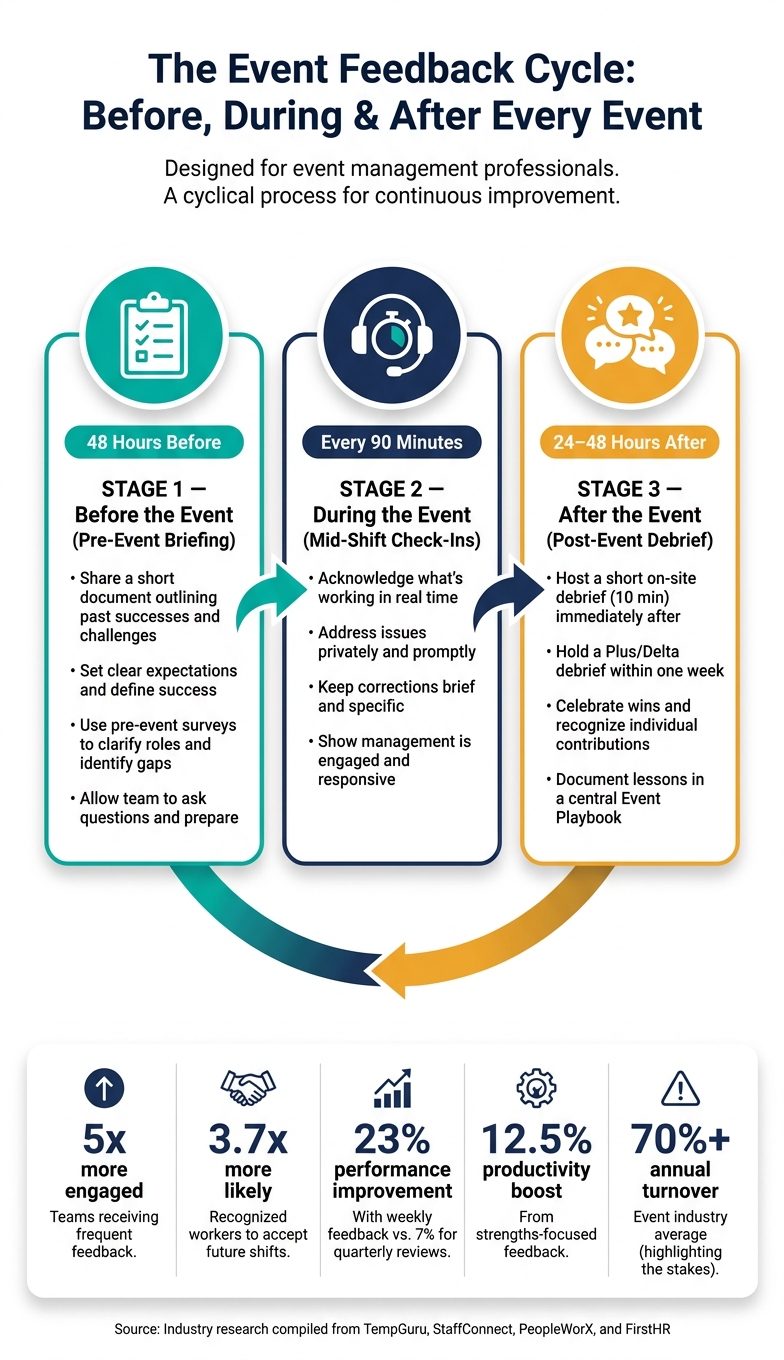
The Event Feedback Cycle: Before, During & After Every Event
Creating a feedback-friendly culture isn’t about adding more meetings or paperwork. It’s about building simple, consistent habits that encourage open conversations before, during, and after every event.
In event management, the best feedback is short and frequent - not formal and sporadic. You can incorporate feedback seamlessly into your workflow by focusing on three key moments:
| Stage | Timing | What to Do |
|---|---|---|
| Pre-Event Briefing | Before the shift | Set clear expectations, explain the event's goals, and define success. |
| Mid-Shift Check-In | During the event | Acknowledge what’s working and address any issues privately and promptly. |
| Post-Event Debrief | 24–48 hours later | Reflect on successes, pinpoint challenges, and recognize individual efforts. |
A post-event debrief should happen within 24–48 hours. This timing allows the stress of the event to ease while details are still fresh enough to act on effectively. By establishing these regular feedback moments, you create an environment where honest communication feels natural.
If team members fear negative consequences, they’re less likely to speak up. Building a sense of psychological safety is crucial. Use debriefs as opportunities to learn and improve, starting with a focus on what went well before addressing challenges.
Ask open-ended questions like, “What was harder than you expected?” or “What could have made your job easier?”. During events, handle corrections privately rather than in front of others to maintain trust. When teams see their feedback leading to real changes, they’re more likely to keep sharing. As StaffConnect warns, if feedback doesn’t result in action, “they’ll stop sharing it”.
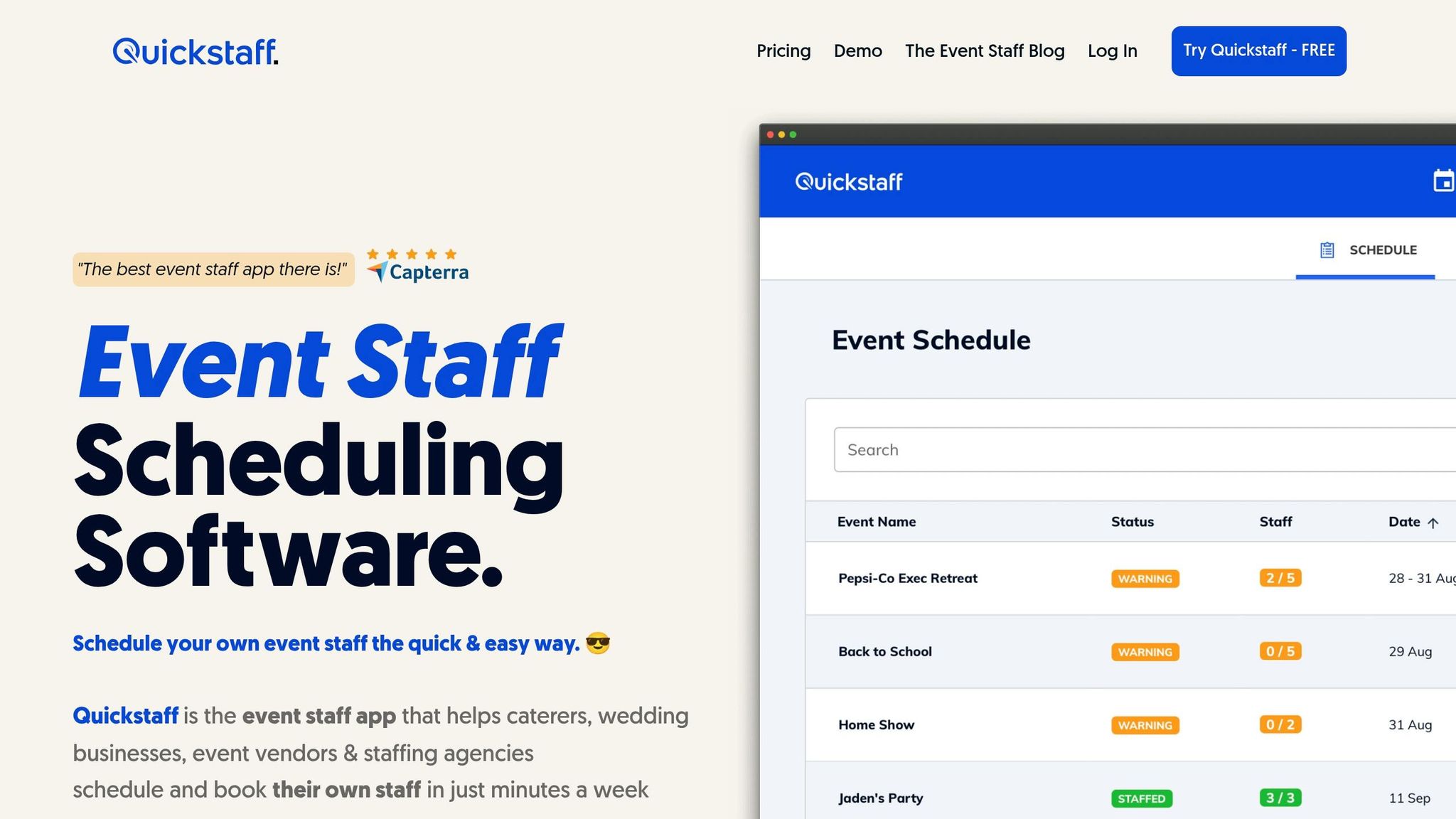
A solid feedback culture thrives on structure, and tools like Quickstaff can help manage that. Quickstaff provides centralized, mobile-friendly communication tools that allow managers to send reminders, share updates, and ensure feedback isn’t overlooked.
Its event management features also let teams document performance insights and track contributions. This transforms individual feedback moments into valuable data, helping you identify patterns, address training gaps, and make smarter staffing decisions. Over time, Quickstaff creates a seamless feedback loop, turning team input into meaningful operational improvements.
Constructive feedback, when done right, can build morale and drive improvement. It’s all about delivering actionable insights in a way that motivates rather than discourages. The key lies in structuring your feedback, maintaining balance, and choosing the right moment to share it.
Saying something like "communicate better" doesn't offer much help. To make feedback effective, it needs to be clear and specific. That’s where the SBI Framework - Situation, Behavior, Impact - comes in. It focuses on observable actions instead of personal judgments.
Here’s how it works:
To make the feedback actionable, follow up with a suggestion like, "During peak hours, keep interactions brief to maintain flow." Adding a clear next step transforms feedback from criticism into coaching, giving the recipient a roadmap for improvement.
It’s tempting to soften criticism by wrapping it in compliments, but this can backfire. If employees start associating praise with hidden critiques, trust erodes. Instead, keep positive feedback and areas for improvement distinct.
Aim to deliver three to five genuine compliments for every piece of constructive feedback. This balance helps reinforce confidence while fostering growth. For example, when discussing areas for improvement, you could start by asking, "How do you think that went?" This question encourages reflection and keeps the conversation collaborative. By separating praise from critique, you show that both are sincere and meaningful.
Timing can make or break the impact of feedback. Quick, private corrections using tools for last-minute catering staff scheduling during an event can prevent mistakes from escalating, while more in-depth discussions are better suited for a debrief 24–48 hours later, once the pressure has eased.
Equally important is the channel you choose. Public shoutouts - like recognizing a team member during a wrap-up meeting - can elevate morale and reinforce positive behavior. On the flip side, constructive feedback should always be given privately to protect the individual’s dignity. For remote or hybrid teams, video calls are preferable to text-based messages, as tone and intent are less likely to be misunderstood.
"The biggest mistakes are vagueness, delay, and treating feedback as the manager's emotional release rather than the recipient's growth tool." - FirstHR
Before diving into feedback, try asking, "Do you have a few minutes to talk through something I noticed?" This small gesture gives the recipient a sense of control and makes them more open to hearing your perspective.
We've already touched on how regular feedback can boost team morale. But to truly make feedback impactful, it should be woven into every stage of the event process. This way, feedback becomes a natural and ongoing part of your operations, rather than just an afterthought.
Think of the event process in three phases: before, during, and after the event.
By embedding these feedback moments into the event lifecycle, you create a rhythm that leads to smoother operations and stronger team collaboration.
Start with a quick on-site debrief, but don’t stop there. Within a week, hold a more detailed Plus/Delta debrief. This approach focuses on two key areas: what went well (Plus) and what needs to change (Delta).
Kick off the conversation by celebrating specific wins and recognizing individual contributions. This sets a positive tone and helps foster psychological safety, encouraging team members to share openly.
"Staff who feel heard and valued in post-event conversations are more likely to work your events again." - Megan Hayward, Founder & CEO, TempGuru
Make sure to gather input from everyone involved: front-of-house staff, logistics teams, tech crews, and vendors. This holistic approach ensures no critical insights are overlooked.
The insights gathered from debriefs are just the beginning. Post-event surveys and follow-up check-ins can help refine processes even further. Ask open-ended questions like, "What made your job harder tonight?" to uncover operational challenges.
Assign clear responsibilities and deadlines for follow-up actions. When the team sees their feedback leading to real improvements, trust grows.
"I like starting my debrief template or deck at the beginning of the planning process. Then, as the planning process goes on, I'm dropping notes in, and not waiting until the very end to remember everything." - Joey Rodriguez, Manager of Event Planning Services, Meeting Tomorrow
Finally, document all feedback and agreed-upon changes in a central Event Playbook. This ensures lessons learned aren’t forgotten and can guide future events. By acting on feedback now, you’re setting the stage for ongoing success.
Sustaining a feedback culture is essential for keeping teams engaged and improving event results. But let’s face it - building that culture is only half the battle. The real challenge lies in maintaining it across multiple events, changing staff, and evolving team dynamics. So, how do you ensure feedback remains a priority? Here’s a breakdown.
Feedback isn’t just about collecting opinions - it’s about spotting patterns. Group recurring comments into themes like scheduling, communication, leadership, or equipment issues. Then, compare these insights with data on staff turnover or shift changes. This approach helps you identify potential challenges before they escalate into deeper problems.
Numbers back this up. Industry data shows that tracking feedback actions can directly improve engagement scores. It’s a simple way to figure out what’s working and where your efforts might be falling short.
"If staff feel like their feedback goes nowhere, they'll stop sharing it. This step is about closing the loop." - StaffConnect
To make this process actionable, keep a log. Note the date, topic, observed behaviors, and agreed changes. This record becomes a valuable tool for making informed staffing decisions. You can also use an event staffing needs analyzer to ensure your team size aligns with event requirements.
Team leads play a crucial role as the link between management and frontline staff. By training them to coach effectively, you can expand your feedback culture without needing to oversee every interaction yourself.
The secret? Focus on specific, observable behaviors rather than vague suggestions. For example, instead of saying, “Be more attentive,” a trained lead could say: “When the guest approached, there was a 10-second delay before acknowledgment. Next time, aim for a two-second response.” This method, called the "See, Say, Next" approach, breaks feedback into three actionable steps: describe what happened, define the ideal behavior, and outline what to do moving forward.
"What changes behaviour is not the label - it's a shared definition of what good looks like in one specific moment." - Ocasta
One golden rule? Stick to one behavior per conversation. Keeping it simple ensures the feedback is clear and actionable without overwhelming the recipient. Pairing structured coaching with automated tools can further integrate feedback into daily routines.
Embedding feedback into your event planning processes makes it easier to maintain over the long haul. Tools like Quickstaff streamline this by allowing you to incorporate feedback directly into event scheduling and planning.
For example, use event notes to capture specific performance observations - like “excellent, invite back” or “needs coaching on guest interaction.” These notes ensure that valuable insights don’t get lost and can be carried forward to future events. When duplicating past events, you can transfer these notes and make staffing adjustments based on prior lessons.
"When you treat feedback as operational data, staffing improves across planning, training, and execution." - Mohau Vuma, Encore Nationwide
Quickstaff’s unlimited messaging feature also simplifies scheduling post-event debriefs within 24–48 hours. This timing is key - details are still fresh, but the immediate stress of the event has passed. Over time, these small but consistent practices build a feedback culture that supports team growth and reduces turnover.
In event teams, feedback isn't just a one-time effort - it’s a regular practice that drives success. The best-performing teams are those where managers set clear expectations before events, provide real-time coaching during them, and follow up with timely debriefs afterward. These actions create a long-lasting positive impact.
The stats back this up: weekly feedback sessions lead to a 23% average improvement in performance, compared to only 7% for quarterly reviews. Recognition also plays a big role, increasing shift acceptance rates by 3.7 times. This is especially critical in an industry with an annual turnover rate exceeding 70%.
These numbers highlight why consistent feedback is so important.
"Morale is not protected by avoiding hard conversations. It is protected by handling those conversations fairly." - PeopleWorX
To make feedback effective, use the SBI framework, conduct debriefs within 24–48 hours, train team leads to provide immediate coaching, and document lessons to refine future events. Tools like Quickstaff help integrate feedback into your workflow by simplifying event notes, messaging, and scheduling.
Start small, stay consistent, and watch the results grow over time.
Creating a safe space for feedback starts with fostering an environment where mistakes are viewed as opportunities to learn and grow. Instead of shutting down conversations, use open-ended questions to encourage a two-way dialogue. Focus on addressing specific behaviors rather than making it about personality traits, which can feel personal and unproductive.
Frameworks like the Situation-Behavior-Impact (SBI) model can be incredibly helpful here. They guide you in keeping feedback factual and free of judgment by framing it around what happened (situation), the observed behavior, and its impact. This approach ensures clarity and keeps the conversation constructive.
While honesty is essential, it should always be paired with empathy. Feedback should also be timely - delivering it too late can dilute its relevance. Make sure your points are clear and provide actionable steps for improvement. Tools like Quickstaff can be useful for streamlining communication and ensuring everyone on your team remains aligned and informed.
Staff members might interpret feedback as a personal critique if it seems to target their character instead of their actions. To prevent this, concentrate on specific behaviors and their effects by applying the SBI framework (Situation, Behavior, Impact). Always ensure the discussion happens in private, and make it a two-way conversation by inviting their input. This approach emphasizes that your intention is to support their development, not to criticize.
Quickstaff offers built-in communication tools that let you send surveys straight to your team, helping you gather useful feedback effortlessly. It also serves as a hub for organizing event details, staff assignments, and performance notes. This streamlined setup makes it simple to monitor progress and plan tailored follow-ups, such as coaching sessions or performance evaluations.