Checklist for Managing Staff Conflicts at Events
June 27, 2026

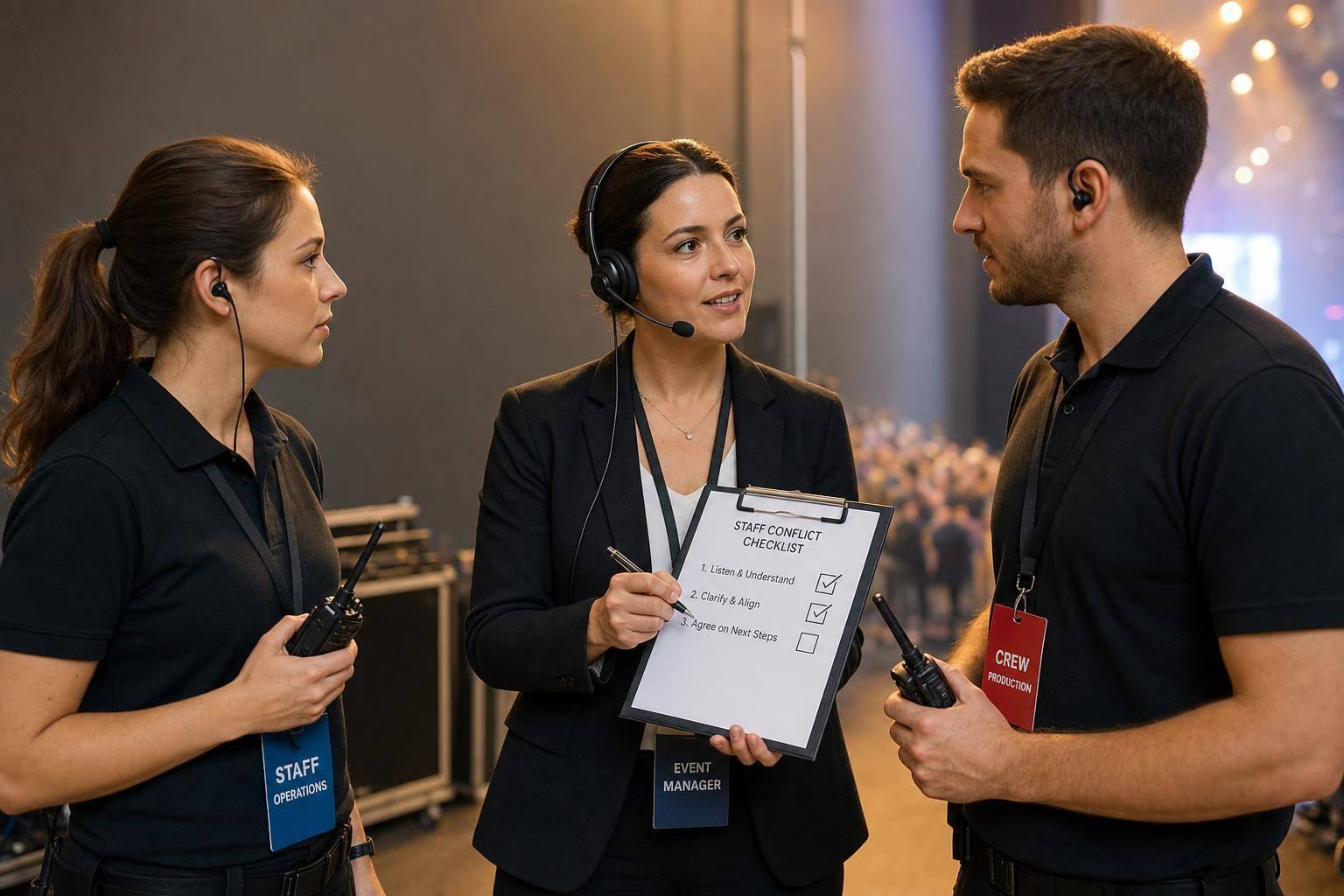
Staff conflict can hurt service in minutes. My main takeaway is simple: I prevent problems before call time, step in fast on-site, and document the issue within 24 hours so the same problem does not show up at the next event.
Here’s the whole article in plain terms:
A few facts stand out. The article points to three phases of conflict control, a 15-30-60 response window for urgent staffing trouble, and a 24-hour deadline for the incident record. That means this is not about long HR-style theory. It’s about keeping the floor calm, keeping guests out of the problem, and keeping the team working.
If I had to boil it down even more, I’d use this checklist:

Event Staff Conflict Management: 3-Phase Checklist
| Phase | What I focus on | What I do |
|---|---|---|
| Pre-event | Stop conflict before it starts | Set roles, reporting lines, behavior rules, and shift coverage |
| On-site | Catch issues early | Watch staff behavior, judge risk, protect guest areas, keep notes |
| Post-event | Fix the root cause | File the record, hold check-ins, review the cause, assign next steps |
The core idea: clear roles, early action, private resolution, and written follow-up.
Most event conflicts don't begin on the floor. They start earlier, before call time, when people aren't sure what they own, what others own, or how much work is sitting on their plate.
Every staff member should show up knowing exactly what they're there to do and who they report to. Overlapping duties and unclear authority are two of the most common triggers for on-site disputes.
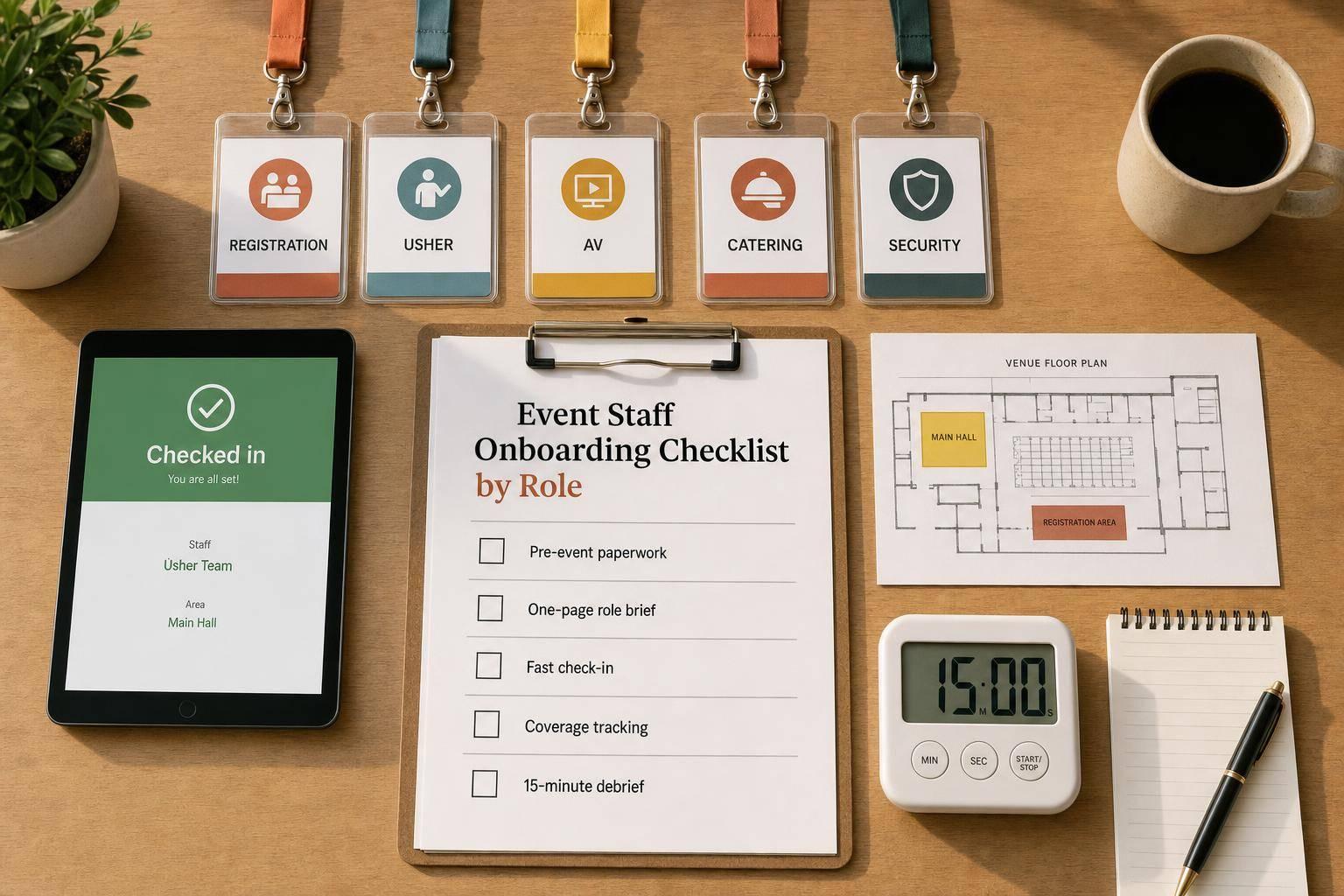
Before the event, confirm these details in writing:
When ownership is clear, it's much easier to set the rules that stop small disagreements from turning into bigger problems.
A short pre-shift briefing before staff hit the floor can get everyone on the same page. Use it to confirm which tools, like radios, a group messaging app, or a direct line to the lead, are meant for live updates and which should be saved for escalations.
Set a few plain rules for internal disagreements: no personal attacks, no interrupting, focus on solving the problem. This is also the right time to confirm dress code and punctuality standards, so nobody is left guessing once the event starts.
Assign one person to handle staffing issues and one person to handle logistics.
Brief leads on check-in surges, session transitions, and break rotations, since those are the moments when conflict is most likely to show up.
Uneven workloads and vague assignments can frustrate staff before service even starts. Never assign a role as "help out where needed."
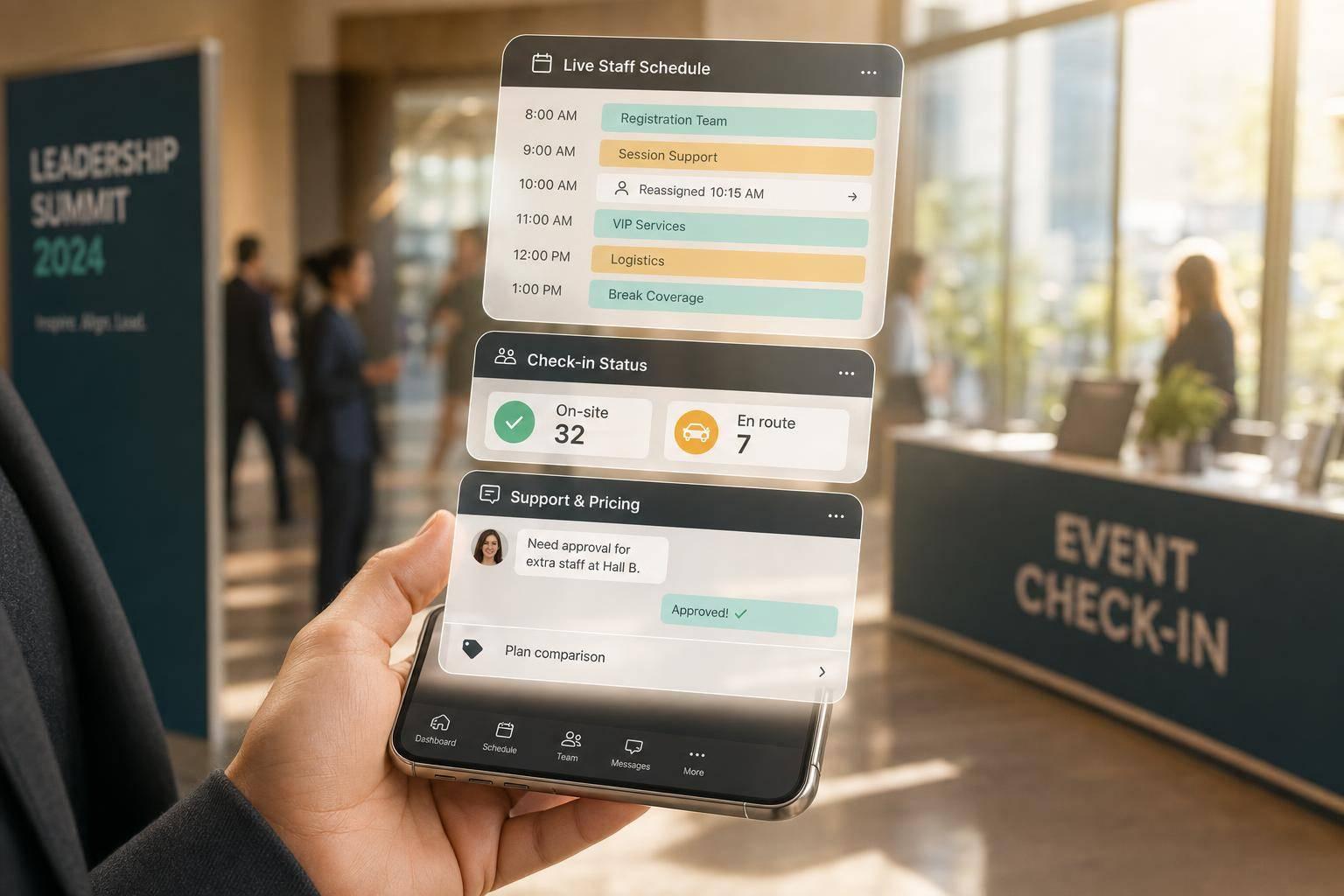
Build the schedule for peak demand, not the average flow, by using an event staffing needs analyzer. That's the difference between a calm shift and a scramble.
Document break rotations in writing so no zone is left uncovered. Have written staff reassignment triggers ready - for example, "If the registration line exceeds 20 people, move one usher to check-in" - so leads don't have to make it up on the spot under pressure.
Clear coverage helps prevent the workload disputes that usually surface mid-service.
Quickstaff centralizes event details, assignments, availability, and reminders so every staff member gets the same information before call time.
Once roles, communication rules, and staffing are set, move to the floor and watch for early warning signs.
Once the event starts, your job shifts. Planning matters less now than paying close attention to how the team is working in the moment.
Look at what’s happening on the floor and compare it with the roles and scalable reporting lines set before call time. If someone’s tone changes out of nowhere, two teammates stop speaking to each other, or passive-aggressive comments start creeping in, don’t brush it off. The same goes for weaker teamwork, raised voices on the radio, eye-rolling, silence after a direct request, visible frustration, or heated arguments near guest-facing areas. Those are all warning signs worth treating seriously.
You’ll often see conflict show up during check-in rushes, session changes, and points when the team is tired because break coverage is thin. That context matters. It helps you judge how serious the issue is and who needs to step in.
Once you notice a problem, sort it by guest impact and safety risk.
| Conflict Level | Signs | Action |
|---|---|---|
| Minor | Personality friction, brief silence, eye-rolling | Monitor and address later. |
| Urgent | Raised voices, service delays, guest-visible arguments | Separate parties and restore coverage. |
| Safety Risk | Harassment, threats, physical aggression, discrimination | Remove the person immediately and escalate. |
For urgent disputes, the 15-30-60 method gives you a simple action window: cut non-essential roles within 15 minutes, move floaters to bottlenecks within 30 minutes, and call in backup staff within 60 minutes if needed. Safety risks skip that process entirely. They go straight to escalation, with no mediation first.
Write down the incident as soon as the situation is stable, not at the end of the night when the details start to blur.
Your notes don’t need to be formal. They do need to be factual. Stick to what you directly saw, not secondhand accounts or guesses.
Record the basics:
If you’re still tied up managing the floor, ask a neutral third party to record it. Those facts should guide the response before the event ends.
Once coverage is stable, deal with the conflict fast and calmly, without pulling guests into it.
Take both staff members away from guests and into a private, neutral space. Never try to mediate over a shared radio channel. Handle it in person or on a one-on-one channel.
Before the conflict talk starts, set clear ground rules: one person speaks at a time, no personal attacks, and the focus stays on what happens next. If tempers are still high, pause for a moment and let things cool down before you begin.
Then get into the discussion while the issue is still fresh.
Keep this part short. Hear each person separately, bring them together for a brief joint discussion, agree on a temporary fix, and write down the agreement.
During the listening phase, ask open-ended questions like, "What specific behavior triggered this?" or "What do you need to finish the shift?" Stick to factual language. "We had a scheduling problems" gives you something you can solve. "You never do your job" just adds heat.
The goal is a temporary agreement that keeps service moving. That could mean shifting tasks for the rest of the shift or changing break times so the team can keep working.
Use the table below to match your response to the level of risk.
| Severity Level | Example Behaviors | Immediate Manager Action |
|---|---|---|
| Low | Passive-aggressive remarks, eye-rolling, minor role confusion | Quick private check-in; monitor from a distance |
| Medium | Raised voices, arguing over roles, refusing tasks, scheduling disputes | Move to neutral ground; use the brief discussion framework; reassign tasks or adjust breaks |
| Immediate escalation | Harassment, physical threats, discrimination, intoxication | Immediate removal from the floor; activate backup staff; escalate to senior management or HR |
For high-severity situations, skip mediation. Remove the person, activate backup coverage, and escalate at once.
After the event, shift from putting out the fire to writing down what happened and following up.
File the incident record within 24 hours. Include names, a short timeline, management actions, agreed next steps, and any guest, service, or safety impact. Be specific.
"Staff member A refused to cover Station 3 after being asked twice"
That kind of note helps. This does not:
"Staff member A has a bad attitude"
Also collect separate statements from each person so you have both sides on record. Then schedule private one-on-one check-ins within 24–48 hours. Keep the tone calm. This is a brief debrief, not a disciplinary meeting.
Ask:
Those two questions do a lot of work. They tell you whether the fix is sticking and whether each person understands what needs to happen next.
Use the incident record to track down the cause so the same issue doesn't pop up at the next event.
Look at the facts and sort out what was behind it: a personality clash, unclear roles, uneven workload, or a breakdown during a rush or break rotation. If you use Quickstaff for event staff scheduling, check event notes, role assignments, and reminders for communication gaps or workload imbalances. From there, you may need to tighten role descriptions, adjust break schedules, or update protocols and training before the next event. Give the fix one owner and a deadline.
Close the loop by turning the incident into a process fix.
Every conflict handled well makes the next event run better. The pattern is simple: prevent issues with clear roles and communication standards before call time, spot warning signs early on-site, step in privately and neutrally when something comes up, and document what happened before details fade. Consistent conflict management comes down to clear roles, early intervention, private resolution, and post-event follow-up.
An event team leader or an impartial third party - such as a department head, stage manager, or volunteer coordinator - should handle on-site staff conflicts.
They should address issues privately and in a constructive way, stay objective, and resolve disputes fast to protect team dynamics and the guest experience. For more complex situations, Quickstaff can help support clear roles and communication.
If conflict starts during a guest rush, don't deal with it in front of attendees. That can throw off the event and leave guests with a bad impression.
Stay professional and keep your attention on the job that needs to get done right then. When the rush slows down, or when there's a good opening, pull the people involved aside to a private, quiet spot and talk through the issue. Quickstaff can help clear up roles and improve communication, which can ease this kind of pressure in busy moments.
Include what happened, who was involved, and the exact resolution. Add the reason for any changes, the timestamps, and acknowledgment from the staff involved.
That level of detail shows whether this was a one-off issue or part of a larger pattern. It also makes recurring problems, process gaps, or staff training needs much easier to spot.