How Crisis Workshops Improve Event Team Problem-Solving
April 15, 2026

When emergencies strike during events, teams often have seconds to respond. Crisis workshops prepare event staff to handle high-pressure situations effectively by simulating realistic scenarios like medical crises, crowd surges, or severe weather. These workshops focus on:
Workshops range from discussion-based tabletop exercises to full-scale drills, each tailored to build confidence and refine skills. Tools like Quickstaff can simplify planning and role assignments, making these sessions more efficient. The result? Teams that are prepared, composed, and ready to manage risks effectively.
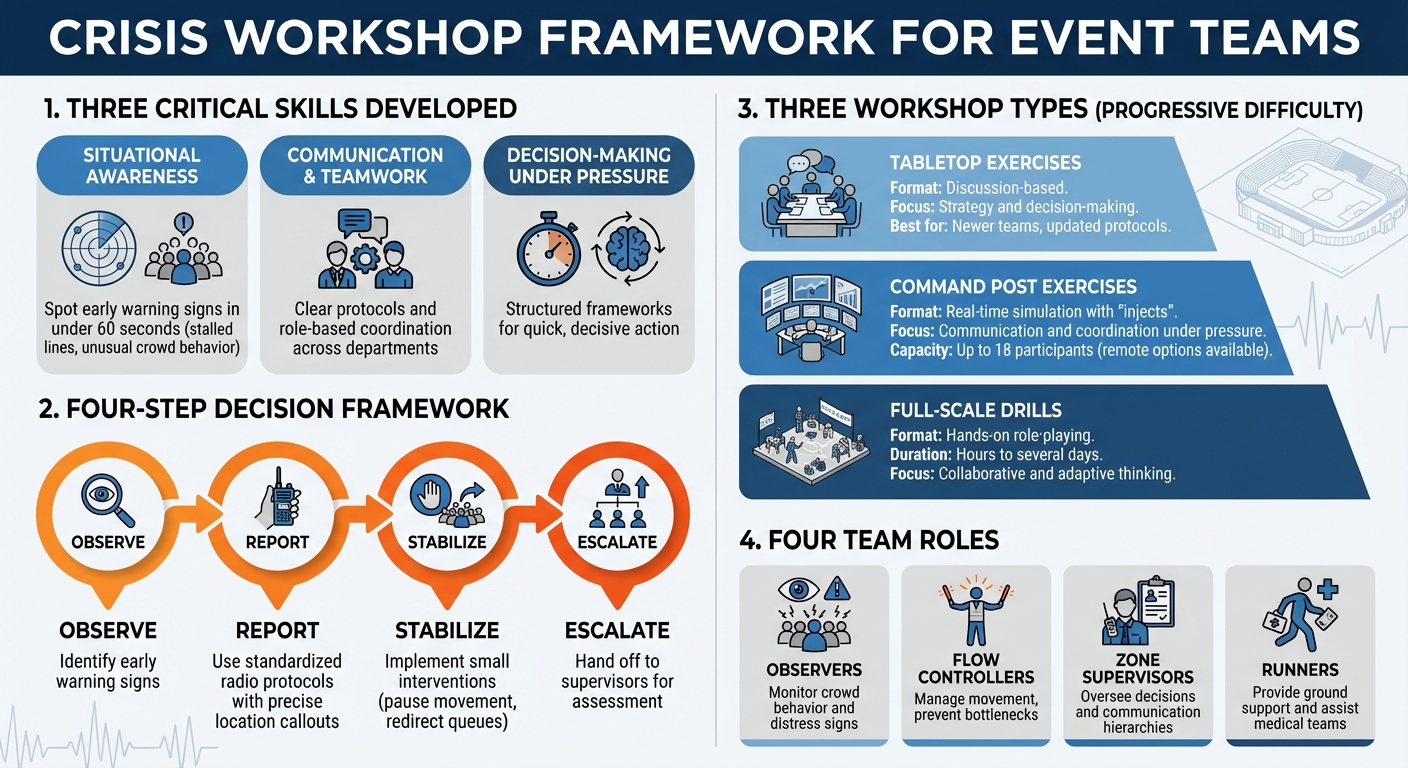
Crisis Workshop Framework: Types, Skills, and Decision-Making Process for Event Teams
Event teams operate in high-pressure environments where quick thinking and decisive action are essential. When emergencies like medical incidents or crowd surges occur, there's simply no time to consult a manual or debate what to do next. Crisis workshops prepare staff to handle these high-stakes moments by building three critical skills that set proactive teams apart from reactive ones.
Catching a problem early often depends on recognizing subtle changes before they escalate. Crisis workshops teach staff to identify what experts call "early tells" - small but significant shifts that could signal brewing trouble. For instance, a line that suddenly stops moving or clusters of people gathering tightly instead of circulating freely might indicate an issue in the making.
Timed drills, known as "injects", train staff to scan specific areas of a venue, enabling them to spot signs of trouble - like stalled lines or disoriented guests - in under 60 seconds. This methodical approach ensures team members can focus their attention on key areas, helping them quickly identify and address potential risks.
"I have seen crowd issues go from minor to critical in under a minute. That is why I insist our event emergency response staff are drilled on radios, routes and roles so they stabilize risk before guests even realize something is wrong." - CEO, Event Staff
Workshops also include post-training debriefs to highlight where teams may have missed warning signs, helping them refine their approach for actual events. Research underscores the importance of situational awareness, emphasizing it as a cornerstone of effective emergency response.
In a crisis, clear and consistent communication is non-negotiable. Guests rely on staff to provide calm, direct guidance, but that requires seamless collaboration across departments like security, operations, and communications. Crisis scenarios in workshops help teams break out of departmental silos and work as a unified group.
Teams practice standardized radio protocols and precise location callouts (e.g., "Zone C North, Row 14") to prevent confusion and reduce response times. Each team member is trained for a specific role, ensuring smooth coordination:
Simulations reinforce these roles, teaching staff how to escalate issues effectively and execute handoffs without slowing the response. After-action reviews help pinpoint communication breakdowns and refine strategies to ensure a more efficient response in future scenarios.
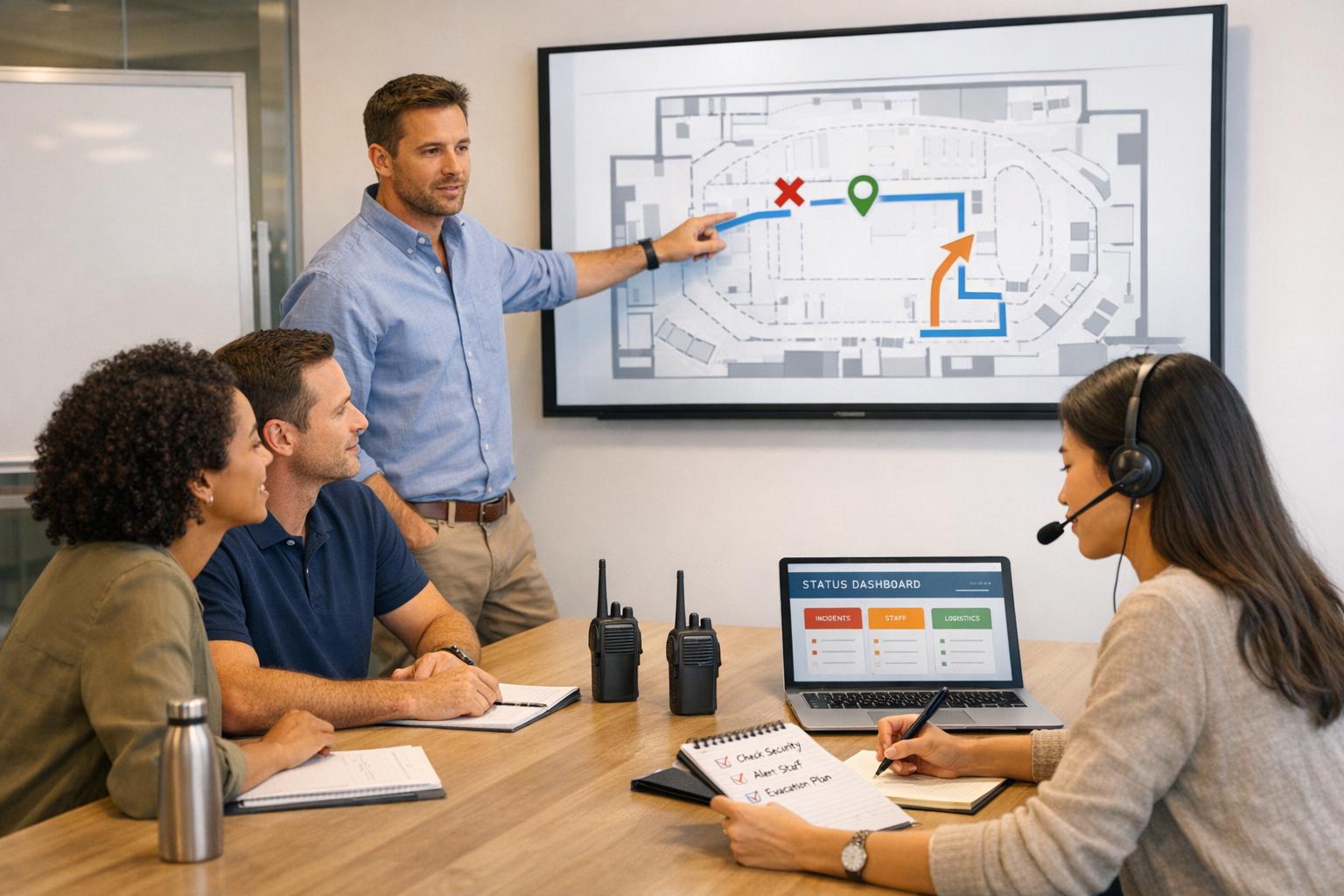
Crisis workshops emphasize a structured decision-making framework: Observe → Report → Stabilize → Escalate. This clear workflow eliminates confusion about who is responsible for what, ensuring quick and coordinated action.
Staff learn to implement small, targeted interventions - like pausing movement on a staircase or redirecting a queue - to buy time for supervisors to assess a situation without alarming the crowd. Spartan9, a company with experience conducting over 120 crisis simulations across 12 countries, highlights the importance of tailoring training difficulty to participants' needs.
"Exercises that are too difficult risk overwhelming participants and undermining confidence; those that are too easy fail to challenge and engage." - Spartan9
Crisis workshops come in different forms, each designed to sharpen specific problem-solving abilities. The right format depends on your team’s current training level. Many teams begin with discussion-based sessions and gradually move toward more immersive, hands-on drills as their confidence and skills grow. Let’s explore three types of workshops that help build your team’s crisis management expertise step by step.
Tabletop exercises are all about discussions. These sessions bring your team together to talk through potential crisis scenarios, focusing on strategies and decision-making. The goal? To explore response options, clarify learning objectives, and ensure everyone understands your organization’s policies and procedures for scalable event management. These sessions create a low-pressure environment where participants can ask “what if” questions and brainstorm solutions to challenges like power outages, medical emergencies, or vendor issues.
This format is especially useful for newer teams or when introducing updated protocols. By encouraging analytical thinking, tabletop exercises help your team identify weak spots in their current plans without the stress of real-time simulations.
Once the basics are covered, teams can move on to more dynamic training, like command post exercises.
In command post exercises, the focus shifts from discussion to action. These sessions simulate real-time scenarios where teams must communicate and coordinate as events unfold. To make things challenging, instructors introduce unexpected updates - known as "injects" - to test your team’s ability to manage complexity and stay composed under pressure.
For example, a session might begin with a small equipment issue, then escalate to a delayed vendor and a guest complaint, all within a short timeframe. Teams need to prioritize tasks, delegate responsibilities, and maintain clear communication throughout. These exercises are designed to mimic the operational pressure of real crises, helping teams refine their decision-making skills.
Many professional instructors have designed over 120 such exercises globally, often offering remote options for up to 18 participants via video conferencing.
When teams are ready to take their training to the next level, full-scale drills provide an immersive and intense experience.
Full-scale drills are the ultimate test of crisis management. These hands-on sessions involve role-playing, strict time limits, and high-pressure scenarios that push teams to their limits. Lasting anywhere from a few hours to several days, these drills immerse participants in complex situations where they must work together to achieve shared goals.
Participants take on specific roles and operate under real-world constraints, testing their ability to apply everything they've learned in tabletop and command post exercises. These drills emphasize what experts call "collaborative thinking" and "adaptive thinking", rewarding teams that can combine creativity with analytical problem-solving.
Running a crisis workshop isn't just about gathering your team and running through scenarios. It's about creating a focused, well-planned exercise that strengthens your team's ability to handle real challenges. The difference between a workshop that genuinely prepares your team and one that wastes time lies in the details: planning, execution, and follow-up. Here’s how to make your crisis training work.
Before you even start, define what success looks like. Are you testing how quickly your team can implement contingency plans? Seeing if your communication protocols hold up under pressure? Or maybe helping newer team members build confidence in crisis situations? Whatever the aim, make sure your objectives are specific and measurable. Vague goals like "improve teamwork" won’t cut it.
Your goals will shape everything else - scenarios, roles, and how you measure success afterward. For instance, if your aim is to test response speed, you might use the 15-30-60-90 rule: acknowledge the crisis within 15 minutes, confirm details in 30, share detailed information within 60, and be ready with a formal statement in 90. Without clear objectives, you risk running an exercise that feels productive but doesn’t actually improve your team’s readiness.
The scenarios you design should reflect the actual risks your team might face. Forget about overly dramatic but unlikely disasters - focus on realistic challenges like a vendor canceling at the last minute, severe weather disrupting plans, a technical failure during a key event, or even a medical emergency. Assign roles that match real responsibilities: your event manager could take the lead in crisis coordination, your communications staff might handle messaging, and your logistics team can focus on operational adjustments.
Getting the difficulty level right is crucial. As Spartan9, a leader in crisis training, explains:
"Exercises that are too difficult risk overwhelming participants and undermining confidence; those that are too easy fail to challenge and engage".
Start with manageable scenarios and gradually add layers of complexity. Use realistic "injects" - unexpected developments that mimic how real crises evolve. This keeps the team engaged and ensures the exercise pushes their skills without overwhelming them.
The workshop doesn’t end when the exercise is over. A thorough debrief is where the real learning happens. Use the After-Action Review (AAR) method to break things down while everything is still fresh. Focus on these four key questions: What was planned? What actually happened? Why did it happen? And what can we do better next time?
Encourage everyone to share honest feedback, regardless of their role. Look for recurring issues - were there communication breakdowns? Did decisions take too long? Was anyone unclear about their responsibilities? Document everything: decisions, actions, timestamps, and any gaps in communication. This detailed record will guide updates to your crisis management plan and improve future workshops. Organizations that treat the debrief as seriously as the exercise itself often see the biggest gains in crisis preparedness.
Once your crisis workshop is planned, the next hurdle is managing the logistics - assigning roles and coordinating schedules. Event staff scheduling tools can make this process much smoother. These tools integrate seamlessly with your workshop planning, helping ensure clarity and timely execution. In fact, the same software you might use to manage live events can also streamline the organization and execution of training sessions.
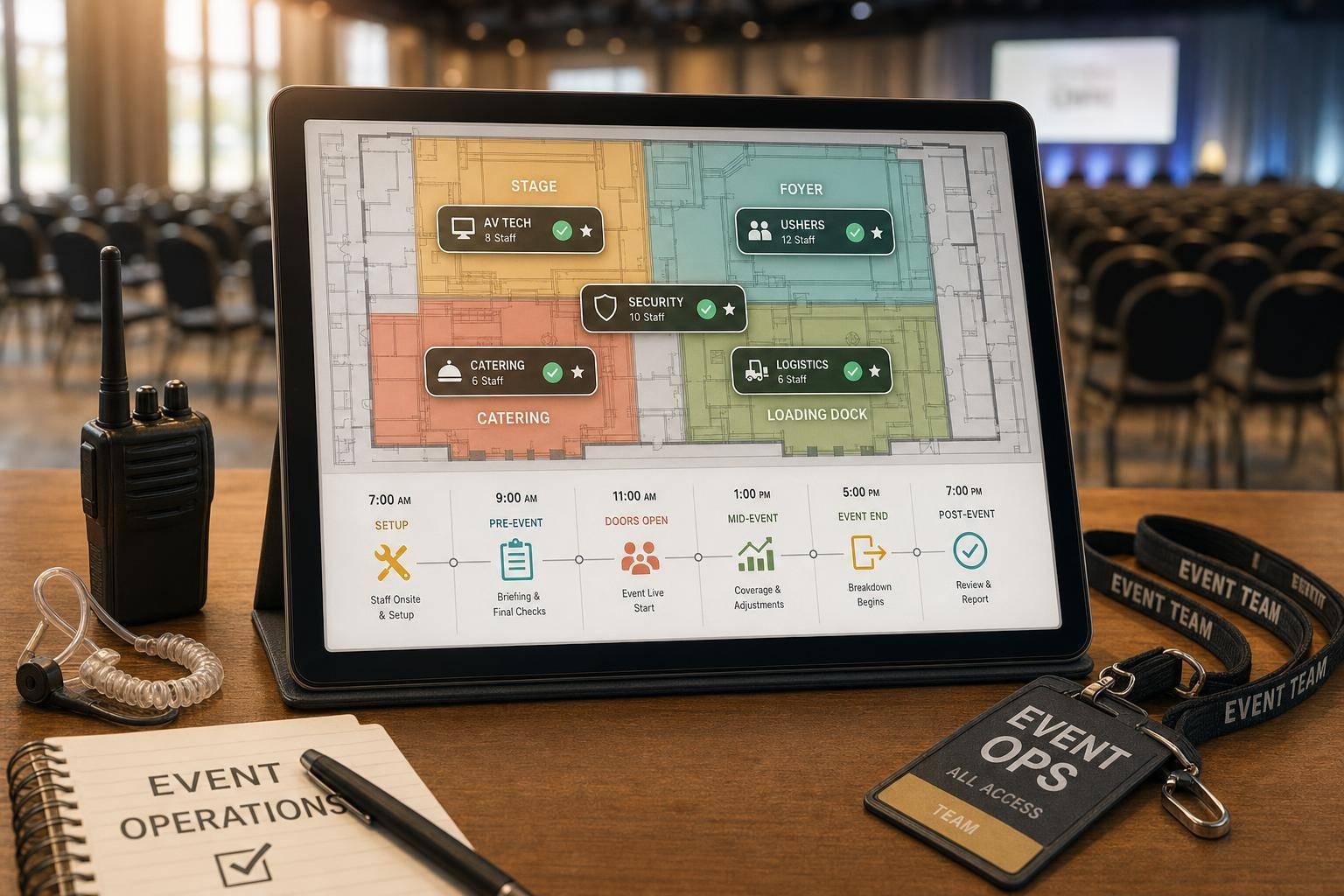
A successful crisis workshop hinges on clear role assignments. Everyone on your team needs to know their responsibilities - whether it's acting as the Crisis Lead, handling communications, or managing logistics. Quickstaff (https://quickstaffpro.com) makes this process straightforward with its role-based assignment feature. You can assign specific roles like "Crisis Lead", "Safety Officer", or "Communication Coordinator" and keep track of who’s involved in each session.
The tool also includes an availability management feature, allowing you to schedule sessions well in advance. This ensures there are no conflicts and that your most experienced team members are available for critical exercises. As Jennifer Manley, a Staffing Coordinator, shares:
"My time spent scheduling has shrunk majorly, leaving me more time to focus on recruiting, on-boarding and training".
By reducing the administrative workload, you can devote more energy to designing effective scenarios.
Once roles are assigned, the next step is crafting realistic scenarios. Quickstaff supports this with its event management tools. The Event Notes feature is particularly useful - it lets you share detailed scenario information and objectives with participants. You can outline the crisis situation, provide key details, and ensure everyone is prepared before the workshop begins.
During live simulations, the messaging feature becomes invaluable. It allows you to send targeted messages to specific groups, mimicking real-time crisis communication. This is especially effective for delivering injects - unexpected updates designed to test your team’s responsiveness.
Regular training sessions do more than prepare your team for crises - they also show your investment in their professional growth. Workshops that focus on skill development can boost morale and improve staff retention. Efficient scheduling tools like Quickstaff help you focus on meaningful training by cutting down on admin tasks. Clear role assignments also reduce stress and build confidence, ensuring staff feel supported during both training and actual crises.
Kelly from The Abbot KC highlights this benefit:
"The time that we have been able to save by using this staff scheduling software has allowed us to tackle the other issues that we face thereby improving our overall events!".
The time saved can be reinvested into creating stronger, more confident teams through well-planned training experiences.
Crisis workshops equip event teams with the tools to shift from reactive fixes to proactive problem-solving. By using structured decision trees, these sessions help staff address potential risks before they spiral into full-blown incidents. The training sharpens essential skills like situational awareness and clear communication, ensuring everyone knows their role when time is critical.
But the value of these workshops goes beyond crisis response. Practicing together in realistic scenarios fosters collaboration across departments, breaking down silos and encouraging teamwork. Teams also gain experience in handling challenges creatively, preparing them for future events. Event leaders often stress the importance of training staff on protocols and roles so risks are managed before guests even notice anything is amiss. When logistics are handled smoothly, this level of teamwork becomes even more seamless.
Organizing these workshops doesn't have to be overwhelming. Tools like Quickstaff (https://quickstaffpro.com) simplify the process by managing role assignments, scenario planning, and communication - just as they do for live events. By cutting down on administrative tasks, you can focus on what truly matters: building a team that's confident and ready to tackle any challenge. This streamlined approach amplifies the effectiveness of the training, creating agile and crisis-ready teams.
Regular crisis training isn't just about being prepared for emergencies - it’s also a way to invest in your team's growth. It boosts morale, reduces stress, and helps retain skilled staff. Confident, well-trained teams perform better in both simulations and real-world situations.
Crisis workshops should happen on a regular schedule - at least once a year - to keep everyone prepared. For industries with higher risks, holding them quarterly or every six months might be necessary. It's also a good idea to organize a workshop whenever there's a major shift in your operations or after dealing with an actual crisis. These sessions help your team stay sharp, ready for surprises, and capable of adjusting to new challenges as they arise.
Crisis simulation workshops are a great starting point for teams looking to sharpen their problem-solving skills in high-pressure situations. These workshops use structured exercises to guide participants through selecting scenarios, managing complexity, and processing layered information. They create a controlled environment where teams can practice critical thinking and decision-making without the stakes of a real crisis. The result? Teams build confidence and are better equipped to tackle challenges when they arise.
Quickstaff makes organizing crisis workshops easier by simplifying staff scheduling and ensuring the right team members are available and ready. With tools for communication, reminders, and centralized event management, it helps streamline coordination. This ensures teams remain organized, respond swiftly, and enhance problem-solving during crisis simulations or emergency drills.