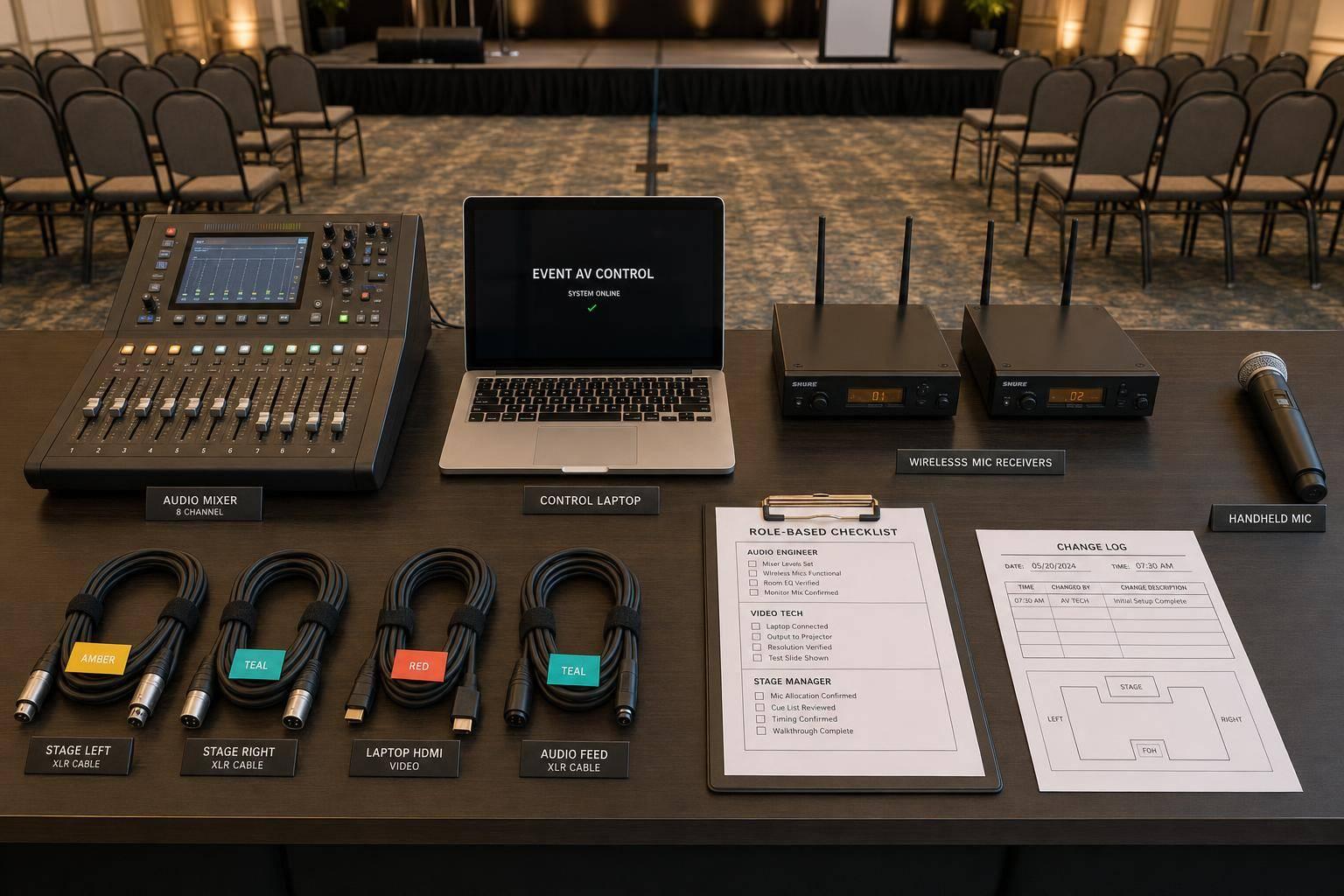
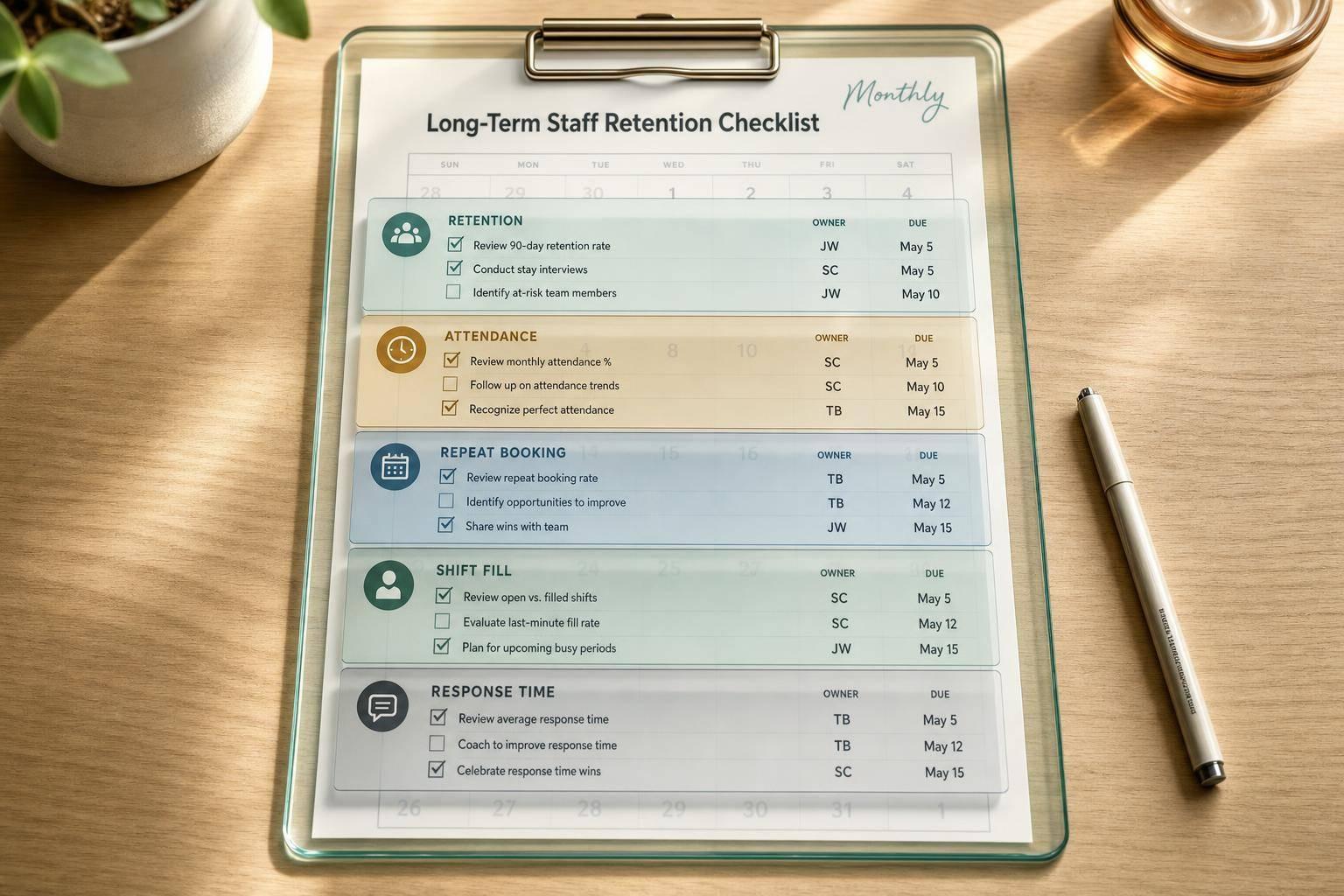
Ultimate Guide to Event Logistics for Vendors
April 29, 2026

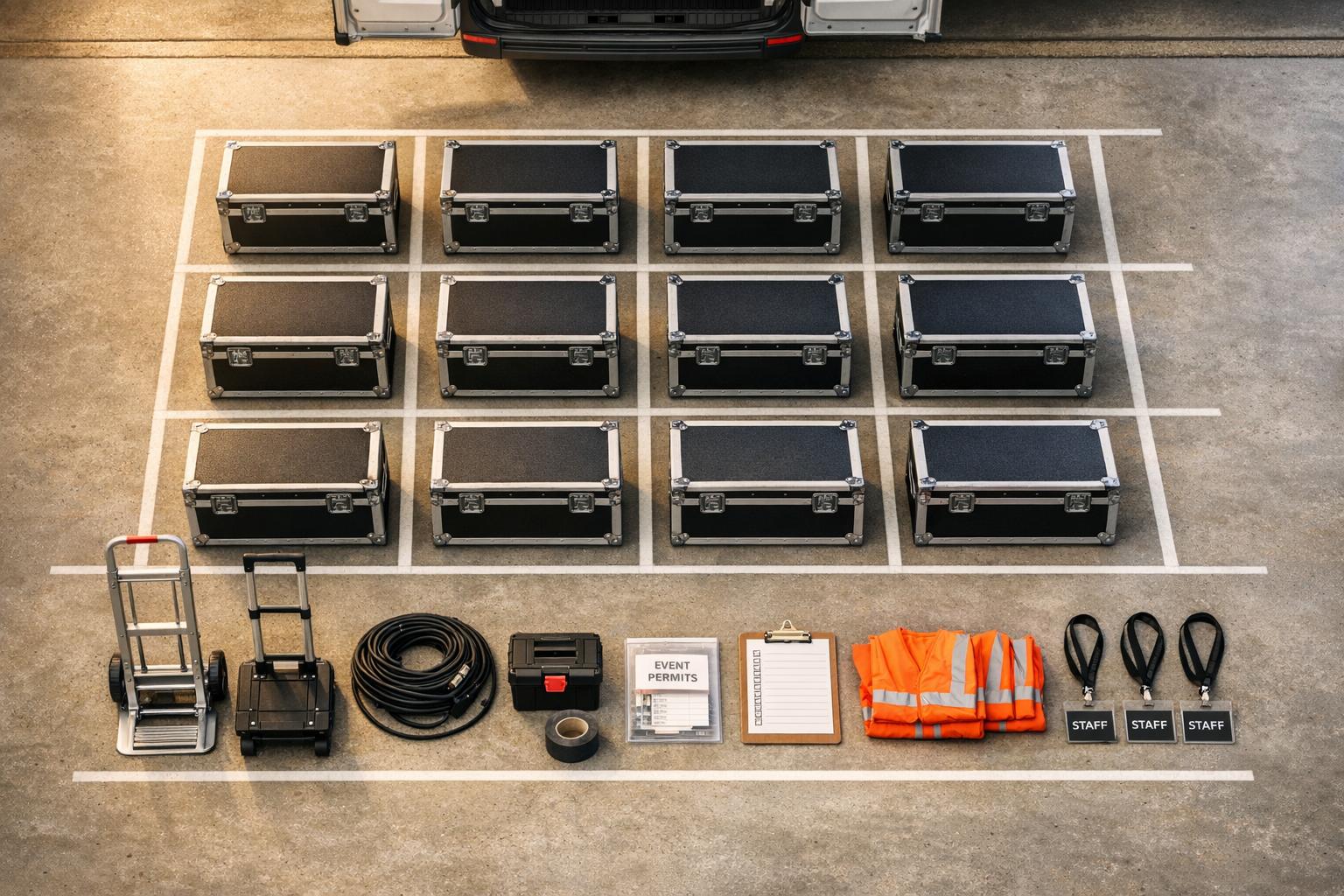
Event logistics is all about execution. From managing transportation and equipment to coordinating vendors and staff, it's the backbone of any successful event. Poor planning can lead to delays, miscommunication, and lost revenue. This guide breaks down key areas vendors must focus on to ensure smooth operations:
Key takeaway: Meticulous planning and communication are essential to avoid costly mistakes and ensure a flawless event experience.
Ensuring on-time delivery requires more than just reserving a truck - it demands thorough preparation. Start by assessing the physical constraints of your destination. Visit the venue to note loading dock details, door dimensions, ceiling heights, and elevator availability. Confirm that all equipment can navigate service entrances, freight elevators, and other structural limitations.
Prepare a detailed shipping manifest that lists each item's dimensions, weight, packaging type, and final destination. For large-scale events, this can involve managing millions of pounds of materials. Items like perishables demand immediate refrigeration and extra care. Coordinate staggered delivery windows with other vendors to avoid congestion at the loading dock, and arrange deliveries in a logical order. For example, staging might need to be completed before audiovisual (AV) equipment setup can begin.
To account for unexpected delays, add 10%–20% extra time to your setup schedule. Book transportation well in advance - 2–4 weeks for smaller events and 1–3 months for larger ones.
"The earlier you can ship via consolidated transportation, the better rate you'll likely get by maximizing use of truck space, fuel, and driver costs".
Finally, assess delivery routes to anticipate urban challenges and prevent last-minute surprises.
Plan your primary delivery route and identify backup options well before the event. Traffic patterns can shift dramatically during rush hours, so it’s smart to map out secondary routes. Use mapping tools to check for construction zones, bridge weight limits, and truck route restrictions. For urban venues, confirm parking rules and determine if oversized vehicles require special permits.
Check the venue's bump-in procedures and whether specific equipment, like forklifts, will be necessary. Some venues may require elevator reservations or limit the number of vendors unloading at a time. Careful route planning ensures you’re ready to partner with transportation providers who specialize in event logistics.
Choose transportation providers with experience in event logistics rather than general freight services. Share your complete shipping manifest, access details for the venue, any special handling instructions, and the contact information of the venue coordinator. This ensures all bases are covered.
For complex events, request targeted move-in times. These are specific time slots assigned to vendors to streamline high-volume logistics. A great example is Shepard Event Services' work during the PRINTING United Expo in June 2024. Under COO Steve Margos and Senior VP Raymond Williams, the team managed over 4 million pounds of freight, including advanced printing equipment and custom exhibits. Their careful coordination of material handling ensured a seamless experience for exhibitors.
This level of organization sets the foundation for effective real-time tracking, which can further reduce delays.
Real-time tracking is the final piece of a well-planned logistics puzzle. GPS tracking eliminates uncertainty by offering live updates and enabling quick adjustments if delays arise. Modern tracking software lets you monitor shipments in real time and relay updates to your event team.
Digital inventory tracking adds another layer of organization, helping you keep tabs on all equipment and supplies during transit and setup. This reduces the risk of critical items being misplaced or sent to the wrong staging area. Real-time visibility also allows for better coordination with other vendors. For instance, if a florist’s delivery is running 30 minutes late, your team can tackle other tasks instead of waiting around.
Setting up and tearing down for an event requires careful planning, clear role assignments, and strict compliance with venue rules. Just like transportation logistics, these processes must be well-coordinated to ensure everything runs smoothly.
Start by creating a timeline that includes staffing plans and time buffers. For standard setups, aim for one setup worker per 250–300 square feet of build space. If your event involves tasks like rigging or elevated installations, increase your crew size by 10–15% to account for the extra workload. For large events, expect to need about 30–40 staff members for setup and 35–45 for teardown.
Build a 25–30% time buffer into your schedule to handle unexpected delays. For teardown, consider adding 20% more staff or scheduling an extra hour to prevent rushing. Fatigue can set in quickly during late-night teardowns, and venues often have strict exit deadlines. Always sequence teardown in reverse order of the build, prioritizing the safe return of rented equipment and protecting venue surfaces.
To keep things efficient, pre-stage materials in designated areas before the active setup begins. This reduces downtime and keeps your team focused. Coordinate dock schedules to avoid bottlenecks, and ensure vendors arrive during their assigned access times to prevent overcrowding at the loading area.
Once your schedule is finalized, assigning specific roles will help ensure every phase moves forward without delays.
A well-defined schedule needs equally clear roles to ensure smooth execution. Divide your team into specialized groups:
Assign at least one dedicated troubleshooter to tackle immediate issues like equipment malfunctions or missing components without disrupting the overall workflow. Each vendor team should have a single point of contact to streamline communication and avoid conflicting instructions. Also, ensure all heavy machinery operators hold valid OSHA certifications.
Avoid using hospitality staff for setup or teardown. These tasks require skilled labor to manage heavy lifting and technical compliance, reducing the risk of fatigue or injury. For late-night teardowns, use rotating crews to maintain safety and prevent exhaustion.
Adhering to venue policies is just as important as scheduling and role assignments. Venues enforce rules to protect their facilities and ensure safety. For example, access windows and dock schedules are often strict - arriving outside your assigned time could result in penalties or even being turned away. Always follow rules for freight elevator usage and keep fire lanes clear.
Most venues require protective measures, like moving blankets for floors and weight limits for tables, chairs, and staging equipment. Tape down electrical cords, maintain clear emergency pathways, and enforce fall-zone boundaries during overhead installations. Some venues also require pre-approved waste management plans, including recycling, composting, and proper disposal of materials like banners.
Before the event, conduct a site visit to identify potential challenges such as narrow hallways or low ceilings. On the day of the event, hold a safety briefing 15 minutes before your crew starts to review any venue-specific hazards. Confirm the location and capacity of electrical outlets, and check WiFi strength if your event involves high-bandwidth activities like live streaming. Following these policies not only protects your team but also helps maintain a good relationship with the venue.
Keeping resources organized is the backbone of successful event execution. It’s all about knowing what you have, who you need, and how much you can spend - while staying flexible enough to handle surprises.
Managing inventory is all about staying organized. Keep a detailed record of shared items like projectors, microphones, furniture, and vehicles. Assigning a specific person or team to oversee this ensures accountability, so nothing goes missing between setup and teardown.
Using a Documentation Kit - including delivery logs, return logs, sign-offs, and photos - can help verify where resources go. As supplies arrive, cross-check them immediately with delivery logs and purchase orders to avoid missing items.
Plan ahead with a detailed equipment usage schedule that maps out setup, event sessions, and teardown times. During teardown, prioritize returning high-value rented items, such as AV equipment, to avoid late fees. For registration, aim for 4–8 printers per 1,000 attendees to ensure smooth operations. Also, keep a list of alternative suppliers handy in case costs rise or shortages occur.
Budgeting for unexpected hiccups is crucial - set aside 10–15% of your budget for unforeseen expenses. Tools like real-time tracking systems and centralized dashboards can help you monitor resources efficiently, avoiding the chaos of juggling multiple spreadsheets.
A well-organized staff schedule can make or break your event. AI-powered scheduling tools can save managers hours by assigning shifts based on availability and qualifications.
Platforms like Quickstaff make scheduling easier by allowing you to create events, assign roles, and track staff availability - all from one mobile-friendly dashboard. Features like automated waitlists and shift-swapping ensure every role is covered.
"Prior to Quickstaff, I was using Excel spreadsheets to track my employees and their shift availability. My life changed the day I started using Quickstaff!" - Jaime S, VP, Lisa's Catering
Real-time communication tools, such as in-app messaging or automated SMS, keep everyone updated on last-minute changes without the hassle of endless phone calls. Some platforms even include GPS-enabled time clocks with geofencing, ensuring staff are physically on-site before clocking in. To avoid confusion, provide staff with role cards - either physical or digital - that outline their responsibilities, shift times, and communication channels.
Once your staff schedule is sorted, you can focus on balancing the budget for logistics.
Budgeting for logistics starts with separating fixed costs (like venue fees) from variable costs (like catering and promotional materials) that depend on attendee numbers. Don’t forget to budget for transportation - whether it’s shuttles, parking, or public transit - and for freight logistics to handle shipping materials and equipment.
Other must-haves to include? Audiovisual systems, lighting, staging, internet bandwidth, and registration hardware like badge printers. For staffing, account for agency fees, shift differentials, training, and any travel or accommodation needs. Always leave room for unexpected expenses by setting aside 5–15% contingency funds for things like weather issues, last-minute AV needs, or capacity changes.
To keep costs under control, get at least three quotes to compare rates and services. Lock in unit rates early to avoid price spikes and protect your margins. Past event data can also help you estimate recurring costs more accurately. To stay prepared, plan for various attendance scenarios - whether conservative, baseline, or higher-than-expected - to align costs with actual outcomes. Lastly, schedule technical rehearsals and equipment tests at least a day before the event to avoid costly last-minute fixes.
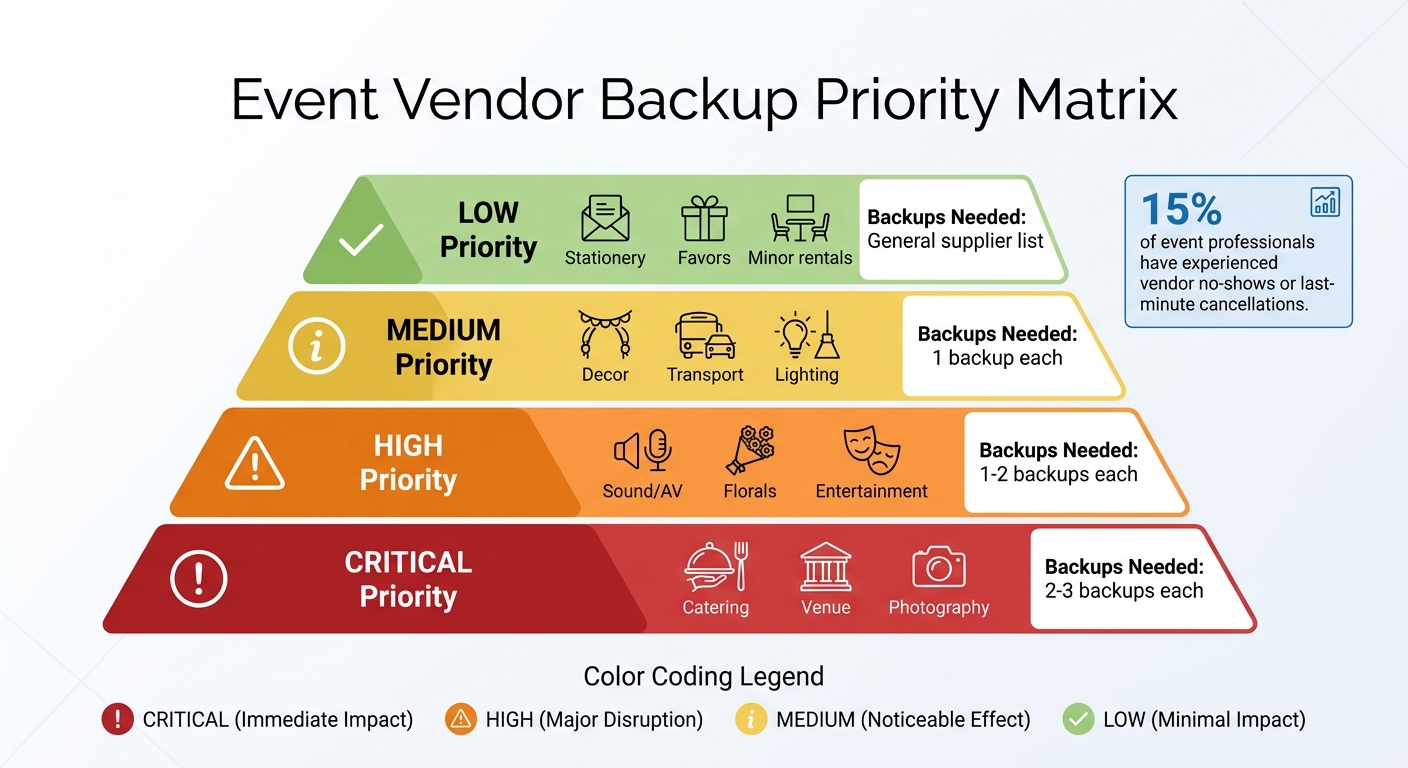
Event Vendor Backup Priority Matrix by Service Type
Managing resources and staff effectively is just one piece of the puzzle. On-site communication plays an equally important role in ensuring event logistics run smoothly. Clear communication and quick problem-solving during the event are essential to avoid hiccups. In fact, poor communication protocols are responsible for over 60% of delays in multi-trade environments, with vendor coordination issues being a leading cause of preventable problems at corporate events.
To keep everyone on the same page, all vendors and staff should follow a single master timeline - commonly referred to as a "Run of Show" document. This document lays out load-in windows, technical checks, rehearsals, and tear-down schedules. By using this centralized plan, you synchronize key transitions and avoid missteps. To further streamline operations, designate a "vendor shepherd" - a team member tasked with greeting vendors, guiding them to their spots, and helping resolve any issues that arise during the often-chaotic setup period.
"The secret isn't just in the tools - it's in preemptive alignment. Before anyone steps on-site, I've already walked through the full timeline with each vendor." - John Mac, Serial Entrepreneur at UNIBATT
A centralized digital hub, such as Slack, WhatsApp, or an event management platform like Quickstaff, can be invaluable for sharing real-time updates, schedules, and changes. For on-the-ground coordination, radios or push-to-talk apps on designated channels work well, but keep these channels free of unrelated chatter. Additionally, holding a pre-event production meeting with key vendors ensures everyone understands floor plans, power needs, emergency contacts, and communication protocols.
Another helpful step is sending out a one-page quick-reference guide to all vendors the night before the event. This guide should include a site map, communication details, and an emergency "if this happens, do this" plan. When the pressure is on, this simple preparation can prevent confusion and keep things moving smoothly.
While detailed planning and scheduling help prevent most issues, having a solid on-site protocol in place is crucial for handling unexpected challenges. Keep backup supplies on hand, such as extra microphones, projector bulbs, alternative internet options, and other essentials. Staff should be empowered to tackle routine problems, with clear escalation protocols for more significant issues.
"Managing vendors well has less to do with control and more to do with choreography." - Ford Smith, Founder and CEO of A1 Xpress
Adopt the 7-day/48-hour rule: confirm vendor details seven days before the event and verify arrival times and setup needs 48 hours prior. This simple practice can catch 90% of potential issues early. That said, around 15% of event professionals have experienced vendor no-shows or last-minute cancellations, so having a plan for emergencies is key. In such cases, phone calls are usually the fastest way to secure backup vendors. When informing clients of changes, focus on presenting solutions to maintain their confidence and avoid unnecessary stress. For multi-day events, nightly "hot wash" briefings can help review what worked, what didn’t, and how to adjust plans for the following day.
| Priority Level | Service Type | Backups Needed |
|---|---|---|
| Critical | Catering, Venue, Photography | 2–3 backups each |
| High | Sound/AV, Florals, Entertainment | 1–2 backups each |
| Medium | Decor, Transport, Lighting | 1 backup each |
| Low | Stationery, Favors, Minor rentals | General supplier list |
With these strategies in place, you'll be well-prepared to manage the unexpected and keep your event running seamlessly.
Executing a successful event goes beyond logistics - it requires strict attention to compliance and documentation. Once your communication systems are set, ensuring every legal and safety requirement is met becomes non-negotiable. A single misstep in compliance can bring an event to a grinding halt.
"If there's even one vendor that isn't abiding by permit rules, events can be shut down, fined or receive violations until compliance is met."
- Suzette Tillit, Director of Special Events, East of Collins Expediting
The first step is understanding which documents are necessary and organizing them well in advance. Most professional events mandate general liability insurance, typically requiring at least $1 million per occurrence and $2 million in aggregate coverage. Beyond insurance, specific permits depend on the services provided - food vendors need health permits, alcohol vendors require liquor licenses, and amplified sound vendors must secure noise permits. Timing is critical: temporary food permits often require 2–4 weeks' notice, while mass gathering permits for large festivals may need to be initiated 6–12 months ahead. This preparation aligns with earlier operational planning, ensuring everything runs smoothly.
The permits you’ll need depend on whether your event is on private or public property. Private venues, like banquet halls or breweries, usually require only a base operating permit. Events on public land, such as parks or city streets, often require additional temporary permits from local authorities.
Before applying, always check with the event organizer. Ask:
"Do you have a blanket temporary food establishment permit that covers vendors, or does each vendor need to apply individually?"
Large festivals often secure blanket permits that cover all vendors, saving individual vendors from extra paperwork and fees.
"A $150 temp permit problem can turn into a $500 fine and a lost event slot."
- Ben, Co-founder, StreetLegal
For insurance, you’ll need a Certificate of Insurance (COI) naming both the venue and organizer as "additional insured". In cities like New York, general liability coverage often ranges from $1 million to $5 million per event. If alcohol is served, liquor liability insurance is mandatory, and alcohol permit applications should be submitted at least 15 days before the event. Additionally, workers' compensation insurance is required for hired staff to cover potential injuries.
| Permit Type | Purpose | Issuing Authority | Typical Cost |
|---|---|---|---|
| Base Health/MFU | License to operate a food business year-round | County/City Health Dept | $500–$1,200/year |
| Temporary Food (TFE) | Short-term permit for specific public events | Local Health Dept | $25–$200/event |
| Liquor/Alcohol Permit | Authorization to serve beer, wine, or spirits | State/Local Liquor Board | Varies by state |
| Noise Waiver | Permission for sound levels above local ordinances | City Council/Police Dept | Varies |
| Fire Dept Permit | Approval for tents, propane, or open flames | Local Fire Marshal | $100–$500 |
| Music License | Legal right to play copyrighted music | PROs (ASCAP, BMI, SESAC) | Annual blanket fee |
New or modified setups may also require a "plan check" with blueprints and equipment lists before permits are issued. If you plan to play music at your booth, you might need a blanket license from a Performing Rights Organization (PRO) like ASCAP or BMI to cover public performance royalties.
Having the right permits is just the beginning. Ensuring they’re organized and accessible on-site is essential to avoid delays or disputes with venue staff or inspectors. Just as clear communication is critical for smooth operations, having your permits and documents readily available is key. Store them in a digital folder for quick on-site access.
Once permits are approved, share life safety and floor plans with your team to ensure compliance during setup and avoid fines. Large venues, like the Javits Center, often have additional protocols, including mandatory union labor, specific waste management policies, and exclusive catering arrangements. Starting the permitting process at least 90 days in advance provides a buffer for any changes or jurisdiction-specific requirements.
"Starting the permitting process early and maintaining clear communication with all stakeholders is essential to prevent delays or last-minute issues."
- Suzette Tillit, Director of Special Events, East of Collins Expediting
To manage access credentials, designate a team member to oversee passes, contracts, and event paperwork in one centralized location - whether that’s a physical binder or a digital platform. Tools like Quickstaff can streamline staffing and centralize compliance documents. Keeping both digital and physical copies ensures you’re prepared if venue security or inspectors request documentation.
Labor compliance is another critical aspect. When hiring event staff, ensure they’re properly classified (W-2 vs. 1099) to meet state-specific regulations. For example, in New York City, minimum wages for event staff range from $15.00 to $16.50 per hour as of 2026. Staff directed on-site by a producer typically must be classified as W-2 employees, so maintaining accurate payroll records is essential to avoid legal complications.
Successful vendor logistics comes down to thorough planning, effective coordination, and a flexible approach. Smooth events hinge on managing the "how", "when", and "where" of execution. While event planning sets the vision, logistics ensures every operational detail is carried out seamlessly.
"Exceptional logistics becomes invisible when execution flows smoothly."
Frameworks like the 5 P's and 7 C's provide clear strategies for handling the complexities of logistics. These tools help ensure smooth operations, from early-stage resource decisions (made 3–12 months ahead) to finalizing details just weeks before the event. Including a 10–15% buffer for delays can help mitigate unexpected issues. Key steps like documenting plans in writing, conducting a physical walkthrough of the venue, preparing an event day kit, and maintaining backups for crucial systems - like internet and AV equipment - can make all the difference.
Clear communication and resource management are essential to avoiding common vendor challenges. When multiple vendors are working in the same space, centralized schedules and thorough documentation are critical for preventing conflicts. Tools like Quickstaff simplify staffing operations by streamlining schedules, tracking availability, and automating communication. In fact, efficient staffing coordination can cut peak wait times from 18 minutes to just 6 minutes and reduce food and beverage overages from 14% to 6%.
Whether it’s transportation planning or real-time staff scheduling, every detail plays a role in creating a seamless vendor experience.
Before sending materials to a venue, it's crucial to sort out key logistics during your site visit. Verify the venue's maximum capacity, the event schedule, and whether any permits are required. Take a close look at the venue's layout and any restrictions to make sure they fit your event's needs. This careful review can help you spot potential challenges ahead of time, making delivery and setup much easier.
To build a setup and teardown plan with enough flexibility, add an extra 10–20% to your estimated time. For instance, if setup is expected to take 4 hours, schedule 4.5 to 5 hours instead. Work closely with vendors and staff to confirm their timelines and include contingency time for critical tasks, such as equipment delivery. Clear communication and a well-organized schedule will help keep everything on track and ensure the event goes off without a hitch.
Vendors usually need permits for the event location, adherence to health and safety standards, and any specific activities they plan to carry out. Key insurance documents often include general liability insurance and workers' compensation coverage. These documents not only ensure compliance with legal requirements but also help safeguard against potential risks or issues that could arise during the event.