SMS vs. Email for Event Reminders
March 3, 2026

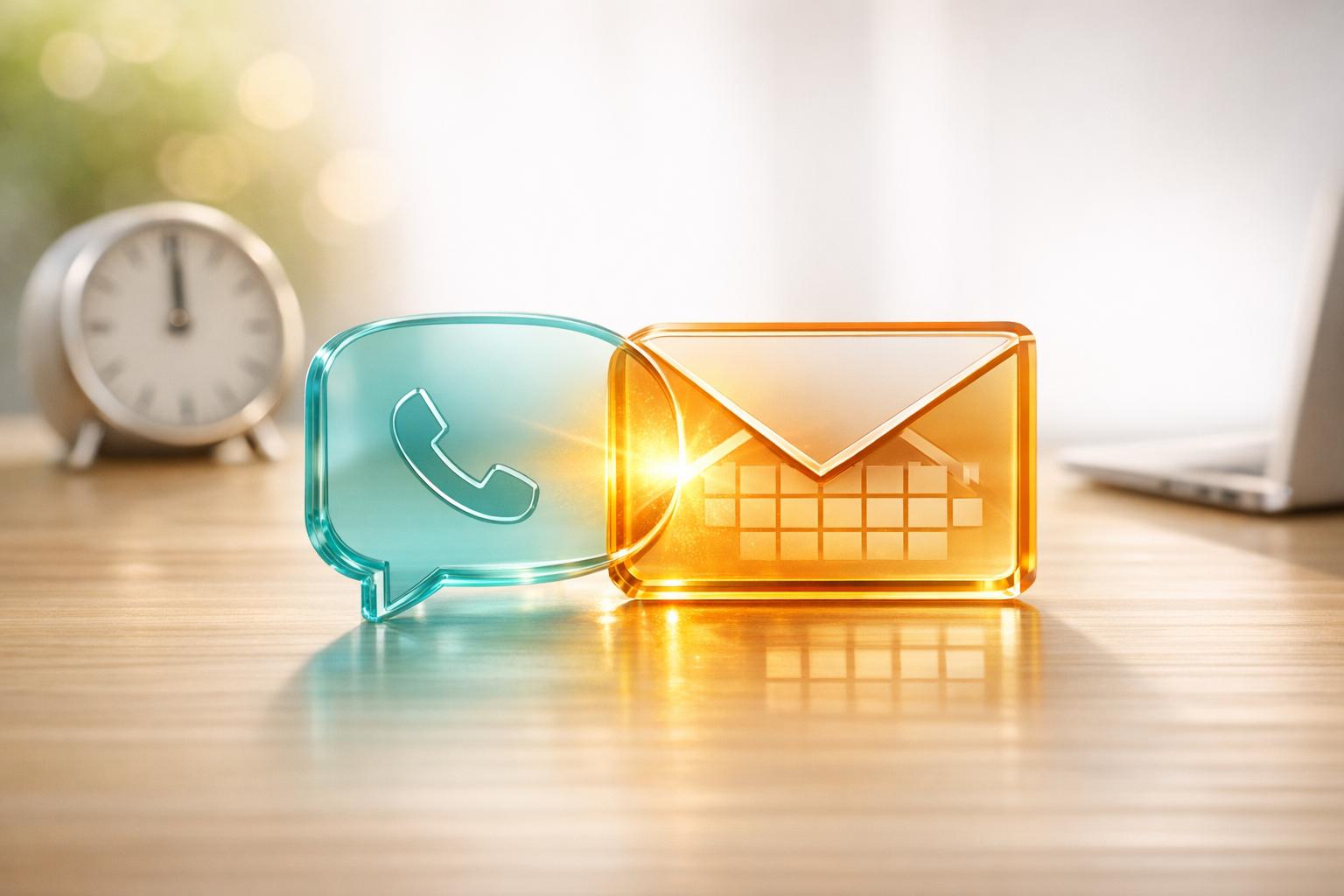
When it comes to event reminders, SMS and email both have unique strengths. SMS offers unmatched speed and engagement, with 98% open rates and responses typically within 90 seconds. Email, while slower, is ideal for sharing detailed information like schedules or maps, with open rates between 20–32%. The best approach? Use both strategically to maximize attendance and engagement.
| Metric | SMS | |
|---|---|---|
| Open Rate | 98% | 20–32% |
| Response Time | 90 seconds | 90 minutes |
| Best For | Urgent updates | Detailed info |
| Cost for 10,000 Sends | $100–$500 | $1–$30 |
To ensure success, tailor your reminders to the audience and event type, combining the immediacy of SMS with the depth of email.

SMS vs Email Event Reminders: Complete Comparison Guide
SMS messages hit your lock screen in seconds - even if you're offline. This speed is part of why SMS boasts a 98% open rate, with 95% of messages read within three minutes. For last-minute updates, like a schedule shift or venue change, SMS can cut no-shows by up to 50%.
"SMS maintains 97% deliverability with minimal filtering",
says Rakesh Patel, Founder and CEO of Textbolt.
This makes SMS perfect for time-sensitive communication. While email can deliver more detailed information, it simply can’t match SMS for speed and reliability when every second counts.
Email is your go-to for sharing detailed information - think venue maps, schedules, or attachments. But it’s less immediate. Only 58% of emails reach Gmail’s primary inbox, with 38% landing in promotional tabs. Even when they make it through, just 21.2% are opened within the first hour. Considering 333 billion emails are sent daily, with nearly 50% flagged as spam, your reminder can easily get buried.
That said, email works well for non-urgent updates or information attendees might want to save for future reference. Its lower engagement rate highlights why it’s better suited for comprehensive content rather than time-critical alerts.
Here’s a quick look at how SMS and email stack up:
| Metric | SMS | |
|---|---|---|
| Open Rate | 98% | 20–32% |
| Read Time | 95% read within 3 minutes | 21.2% read within 1 hour |
| Deliverability | 97% | 58% reaching primary inbox |
| Average Response Time | 90 seconds | 90 minutes |
| Internet Required | No | Yes |
When diving into response times, the differences between SMS and email become even more apparent. Each channel serves a distinct purpose, with SMS excelling in speed and email offering depth.
SMS is known for its lightning-fast response times, typically between 90 seconds and 3 minutes. This makes it an incredibly effective tool for generating immediate engagement. The stats back this up: SMS boasts a 45% response rate, with 86.1% of recipients opening messages within 30 minutes. Click-through rates for SMS sit between 10–19%, far outpacing email's 2.62%. Additionally, two-way messaging - using simple keywords like "YES" or "CONFIRM" - can boost interactions by as much as 40%.
For instance, in July 2025, a Melbourne Beauty Salon transitioned from email to SMS for appointment confirmations targeted at younger clients. Within just six weeks, their response rates skyrocketed from 12% to 89%, while last-minute cancellations dropped by 60%.
While SMS shines for quick responses and immediate action, email plays a different, yet equally important, role.
Email, on the other hand, is built for sharing detailed content, making it ideal for materials like venue maps, event schedules, or instructional documents that recipients may need to revisit later. However, this depth often comes at the expense of speed. Only 21.2% of emails are opened within the first hour, and the average email open time is around 6.4 hours, with replies typically taking 90 minutes. Emails also face stiff competition in crowded inboxes filled with newsletters and promotions, which can delay responses and reduce urgency.
| Metric | SMS | |
|---|---|---|
| Response Rate | 45% | 6% |
| Average Response Time | 90 seconds to 3 minutes | 90 minutes |
| Click-Through Rate | 10–19% | 2.62% |
| Opens Within 30 Minutes | 86.1% | 21.2% within 1 hour |
| Best Use Case | Immediate confirmations | Detailed information |
Both SMS and email have their strengths, but understanding their unique advantages can help businesses choose the right tool for the right situation.
Getting the timing and frequency right is crucial when combining the strengths of SMS and email. The goal is to balance giving people enough time to plan while staying close enough to the event to keep it top of mind.
For SMS, timing is everything. Send the first reminder 24–48 hours before the event to give attendees time to prepare. Then, send a final nudge 1–2 hours before the event to encourage last-minute confirmations.
Timing also depends on your audience. For business-related events, stick to work hours - 9:00 AM–5:00 PM. For consumer events, early evening - 6:00–8:00 PM - is ideal, as people are more likely to be at home and responsive. Studies show confirmation rates jump to 84% during this window, compared to 72% at other times. Avoid sending messages during peak commute times, like 6:30–8:30 AM or 4:00–7:00 PM, when people are less likely to engage.
"The trick is to be helpful but not pushy. Be friendly but not forceful."
– Philip Portman, Founder & CEO of Textdrip
Keep SMS reminders to one or two messages for most events. For critical occasions, you can stretch to three: one a few days out, another 24 hours before, and a final message an hour before. Mid-week days - Tuesday through Thursday - tend to yield better response rates. Personalizing your messages, like including the recipient's name, can increase responses by 26%.
Emails work best for planning ahead. Start with an initial invitation about one month in advance, followed by a second email one week before the event, and a final reminder 1–2 days prior.
Consistency is key. Stick to a rhythm, like sending one email every two weeks, to stay on your audience’s radar without overwhelming them. For example, welcome emails often see open rates as high as 80%.
"The ideal email frequency is typically one email every two weeks. The key here is finding a balance between delivering consistently and not flooding your subscribers' inboxes."
– Campaign Monitor
A combined strategy can be especially effective: use email early to provide all the important details, then switch to SMS as the event gets closer to deliver timely, urgent reminders. This approach ensures you’re covering all your bases without overloading your audience.
When it comes to event reminders, the length and formatting of your message can make all the difference. SMS and email each offer distinct advantages, shaped by the space they provide and the way information is presented. These differences directly impact how you communicate with your audience.
SMS is all about brevity. With a hard cap of 160 characters per message (or up to 1,600 characters with MMS), it forces you to get straight to the point. On the other hand, email gives you virtually unlimited space to include detailed information, attachments, and visual elements. This contrast dictates the kind of content each medium is best suited for.
SMS thrives on simplicity. It’s ideal for quick, time-sensitive updates that require immediate attention. Think of messages like: "Your catering shift starts at 2:00 PM tomorrow at The Grand Ballroom. Reply YES to confirm." Every word counts, and the focus is on delivering one clear action or piece of information.
"SMS is limited by character count and format. It is not suitable for long explanations, detailed instructions, or documents."
– StaffConnect
While MMS allows for longer messages and the inclusion of images or GIFs, it’s still best to keep things concise. Personal touches - like using the recipient’s name or adding an emoji - can make messages feel more engaging. However, you should stick to a single, clear call-to-action to avoid confusion.
Email, by contrast, is built for depth. It’s perfect for sharing detailed instructions, event schedules, or materials that people might need to reference later. With the ability to include headers, brand colors, logos, and multiple calls-to-action, emails can deliver a professional and comprehensive experience.
For example, an email might include everything from "Add to Calendar" and "View Map" buttons to a downloadable schedule - all in one message. This makes it especially effective for events with complex logistics and availability tracking, ensuring recipients have all the information they need at their fingertips.
"Email is a great medium for sending longer, richer messages that include images and attachments, and can be saved for a later date."
– Twilio SendGrid Team
The formatting options available in email complement SMS’s immediacy. Together, they allow you to tailor your communication strategy based on the urgency and complexity of your message. Here’s a quick breakdown of how the two compare:
| Feature | SMS / MMS | |
|---|---|---|
| Message Length | 160–1,600 characters | Unlimited |
| Media Support | Images and GIFs (MMS) | Images, videos, attachments |
| Call-to-Action | Single link recommended | Multiple buttons and links |
| Branding | Text-based | Full branding with HTML |
| Best For | Urgent alerts | Detailed instructions |
When dealing with multiple events or large attendee lists, understanding the cost structure of SMS and email is essential for managing your budget effectively with tools for catering staff scheduling. SMS typically follows a pay-per-message model, with costs ranging from $0.01 to $0.05 per text. On the other hand, email operates on a subscription-based model, charging based on the number of subscribers rather than the messages you send. This makes email far more budget-friendly as the volume of messages increases. These differences are key when crafting your event reminder strategy.
For example, sending 10,000 SMS messages could cost anywhere between $100 and $500, while the same volume of emails might only cost $1 to $30.
With SMS, costs rise directly with the number of messages you send. Additionally, there are other potential expenses to consider. For instance, 10DLC registration, which is required for business SMS in the U.S., usually costs between $4 and $40. If you're running high-volume campaigns, you might need a dedicated shortcode, which can cost $500 to $1,000 per month. On top of that, platform fees can range from $20 to $500 monthly.
"The power of push notifications is so strong. SMS which is crazy expensive, and people are starting to tune these out. Being able to do push notifications is the reason you do an app."
– David Cost, Rainbow Shops
Despite its higher cost, SMS delivers a strong return on investment - around $71 for every $1 spent. Its effectiveness largely stems from an impressive 98% open rate. However, to manage costs, it's important to use SMS strategically. Budgeting for a 15–20% buffer to cover overages and carrier fees during peak times is a good practice. If your monthly volume exceeds 10,000 messages, consider subscription plans that offer better rates per message.
Email pricing is based on the number of subscribers rather than individual messages. For example, maintaining a list of 10,000 subscribers typically costs between $80 and $115 per month on platforms like Klaviyo, Mailchimp, or Omnisend. This allows you to send multiple reminders - such as confirmations, one-week notices, and day-before alerts - without worrying about additional costs per message.
Although there can be upfront costs for email design, templates, and list management tools, the ongoing cost per message is minimal. Email marketing also offers a solid return, with an average of $36 to $42 for every $1 spent. This makes email ideal for detailed, high-volume event communications.
| Cost Factor | SMS | |
|---|---|---|
| Pricing Model | Pay-per-message | Per subscriber |
| Cost for 10,000 Sends | $100–$500 | $1–$30 |
| Monthly Platform Fees | $20–$500 | $80–$115 (for 10k subscribers) |
| Additional Fees | 10DLC registration ($4–$40); shortcodes ($500–$1,000/month) | Design and marketing tools |
| Best For | Time-sensitive, high-value alerts | High-volume, detailed communications |
This breakdown highlights the importance of balancing immediate engagement with cost efficiency. Up next, we’ll look at how combining these channels can help you create a more effective reminder strategy.
Instead of picking between SMS and email, the smartest move is to use both in a way that plays to their strengths. Email works well for sharing detailed information early on, while SMS shines when you need to send time-sensitive updates or last-minute reminders - messages that are often read within minutes. By combining these channels, you can use email for the big-picture details and SMS for urgent updates, creating a system that helps maximize event attendance. For more insights on managing your team and operations, check out The Event Staff Blog.
The trick is to match the message to the medium. For example, send a comprehensive email well in advance to cover the key details, and then use SMS for concise, urgent updates - like a quick reminder with a link to join or attend. This kind of coordination can significantly improve attendance rates.
"SMS and email are complementary channels, and if you use them correctly, you can create a seamless customer communication experience." - Twilio
Audience segmentation can make this strategy even more effective. For instance, you might send VIP attendees an exclusive SMS with priority entry details, while emailing logistical information to the rest of your audience. Similarly, you could use SMS to nudge unregistered users with incentives, while confirmed attendees receive email reminders about the event schedule.
Using a planned sequence of reminders across both channels can take your engagement to the next level. Start with an email that builds excitement - share highlights like key speakers or agenda details. Follow this up with an SMS about 24 hours before the event, including essential logistical info like a direct link to join or parking instructions. Finally, send a short SMS one hour before the event as a last-minute nudge, featuring a "Join Now" link or a quick venue reminder. Adding "Add to Calendar" buttons in your emails can also help attendees stay organized.
Research backs up the effectiveness of this approach. Businesses that combine email and SMS retain up to 89% of customers, compared to just 33% when using a single channel. Additionally, SMS reminders alone can cut event no-show rates by 30% to 50%. For example, a major tech conference saw a 30% drop in no-shows after implementing a targeted multi-message sequence.
To avoid overwhelming your audience, keep SMS communications to 2–3 well-timed messages. And always ensure you have explicit opt-in consent to comply with regulations like the TCPA. When thoughtfully combined, SMS and email create a dynamic reminder system that not only boosts attendance but keeps participants engaged from start to finish.
When it comes to choosing a reminder method, there’s no one-size-fits-all solution. SMS stands out for its immediacy, boasting an impressive 98% open rate, while email shines with its ability to convey detailed, referenceable information.
"The main criteria to take into account when incorporating SMS to your existing email program are archival and urgency." - Twilio SendGrid Team
Audience preferences play a big role too. Younger groups, like Gen Z and Millennials, often lean toward SMS for its speed and convenience. On the other hand, older generations might prefer email or may not have reliable access to smartphones. The nature of the event also influences the choice - an urgent venue change is best communicated through SMS, while a formal conference with detailed logistics benefits from email’s ability to include attachments and rich formatting.
For most organizers, a combination of both channels works best. Using both email and SMS together can boost conversion rates by an impressive 429%. Emails are ideal for early announcements and detailed information, while SMS excels at delivering last-minute reminders, especially within 24–48 hours of the event.
If you’re managing event staff scheduling challenges, platforms like Quickstaff (https://quickstaffpro.com) make it easy to coordinate both SMS and email reminders, ensuring your messages are timely and effective. By leveraging the strengths of each method, you can maximize attendance and streamline communication.
Yes, you usually need consent to send event reminders through SMS. Laws like the Telephone Consumer Protection Act (TCPA) mandate that businesses obtain prior approval before sending text messages. To meet these requirements, implement opt-in methods such as checkboxes or consent forms. This approach not only ensures you're following the law but also respects users' privacy and fosters trustworthy communication.
To keep reminders from coming across as spam, pay attention to timing, tone, and relevance. Send reminders close to the event for better timing, and use a friendly, approachable tone to keep the connection positive. Personalization is also important - stick to essential details that matter to the recipient. Using multiple channels can help too, like sending emails for detailed information and SMS for quick updates. This way, you can engage effectively without overwhelming your audience. The right timing and meaningful content make all the difference.
Use SMS for sharing short, time-sensitive details like event dates, times, locations, or urgent actions. It’s perfect for quick and direct communication. On the other hand, emails work better for more detailed content - think agendas, step-by-step instructions, or links to important resources. The key is to match your message to the right channel: SMS for essentials and quick responses, email for in-depth information and added context.