Reducing Panic in Emergency Staff Communication
July 30, 2026


In an emergency, bad staff communication can make fear spread in seconds. In the first 60 seconds, I need one person in charge, one clear message, and one main action for each group. If messages are short, repeated, and sent through mobile alerts plus backup channels, staff are less likely to freeze, guess, or pass along wrong information.
Here’s the short version:
A few numbers stand out. Vendors and contractors may make up 20% to 40% of event workers, so leaving them out creates gaps fast. And if even one part of the plan is unclear at start time, the first minute of a crisis can turn messy.
Bottom line: if I want less panic, I need fewer voices, shorter updates, tested channels, and practice before the event starts.

Emergency Staff Communication: 8-Step Protocol to Reduce Panic
Emergency scenes get worse fast when communication falls apart. Panic spikes when staff no longer have one clear source of truth. The first step is simple: stop conflicting messages and information overload before they spread.
Conflicting orders make people pause at the exact moment they need to move. One leader says evacuate. Another says stay put. That kind of contradiction can stop a team in its tracks.
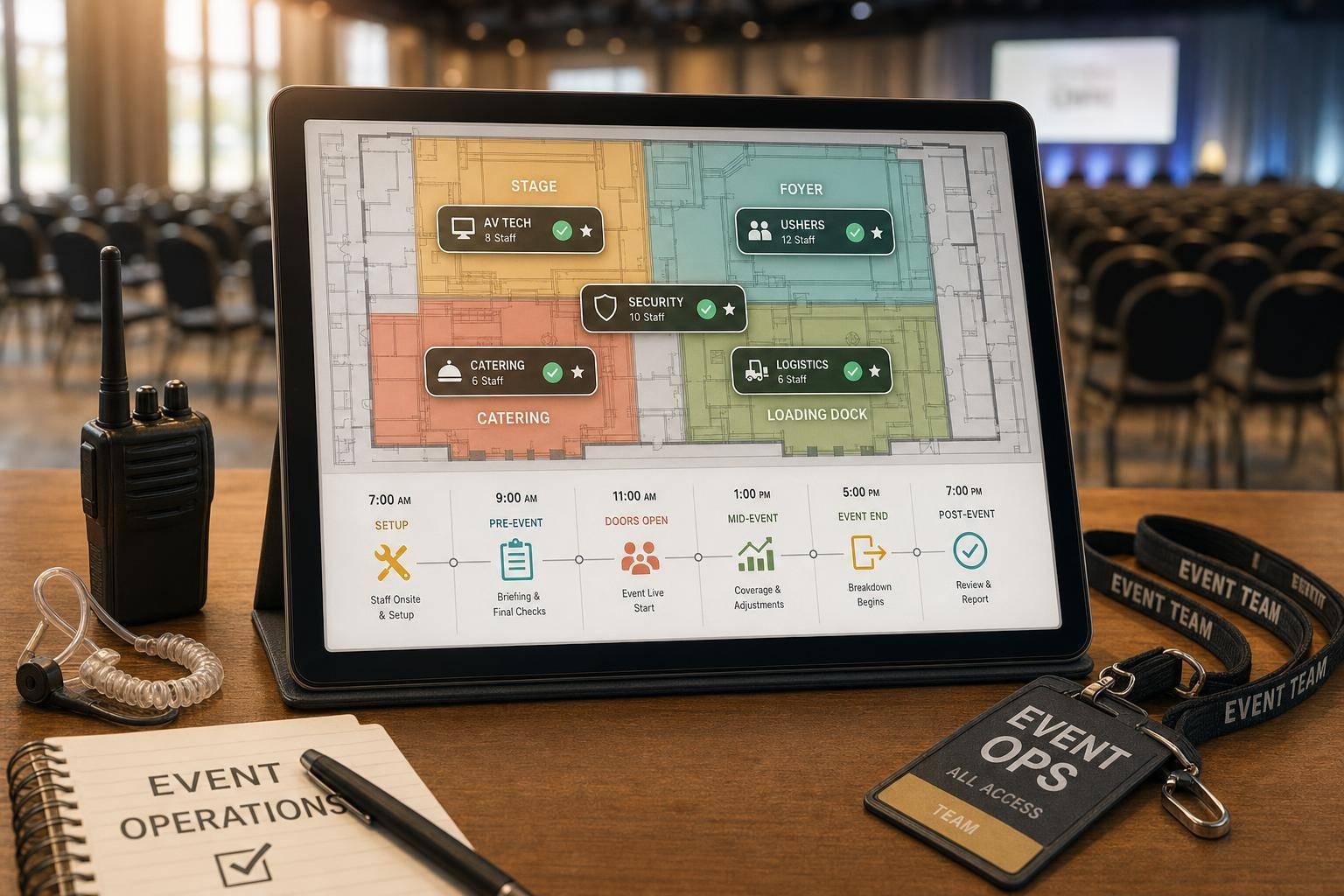
Set the command structure before the event starts. One person - the Incident Commander (IC) - should be the only one allowed to send sitewide alerts. Everyone else should pass updates through that same chain of command.
During a high-stress moment, people don't have the mental space to sort through nuance or long explanations. A message that looks clear in a planning document can turn confusing when it's blasted over a PA system in a noisy venue. And wording matters more than people think. "Evacuate now" and "Move to the concourse now" may sound close on paper, but in the moment, one can drive action while the other leaves room for doubt.
"Conflicting messages, even if individually accurate, erode trust and create confusion." - Cat Cecere, Safety Expert, Joffe Emergency Services
Every emergency message should include three parts: what is happening, a clear instruction, and what comes next. That format keeps messages short, direct, and easier to act on.
When roles aren't clear, staff start guessing instead of acting. If nobody is assigned to confirm facts or coordinate the response, people fill the gap on their own. They answer questions with unverified information, and misinformation can spread in a hurry.
Vendors and contractors may account for 20% to 40% of event workers, but they're often left out of the communication loop. Before the event begins, assign them to a Zone Leader and give them a clear reporting path.
It also helps to avoid blasting the same detailed update to everyone at once. Staff in different roles need different information. If you dump everything on the whole team, the signal gets buried in the noise. When people know their role, they can move without waiting for extra clarification.
Once roles and messages are clear, mobile alerts can send those same instructions fast.
Good emergency communication comes down to a simple idea: say the right thing fast to the right people. When you strip out mixed messages and fuzzy roles, updates become calmer and easier to act on.
Every alert should do three things:
"Fire alarm in North Hall. Exit by the nearest marked door. Meet in the south lot for updates."
That kind of message works because it gets straight to the point. Use active voice and plain English. Under stress, people don't have time to decode vague wording. Clear directions lower the mental load, which helps people move faster.
Short messages fall apart if too many people try to control them. One person should own the final alert. Set that role ahead of time, name zone leads, and give each person a one-page chain-of-command card.
This matters more than it may seem. If staff aren't sure who speaks last, delays and crossed wires can show up at the worst possible moment.
In a loud venue, one message usually isn't enough. Repetition is essential in an emergency. Train your team to repeat the most critical instruction at least once in the same message.
Also, don't write alerts from scratch when pressure is high. Build a library of tested messages your staff can adjust fast for common situations like evacuations, medical incidents, severe weather, and crowd control. When something happens, the Communications Coordinator can pick the closest template and tailor it fast instead of starting with a blank page.
Use alert tiers too, so each group gets only the information it needs.
Once the message is clear, it still has to reach every staff member. In an emergency, speed matters. So does consistency. When people know exactly where to check for updates, they’re less likely to freeze, guess, or spread bad info.
Each channel should do one job well. Radios help staff coordinate in the moment. Mobile alerts push sitewide updates. PA systems speak to the crowd. Supervisor relays step in when the tech doesn’t.
Set this up before the event starts. Decide which channel sends the first alert, which one confirms receipt, and which backup takes over if the first option fails. During your pre-event walkthrough, flag signal dead zones and assign supervisor relays to cover those spots.
| Channel | Primary Use | Speed | Backup Value |
|---|---|---|---|
| Mobile Push/SMS | Instant alerts to all active staff and vendors | Very High | High; bypasses radio dead zones and noisy areas |
| Handheld Radios | Real-time coordination between security and ops teams | High | Moderate; prone to battery failure and spotty coverage |
| PA System | Directing large crowds of attendees | High | Low; limited to those in range of speakers |
| Supervisor Relays | Face-to-face confirmation in specific zones | Low | Last resort if electronic systems fail |
Start with the primary channel. If coverage drops or the message doesn’t get through, move to the backups right away.
Sending an alert is only half the task. You also need to know who got it. Receipt tracking shows command who has seen the alert and who still needs a relay. That gives teams a live view of message delivery, which is a big deal when staff are spread out or working in loud areas.
It also helps to put vendor supervisors in the same alert group. That way, workers get the same instruction at the same time instead of hearing different versions from different people.
Centralized rosters and contact lists make this work. If that info is scattered, fast alerts become a scramble when every second counts.
With channels in place, the next step is practice.
Once command roles and channels are in place, test everything before doors open. Staff should know the wording, the channel to use, and who gives the call. In a live incident, guessing costs time.
Hold a 15–20 minute staff briefing 30–60 minutes before doors open at every event. Use that window to walk through the venue layout, confirm zone assignments, and review where equipment is located. Then run through at least two likely scenarios, like a medical emergency and severe weather.
Role-based drills help people move faster when the first alert comes in. Supervisors should practice saying short, calm messages out loud. That matters more than it might seem. A message that looks fine on paper can fall apart over a PA system in a loud venue.
Use this checklist to spot gaps before staff arrive:
| Category | What to Confirm |
|---|---|
| Chain of Command | Incident Commander named, with a documented alternate |
| Zone Coverage | Zone Leaders assigned to all venue areas, including parking and main hall |
| Message Templates | Pre-written scripts ready for fire, medical, weather, and security scenarios |
| Three-part message format | All templates follow: what's happening, what to do, what comes next |
| Repeat key directions | Protocol in place to repeat key directions at least once per message |
| Mobile Alert Access | Every staff member and vendor supervisor enrolled in the primary alert platform |
| Backup channels tested | PA system, digital signage, radios, and any secondary channels tested and confirmed functional |
| Receipt and status confirmed | Process in place for staff to confirm receipt and report status back to command |
If even one item is still unresolved when doors open, you've got a gap that can hurt clarity in the first 60 seconds of an incident. Quickstaff can help centralize scheduling and messaging so alerts go out fast.
Set up a clear chain of command before the event. Pick one person, or a small approved team, to send emergency alerts so staff get one steady message and rumors don't spread.
A designated Communications Coordinator should handle alerts and keep an eye on incoming reports. The Incident Commander should lead major decisions and handle media statements. It's also smart to assign backup staff for each critical role, so no one is scrambling if a key person is unavailable.
The first emergency message should be short, direct, and consistent.
It needs to do three things right away:
Use a calm tone. Avoid passive voice. Repeat the main instruction so people don’t get confused or panic.
Staff should rehearse emergency communication well before the event. The goal is simple: get critical information out in under five minutes when something goes wrong.
Run tabletop exercises at least 30 days before the event. For temporary staff, include venue walk-throughs so they know the space before they need to act under pressure. Then, within 30 days after any crisis or drill, hold a debrief to spot weak points and update the playbook.