Food Transport Training Prevents Cross-Contamination
October 14, 2026

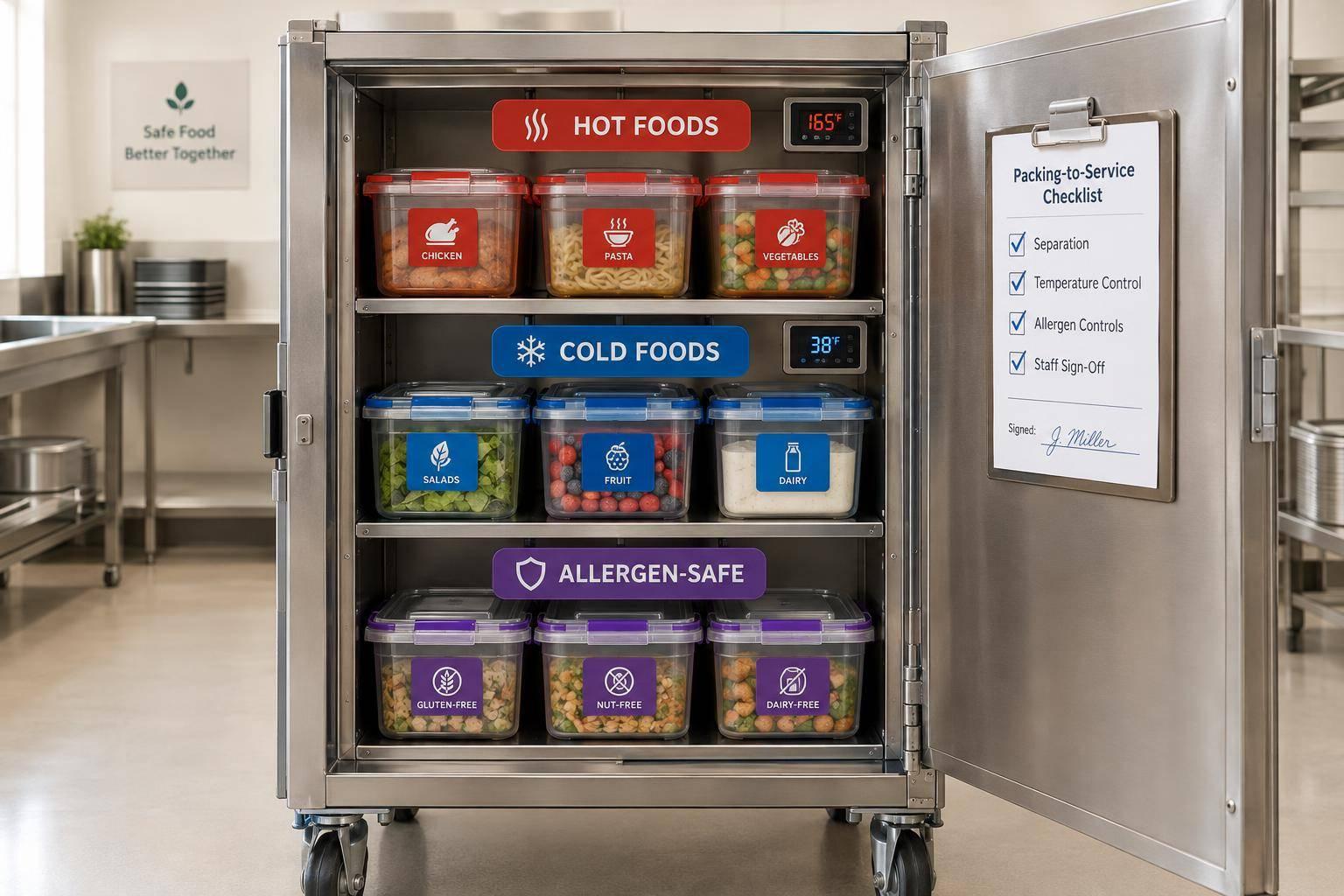
I train staff to keep food separated, check every handoff, and stop service when food safety is in doubt. For off-site service, that means checking more than temperature: clean equipment, sealed containers, and clear staff roles matter, too.
Here’s what I check from packing through event setup:
My rule is simple: a safe temperature does not prove food is safe. <u>Keep questionable food out of service</u> until the person in charge reviews it and decides what to do.

Safe Food Transport: Packing to Service
Start with clean, dry equipment, and pack in one direction: ready-to-eat foods first, raw foods next. Pack and close all ready-to-eat foods before handling raw items.
Keep raw poultry, ground meats, whole cuts of beef or pork, and seafood in separate, covered containers. Add a second layer of containment around packages that may leak. Keep raw-food packaging out of the ready-to-eat packing area.
Keep hands and utensils moving from clean tasks to raw-food tasks - not back again. Use dedicated utensils for each food category, and pack serving utensils with their matching covered containers.
Wash hands before packing and after touching raw food, waste, phones, or door handles. Replace dirty or torn gloves, and wash hands before putting on new gloves. Do not touch ready-to-eat food with bare hands.
Handle allergen cross-contact separately from microbial contamination. Sanitizing alone does not reliably remove allergen residue. Check ingredients before packing, use dedicated or fully cleaned utensils and surfaces, and pack allergen-controlled orders first. Never assume food is allergen-free if it has been handled with an unclean utensil, surface, glove, or scoop.
Use the checklist as the final check before loading. Record the event, packing date, food categories, container condition, label accuracy, allergen identification, and staff initials. The person in charge must review and sign the checklist before loading begins.
If you find a leak, stop packing and replace the leaking container. Place any potentially affected food in a labeled hold area. Clean and sanitize the spill area, wash hands, change gloves, and document the corrective action before loading. Do not repackage contaminated food for service. Notify the person in charge for review and sign-off. Once the load is signed off, move it directly to the vehicle.
Have the loader complete a pass/fail checklist for the vehicle, carts, racks, and carriers. When scheduling tools allow, have the driver verify the checklist. Check for contamination, leaks, pests, and damage, and fix any problems before loading.
Keep food separate from chemicals, cleaning supplies, personal belongings, tools, waste, and unrelated cargo. Never put food in containers that previously held chemicals or toxic materials.
The driver must check that racks, dividers, nonslip mats, and straps prevent containers from sliding, tipping, opening, or getting crushed during braking and turns. Keep raw-food carriers below ready-to-eat carriers throughout transport.
Pre-chill cold carriers and prepare hot-holding equipment before loading. Hold TCS foods at 41°F or below when cold and 135°F or above when hot, unless local rules require stricter temperatures.
Use a calibrated probe thermometer to check food at departure, scheduled stops, and handoff. Clean and sanitize the probe between checks. Keep carriers closed, limit door openings, and report delays or equipment failures immediately. Continue these checks until the food reaches the receiving handoff.
Use a transport checklist to record departure and arrival times, food temperatures and check times, delays, door openings, and handoff status. At scheduled stops, also record container condition, raw-food and allergen separation, and equipment operation.
Isolate questionable food and notify the supervisor before service. Record its temperature, packaging condition, and known time outside temperature control. The supervisor - not the driver - decides on corrective action or disposal. Do not treat reheating as a fix for questionable food. Flag every unresolved issue for the event lead.
Train staff on the local food code and health-department rules for transport temperatures and contamination control.
At handoff, give the log to the event lead and move directly into receiving checks. Confirm the log, temperature record, and any exceptions before unloading begins.
Before opening or accepting anything, compare the load with the transport log and temperature record. Set up a clean receiving area away from waste, dirty equipment, guest traffic, and raw-food prep.
Assign one employee to inspect food and another to move accepted containers straight into refrigeration, hot-holding equipment, or insulated containers. Using event staff scheduling software can help ensure you have the right personnel assigned to these critical safety roles. Unload ready-to-eat food first only when doing so won’t delay temperature control. Handle raw meat, poultry, seafood, and eggs separately.
Check labels, seals, lids, leaks, exposed food, and residue on container exteriors. Record each food’s name, arrival time, measured temperature, condition, and the receiver’s initials. A safe temperature doesn’t rule out contamination. Mark questionable items and keep them separate until the person in charge decides whether to accept, reject, or discard them.
Move accepted food into clearly labeled service zones. Keep food separated at the event table just as you did during loading and transit.
Label separate tables and utensils “READY-TO-EAT - CLEAN” and “RAW - DO NOT USE FOR SERVICE.” Keep ready-to-eat food covered and clean utensils protected. Use separate utensils, containers, and cleaning controls to manage allergens.
Before anyone handles food, set up an accessible handwashing station with potable running water, soap, disposable towels, and a waste container. Wash hands for at least 20 seconds before handling food, after touching raw food or waste, and before putting on gloves. Handle ready-to-eat food with clean tongs, deli tissue, or properly used gloves. Avoid bare-hand contact unless a local code exception and a documented procedure apply.
Remove contaminated items immediately and discard exposed disposables. Before reusing food-contact items, wash, rinse, sanitize, and air-dry them.
Before service, check that all separation controls remain in place. Record the receiving-area condition, food condition, container placement, raw-food separation, assigned utensils, allergen controls, handwashing supplies, and holding temperatures. Add the time and employee’s initials for each check.
Document corrective actions and discarded items, including the food name, quantity, reason, and final disposition. Flag unresolved concerns for review by the person in charge before service.
Completed training does not mean a worker is ready to work independently. Demonstrate each role’s tasks, then watch each worker perform them. Confirm they can do the required task correctly before assigning them to that role.
Use a short verbal or written check to test their knowledge of cross-contamination, allergen cross-contact, and problem reporting. Staff must know to stop the affected task, isolate questionable food, and notify the supervisor before service - not quietly fix the problem and carry on.
Record each employee’s name, role, training date, observed skills, corrections, and follow-up date. After corrective training, observe the worker again before approving independent work. Assign only workers who pass this check to the event.
Once workers pass observation, assign them to the roles they’ve shown they can perform. Put a trained lead in charge of each task, and require final sign-off before service. Name leads for packing, loading, transport, receiving, and setup, plus a person in charge. Check replacement staff using the same process.
Before service, the person in charge must review the completed handoff records and sign off. Record the event name, check times, responsible staff, corrective actions, and approval signature. Keep affected food out of service until the issue is resolved.
Yes, but keep raw and ready-to-eat foods strictly separate during transport to prevent cross-contamination. Pack all food in protected containers and keep transport equipment clean.
Quickstaff can help organize staff duties and event details, keeping your team coordinated as they follow food safety standards.
Keep dedicated, color-coded tools - including cutting boards, knives, tongs, and ladles - for allergy-sensitive orders ONLY. Store them in a labeled container. Before reusing shared equipment, thoroughly wash, rinse, sanitize, and air-dry each item.
These steps reduce risk, but they don’t guarantee that shared kitchen equipment is completely free of allergen residue.
Do not start food-related tasks until proper handwashing facilities are available. Staff must wash their hands with soap and water for at least 20 seconds to prevent cross-contamination and manage allergen safety.
Work with the venue or organizer to arrange a compliant setup. Until it’s ready, assign staff to non-food roles.
Quickstaff makes scheduling easier and helps teams prepare for site-specific requirements.