California Heat Illness Rules for Outdoor Events
October 12, 2026

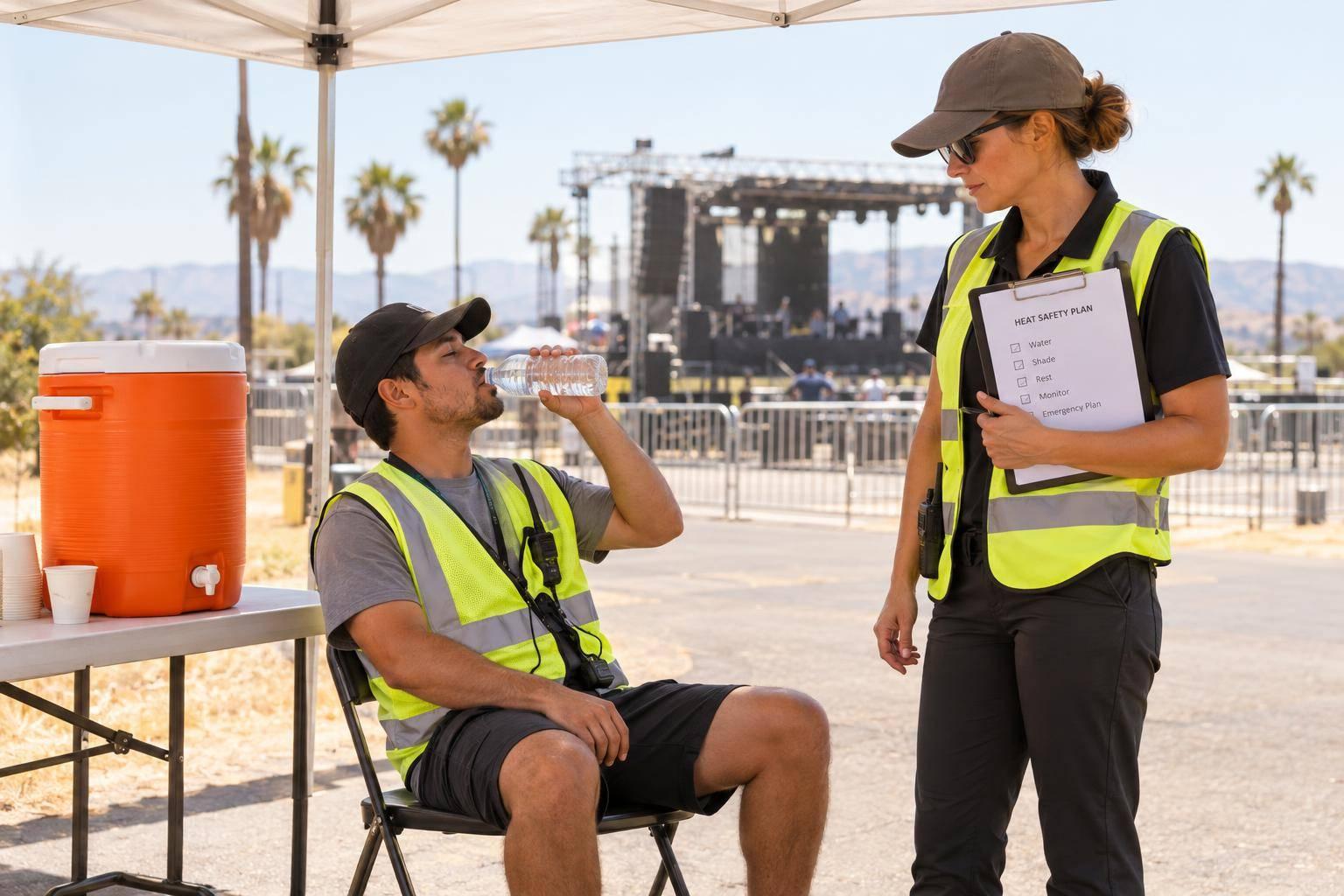
Before outdoor event work starts, I check for free water, shade, rest access, and a written heat illness plan. California requires enough drinking water for 1 quart per worker per hour, shade above 80°F, and preventive cool-down rest of at least 5 minutes, excluding travel time.
Here’s what I check from setup through the last breakdown task:
My rule: <u>keep protections in place until outdoor work ends</u>. A busy service period or changing crew does not remove those duties.

California Outdoor Event Heat Safety Checklist
Once roles are assigned, keep water, shade, and cool-down rest available throughout the shift.
| Control | Legal trigger | Responsible role | Placement or access requirement |
|---|---|---|---|
| Drinking water | Required throughout outdoor work. | Employer; designated water lead maintains supply | Free, suitably cool water as close as practicable to work areas |
| Shade | Required above 80°F; available upon request at 80°F or below. | Employer; site or shade lead checks access | Near work areas, safely accessible, with enough space and ventilation |
| Preventive cool-down rest | Whenever a worker feels the need to prevent overheating. | Supervisor permits rest, monitors the worker, and responds to symptoms | Access to shade; at least 5 minutes, excluding travel time; no return until symptoms resolve |
Use inspection logs to record that water, shade, and rest access remained available throughout the shift. Logs do not replace the required controls.
Provide free, cool drinking water. If water isn't continuously supplied, start with enough for at least 1 quart per employee per hour for the full shift.
Assign a water lead to check water levels, cooling, dispenser cleanliness, and cup or bottle supplies near loading areas, bars, outdoor kitchens, guest-service zones, and remote posts. One cooler at the entrance isn't enough if staff have to walk far to get a drink.
Provide shade whenever the outdoor temperature exceeds 80°F, and whenever workers request it at 80°F or below.
Workers must have enough room to sit normally in full shade without crowding. The area must be open to the air or otherwise ventilated or cooled. Keep it close to the work area, with safe, unobstructed access, and account for changing sun angles during the event. Open-sided canopies can qualify. Enclosed tents or vehicles don't qualify simply because they block sunlight.
Supervisors also need to act early when workers feel overheated.
Let workers take a preventive cool-down rest before they feel sick. Supervisors should direct them to shade, ask about symptoms, monitor them, and encourage continued rest and hydration.
Rest must last at least 5 minutes after the worker reaches shade. Travel time doesn't count, and the worker shouldn't return to duty until symptoms resolve. If symptoms worsen or don't resolve, arrange medical assistance.
Meal and rest breaks do not replace heat-illness recovery periods.
Once water, shade, and rest are in place, set up training and supervision before the first shift starts.
Legal requirement: Train supervisors and nonsupervisory workers before they begin heat-exposed work, using a language they understand. Training must cover heat risk factors, symptoms, hydration, shade access, preventive cool-down rest, acclimatization, reporting procedures, employer procedures, and emergency response. Temporary, seasonal, transferred, and newly assigned workers need the same relevant training before exposure. A brief verbal reminder isn't enough.
Supervisors also need instruction on putting heat illness prevention procedures into practice, monitoring weather and workplace conditions, recognizing symptoms, and acting immediately when a worker becomes ill.
Event application: Name the trainer, supervisor, and shift lead responsible for training, supervision, and shift orientation. Before each shift, show workers where to find water, shade, rest areas, check-in points, and emergency access points. A pre-shift briefing can reinforce - not replace - the required training.
At 95°F or higher, §3395 high-heat procedures apply only to covered industries. For event work, maintain the general protections and confirm whether these rules apply before the event.
As temperatures climb or workers arrive at a new site, put close observation into practice.
Legal requirement: A supervisor or designee must closely observe all employees during a heat wave. A heat wave means the predicted high is at least 80°F and at least 10°F above the average high of the preceding five days. Workers newly assigned to hot work areas must also be closely observed during their first 14 days of employment or assignment.
Event application: Assign one supervisor or designee to know where each assigned worker is, check on workers at planned intervals, watch for changes in behavior or performance, and make sure water and shade remain accessible.
If symptoms appear, act immediately.
Legal requirement: Stop work at the first sign of heat illness. Signs include unusual fatigue, weakness, dizziness, headache, nausea, cramps, confusion, or unusual behavior. Move the worker out of the heat into shade or another cool location and provide appropriate first aid. Offer water only if the worker is alert and able to drink.
Confusion, fainting, seizures, inability to drink, or suspected heat stroke require an immediate emergency response. Monitor workers with symptoms continuously and never leave them alone. Do not send them home without offering onsite first aid or providing emergency medical services as required.
Supervisor check: Test phones or radios before work. Name the person who will call 911 and a backup, confirm the exact site address and ambulance entrance, and keep responder access clear.
Breakdown can add risk because of heavy lifting, rushing, and reduced staffing. Keep a named lead, reliable communication, and clear responder access in place until outdoor work ends.
Use the same heat protections throughout the event, but adjust how you apply them during setup, service, and breakdown.
Before unloading, map sun-exposed loading areas, tent sites, outdoor kitchens, bars, and service stations. Review the forecast, workload, PPE, and exposure time. Assign named leads to check water, shade, communications, first-aid supplies, and emergency access. Set up water and shade before work starts, close to work areas so workers don’t have to cross active vehicle routes.
Relief coverage and cooler work hours are support measures only. If workers can’t reach water or shade, pause or relocate the affected task until access is restored.
As guests arrive, barriers and changes to lines can block water and shade access. Assign a lead to check access and movement paths whenever service conditions change, and clear obstructions promptly. A service rush must not prevent required cool-down rest.
Keep heat protections in place until the last exposed task ends. Loading, taking down tents, and strenuous cleanup can add to fatigue. Keep water, shade, supervision, and emergency communication available. Don’t pack away cooling resources while outdoor work continues.
Record checks and corrections in the event checklist during setup, service, and breakdown. Include the time, temperature, water and shade access, responsible lead, rest requests, symptoms, and when protection was restored.
After assigning water, shade, rest, and supervision duties, document them in a site-specific written plan.
A written plan is required - not just a staffing checklist. California’s Title 8, Section 3395 requires employers to establish, implement, and maintain a written heat illness prevention plan. For event work, explain how workers request rest and how protections remain in place during setup, service, and breakdown. The plan may be part of the employer’s Injury and Illness Prevention Program. If 95°F heat procedures may apply, identify who monitors workers, communicates alerts, and calls emergency services. Also explain how newly assigned or recently returning workers will be closely observed during acclimatization.
Write the plan in English and in the language understood by the majority of employees. Make it available at the worksite to employees and Cal/OSHA representatives upon request. An electronic copy can meet this requirement if workers can access it on an available phone or other device when requested.
Assign responsibilities in writing without transferring legal duty. The staffing agency shares rosters, language needs, and training status. The event lead coordinates coverage, while the venue contact identifies shade, emergency access, first aid, and site limits. Name the lead responsible for implementing the plan. Records should support the plan, not replace it.
Use scheduling software to organize coverage only. The written plan still controls compliance.
When staffing changes by shift, scheduling tools can help track coverage - not compliance.
Quickstaff is an optional scheduling and communication tool. Use its event details, availability checks, role assignments, reminders, and mobile access to plan relief coverage. Assign a water monitor, shade coordinator, acclimatization checker, and emergency lead.
Verify supervisor training separately from scheduling. A scheduled shift does not prove training or heat-response authority. Quickstaff records do not replace the written plan, training, water, shade, rest, observation, emergency access, or implementation duties.
Once duties are assigned in the written plan, complete a final site check before work begins. Check heat protections before setup, during service, and through the last breakdown task. Recheck when temperatures climb, staffing changes, work areas move, or the event runs late. Keep protections in place until the last worker finishes.
Before every event, confirm that crew assignments and relief coverage match the on-site water, shade, rest, training, supervision, and emergency access arrangements. Use the roster and site map to check coverage and access points.
Do not start heat-exposed work until all required protections are in place. The supervisor should delay, relocate, or reschedule any task until gaps are corrected.
The staffing agency and host employer share responsibility for heat safety as joint employers. Before workers arrive on site, the agency provides general safety instruction and orientation. The host employer identifies on-site hazards, delivers site-specific training, oversees daily work, and enforces safe work practices at the venue.
Both should spell out their safety duties in a written agreement so nothing falls through the cracks.
Yes, preventive cool-down rests are paid, and staff should stay on the clock. Under federal guidelines, short breaks of 20 minutes or less count as paid time. These rests help staff recover from heat exposure and prevent fatigue.
Meal breaks are different. They’re typically unpaid, last 30 minutes or longer, and require staff to be fully relieved of duties. Shorter rest breaks must be scheduled as paid time.
Under California heat illness regulations, the conditions - not just the tent - determine how a work area is classified. Tented areas that lack effective cooling or are open enough to expose workers to outdoor temperatures are generally treated as outdoor environments.
Employers must assess workers’ heat exposure risks and provide the required protections, including shade, water, and cool-down rest, even when employees work under a temporary structure.