Guide to Event-Specific Safety Training
July 15, 2026

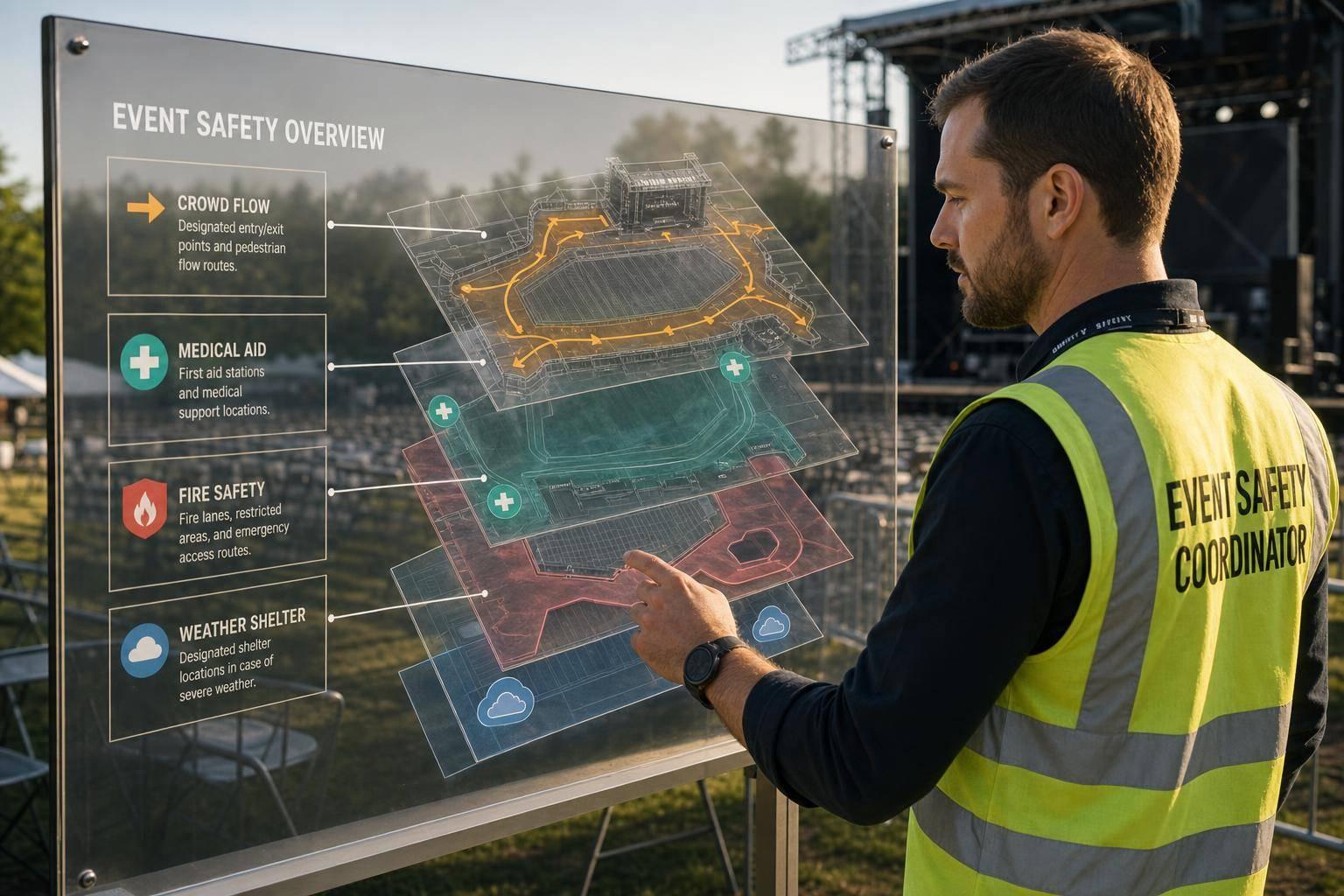
If I had to boil this down to one point, it’s this: basic job safety training is not enough for live events. Staff need role-based, event-day training tied to the venue, crowd size, weather, exits, and chain of command.
Here’s the short version:
A few numbers stand out fast:
What I like about this guide is that it keeps the focus on what staff need to do in the moment:
| Area | What I’d focus on |
|---|---|
| Basic training | OSHA-style safety basics, PPE, slips, lifting |
| Event-day safety | Exits, radio channels, floor plan, emergency roles |
| Medical | First-aid kits, AED locations, EMS contact steps |
| Crowd control | Bottlenecks, line flow, egress, de-escalation |
| Fire and venue safety | Clear exits, temporary power, tents, shutdown steps |
| Weather | Lightning radius, thunder rule, WBGT heat triggers, wind limits |
| Records | Completion dates, attendance logs, expirations, role match |
Bottom line: I’d use certifications for baseline skills, then use day-of briefings to cover what matters at that event, in that space, with that team.
Every event has its own risk mix. But the main safety areas stay the same: crowd management, medical readiness, fire safety, weather response, safeguarding, and site-specific briefings. Once roles are set, each person needs to know these topics before doors open.
Staff need to spot trouble early, especially in places where people can bunch up fast. That means narrow corridors, stairwells, and bottlenecks near entry gates where crowd density can jump in a hurry. Managing ingress and egress, handling queue lines, and keeping walkways open are front-line skills for ushers, gate staff, and bar teams before the event starts.
Staff also need a clear chain of command. Who makes the call in an emergency? Who contacts emergency services? Who controls the PA system? OSHA's emergency action plan guidance calls for a preferred method for reporting emergencies, defined evacuation routes, role assignments, and a clear communication structure. For temporary workers who move from one event to the next, that setup needs to be spelled out every time. It can't be left to guesswork.
De-escalation matters too. Front-line teams should know how to respond to disruptive behavior before it gets worse. That means spotting early warning signs, using calm verbal techniques, and knowing when to pass the issue to a supervisor or security team. A small problem can grow fast if no one knows when to step in.
Most staff do not need clinical training. But they do need to know where first-aid kits and AEDs are, how to alert on-site EMS to a medical issue, and how to document what happened.
Fire safety at live events is not just about pointing out the nearest extinguisher. Temporary venues like tents, outdoor stages, and pop-up structures bring added risks: temporary power, extension cables across walkways, trip hazards, and blocked emergency exits. A pre-event walkthrough should check that exits are clear and that staff know the emergency shutdown steps.
Outdoor events need written weather triggers. Not gut calls. Pick a weather watcher and set exact action thresholds before the event begins.
For example:
Safeguarding now goes well past physical harm. Staff should know how to spot and quietly report harassment, identify attendees who may be vulnerable or distressed, and follow the venue's reporting process in a private way. If the reporting path is clear and private, staff are more likely to act fast instead of freezing up.
Site-specific briefings bring all of this into the actual event space. Even trained staff need a walk-through of the real floor plan, restricted areas, loading zones, emergency exits, and key contacts for that event. Certification courses build baseline knowledge. The day-of briefing puts that knowledge on the ground. Use certifications for the basics, and briefings for what matters that day.
| Type | Required knowledge | Course examples | Recommended refresh frequency |
|---|---|---|---|
| Crowd management certification | National fire-code requirements, life safety principles, detailed duties of crowd managers, occupancy and egress calculations, and evacuation support | NFPA/IFC-aligned Crowd Manager online training; state fire marshal crowd manager programs | Every 2–3 years or per local code; annual practical drills recommended |
| Security/safeguarding courses | Recognizing and responding to harassment, assault, and vulnerable attendee identification; venue security procedures | State-licensed security training; event safeguarding workshops | Annually or per venue/client requirements |
| Site-specific event-day briefing | Venue maps, emergency exits, restricted zones, loading areas, radio channels, key contacts, weather hold procedures | Conducted by event supervisor or safety lead on-site | Every event, regardless of prior certification |
The ICC's crowd manager program, for example, is a 2-hour online course that meets requirements under the International Fire Code and NFPA life safety standards. For staff stepping into a crowd management role, that's a practical place to start.
Next, match each role to the right certification path.
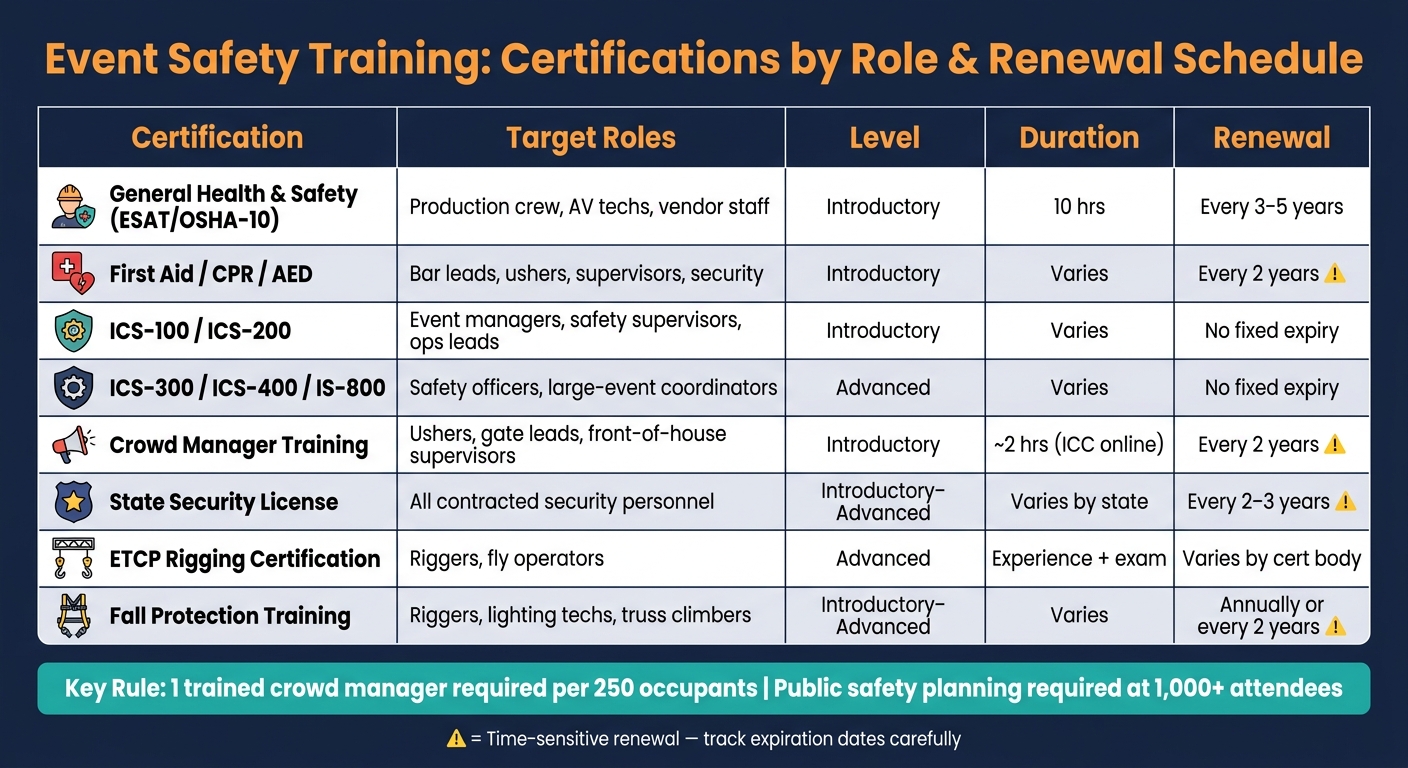
Event Safety Training: Certifications by Role & Renewal Schedule
Once you’ve mapped the main hazards, the next move is simple: match training to the job. Not every role needs the same credential. A stagehand, a security lead, and a rigging tech face very different risks, so their training should reflect that. Event size matters too. A small local gathering won’t need the same level of incident command training as a large festival with police, fire, and EMS on site.
General health and safety training works well for production crew, stagehands, AV techs, and setup/teardown vendors. Programs like ESAT cover OSHA basics, PPE, common hazards, plus crowd and weather risks. Think of it as the baseline that helps crews work safely from load-in to load-out. Refresh this training every 3–5 years.
First aid and CPR/AED certification should be in the hands of supervisors, security leads, and staff working high-traffic areas like stages, bars, and entry points. If something goes wrong in a packed area, those first few minutes matter. AHA and Red Cross programs are widely recognized. These certifications are valid for 2 years.
For supervisors who coordinate with fire, police, or EMS, FEMA ICS training gives teams a common structure for incident response. ICS-100 and ICS-200 are the starting point. For larger or multi-agency events, ICS-300, ICS-400, and IS-800 are a better fit.
Crowd manager training is required by NFPA 101 and local fire codes. Some venues set the threshold at 50 occupants. The IFC model requires at least one trained crowd manager for events with 1,000+ attendees, plus one more for every 250 people after that. Renewal comes every 2 years.
Security licensing changes by state, but one rule stays pretty clear: guards handling access control, bag checks, or physical intervention at public events usually need a state-issued license. Training usually covers use-of-force rules, legal authority, de-escalation, and incident documentation. Renewal periods come from state law and often fall every 2–3 years.
For overhead work, the bar is higher. ETCP rigging certification is meant for riggers, while fall protection training applies to riggers, truss climbers, and lighting techs working at height.
| Certification | Target roles | Level | Typical duration | Renewal |
|---|---|---|---|---|
| General health & safety (ESAT/OSHA-10 style) | All production, technical crew, vendor staff | Introductory | 10 hrs (OSHA-10) | Every 3–5 years |
| First aid / CPR / AED | Bar leads, ushers, supervisors, security | Introductory | Varies by provider | Every 2 years |
| ICS-100 / ICS-200 | Event managers, safety supervisors, ops leads | Introductory | Varies by provider | No fixed expiry; refreshers recommended |
| ICS-300 / ICS-400 / IS-800 | Safety officers, large-event coordinators | Advanced | Varies by provider | No fixed expiry; refreshers recommended |
| Crowd manager training | Ushers, gate leads, front-of-house supervisors | Introductory | Varies by provider | Every 2 years |
| State security license | All contracted security personnel | Introductory–Advanced | Varies by state | Every 2–3 years (set by state law) |
| ETCP rigging certification | Riggers, fly operators | Advanced | Experience and exam | Varies by cert body |
| Fall protection training | Riggers, lighting techs, truss climbers | Introductory–Advanced | Varies by employer | Annually or every 2 years |
Once roles are mapped, the practical job is making sure training dates line up with renewal windows and event deadlines.
Once you've picked the right certifications, the next move is simple: turn them into a role-by-role training plan.
Give temporary and permanent staff the same site- and task-specific training. If someone's doing the same job in the same setting, the safety standard shouldn't change.
Start by profiling the event. Is it indoors or outdoors? How many people are expected? Will alcohol be served? Are vehicles, heavy equipment, or elevated structures part of the setup? What weather risks come with the location? Those details decide which training modules each role needs.
Use the role map from the prior section to match training to event risk. A simple matrix works well here, with Required, Recommended, and Not Applicable for each role. Take the certifications you've already picked for each role and plug them into the matrix. Here's a working example:
| Role | General Safety Orientation | Crowd Management | Responsible Beverage Service | First Aid / CPR | Emergency Procedures | Vehicle and Equipment Safety | Weather and Site Hazards |
|---|---|---|---|---|---|---|---|
| Server | Required | Recommended | Recommended | Recommended | Required | Not Applicable | Not Applicable |
| Bartender | Required | Recommended | Required | Recommended | Required | Not Applicable | Not Applicable |
| Captain / Lead | Required | Required | Recommended | Recommended | Required | Recommended | Recommended |
| Loader / Driver | Required | Not Applicable | Not Applicable | Recommended | Required | Required | Recommended |
| Security | Required | Required | Not Applicable | Recommended | Required | Not Applicable | Recommended |
| Stage Crew | Required | Not Applicable | Not Applicable | Recommended | Required | Required | Recommended |
| Site Lead | Required | Required | Not Applicable | Recommended | Required | Recommended | Required |
Update the matrix whenever event risk changes or role assignments shift. Security staff may also need conflict management, access control, and coordination with law enforcement. Loaders and drivers should get briefed on manual handling and dock or roadway hazards. This matrix then guides the timeline, briefings, and recordkeeping steps below.
Once the matrix is ready, schedule training by deadline, not by convenience.
A practical timeline for most events looks like this:
For higher-risk events, run a quick drill during setup. Then, within 48–72 hours after the event, review incident logs and near-misses, update training records, and flag anyone who needs a refresher before their next assignment.
Each record should include the employee name, role, training topic, date, worker type, instructor, and any assessment results. Those records also support the staffing and compliance workflow in the next step.
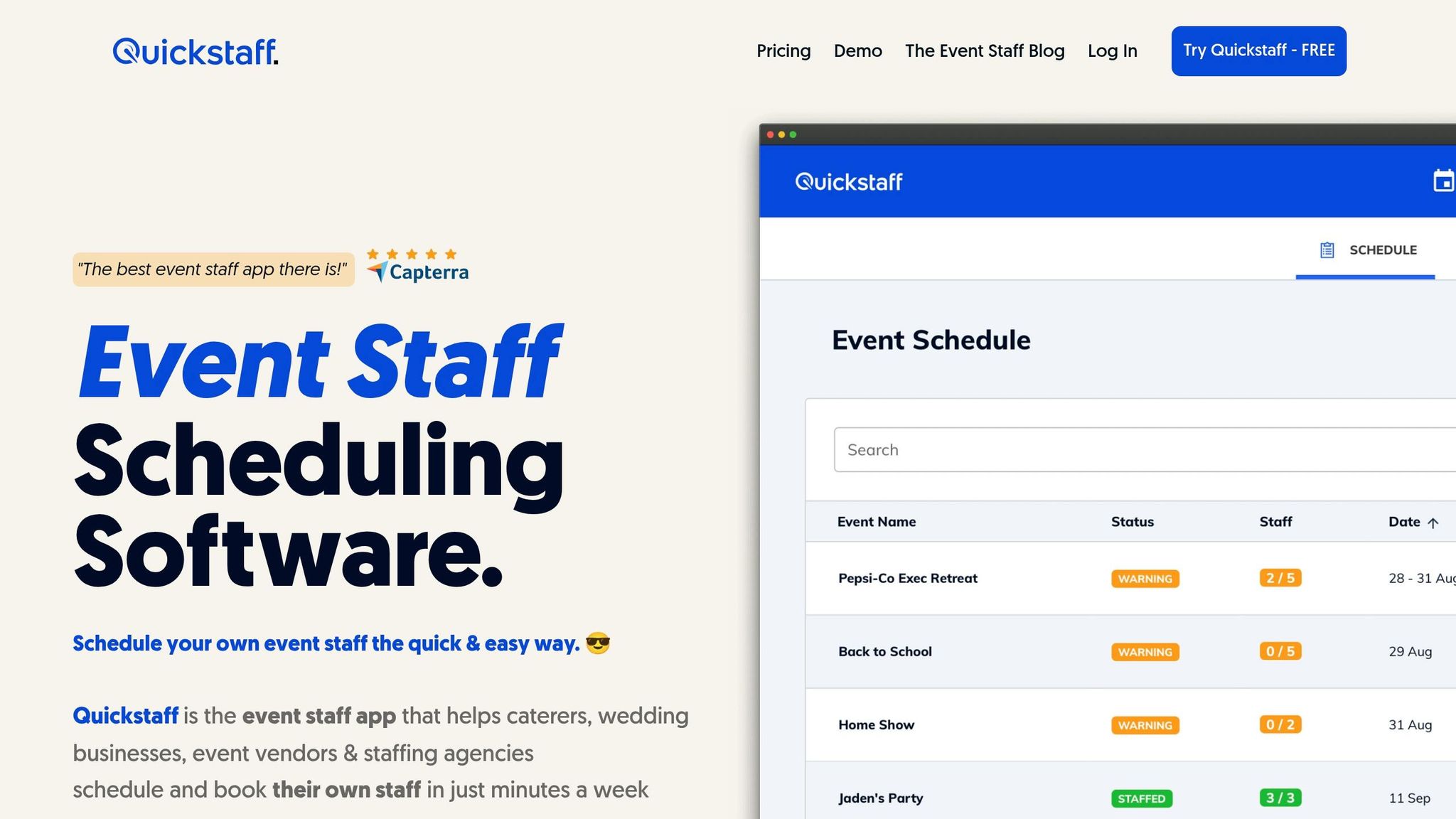
Quickstaff brings scheduling, availability tracking, and training status together in one place.
Use staff profiles to track completion, expiration dates, and role eligibility. Managers can use custom fields, tags, or profile notes to mark finished modules. For example, a staff member might be tagged as "Crowd Mgmt 2026" or "First Aid valid to 12/31/2026." From there, managers can filter the staff list and invite only qualified workers for high-risk roles.
Automated reminders can go out before a deadline. The waitlist feature also helps keep trained backups ready if someone drops out at the last minute.
That same staffing record trail supports the compliance and retention benefits covered next.
Once training and scheduling are set, the payoff shows up fast: better compliance and stronger incident response.
Documented training helps support due diligence after an incident. If something goes wrong, training records show that the training was planned and tied to each role.
That matters in practice. Staff who are trained for the job tend to spot issues sooner and act faster, which can cut injuries and limit disruptions. For attendees, clear instructions and steady response make the venue feel calmer and safer.
Those same systems can also help keep staff around.
Structured training lowers stress, cuts mistakes, and improves return rates. In seasonal event work, retention keeps hard-earned experience on the team and reduces rehiring costs. Training can also give staff a path into lead roles, which helps engagement and retention.
The next step is simple: track whether the program is working.
| Area | Training Inputs | Short-Term Effects | Long-Term Benefits | Metrics to Track |
|---|---|---|---|---|
| Compliance | Briefings, certifications, logs | Fewer documentation gaps, clearer recordkeeping | Lower liability exposure, smoother audits and client reviews | Training completion rate, audit readiness |
| Attendee Safety | Emergency response, crowd, medical readiness | Faster incident response, fewer injuries | Stronger guest trust, fewer serious escalations | Incident count, near-miss count, response time |
| Operations | Standard procedures, drills, comms checks | Fewer disruptions, more consistent execution | Predictable event delivery across venues and seasons | Schedule disruption time, no-show impact |
| Talent Retention | Onboarding, refreshers, advancement | Higher staff confidence, lower early turnover | Stronger team performance, reduced onboarding costs | Retention rate, shift coverage rate |
A few metrics matter more than most:
Compare those numbers from one event to the next. That’s how you find out whether training is changing outcomes, not just producing paperwork.
Make safety training part of every event. Define role-based requirements, cover core risk areas, match certifications to each job, document completion, and build schedules from training status.
When training, scheduling, and after-action reviews stay connected, safety becomes part of standard operating process.
Event-specific safety training matters for everyone working the event. But not everyone needs the same level of training. What people need should match their role, day-to-day duties, and the risks tied to the event itself.
For example, frontline staff should have basic hazard awareness so they can spot common problems and respond the right way. Supervisors need deeper safety training because they’re often the ones making calls in the moment and guiding the team. And some roles call for formal certification, such as food handling, alcohol service, or CPR, AED, and first aid.
Training should match what each role actually does. A one-size-fits-all setup usually falls short.
For hospitality and general staff, that often means Food Handler and Alcohol Server certifications. Security teams and medical responders usually need American Red Cross or AHA First Aid, CPR, and AED training.
Some higher-risk or lead roles may also need Stop the Bleed or Professional Rescuer certifications. And beyond that, many teams need role-specific training tied to the job itself, like crowd management, radio communication, or emergency protocols.
Renewal rules depend on the certification and local requirements. In most cases, first aid and CPR certifications last 2 years.
For designations like CSEP, CMP, and CEM, renewal usually happens every 3 to 5 years. Many of these programs also require continuing education credits to stay active.
OSHA general industry safety training should be refreshed every year, within 12 months of the last session. And in high-stress work settings, yearly refreshers are a smart move even if the card hasn’t expired yet.