What Event Staff Want From Managers
August 31, 2026

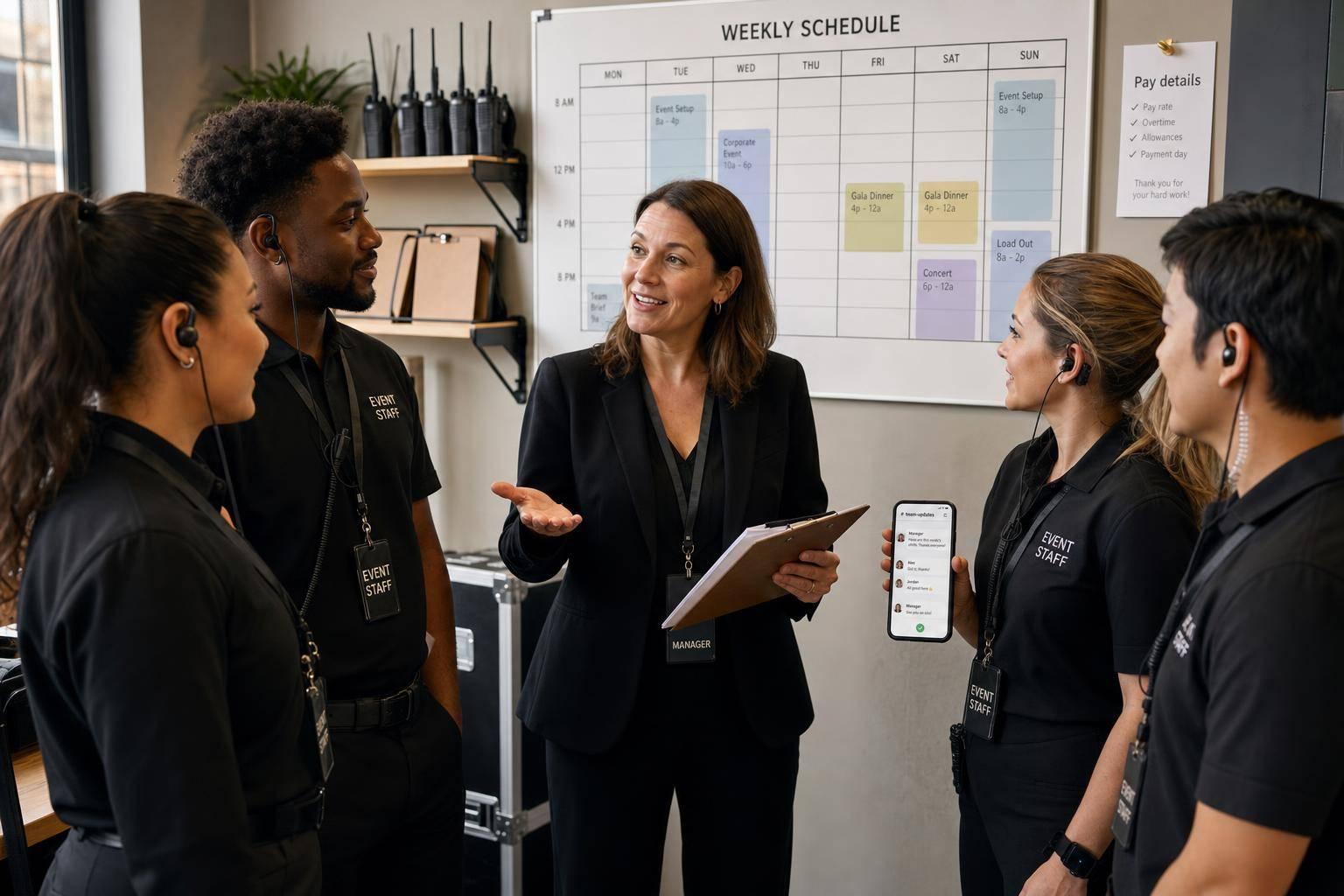
If you want event staff to come back, give them notice, explain pay clearly, treat people the same way, and keep updates in one place.
I’d sum it up like this: event workers leave when the job feels shaky. That usually means late schedules, pay confusion, uneven shift handling, or messy communication. The article’s main point is simple: when I remove that uncertainty early, staff are more likely to accept shifts again.
Here are the big takeaways right away:
A few numbers make the point clear:
In short: staff remember the basics. If I make the work easier to plan, easier to understand, and easier to trust, I have a much better shot at keeping a steady team.
![What Event Staff Really Want From Managers [Key Stats]](https://cdn.prod.website-files.com/6179e204627a03fe2a7ebc9f/6a96402b50ab38ac79c181ce_6a963468f0ae24ed42a366dd-1788229592984.jpg)
What Event Staff Really Want From Managers [Key Stats]
The common thread is uncertainty: managers keep staff loyal by cutting that uncertainty early.
Unpredictable schedules push staff out fast. If workers don’t know their call time, end time, or role until a day or two before an event, planning around other jobs and personal life gets messy in a hurry, making scalable event scheduling a necessity for retention. Nationally, about 40% of hourly workers get less than a week’s notice on their schedules, and in retail and service sectors that figure climbs closer to two-thirds. That’s a serious retention issue.
A good target is one to three weeks of notice, with at least 14 days whenever possible. The schedule should spell out the venue, call time, estimated end time, role, uniform, and any setup or teardown duties. Research on Fair Workweek laws found that scheduling policy changes increased the share of workers receiving two weeks’ notice by 13 percentage points - about a 29% improvement.
Once dates are locked in, staff start looking at whether shifts are handled fairly.
Fairness shows up in the small stuff. Rotate tougher assignments like setup and cleanup, and hold everyone to the same standards. If there’s a problem, deal with it privately and professionally.
A Harvard study found that more scheduling fairness was tied to a 1.8 percentage point decrease in worker exits - from a baseline exit rate every two weeks of 4.5% - which works out to about a 40% relative reduction in turnover. For a catering manager or staffing coordinator, that can make the difference between scrambling for help and keeping a crew that comes back. Using event staff scheduling software helps managers maintain this consistency. Respectful supervision and safe working conditions matter here too. People are far more likely to take the next shift when they feel they were treated decently on the last one.
Fair shift assignments matter, but they won’t fix confusion around money.
Before someone says yes to a shift, lay out the exact hourly rate in U.S. dollars, expected hours, overtime eligibility, break policy, and when pay will be sent. If tips, service charges, travel pay, parking reimbursement, or bonuses are part of the job, staff should know that before the event starts - not when payday arrives.
82% of workers say pay transparency is important, but only 34% say their employer actually practices it. That gap is where trust starts to crack. The usual trouble spots are pretty predictable:
Managers can head off most of those issues by documenting how time is tracked, who approves edits, and the exact pay date.
Once pay is clear, communication needs to stay simple.
Send one full confirmation with the event name, date, full address, call time, uniform, parking instructions, entry instructions, and a direct contact name. That one message can prevent the usual mess of scattered texts, missed updates, and last-minute group chats that leave people guessing and showing up late.
During the event, staff should know exactly who to go to if the client changes something or the setup shifts at the last minute. One clear point of contact per event cuts down confusion. A day-before checklist with dress code, parking, entry point, break plan, and lead contact shows staff that the event is organized and that someone is paying attention.
Once the basics are clear, loyalty comes down to consistency. Staff want one clear message, sent once, in a place they can check without digging around. That matters a lot on event teams, where small mix-ups can turn into big problems fast.
A survey of more than 52,000 frontline workers found that they are 2.4 times more likely to feel supported when their manager communicates well, and four times more likely to quit if that communication falls short. In events, you usually see that gap right away.
Scattered updates lead to confusion. Put schedules, dress code, parking, venue access, and last-minute changes in one channel. That gives staff a single place to check on the way to the venue instead of piecing things together from texts, emails, and group chats.
If load-in changes, one update can reach everyone in the same spot. That cuts down on missed details and back-and-forth.
Only 39% of employees rate their organization's communication as very helpful, and in retail that drops to 31%. Putting updates in one place is one of the fastest ways to fix that.
One channel cuts confusion. An open path for questions helps stop mistakes before they happen.
Invite questions directly. End the brief with a simple deadline, such as: Text me by 8:00 PM tonight if anything is unclear. That small move makes questions feel normal instead of awkward.
Fast answers matter most before the event starts. Managers who reply quickly build trust and usually get better turnout.
Once schedules, pay, and communication are set, pay close attention to changes in how staff respond. People almost never leave out of nowhere. The first hints usually show up as slower replies, weaker attendance, and less involvement. And most of the time, those signs trace back to the same things staff care about most: notice, fairness, pay, and communication.
The first signs tend to appear in response speed, attendance, and participation.
Someone who used to reply the same day may start taking a few days to answer, accepting fewer shifts, or turning down shifts they used to jump on. Attendance and punctuality matter too. A staff member who once arrived early may begin showing up right at call time. Then you may see a late arrival here and there, along with less interest in staying for breakdown.
Effective communication with event staff can say just as much. Disengagement often looks quiet at first: fewer questions before events and slower replies. Less outreach, fewer questions, and slower replies can be a sign that trust is starting to slip.
When you see those patterns, step in before the next shift disappears.
If you notice a pattern, move fast. Set up a short private check-in. Start by acknowledging the person's past reliability, then point out the change in neutral language. Ask if notice, pay, or shift fairness is behind it.
Before the conversation, use Quickstaff to review acceptance history, response times, availability, and past communication. That gives you a clearer picture going in. Once you find the source of the friction, fix it and make the change visible.
Event staff rarely stick around because of one great shift. They stay because the day-to-day pattern feels solid: enough notice to plan their lives, fair treatment from one event to the next, pay terms explained before they say yes, and one clear place for updates and questions.
Put simply, these habits cut down the uncertainty that drives people away. When managers get these basics right, staff come back.
Research consistently shows that more schedule notice lowers turnover.
The core habits are simple:
For managers who want a repeatable process, tools like Quickstaff can help keep those details in one place.
The staff who keep showing up, accepting shifts, and doing their best on-site are usually the ones who trust that their manager will follow through. That trust is built in small moments, and it keeps staffing predictable. Reliable staffing starts with reliable management.
Event staff should usually get schedules 5–7 days in advance. That gives them enough time to sort out personal commitments like child care or medical appointments.
A detailed event brief should go out 48–72 hours before the shift so staff know what to expect and can show up prepared. Quickstaff can help by keeping schedules, event details, and reminders in one place.
Before a shift starts, managers should clearly confirm hourly pay, how performance bonuses work, and how overtime is paid. If pay changes based on experience or results, staff should know that upfront too.
Clear pay details help prevent mix-ups, build trust, and help people stick around.
Managers can spot slipping trust when the same patterns keep showing up: lower repeat-shift acceptance, more no-shows, fewer staff questions, and slower replies.
They may also notice more confusion tied to missed or uneven schedule updates, including staff showing up at the wrong location, plus more frustration when shifts change. The fix starts with the data. Watch centralized scheduling metrics for acceptance, availability, attendance, and response times.
Then look for repeated communication misses and clean them up with one reliable update channel and prompt check-ins.