Catering Staff Training: Skills Each Role Needs
August 29, 2026

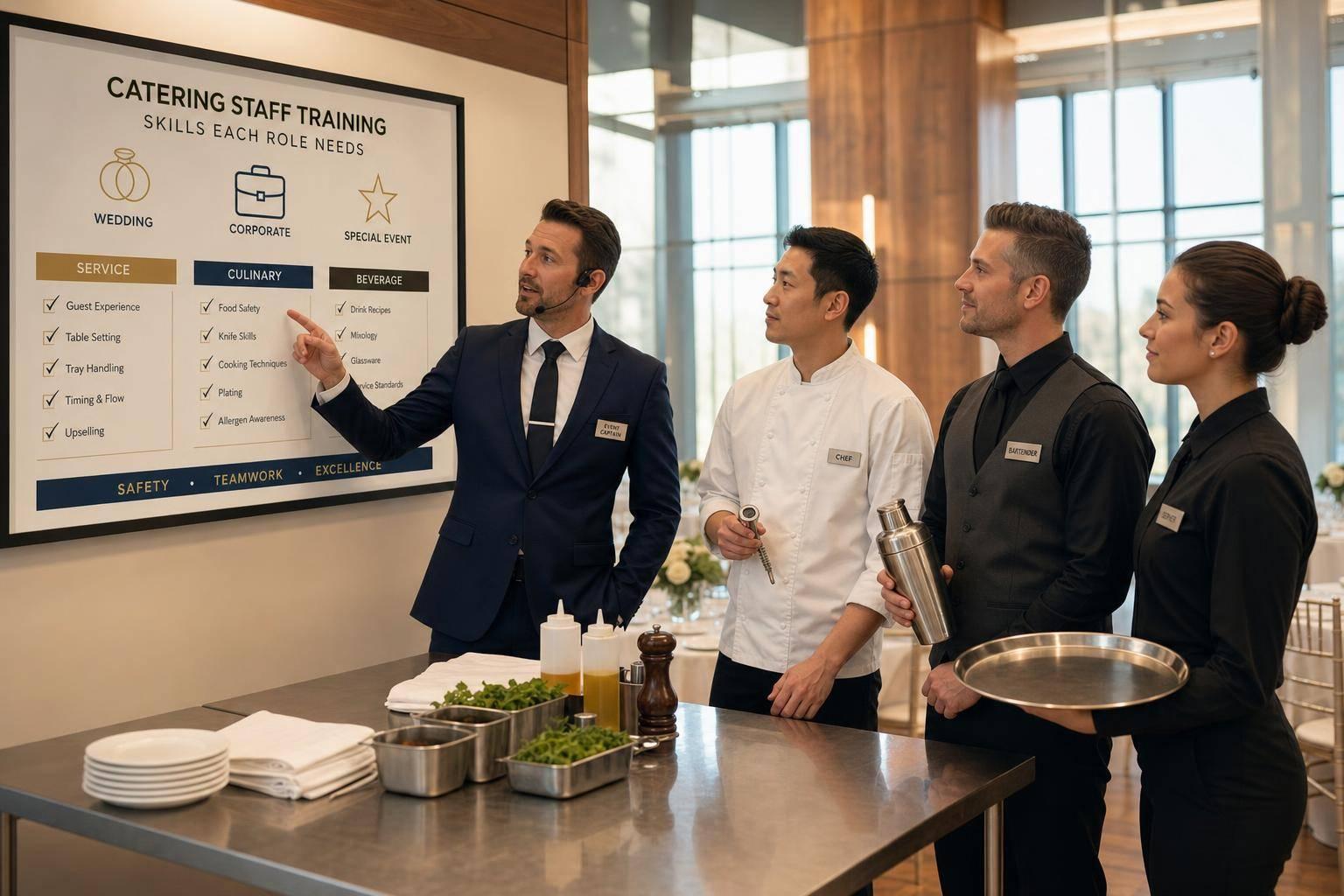
If you train every catering worker the same way, you set your team up for missed plates, slow service, and safety problems. I’d build training by role, then check each person on the exact tasks they’ll handle before I put them on a shift.
Here’s the short version:
A few points stand out fast:
Quick comparison
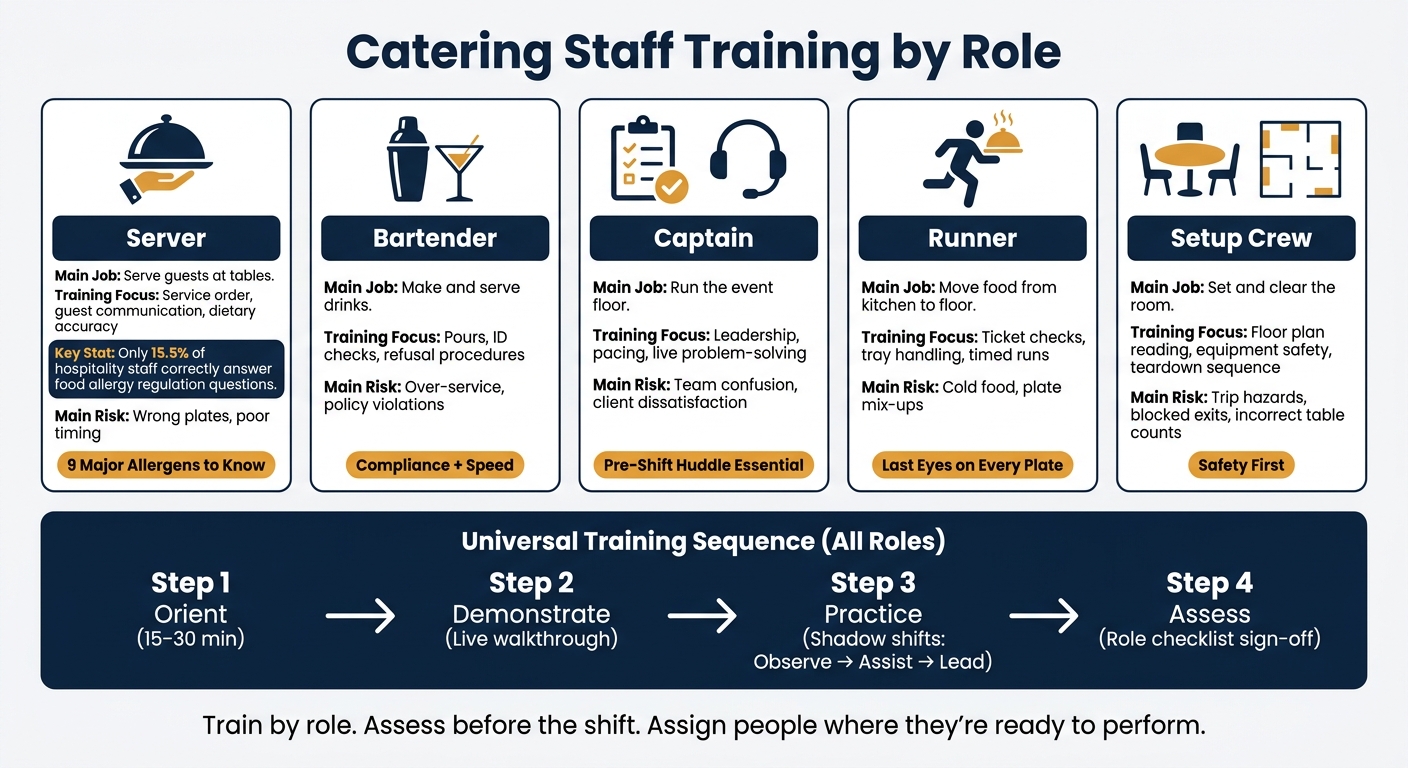
| Role | Main job | Main training focus | Main risk if training is weak |
|---|---|---|---|
| Server | Serve guests at tables | Service order, guest talk, dietary accuracy | Wrong plates, poor timing |
| Bartender | Make and serve drinks | Pours, ID checks, refusal steps | Over-service, policy misses |
| Captain | Run the floor | Leadership, pacing, problem handling | Team confusion, client issues |
| Runner | Move food from kitchen to floor | Ticket checks, tray handling, timing | Cold food, mix-ups |
| Setup crew | Set and clear the room | Layout, equipment safety, teardown | Trip hazards, bad room setup |
My takeaway: train for the role, train for the event format, and assign shifts using scalable event scheduling based on checked readiness - not guesswork.
Catering Staff Training by Role: Skills, Risks & Focus Areas
Guest-facing roles have the biggest effect on how an event feels to attendees. That means training can't stop at task execution. Staff need technical precision and clear, polished communication. A good place to start is with banquet servers, because they're doing the service work guests notice most.
Server training should cover the basics first: table settings, serving and clearing order, seat assignments, safe tray handling, and how to move through a packed room without disrupting service. Then it should move into live guest interaction. Servers need practice with special meals, steady body language, and quick recovery when a guest questions a dish or points out a mistake.
Dietary accuracy is non-negotiable. In the U.S., the nine major U.S. allergens - milk, eggs, fish, crustacean shellfish, tree nuts, peanuts, wheat, soybeans, and sesame - should be part of every guest-facing training plan. This is one area where many teams fall short. Research shows that only around 15.5% of hospitality staff correctly answer questions about food allergy regulations. That gap is a problem.
Servers should get used to asking whether anyone has food allergies or dietary restrictions the kitchen should know about. They should also learn how to record those responses and confirm allergen-safe plates before service. If anything is unclear, they need to escalate it right away. Never guess.
Bartender training should begin with station setup. Before the first guest walks up, staff should know how to arrange glassware, stock ice bins, set garnishes, and place tools so the bar runs smoothly. After that, training should move into standard pours and event-specific drink menus. Recipes should be memorized, and pour accuracy should feel automatic.
Speed matters. But compliance matters too. Bartenders need to know how to check IDs, spot signs of intoxication, refuse service when needed, and document incidents based on company policy. The table below shows the main areas to assess during training:
| Competency | What to evaluate |
|---|---|
| Speed | Keeps service moving without rushing accuracy |
| Accuracy | Correct recipes, consistent pours, proper glassware |
| Product knowledge | Knows menu items and drink details |
| ID-check consistency | Checks IDs every time and follows policy |
| Cleanliness | Keeps the bar organized and clean |
| Guest interaction | Friendly, concise, and calm under pressure |
| Problem resolution | Follows refusal and escalation procedures |
Captains lead the event floor, so their training should match that level of responsibility. A strong captain starts with a short pre-shift huddle that covers station assignments, dietary flags, service pacing goals, reservations, menu changes, and any last-minute updates using a catering staff scheduling checklist. That meeting shapes the shift before service even starts.
Once the event is live, captains track ticket times, stay in close contact with the kitchen, and spot slowdowns before guests notice them. If something goes wrong - a missing vegan plate, a delayed course, or a guest complaint - the captain needs to stay calm, confirm the next step, and give the client a clear update while the team works the problem. After the event, a quick debrief helps the team see where speed or accuracy slipped and turns that event into a coaching moment for the next one.
Support roles need a different training focus: accuracy, safety, and flow.
Once guest-facing service is covered, train the people who keep the event on track behind the scenes. These roles often fix issues before guests ever notice them. That means their training should focus on accuracy, safety, and timing.
Runners are often the last set of eyes on a plate before it hits the floor. Train them to read tickets, match seats, and check each plate before leaving the kitchen. Garnish should be in place, the rim should be clean, and the portion should be right.
How they carry food matters just as much as how fast they move. Runners need drills on keeping plates level, balancing trays close to the body, and getting through tight spaces without bumping into guests, staff, or equipment. Timed practice runs help a lot. For example, have them move a full course from the kitchen to floor stations while keeping presentation intact. That kind of repetition helps runners settle into the pace expected at a large wedding or back-to-back corporate luncheon, where meal timing is often tied to speeches, vendor schedules, and venue curfews.
Communication is the other side of the job. Runners should take direction from the kitchen expo or captain, repeat orders back, and flag problems right away.
Setup crew need a different kind of training. Their work centers on room layout, safety, and teardown.
Setup crew training starts before guests arrive and finishes after they leave. First, they need to read a floor plan and translate it into the room in front of them. That includes table counts, aisle widths, buffet positions, and focal points like dance floors or staging areas. Train setup crew to keep exits clear and maintain ADA-compliant pathways, because one misplaced table can block an exit or disrupt an accessible route.
Equipment safety can't be treated casually. Staff need training on safe lifting, team carries, cart use, cord routing, and hot box handling. Hot boxes should be placed level with heat-resistant gloves, and fuel canisters should stay away from drapes and flammable decor. Real incident scenarios can make this stick fast - a tipped hot box or a guest tripping over a cable shows exactly what's at stake.
Teardown is where teams often get loose, and that's where mistakes pile up. A clear reverse sequence helps: food and trash first, then decor and linens, then furniture and equipment. Checklists should cover rental item counts, cord removal, hot equipment cooldown, and a final room sweep. Miss those steps, and you can end up with lost equipment charges or venue complaints.
These roles overlap a bit. Runners may help with resets or basic setup. But their training needs are not the same.
| Runners | Setup Crew | |
|---|---|---|
| Primary focus | Speed, order accuracy, plate presentation | Layout precision, safety, room-readiness |
| Training emphasis | Pacing drills, routing, kitchen communication | Floor plan reading, equipment handling, checklists |
| Guest contact | Moderate - moves through populated rooms during service | Low - mostly pre- and post-service |
| Key risk if undertrained | Cold food, wrong plates, service bottlenecks | Blocked exits, trip hazards, incorrect table counts |
| Core skill | Coordinating with kitchen and servers in real time | Following timelines and completing teardown accurately |
Use that split when building training tracks. Runners need service-flow simulations and accuracy tests under time pressure. Setup crew need layout labs and safety drills, plus checklists they can carry into every event. Put staff on the wrong track - or skip role-based training altogether - and both speed and safety take a hit.
Once each role’s core skills are clear, turn them into a short training workflow.
The easiest way to train event staff is to use a short loop: orient, demonstrate, practice, assess.
Orient covers the basics: service style, safety rules, allergen protocols, and event-specific expectations. Keep each role’s orientation short, about 15–30 minutes. Then move to demonstrate, where a trainer shows the full sequence live. A banquet server, for example, should watch a complete table approach, serve, and clear. A runner should watch a timed tray run from expo to the floor.
From there, staff practice through drills and shadow shifts. A simple shadow-shift ladder works well:
Last comes assess, using a role checklist to confirm readiness. That gives managers a repeatable way to judge whether someone is ready instead of making a call based on instinct.
Timed drills make the practice phase much more concrete. Runners should complete a full tray run from the kitchen to the floor station with no spills or route mistakes. Bartenders can be tested on building standard menu drinks to time, with accurate pours and garnish. It’s a simple setup, but it tells you a lot fast.
Before peak seasons or more complex events, run the same sequence again in a shorter form so the training stays sharp.
Then tailor that sequence to the kind of event the team will actually work.
Train for the event in front of you, not some generic shift.
Large weddings and corporate galas put pressure on speed, stress control, and communication. Staff should practice fast tray passing, timed dinner drops, and calm responses to late arrivals, missing place settings, or the bar getting slammed right after speeches. Small plated dinners shift the focus to precision and sequence. That means synchronized serving, tighter menu knowledge, and proper wine service. Buffet and station-style events bring a different kind of pressure: line control, restocking, and fast coordination between runners and the kitchen.
| Event Type | Pace | Banquet Server Focus | Bartender Focus | Runner Focus | Setup Crew Focus |
|---|---|---|---|---|---|
| Large wedding (150–300 guests) | High | Speed, dietary accuracy, timed drops | Batching, ID checks, rush management | Route discipline, expo communication | Safety, equipment handling, venue rules |
| Corporate gala | High | Discreet service, event cues | VIP handling, silent service | Rapid restocking, expo coordination | Precise layout, clean teardown |
| Small plated dinner (20–80 guests) | Moderate | Synchronized serving, wine service | Cocktail detail, wine service | Presentation, precise timing | Exact table counts, fine detail |
| Buffet service | Moderate–High | Line control, quick clearing | Standard pours, crowd management | Station restocking, food level monitoring | Buffet positioning, flow design |
| Stations (chef or action stations) | Moderate | Allergy awareness, guest direction | - | Fast restocking between stations | Station spacing, safety clearance |
When staffing is lean, training also needs to cover priorities. In plain terms: what gets done first when there isn’t enough time to do everything. Captains should practice reassigning staff on the fly. Servers should know to protect hot food drops and urgent guest needs first. Bartenders should be ready to simplify the menu or batch cocktails during a rush without skipping ID checks or over-pouring.
Track those readiness levels in the same system you use to build the roster.
Training falls apart if the right people don’t land in the right roles on event day. That’s where Quickstaff helps U.S. catering managers tie training progress to scheduling.
Managers can tag staff by role and level - for example, “Server – Level 1: Buffet only,” “Server – Level 2: Plated,” and “Server – Level 3: High-speed events” - assign shadow shifts, and note readiness inside each event. That makes it easier to place trained staff in higher-stakes roles while keeping call times, dress codes, and special instructions in one place.
Reminders and messages also help keep training notes and floor plan updates in front of the team.
Once each role is trained, the next step is simple: match each person’s readiness to the job they’ll actually do.
Good catering training teaches the right skills for each role. Banquet servers need service speed and dietary accuracy. Bartenders need speed and alcohol-service compliance. Runners need timing and coordination. Setup crews need precision and safe work habits. Captains need leadership and the ability to make fast calls when plans change in the middle of an event. Role-based training cuts down on errors, helps teams recover faster, and keeps service under control.
Use the same standard for every role: assess the exact task a worker will handle before assigning the shift. When you apply that standard the same way across roles, you build a team people can count on over time.
Captains and coordinators keep the whole system together. When they work from clear pre-shift checklists and assign roles based on actual readiness, follow-through gets better. That readiness only matters if shift assignments match it. Quickstaff supports that by keeping readiness-based scheduling and event communication in one place.
Train by role. Assess before the shift. Assign people where they’re ready to perform.
Use activity-based drills that match real event conditions, not just classroom training. Put staff in the same kind of situations they’ll face on the job.
Have them use teach-back to confirm routes or access points, so you know they didn’t just hear the plan - they can repeat it and use it. Run full-timeline drills too. That helps you test pacing during slower periods and peak rushes, when timing can fall apart fast.
It also helps to practice quick radio communication and guest-interaction scripts. Those small moments matter. A short, clear radio call can save time, and a calm guest reply can keep things on track.
Before service, hold a 10-minute briefing to confirm responsibilities, review allergen protocols, and answer final questions.
Servers and buffet attendants need the most allergy training because they work face-to-face with guests.
They’re often the first people asked about ingredients. That means they need to answer allergy questions clearly, spot possible allergens, and pass dietary restrictions or special requests to the kitchen without mistakes. Buffet attendants also need to help guests at food stations when allergy concerns come up.
Retraining shouldn’t be a one-and-done task. Use short monthly refreshers, plus deeper quarterly workshops, to keep skills sharp and top of mind.
For high-stakes safety topics like allergen awareness, run a 10- to 15-minute review before every event. Then follow it with a 10-minute post-event debrief to fix weak spots right away.