How to Cater Large-Scale Events: Logistics & Staffing
April 20, 2026

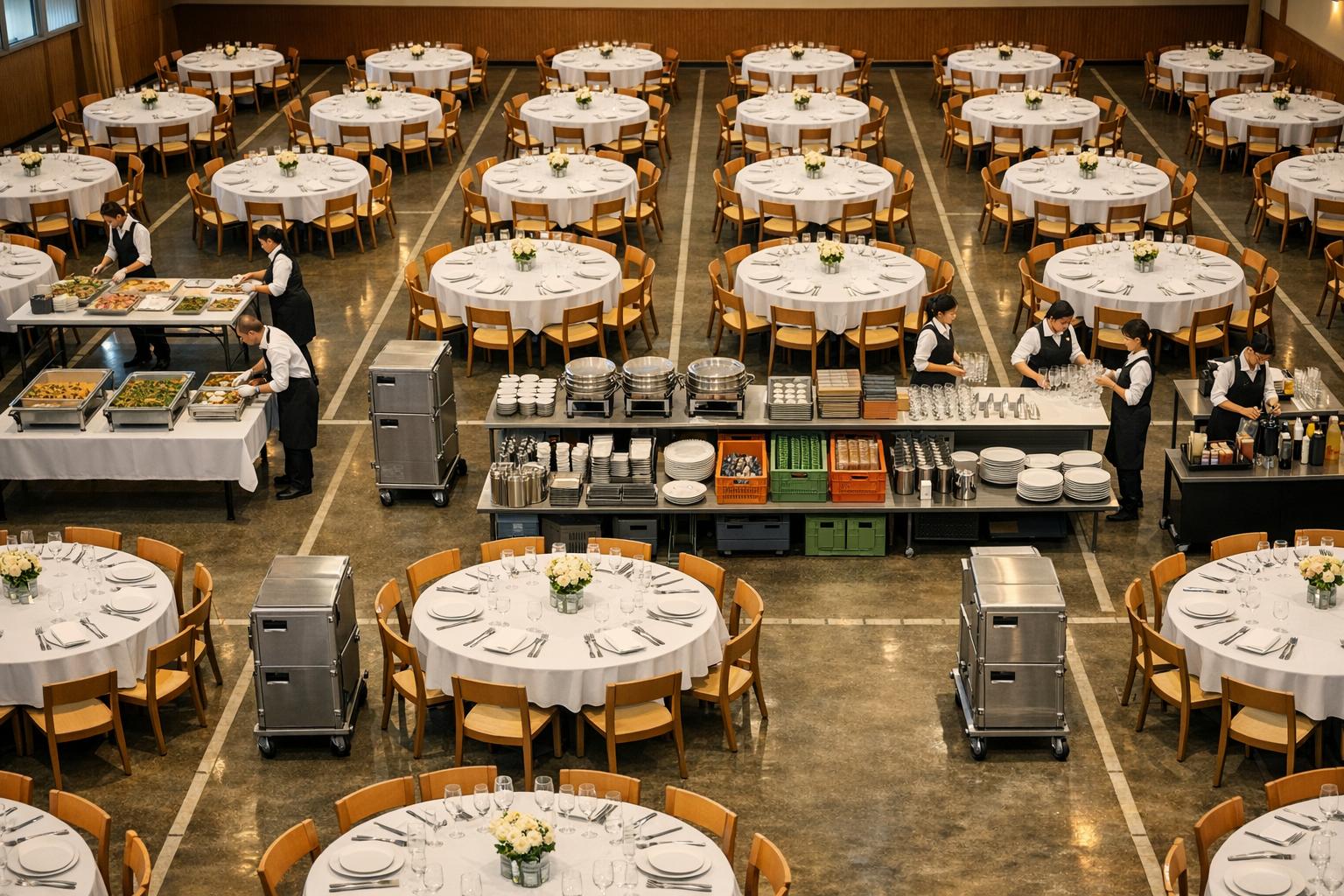
Managing catering logistics for large events can feel like navigating a maze. From feeding thousands of guests to coordinating complex timelines and non-traditional venues, the challenges are immense. Yet, as RH Vincent Catering demonstrates, mastering this art is not only possible - but can also be the defining factor in a flawless event experience. Based in Metro Atlanta, RH Vincent specializes in large-scale catering for events with attendance ranging from 1,000 to over 29,000 guests. Their expertise lies in combining logistics, staffing, and strategic planning to turn complexities into seamless execution.
This article distills key strategies from a recent discussion led by RH Vincent Catering’s leadership at an industry event, offering actionable insights to catering managers, event organizers, and business owners in the U.S. events industry. Whether you're aiming to scale your operations or streamline your processes, here’s what you need to know.
Large-scale catering encompasses events far beyond standard gatherings. RH Vincent defines this as serving 1,000+ guests, often across multiple shifts or non-traditional locations such as parking lots, fields, or stadiums. For such events, catering is more than just food service - it’s about delivering a cohesive guest experience, from the moment attendees arrive to the time they leave.
As Steve Hunt of RH Vincent Catering puts it, "Logistics really are the backbone of large-scale catering, and a good plan usually means a good event."
To simplify the intricate process of large-scale catering, RH Vincent breaks it into manageable steps. Below, we explore each phase, providing practical advice.
Every event begins by understanding the client’s vision and objectives. Is the event focused solely on food, or does it include entertainment and other activities? Will it be a one-hour corporate lunch break or an all-day family event? Defining these parameters dictates everything from menu design to staffing needs.
Menu selection is a cornerstone of large-scale events. RH Vincent emphasizes practicality, recommending menus that balance guest preferences with ease of preparation and serving efficiency. Popular staples include barbecue, hamburgers, hot dogs, coleslaw, mac and cheese, and baked beans - items that hold well under buffet conditions.
Executing large events requires extensive equipment planning. For RH Vincent, this includes everything from grills and fryers to refrigerated trucks and portable generators. Adequate preparation ensures smooth day-of operations.
RH Vincent employs a unique staffing model, combining trained event managers with volunteers from local organizations such as high school booster clubs and nonprofits. These volunteers are supervised by experienced managers, ensuring efficiency while offering community engagement opportunities.
On the day of the event, meticulous coordination is critical. RH Vincent relies on buffet lines for serving efficiency, ensuring that guests receive food quickly without compromising quality. For large crowds, they implement staging areas and open additional buffet lines as needed to manage peak traffic.
After each event, RH Vincent conducts a formal debrief to analyze successes and identify areas for improvement. This includes reviewing guest feedback, client input, and internal metrics such as food waste, staffing efficiency, and equipment performance.
One standout case is RH Vincent’s work with West Virginia University (WVU). Originally held outdoors on a field, the event shifted to a stadium setting due to campus expansion. Feeding thousands of people in such a constrained space required creative solutions, including staging food at strategic points and using radios for real-time communication among staff. The result? A seamless guest experience with minimal wait times, proving that even the most challenging venues can be mastered with proper planning.
For catering managers and event professionals, here are the most important lessons from RH Vincent’s approach:
Large-scale catering is as much about logistics and planning as it is about the food itself. By focusing on guest experience, efficiency, and adaptability, event professionals can turn potential chaos into organized success. RH Vincent Catering’s methods highlight the importance of preparation, teamwork, and a client-focused approach - valuable lessons for anyone in the events industry looking to scale their operations.
By following these strategies, catering professionals can not only rise to the occasion but also set a new standard for excellence in large-scale event management.
Source: "How Do You Cater Thousands of Guests at a Large-Scale Event?" - RH Events & Catering, YouTube, Apr 1, 2026 - https://www.youtube.com/watch?v=0H70I4_gndk