Ultimate Guide to Networking in Events Industry
December 28, 2025


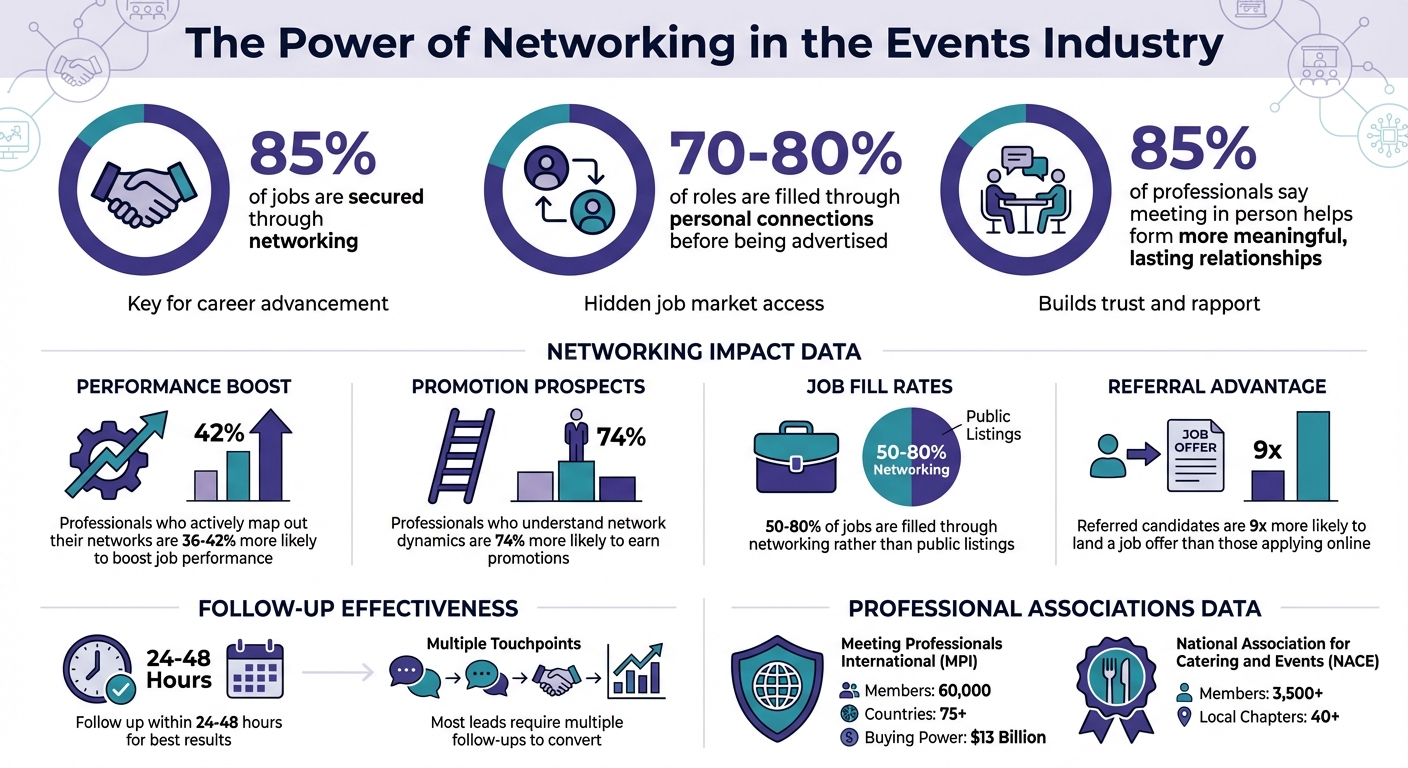
Networking is the backbone of success in the events industry. It’s how 85% of jobs are secured, and 70-80% of roles are filled through personal connections before they’re ever advertised. But it’s not just about job hunting - it’s also about building trust, gaining referrals, and staying informed on trends. Yet, with the hectic nature of event logistics, finding time for meaningful networking can feel overwhelming.
Here’s how to make networking work for you:
Tools like scheduling apps can help free up time, letting you focus on relationship-building instead of logistics. By approaching networking with intention and follow-through, you can open doors to new opportunities and long-term success.
Networking Statistics and Impact in the Events Industry
Networking is all about having a plan: setting clear goals, building a personal brand that leaves an impression, and identifying the right people to connect with. These steps lay the groundwork for meaningful relationships that can make a difference in your career.
Before attending any event, take a moment to figure out your purpose. Are you there to find a mentor, generate leads, or explore partnership opportunities? Knowing your "why" helps you focus your efforts - from how you introduce yourself to the conversations you prioritize.
Set specific, measurable goals to keep yourself on track. For instance, you might aim to meet five new contacts, collect ten business cards, or connect with two keynote speakers. Research shows that professionals who actively map out their networks are 36% to 42% more likely to boost their job performance.
Do some homework before the event. Check out guest lists, social media profiles, or even event hashtags to identify key people you'd like to meet. Create two lists: one for existing contacts to reconnect with and another for potential new connections who could add value to your network. As Keith Ferrazzi puts it:
Building a strong network is like any other goal - and measuring your success is crucial.
Tailor your goals to your career stage. For example, business owners might focus on lead generation, while industry newcomers might aim to gain insights and learn from experienced professionals.
Once your goals are set, it's time to let your personal brand do the talking.
Your personal brand is essentially your professional reputation. It’s how people remember you after a conversation ends. Start with a concise 30-second introduction that highlights your experience, interests, and what you’re looking for. Instead of sticking to one generic pitch, create what experts call a "Jenga Tower" of introductions - different versions tailored for various audiences.
Reliability and consistency are key to building a strong personal brand. Simple actions, like following up within 24 hours of meeting someone, show professionalism and build trust. Small gestures - such as delivering on promises or sending information you mentioned - can go a long way in establishing your credibility.
Even your appearance and details like your name tag matter. Research the dress code beforehand, and use your name tag strategically. For instance, listing your title as "Event Logistics Specialist" instead of just your company name can spark curiosity and lend credibility.
And here’s a compelling stat: 85% of professionals say meeting in person helps them form more meaningful, lasting relationships. The goal isn’t to close a deal on the spot but to build trust and a reputation that leads to future opportunities.
With your brand polished, the next step is identifying the right people to connect with.
Not all connections are created equal, so focus on the ones that can genuinely impact your career. In the events industry, this often means event organizers, venue managers, catering leads, and seasoned peers who understand your challenges.
Pay special attention to what networking experts call "anchor tenants." These are influential individuals whose endorsement can instantly boost your credibility within their circles. As social capital expert David Burkus explains:
It should be your goal not to meet the most people as possible, but to understand who else is connected to whom and what the rest of the network looks like.
Professionals who grasp these network dynamics are up to 74% more likely to earn promotions than those who don’t.
Here’s a quick breakdown of key contacts and their value:
| Contact Category | Primary Value | Priority Level |
|---|---|---|
| Event Organizers | Gatekeepers who can introduce you to key players | High |
| Venue Managers | Offer logistics support and potential referrals | High |
| Anchor Tenants | Provide instant credibility within a group | High |
| Industry Experts | Share insider knowledge and trends; potential mentors | Medium-High |
| Peers/Colleagues | Offer advice, collaboration, and job leads | Medium |
Don’t overlook vendors, technical specialists, or event staff - they often have valuable insights and connections to share. When reconnecting with existing contacts, try asking, "Have you met anyone recently I should meet?" It’s a simple way to expand your network organically.
The goal here isn’t to pitch your product or service right away. Instead, focus on building genuine relationships. These connections are far more likely to lead to long-term success.
Now that you’ve built a solid foundation for networking, it’s time to make the most of every opportunity - before, during, and after the event. Breaking it into these three stages ensures you approach networking with purpose and efficiency.
The success of your networking often hinges on the preparation you do beforehand. Start by reviewing RSVP lists, speaker bios, and attendee profiles on LinkedIn or the event's app. This helps you identify key people you’d like to connect with. Search for the event hashtag on platforms like X (formerly Twitter) or LinkedIn, and engage with those already talking about the event. For instance, at IBTM World, where over 12,000 professionals gather over three days, pre-event research is crucial to navigate the crowd.
Make sure your materials are ready to go. Bring enough business cards, update your résumé, and ensure your LinkedIn profile is polished. As networking expert John Corcoran puts it:
Pretend your business cards are on fire if you have to.
Pack a few essentials: a pen for jotting notes on business cards you receive and breath mints for those up-close conversations. Dress slightly better than the event’s standard to leave a lasting impression.
If you’re part of the event staff, managing your schedule is just as important. Tools like Quickstaff can help you track your availability and balance work commitments with networking opportunities.
Finally, arrive early. Showing up ahead of time gives you the chance to strike up conversations in a quieter setting before larger groups form.
Once the event is underway, it’s time to put your preparation to work. Use your research to approach people confidently. Look for individuals standing alone or join smaller groups where it’s easier to jump into the conversation. A friendly smile, a confident handshake, and approachable body language go a long way.
Start conversations with neutral openers like, “What brings you to this event?” or compliment someone’s work or presentation. Introduce yourself clearly, highlighting your background and what you bring to the table. Then, focus on active listening - pay attention to what the other person is saying instead of planning your next response.
Here’s a handy tip: wear your nametag on your right side so it’s visible during a handshake, and keep your right hand free by holding drinks or plates in your left. To help remember names, repeat them during the conversation, such as, “It was great meeting you, Sarah”.
Manage your time wisely. Stick to about 10 minutes per conversation to ensure you meet multiple people. When it’s time to move on, exit gracefully by giving a genuine compliment, mentioning a follow-up, and shaking hands.
Take advantage of casual moments, like waiting in line for coffee or sitting before a session starts, to strike up conversations. If you’re feeling nervous, start with exhibitor booths where the setup makes it easier to chat.
After each conversation, jot down key details or follow-up notes on the back of a business card or in a mobile app. These quick notes will be incredibly helpful later.
The connections you make at an event are only as good as the effort you put into maintaining them. Timing is everything - reach out as soon as possible, ideally the same evening or within a few days, to keep the conversation fresh.
Avoid sending generic LinkedIn invites. Instead, personalize your message by referencing something specific you discussed, like a shared interest or a unique insight. If you promised to share information, links, or introductions, follow through immediately to show you’re dependable.
Expand your connection by engaging on platforms like LinkedIn, X, or Facebook to stay updated on their professional activities. If the interaction was particularly meaningful, suggest a next step, such as a quick phone call, a coffee meeting, or an informational interview. Keep a detailed record of each contact, noting what you discussed and how you might support their needs or interests.
Set reminders to touch base periodically, whether it’s sending a holiday greeting, sharing relevant news, or just checking in. This keeps the relationship alive without feeling intrusive.
For a memorable touch, consider taking a fun selfie with new contacts during the event and sending it to them later as a lighthearted reminder of your meeting. It’s a small gesture that can leave a lasting impression.
Networking pays off in big ways: between 50% and 80% of jobs are filled through networking rather than public listings, and referred candidates are nine times more likely to land a job offer than those applying online. A strong follow-up strategy can turn a brief encounter into a pivotal career opportunity.
Building and maintaining a strong professional network doesn’t end when an event wraps up. By tapping into professional organizations and using technology wisely, you can keep your connections alive, create new opportunities, and grow your career.
Professional associations are fantastic hubs for networking, especially for event professionals. These groups host workshops, conferences, and local chapter meetings that bring industry insiders together. Take Meeting Professionals International (MPI), for instance - it connects a global community of 60,000 event professionals across more than 75 countries and represents about $13 billion in buying power. Similarly, the National Association for Catering and Events (NACE) supports over 3,500 members through 40+ local chapters across the U.S.. And for those in creative roles, the International Live Events Association (ILEA) offers a global network for planners, decorators, AV technicians, and more.
But these associations aren’t just about mingling. They also provide resources like exclusive job boards, certifications, and mentorship programs to help you advance your career. Volunteering for committees or leadership roles can also put your skills in the spotlight, which often leads to referrals and new opportunities. As Keith Ferrazzi, a well-known networking expert, puts it:
The more people you help, the more help you'll have and the more help you'll have helping others.
By pairing these opportunities with the right technology, you can take your networking to the next level.
Platforms like LinkedIn remain essential for professional networking. They allow you to research contacts, share updates, and connect meaningfully with others in your industry. Event-specific apps like Hubilo also bring value by offering live chats and breakout rooms, making it easier to engage virtually when in-person meetings aren’t an option.
For event staff, scheduling tools are another game-changer. Apps like Quickstaff help you manage your availability and avoid double-booking, ensuring you never miss an opportunity to work with repeat clients. With features like a centralized calendar, automated reminders, and mobile access, these tools help you stay organized and dependable - qualities that make a lasting impression and lead to stronger professional relationships.
Reliability is key to building trust in any professional setting. Scheduling platforms not only reduce miscommunications but also provide real-time updates and allow you to choose shifts that fit your availability. Tools like Quickstaff even make payroll tracking and budgeting easier, improving your work-life balance while showcasing your professionalism. When you manage your commitments effectively, you’re more likely to turn one-time gigs into long-term partnerships and referrals.
Networking serves as the backbone of career advancement in the events industry. With a significant percentage of roles being filled through networking, the relationships you cultivate today can lead to new opportunities tomorrow. Whether it’s securing your next job, finding dependable collaborators, or building a reputation that keeps clients returning, your network is undeniably one of your most important assets.
To make the most of networking, approach it with a clear and strategic mindset. As Keith Ferrazzi highlights, setting measurable goals can significantly enhance your success. For instance, before attending an event, decide on specific objectives - like meeting five new people or connecting with a particular speaker. Track your progress using simple methods, such as jotting notes on business cards, maintaining a spreadsheet, or leveraging digital tools like Quickstaff to manage your contacts and availability.
Clear goals are just the beginning. Following up effectively is what transforms fleeting introductions into meaningful relationships. Studies show that most leads require multiple follow-ups to convert. To increase your chances, reach out within 24–48 hours of meeting someone with a personalized message that references your conversation. This small step can significantly boost response rates.
Another key to success is actively managing your network. Research shows that executives who consistently map and nurture their networks are 42% to 74% more likely to receive promotions than those who don’t. Create a Relationship Action Plan that organizes your contacts into categories - current connections and potential ones - and assign specific actions to each. This could mean scheduling a coffee chat, engaging with their LinkedIn activity, or sharing an article they might find useful. Revisit and update this plan monthly to keep your network vibrant and growing.
Start small, stay consistent, and watch as the connections you build today shape the future of your career in the events industry.
To create effective networking goals, start by identifying why you're attending the event. Are you there to find new vendors, build partnerships, or stay updated on industry trends? Knowing your purpose helps you stay focused and intentional.
Once you have clarity, make your goals measurable. For example, aim to meet three event planners or exchange contact details with the keynote speaker. Having specific targets keeps you on track. Also, think about the kind of connections you want - whether you're seeking long-term relationships or quick, valuable insights.
Write down a goal that follows the specific, measurable, achievable, relevant, and time-bound (SMART) framework. For instance: "By 5:00 PM on October 15, 2025, I will have introduced myself to the lead vendor and collected three business cards."
Before the event, do some homework - research attendees, prepare a short introduction about yourself, and schedule meet-ups if possible. During the event, stay adaptable. If things don't go as planned, adjust your strategy to make the most of your time and opportunities.
To establish a strong personal brand in the events industry, start by identifying what makes you stand out. Are you the go-to expert for luxury weddings, corporate conferences, or energetic music festivals? Define your niche and craft a concise elevator pitch that showcases your expertise. Practice delivering it confidently at networking events. Pair this with a polished professional image - everything from your appearance to branded materials, like business cards, should reflect your unique style.
Consistency plays a big role. Keep your LinkedIn, social media profiles, and personal website fresh with engaging content. Share behind-the-scenes snapshots, quick tips, or success stories that highlight your skills. When attending events, set clear goals - whether it’s connecting with key industry players or gathering referrals. Afterward, follow up with personalized messages that reference your conversations to leave a lasting impression. Tools like Quickstaff can also enhance your reputation by streamlining event scheduling and staffing, showing off your organizational skills.
By staying consistent, approachable, and intentional in your efforts, you’ll build a reputation as a reliable and memorable professional in the events world.
To make the most of any event, start by doing your homework. Research the attendee list or event app to find people who align with your objectives - whether you're looking for new vendors, potential clients, or experienced mentors in your field. Narrow your focus to 5–10 key individuals, and prepare a few talking points for each. These could include their recent projects, shared industry challenges, or anything else that helps spark a meaningful conversation.
Once you're at the event, use tools like name badges or event apps to ensure you're connecting with the right people. If you're unsure about someone, a quick two-minute chat can help you decide if it’s worth continuing the discussion or moving on.
After the event, it’s time to prioritize. Organize your contacts based on factors like their decision-making authority or how well they align with your goals. Reach out to your top-priority connections within 48 hours to keep the momentum alive. Tools like Quickstaff can be a game-changer here, helping you manage your contacts, set follow-up reminders, and track your progress. This way, you can turn those initial conversations into real opportunities.