How to Motivate Temporary Event Staff
March 27, 2026

Temporary event staff are essential for the success of any event. They handle critical tasks like registration, customer service, and guest interactions. However, their transient roles often lead to lower motivation and engagement. The good news? Keeping them motivated doesn’t require a big budget or complex strategies. Here’s how you can ensure they feel valued and perform their best:

6-Step Process to Motivate Temporary Event Staff
The first few hours on the job can make or break how well temporary staff adapt to their roles. A strong onboarding process can boost employee retention by 82% and improve productivity by more than 70%. These statistics are even more critical for temporary workers, who must hit the ground running without the luxury of a lengthy adjustment period.
Grant Morningstar, CEO of Eleven8 Staffing, emphasizes this point:
Onboarding sets staff up for success. A lack of training can lead to mistakes, delays, or confusion, ultimately affecting the guest experience.
When temporary staff arrive without clear guidance, they lose time figuring out basic tasks, make avoidable mistakes, and may feel disconnected from the event's goals. A well-thought-out onboarding process gives them the tools and confidence to contribute right away.
Temporary staff need a clear understanding of their specific duties, performance expectations, and their role within the broader event. Laurie Wherley from Jobble highlights the importance of clarity:
Clearly defined roles and expectations are crucial for temporary staff. They should know exactly what is expected of them, including their responsibilities, performance standards, and any deadlines or key milestones they need to meet. Clear expectations provide a roadmap for success and can help reduce confusion and frustration.
Start by drafting detailed job descriptions that differentiate between roles. For instance, the tasks of a bartender are entirely different from those of a registration assistant - confusing these roles leads to inefficiencies and service gaps. Beyond listing duties, explain the purpose behind each task. When staff understand how their efforts contribute to the event's success, they are more likely to feel motivated and connected.
Equip staff with an event packet that includes essentials like schedules, venue maps, guest lists, and any tools or technology they’ll need, such as registration software. This not only reduces uncertainty but also provides a handy reference throughout the event.
Laying out these expectations paves the way for targeted training that fine-tunes their performance.
After defining roles, the next step is to provide practical, role-specific training. This training should zero in on the skills staff need to perform effectively. Combine pre-event training - such as online modules or in-person sessions - with on-the-job learning, like shadowing experienced team members or participating in mock scenarios.
Focus on the essentials: venue layout, technology systems, key messaging, and emergency procedures. For events spanning multiple days, space out the training to improve retention.
Pairing new staff with a mentor, rather than a manager, can make a big difference. Mentors offer a safe space for questions and help new hires feel supported. Additionally, hold a pre-event briefing to address any lingering questions or concerns. This helps catch potential issues before they escalate during the event.
Setting SMART goals - Specific, Measurable, Attainable, Realistic, and Time-bound - gives staff clear objectives and prevents them from feeling overwhelmed.
Keep in mind that around 20.5% of organizations report losing half of their new employees within the first 90 days. For temporary staff, this adjustment period is even shorter. Structured, practical training from the start ensures they remain engaged and ready to perform at their best.
Once your team is trained, the next step is making sure everyone understands the event's purpose and their role in achieving it. According to Gallup, only 33% of US employees feel engaged at work. For temporary event staff, this disconnect can be even more pronounced. The fix? Clearly outline the event's main objectives and explain how each role contributes. When people see the bigger picture - why the event matters, who it’s for, and what success looks like - they’re better equipped to handle challenges and deliver outstanding service.
When staff know exactly what success looks like, they can deliver it confidently, boosting their own sense of accomplishment.
Start your briefing by explaining the event’s purpose and its broader impact. For example, if it’s a corporate fundraiser, share the fundraising target and the cause it supports. For a product launch, highlight why the product matters and who will be attending. This context transforms what might seem like mundane tasks into meaningful contributions.
Also, redefine roles to emphasize their importance. Instead of saying someone is on "door duty", describe their job as "creating the first impression" or "setting the tone for the evening". A registration assistant who knows they’re responsible for ensuring a smooth check-in process - and making attendees feel welcome - will naturally approach the task with more care and pride.
This clarity naturally leads to setting measurable goals throughout the event.
Break the event into smaller, trackable goals. For example, a street canvassing team might aim to distribute 500 flyers or gather 50 email sign-ups by 3:00 PM. At a multi-day conference, you could set daily registration or session attendance targets.
Use tools like daily debriefs or real-time check-ins to track progress and provide feedback. Group chats or digital platforms are a great way to share updates and keep energy high. For instance, you might send a message like, "We’ve hit 200 registrations! Only 100 more to go!".
A confident, informed team is far more motivated than one left guessing about their responsibilities.
Clear, measurable milestones eliminate uncertainty and give everyone something tangible to work toward.
After setting clear goals and onboarding effectively, the next step is creating a sense of belonging for temporary staff. Temporary roles are often viewed as short-term gigs, which can lead to lower motivation and effort. But when temporary workers feel like they’re truly part of the team, their enthusiasm and focus significantly improve. As Laurie Wherley from Jobble puts it:
Creating a sense of community among temporary staff is essential for their retention and overall job satisfaction.
By treating temporary workers as integral team members from the start, you can foster stronger engagement and commitment. Below are some practical ways to ensure temporary staff feel included.
Start each event with a quick team meeting to introduce new staff and explain their roles. This small gesture helps them feel acknowledged and valued. You can take it a step further with personalized touches like name badges. Adding a brief team-building activity can also encourage social connections and help break the ice between team members.
Assigning each temporary worker a mentor or team lead ensures they have someone to turn to for guidance. This setup not only helps them learn the ropes but also encourages professional relationships. Teams that emphasize trust and connection are shown to achieve 50% higher productivity.
Mentors play a dual role - they provide training and help temporary staff understand how their efforts contribute to the event’s success. Laurie Wherley highlights this point:
When they feel that they are learning, growing, and contributing meaningfully to the event, it can lead to increased engagement and a stronger commitment to doing their best.
For standout temporary staff, consider offering recommendation letters after the event. This gesture acknowledges their efforts and shows that their contributions have long-term value.
After integrating temporary staff into your team, the next focus should be on maintaining clear and open lines of communication. Building on the foundation of defined roles and effective training, communication ensures everything runs smoothly during the event. Without it, even the best-laid plans can fall apart. As KDM Events warns, "Lack of communication will come back to bite you should anything go wrong, so again be sure to cover all of your bases!". When staff are left out of the loop or don't know what’s happening, stress levels rise, and coordination suffers.
But communication isn't just about avoiding mishaps - it’s about giving your team the tools to excel under pressure. When everyone knows the event’s goals, their specific responsibilities, and contingency plans, they can handle surprises with confidence. A strong communication plan not only prevents problems but also equips your team to act decisively when challenges arise.
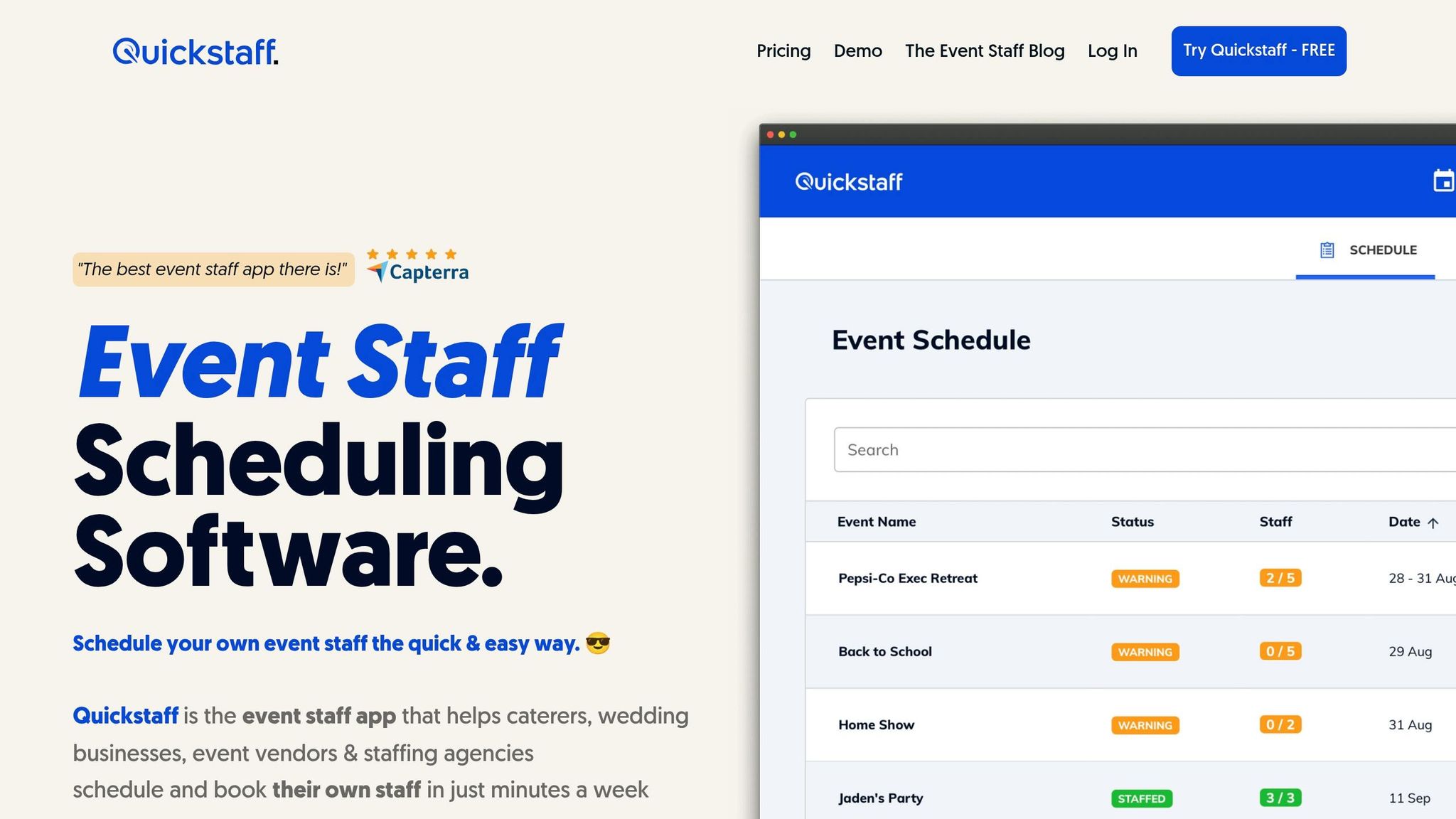
Coordinating communication for a temporary team can feel overwhelming. That’s where Quickstaff comes in, offering a centralized platform to streamline messaging. Instead of juggling countless calls or texts, Quickstaff lets you send unlimited messages to your entire team or specific groups, like servers or bartenders. This ensures that only the relevant people receive updates, cutting down on unnecessary noise.
When you set up an event in Quickstaff, the platform automatically sends key details - such as the event name, date, call time, location, and assigned roles - via email to your team. Staff can confirm or decline shifts with a single click, giving you immediate insight into who’s available. Automated reminders also help reduce no-shows by keeping assignments top of mind. As Jennifer Manley, a Staffing Coordinator, shared, "My time spent scheduling has shrunk majorly, freeing time for recruiting and training".
Centralized messaging is just one part of the equation. To keep your team motivated and aligned, regular feedback is essential. Temporary staff, in particular, benefit from timely, actionable input. Research shows that employees who receive daily feedback are 3.6 times more likely to excel compared to those who only get annual reviews. Additionally, 80% of employees who’ve received meaningful feedback within the past week report being fully engaged in their work. For short-term staff, waiting until the end of an event to provide feedback simply isn’t practical.
David Grossman, a communication expert, compares effective feedback to a GPS: "It helps them understand where they are, where they need to go, and how to get there". Feedback also improves decision-making in the moment, especially during unexpected situations. Be specific about behaviors and their impact. For example, saying, "When you greeted guests at the door with a smile, it set a welcoming tone for the entire event", reinforces positive actions. Use "I" statements to avoid sounding critical, and ask, "How can I help you with this in the future?" to show your commitment to their growth. This approach is particularly important for millennial workers, 51% of whom believe feedback should be given frequently or continuously while on the job.
Once you’ve established smooth communication, it’s time to focus on showing appreciation for your team’s efforts and rewarding their performance. Recognition isn’t just about being courteous - it’s a smart way to keep your team motivated and engaged. When you acknowledge achievements, you reinforce the connection between their hard work and the event’s success.
As Megan Hayward from TempGuru points out:
Staff who are recognized are more likely to accept future bookings from the same organizer, reducing your recruitment and training overhead on repeat events.
In an industry where temporary workers often feel overlooked, specific recognition can leave a lasting impression and foster loyalty.
You don’t need a big budget to make your team feel valued. A small bonus - ranging from $25 to $50 per staff member - can go a long way in boosting morale and encouraging loyalty. For a team of 10, that’s an investment of $250–$500, which can significantly enhance performance and commitment. The key is to be specific and prompt with your acknowledgment. Highlighting achievements as they happen keeps energy levels high throughout the event.
During team briefings or at the end of the day, take the time to name individuals and detail their contributions. For example, you might point out how Sarah quickly resolved a registration issue or how Marcus skillfully managed a challenging guest interaction. This level of detail shows you’re paying attention and that their efforts matter.
Real-time feedback is especially effective. If a guest praises a staff member or a client shares positive comments, pass that feedback along immediately. For freelance workers, consider writing LinkedIn endorsements or sharing positive remarks with their staffing agencies.
Incentives provide an extra push for great performance and foster long-term loyalty. To make this work, set clear criteria so everyone knows what actions will be rewarded.
A tiered incentive system is a great option. For instance, you might offer referral bonuses between $25 and $75 for successful new hires. Loyalty bonuses could include $25 after three events and $50 after five events. This not only motivates your current team but also lowers recruitment costs for future events. Noelle Forseth from When I Work emphasizes the value of this approach:
Incentives and rewards are a balance between making daily work life more bearable and having high moments that employees can look forward to.
Managing schedules can be a major headache for temporary staff. Tracking shifts, handling swap requests, and communicating availability can quickly become overwhelming, leading to lower motivation. By introducing scheduling tools, you can ease these challenges. In fact, organizations that use specialized scheduling technology report spending 42% less manager time on scheduling and experiencing 37% fewer coverage gaps.
But the benefits go beyond just saving time. When employees have more control over their schedules - whether by setting their availability or swapping shifts - they feel more engaged and empowered in their roles. Meeting scheduling preferences has been shown to increase participation by 37%.
Dedicated scheduling tools can make this process seamless. For instance, Quickstaff offers a mobile-friendly platform that eliminates the chaos of traditional scheduling methods. Temporary staff can check their upcoming shifts, update availability in real time, and even receive automated reminders - all from their phones. The availability tracking feature provides a clear view of who’s free, making it easy to fill shifts without endless calls or messages.
Role-based scheduling also helps clarify assignments, reducing confusion on event days. Publishing schedules 4–6 weeks in advance gives staff ample time to plan around personal commitments, which not only boosts participation but also reduces last-minute cancellations. Additionally, peer-to-peer shift swapping through digital platforms resolves 65% of scheduling conflicts, allowing you to focus on running the event smoothly.
Quickstaff’s flexibility and user-friendly features make it easier to keep your team satisfied and your events running efficiently.
Flexibility is more than just a nice-to-have - it’s a powerful retention tool. Research shows that giving employees control over their schedules improves their work-life balance and minimizes frustration from rigid shift assignments. A system that allows staff to swap shifts directly through designated communication channels can resolve conflicts quickly without creating unnecessary delays.
You could also try a Core/Flex scheduling strategy. This approach designates mandatory hours during key event times (like dinner service or ceremonies) while offering flexible hours that staff can adjust or swap as needed. Cross-training your team to handle multiple roles - like front-of-house duties and kitchen prep - can further expand your pool of available workers. Employees using specialized scheduling tools report 28% higher satisfaction with their work schedules, making flexibility a win-win for both staff and management.
Motivating temporary event staff doesn’t have to feel like a puzzle. Start by focusing on strong onboarding and training - this builds confidence and sets a positive tone from the beginning. Establish clear goals and expectations so everyone knows how their role contributes to the event's overall success. Treat temporary staff as essential members of the team by introducing them to the group and pairing them with mentors for support.
Maintain open and transparent communication throughout the event. Offering regular feedback not only helps staff adjust and improve but also shows that their efforts are appreciated. Acknowledging good performance goes a long way - whether it’s a simple thank-you or a small reward tied to their contributions. These small gestures can make a big difference in engagement and retention.
Simplify scheduling to reduce stress for everyone. Tools like Quickstaff can centralize scheduling, streamline shift management, and cut down on tedious admin work. When scheduling is easy, attendance improves, and staff stay more engaged.
"Your event is only as good as the team behind it. Invest in your temporary event staff, and you will reap the rewards in the form of a successful, smoothly-run event." - Laurie Wherley, Jobble
To re-engage temporary staff who seem disconnected, start by fostering a welcoming and supportive atmosphere. Highlight the significance of their role and the impact they have on the overall success. Acknowledge their efforts with genuine appreciation and encourage collaboration among the team. These steps can help lift their spirits, strengthen their sense of belonging, and inspire greater dedication to the event's goals.
A fast and efficient onboarding process for event staff should cover the essentials: paperwork, role expectations, venue details, and safety protocols. The goal is to provide a clear, concise orientation that ensures everyone knows their responsibilities, understands event procedures, and is familiar with key aspects of the venue. By focusing on these areas, you can help staff feel ready and confident to handle their roles effectively, even with limited preparation time.
Quickstaff tackles no-shows and last-minute shift gaps by streamlining communication and keeping things organized. Its scheduling tools let you send timely reminders and updates, ensuring that team members stay informed about their shifts. The platform also promotes open communication, helping to address concerns and strengthen trust among staff. Plus, with centralized tools to track availability and commitments, it becomes easier to avoid scheduling conflicts and encourage accountability.