Staffing Agency Calculator
July 22, 2026

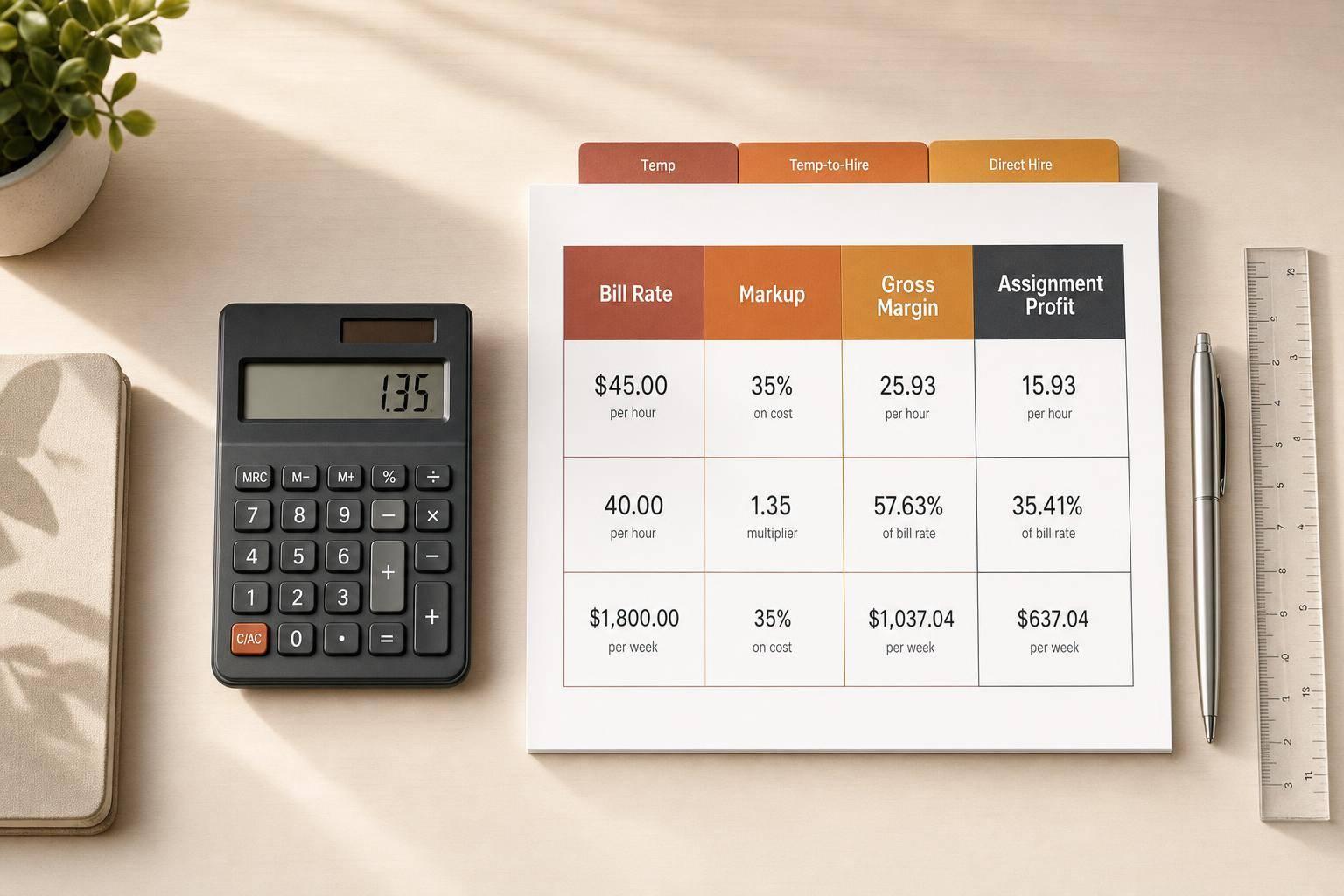
A strong staffing agency calculator helps recruiters and finance teams price deals with more confidence and fewer surprises. Whether you're quoting a temp assignment, reviewing a temp-to-hire arrangement, or estimating a direct hire fee, small changes in pay rate, burden costs, and overtime can have a big impact on profit.
This tool is built to show more than a simple markup. You can estimate bill rate, gross margin, weekly revenue, and assignment profit while factoring in payroll tax, workers' comp, insurance, admin expense, compliance costs, and one-time fees. That line-item visibility makes it easier to explain pricing internally and defend it with clients.
If you know the pay rate and markup, the calculator works forward to a bill rate. If you know the pay rate and need to hit a target margin, it works backward to find the required billing level after burden. For permanent placements, the staffing agency calculator can also estimate a direct hire fee from salary and fee percentage. It's a practical way to evaluate recruiting profitability before the placement is made.
Yes. That’s one of the most useful ways to run the calculator. If you enter the worker pay rate along with your burden costs and target gross margin, the tool can estimate the bill rate you need to charge to hit that goal. This is especially helpful when a client asks for pricing and you want to protect margin instead of relying on a rough markup guess.
Overtime is calculated using the multiplier you enter, such as 1.5x. The tool applies that assumption to overtime pay and the related bill amount based on your setup, then rolls those numbers into weekly revenue, labor cost, burden cost, and gross profit. That gives you a more realistic view of assignment profitability when schedules regularly go beyond standard hours.
Markup is how much you add on top of the worker’s pay rate or cost base to set a bill rate. Gross margin is the percentage of revenue left after direct labor and burden costs are covered. In staffing, those numbers can look close at first glance, but they tell different stories. Markup helps with pricing mechanics, while gross margin shows whether the assignment is actually producing healthy profit.