Overtime Calculator
July 28, 2026

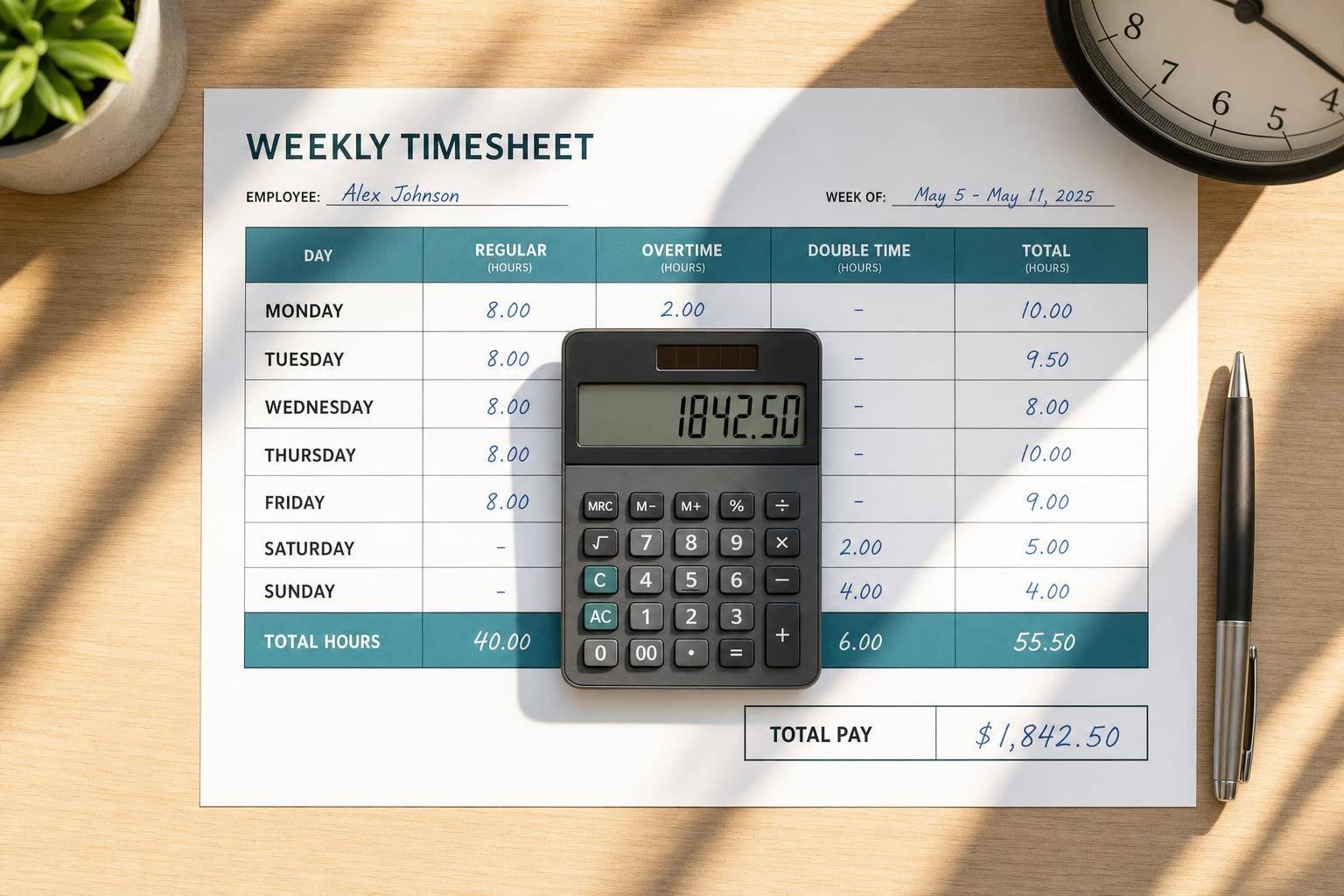
Tracking extra hours shouldn’t require a spreadsheet and a pile of manual math. This Overtime Calculator gives you a quick way to estimate regular pay, overtime earnings, double-time pay, and total compensation for a weekly or custom pay period. It’s useful for hourly employees checking a paycheck estimate, managers reviewing schedules, and payroll teams who need a fast overtime breakdown.
You can enter your hourly rate, total hours worked, overtime threshold, and pay multipliers, then add extras like a shift differential or bonus. If double time applies, the tool separates those hours automatically so you can see exactly how pay is split across regular, overtime, and premium rates.
This overtime pay calculator is designed for speed. Optional fields stay out of the way until you need them, and the results are easy to scan at a glance. You’ll also see your effective hourly rate, which can be helpful when comparing different schedules or checking how extra hours affect total earnings.
Overtime rules vary by state, country, contract, and employer policy, so this tool is best used as a practical estimator rather than legal advice. For everyday planning, though, it’s a fast and reliable way to calculate overtime pay.
It first applies your regular-hours threshold to determine regular hours. Any hours above that point are treated as overtime. If you enable double time, the tool then splits those extra hours again so that hours above the double-time threshold are paid at the double-time multiplier, while the hours between the regular threshold and double-time threshold stay at the overtime rate.
Yes. While the default setup is built around a typical 40-hour workweek, you can change the regular-hours threshold and use a custom pay period to match your workplace rules. That makes it useful for different schedules, union agreements, and internal payroll setups, as long as you enter the correct thresholds and rates.
It’s a strong estimating tool, but it shouldn’t replace official payroll review or legal guidance. Overtime rules can depend on local labor laws, industry regulations, collective bargaining agreements, and whether shift premiums or bonuses must be included in the regular rate. For final payroll decisions, it’s smart to compare results with your employer’s policy or payroll provider.